
Reviewed · 2-DAY EXPERIENCES
2-Day Small-Group Basic Skills Survival Course in Södermanland
A fire, a shelter, clean water, and food: this two-day course teaches you to think through those basic needs in the Swedish forest. Instead of watching a guide perform one trick after another, you get time to practice compass work, fire-making, foraging, shelter building, and cooking outdoors.
I like the small maximum group of eight, which should give you more hands-on time with William, the instructor. I also like that transport, meals, and needed gear are included, so you can focus on learning rather than assembling a full expedition kit. The main consideration is that two days can only provide a strong introduction. You will gain useful skills, but not full independence in every kind of emergency.
Key points at a glance
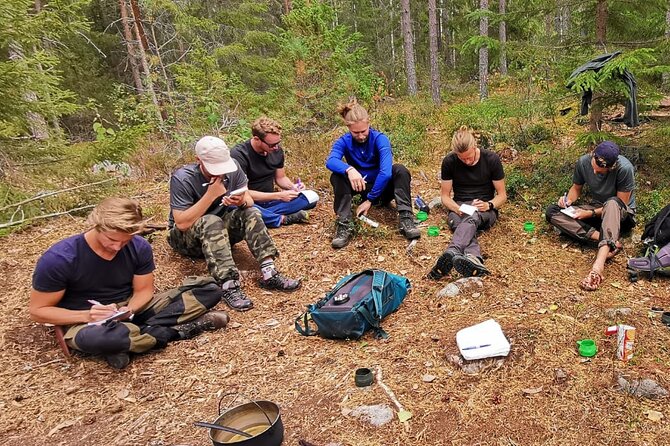
- Practical wilderness training: Build fires and shelters, collect water, identify plants, and prepare food outdoors.
- William leads the course: His teaching combines explanation with practice, including map work, cooking, and basic survival methods.
- Small group setting: The course accepts no more than eight people, with minimum group rules that change by season.
- Meals are included: Breakfast, lunch, and dinner are provided, with fire cooking forming part of the experience.
- Transport from Stockholm: Meet at True Nature Sweden AB on Tideliusgatan at 9:00 am, then travel by private vehicle to the forest.
- Optional rentals: Camping gear costs 450 kr per person, and a backpack costs 100 kr per person if needed.
From Stockholm to the Södermanland forest
The course starts at 9:00 am at True Nature Sweden AB, Tideliusgatan 62, in Stockholm. Private transportation is included, which removes one of the more awkward parts of booking a wilderness course: figuring out how to reach a remote starting point with outdoor equipment.
The exact forest site is not specified, so you should not expect a named attraction or a sightseeing route. The point is the setting itself. You leave the city behind and spend the course in the wilderness, where the lessons make immediate sense. Firewood becomes a real resource, shelter has a purpose, and reading a map is more useful than simply hearing a talk about navigation.
The ride also keeps the weekend simple. You meet at one urban address, travel with the group, and return to that same meeting point when the activity ends. Bring enough personal clothing for changing weather, but check the provider’s final instructions before departure because the supplied information does not list a detailed packing list.
A few more Stockholm days worth weighing up
- 2-Day Small-Group Stockholm Archipelago Kayak Tour
★ 5.0 · 25 reviews - 2-Day Kayak Tour in the Stockholm Archipelago
★ 5.0 · 13 reviews - 2-Day Small-Group Stockholm Hiking Tours
★ 5.0 · 6 reviews
Day one: learning the survival priorities
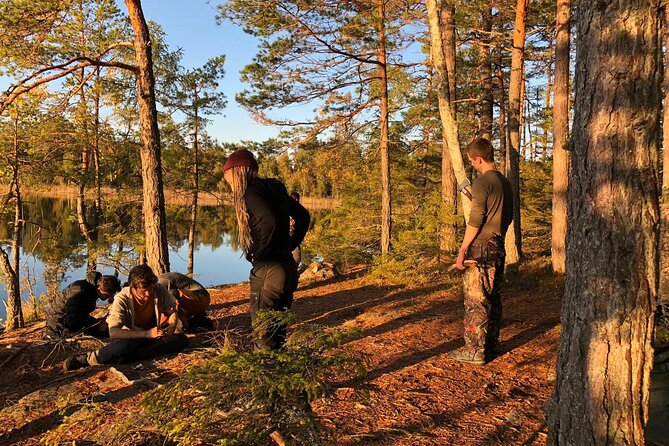
The course is built around basic human needs and the order in which you should address them. That is more useful than collecting a bag of clever wilderness tricks. In a stressful situation, you need a way to decide what matters first.
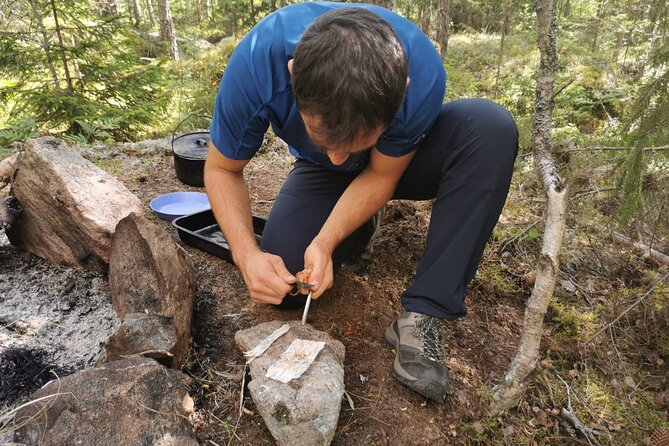
You work through fire, shelter, food, and water, with the guide explaining what each requires and giving you a chance to practice. The course description does not promise a particular fire-starting method, so the precise tools and techniques may vary. What is clear is that fire-making is a central part of the training, not a quick demonstration at the edge of camp.
Fire has several jobs in a survival situation. It can provide warmth, help with cooking, and make camp life easier. The course also covers simple encampment methods, so you learn practical ways to organize a basic camp rather than treating survival as a collection of dramatic stunts.
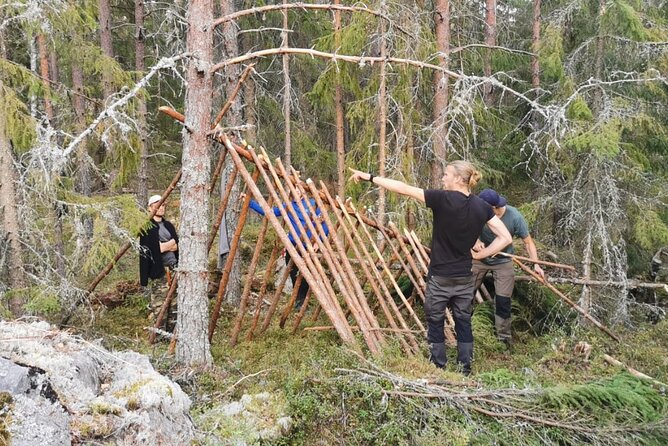
Shelter building is another major exercise. You learn how to choose materials and construct a simple place to stay in the forest. One especially useful aspect is the chance to make your own shelter, since the physical work reveals problems that are easy to miss in a classroom. A shelter can look finished while still leaving you exposed to cold or damp ground.
The course is not presented as luxury camping. You sleep in the forest, and that matters. A night outside turns shelter, warmth, and camp organization into real concerns. It also gives you a direct sense of how much effort basic comfort can require.
Fire cooking, plants, and finding food
Food lessons cover what to eat, where to find it, and how to prepare it. Meals are included, with breakfast, lunch, and dinner provided during the course. That means you are not expected to gather every calorie you consume, but you still learn how food can be prepared with simple outdoor methods.
Cooking over the fire is part of the appeal. It links several lessons at once: you need fuel, a safe fire, suitable cooking methods, and a way to organize camp. The food is not just a meal break. It becomes a practical demonstration of how a small number of basic resources can support you outdoors.
The plant section introduces edible, toxic, and medicinal plants. This is valuable, but it calls for care. A two-day introduction cannot turn you into a safe expert in wild plants, and you should treat identification as a skill that requires continued study. The sensible lesson is not to taste anything unfamiliar on your own. It is to learn how careful identification works and understand that mistakes can be serious.
You also discuss where food may be found and how it can be prepared. The course includes trapping and fishing as subjects, but the supplied information does not specify the equipment, catch, or local regulations. Consider these lessons an introduction to methods, not a promise of a successful meal from the forest.
Water collection and the logic of staying healthy

Water is treated as one of the central survival needs. You learn where to look for it and how to collect it. The information provided does not state which purification method is taught, so ask the provider for the current details before you book if water treatment is a priority for you.
This part of the course has value because water problems often develop quietly. Finding a source is only one step. You also need to think about collection, cleanliness, and how to manage your supply. The course’s broader focus on priorities helps you place water in the right part of your decision-making.
Do not assume that the course replaces formal first-aid or emergency training. No first-aid syllabus is listed. This is a basic wilderness skills course focused on fire, shelter, food, water, plants, wildlife, navigation, and camp life.
A different sort of day out, same corner of Stockholm:
- Stockholm: City Archipelago Sightseeing Cruise with Guide
★ 4.3 · 10,798 reviews - Stockholm: Skansen Open-Air Museum Admission Ticket
★ 4.5 · 3,427 reviews - Stockholm: Archipelago Boat Tour
★ 4.4 · 3,110 reviews - Stockholm: Highlights Boat Tour
★ 4.3 · 2,542 reviews
Map reading, compass work, and getting unlost
Orientation includes map reading and compass use. This is one of the most transferable parts of the weekend because it helps you avoid turning a small mistake into a serious problem. You learn how to understand where you are, read the surrounding area, and make decisions about direction.
The course is designed for beginners, and that matters. You do not need to arrive with an outdoor background. One of the most useful reported details from the experience is that complete beginners, including a mother and daughter, were able to work through compass use and shelter building with confidence.
Still, map reading improves through repetition. You may leave understanding the basic principles, but you will need to practice again if you want the skill to feel natural under pressure. Treat the two days as a foundation rather than a final qualification.
Wildlife tracking and basic risks
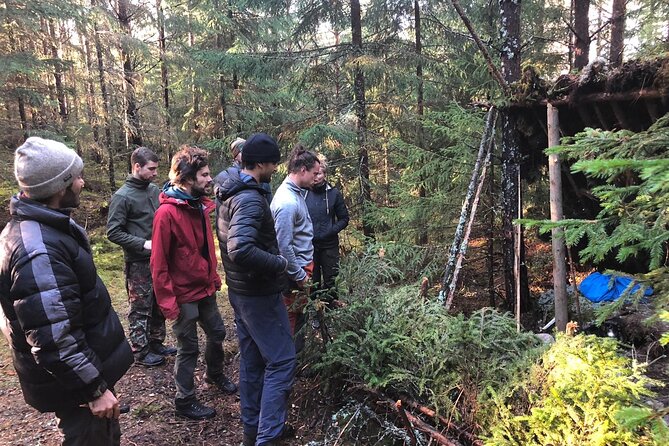
The wildlife section introduces tracking and discusses animal dangers. It is a good reminder that survival is not only about making fire. You also need to observe what is around you and behave in a way that reduces risk.
The available information does not identify specific species or promise sightings. You should not book this expecting a wildlife-watching excursion. Tracking here is a survival skill, focused on reading signs and understanding potential hazards.
That practical focus is useful. It encourages you to see the forest as a living system rather than a backdrop. You learn to notice signs, materials, water, plants, and possible risks with more care. The best lesson is a respectful one: use what nature provides, but do not treat the forest as an unlimited supply cupboard.
Group survival and taking responsibility
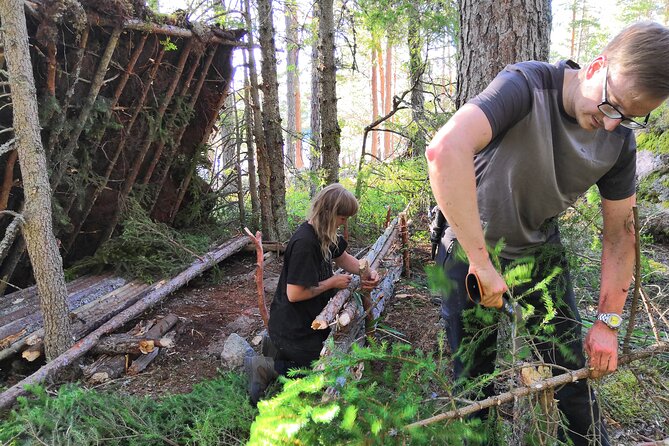
The course includes survival in a group, with leadership as a topic. This gives the weekend a wider purpose. A real emergency may involve several people, and group decisions can create as many problems as the original situation.
A maximum of eight people is a sensible size for this kind of teaching. It is small enough for discussion and practice, while still allowing you to see how different people approach the same task. One person may focus on building, another on navigation, and another on food or camp organization.
The minimum group size changes with the calendar. From early October through late April, at least three participants are required. From early May through late September, at least five are required. If the minimum is not reached, the operator offers another date or experience, or a full refund.
That rule is important if your dates are fixed. Confirm the departure before arranging nonrefundable accommodation or transport around it.
Sleeping outdoors and the real level of difficulty
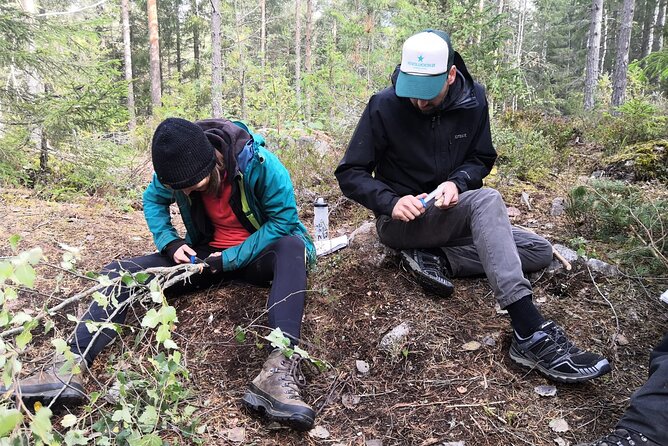
This is a basic course, not a survival television challenge. The available descriptions point to a structured weekend with teaching, practice, meals, and a guided camp. One participant expected something more intimidating and found it less tough than imagined, while still finding it exciting and worthwhile.
That balance is a strength. You get an authentic night in the forest without being thrown into an uncontrolled situation. William’s approach appears to include patience, practical demonstrations, and room for questions. The course also welcomes people who do not fit the usual macho image of wilderness training. You can book it as a beginner without needing to prove anything.
The difficulty will still depend on weather, clothing, fitness, and comfort outdoors. You sleep in the forest, handle natural materials, and spend two full days outside. The exact sleeping arrangement and camping equipment are not detailed, so ask what is supplied if you do not already own suitable gear.
Camping gear rental is available for 450 kr per person, with a backpack rental for 100 kr per person. These are optional costs, not part of the advertised price.
William’s teaching style
William is the named instructor, and the course depends heavily on his ability to explain and demonstrate skills clearly. The available feedback repeatedly points to his patience, practical approach, broad experience, and sense of humor.
That combination matters. Survival skills can become dry if they are taught only as rules, or intimidating if the instructor acts as though every beginner should already know the basics. Here, the tone appears more welcoming. Lessons combine theory with action, so you hear why something matters, then try it yourself.
The course also seems to encourage curiosity about nature. The aim is not only to make you feel prepared, but to help you notice the forest differently. That is a quieter benefit than fire-making or compass work, but it may last longer.
Meals, equipment, and what the $480.71 price covers
The price is $480.71 per person. That is a substantial weekend cost, but it includes private transportation, breakfast, lunch, dinner, and all needed gear for the course. You are paying for instruction as well as the practical package around it.
I see the strongest value in the small group and the included logistics. If you had to arrange transport, buy specialist equipment, and plan two days of food separately, the total cost would rise quickly. The meals also allow the course to show how camp cooking works without requiring you to carry a complete food plan.
The price is less compelling if you already own outdoor equipment and have solid experience with navigation, camp cooking, shelters, and fire-making. In that case, the course may feel introductory. It is aimed at people who want a structured start, not seasoned bushcraft practitioners seeking advanced instruction.
Alcoholic drinks are not included. Your own travel insurance is also not included. The activity accepts a maximum of eight participants and provides a mobile ticket.
Who should book this course
I would choose this course if you want a practical first step into Swedish wilderness skills and prefer learning by doing. It suits solo participants, couples, parents and adult children, and small groups of friends who want a shared challenge without signing up for a long expedition.
It is also a good fit if you are curious about camping but do not yet know where to start. Having transport, meals, and essential gear arranged removes much of the planning burden.
You may want something longer if your goal is genuine self-sufficiency in remote conditions. The course itself is a basic introduction, and the available feedback includes interest in returning for a longer program. Two days can give you a strong start, but repeated practice is the path to confidence.
Practical booking advice
The meeting point is True Nature Sweden AB, Tideliusgatan 62, Stockholm. Start time is 9:00 am, and the course ends back at the same meeting point.
Free cancellation is available up to 24 hours before the local start time for a full refund. Changes or cancellations made within 24 hours are not accepted for a refund. Because a minimum group is required, confirm the departure if your plans are tight.
The course is listed as suitable for most people, but the information does not provide detailed mobility, medical, or equipment guidance. If you have a specific concern, ask the provider before booking.
Should you book it?
Book it if you want hands-on basic survival training, a night in the Swedish forest, and a small group led by William. The strongest reasons are the practical mix of fire, shelter, plants, water, cooking, and navigation, plus the fact that transport, meals, and essential gear are handled for you.
Skip it if you want advanced wilderness instruction, a wildlife safari, or a relaxed nature walk. This is a working weekend outdoors, and the two-day format gives you an introduction rather than mastery. For beginners who want to leave Stockholm and learn how to see the forest as a source of materials, information, and responsibility, it offers solid value.
FAQ
Where does the course start?
It starts at True Nature Sweden AB, Tideliusgatan 62, 118 69 Stockholm, Sweden.
What time does the course begin?
The stated start time is 9:00 am.
Where does the course end?
The activity ends back at the original meeting point in Stockholm.
How long does the course last?
The course lasts approximately two days.
How many people can join?
The maximum group size is eight participants.
What is the minimum group size?
From early October to late April, at least three participants are required. From early May to late September, at least five participants are required.
What happens if the minimum group is not reached?
You will be offered a different date or experience, or a full refund.
Are meals included?
Yes. Breakfast, lunch, and dinner are included.
Is transportation included?
Yes. Private transportation is included.
Is camping gear included?
All needed course gear is included, but optional camping gear rental costs 450 kr per person. A backpack can also be rented for 100 kr per person.
Just added around Stockholm
- Traditional Persian Cooking Class in Stockholm with a Local★ 5.0 · 20 reviews
- Stockholm Top attractions all-inclusive Gran Tour Winter Edition★ 5.0 · 6 reviews
- Airport Limousine Transfer: Arlanda Airport to Stockholm City 1-7 Passengers★ 4.0 · 5 reviews
- Scandinavian Art, Architecture and Design Tour in Stockholm★ 4.5 · 11 reviews
- Wolf and Wildlife Tracking in Sweden★ 5.0 · 9 reviews
- Walking Tour of Stockholm’s City Center★ 4.5 · 26 reviews
- Stockholm: Sunset Hike in Tyresta National Park with Meal★ 5.0 · 79 reviews
- Private Tour: Swedish History Day Trip to World Heritage Candidate Markim-Orkesta from Stockholm★ 5.0 · 8 reviews
2-Day Experiences, compared.
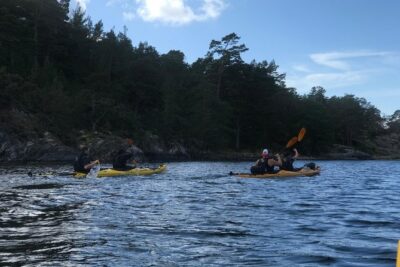
2-Day Small-Group Stockholm Archipelago Kayak Tour
Read our review →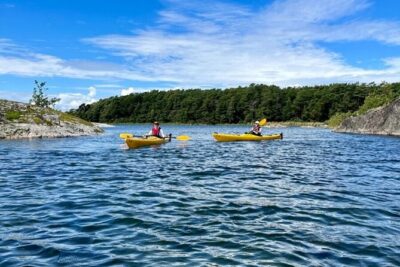

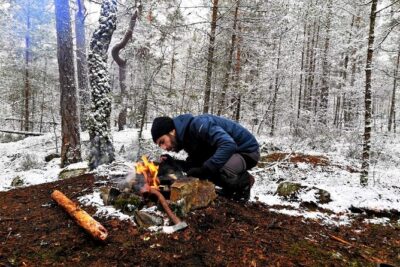
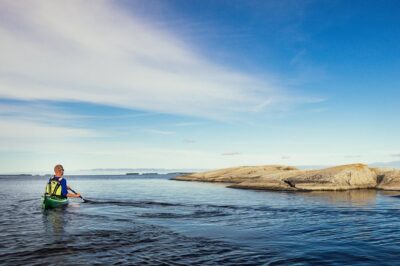
2-day kayaking adventure around Vaxholm in Stockholm Archipelago – self guided
Read our review →
2-Day Round Trip from Bergen: THE GRAND SOGNEFJORD – fjords, waterfalls, glacier
Read our review →Browse the lists this tour appears in