
Reviewed · WALKING TOURS
3-Hour Private Copenhagen Walking Tour
Copenhagen’s best introduction is on foot, and this tour strings together the city’s big sights without making you cross town at random. You begin by the HC Andersen statue near City Hall and finish in the royal quarter, passing from medieval squares and shopping streets to Christiansborg, Nyhavn, Marmorkirken, and Amalienborg.
I like the private format, since you can ask questions and steer the conversation toward architecture, royal life, politics, or Hans Christian Andersen. I also like the guides’ reported style: Lorena mixed facts with anecdotes, Andrés adjusted the walk to suit his group, and Alia and Nicolas added local stories beyond the standard landmarks.
The main consideration is the price: $189 per person is a serious spend for a three-hour walk, especially since food, drinks, and attraction admissions are not included. The route is also not suitable for wheelchair users or people with mobility or heart problems, and the Little Mermaid is described among the highlights but is not listed in the timed route.
Key points to know before you book
- Start at the HC Andersen statue: Meet by City Hall, facing the Tivoli sign.
- Finish in the royal quarter: The walk ends at Amalienborg Palace, near Marmorkirken.
- Expect about three hours on foot: The route covers roughly 3 to 4 kilometers at a leisurely pace.
- Hear more than landmark facts: Guides have been praised for anecdotes, architecture, politics, culture, and useful follow-up suggestions.
- Plan your own refreshments: Food and drinks are not included, though a Danish pastry or coffee break may be possible.
- Check the route carefully: The Little Mermaid is mentioned in the tour description, but the detailed itinerary does not schedule a stop there.
City Hall Square gives you a useful starting point

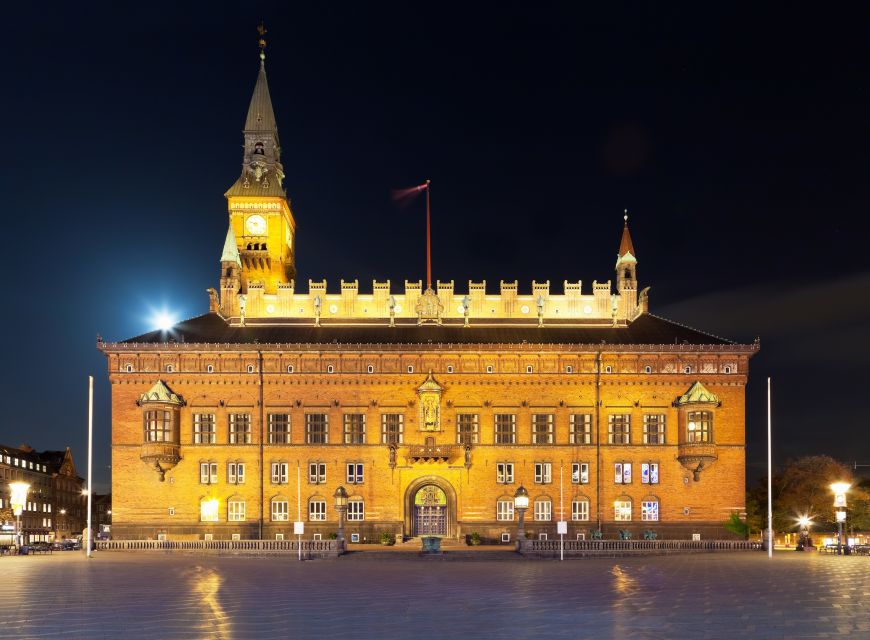
The meeting point is the HC Andersen statue by Copenhagen’s City Hall, facing the Tivoli sign. That is a practical place to begin because City Hall Square is easy to recognize and gives you an immediate sense of Copenhagen’s public life.
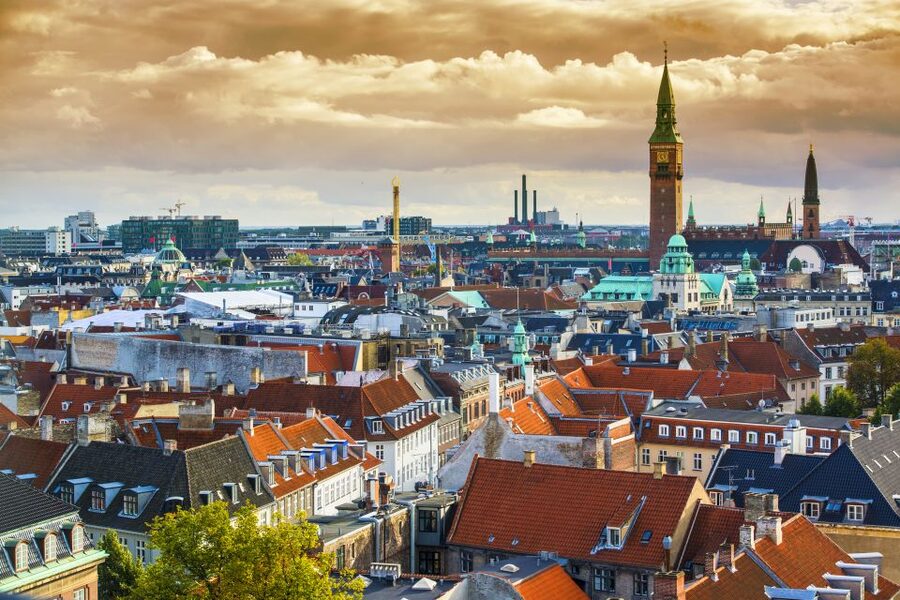
The square is more than a place to gather. It connects the modern city with the old center, and the City Hall building provides a strong first lesson in Danish civic architecture. Your guide uses the area to explain the building, its clock tower, and the role of the square in daily city life.
This opening is also helpful if Copenhagen is new to you. You can ask about restaurants, transport, museums, or which parts of the center deserve more of your own time. Since the walk is private, this is a good moment to tell the guide what interests you most.
The HC Andersen statue makes the meeting point easy to identify, but arrive with a little time to spare. The instructions say to wait at the statue by City Hall, facing the Tivoli sign. Comfortable shoes matter from the first step.
More Walking Tours in Copenhagen
- Private Walking Grand Tour of Copenhagen
★ 5.0 · 3,953 reviews - Copenhagen Highlights Walking Tour
★ 5.0 · 2,324 reviews - Politically Incorrect Private Highlights Walking Tour
★ 5.0 · 1,244 reviews
Strøget shows Copenhagen at street level
From City Hall, the route moves toward Strøget, one of Europe’s long pedestrian shopping streets. This is where Copenhagen becomes a city of small details: shopfronts, cafés, street performers, and the steady movement of people on foot.
I like this part because it helps you understand how the center works between major sights. You are not simply being taken from palace to palace. You are walking through the public spaces that connect them, with time to notice how locals use the city.
The guide can also give context to the commercial side of Copenhagen. Strøget has well-known shops and department stores, but the useful part of a guided walk is learning where the street fits within the older center. One past participant especially valued seeing a preserved tiny room inside the Magasin department store, associated with where Hans Christian Andersen wrote fairy tales. That detail gives the shopping street a literary link you might otherwise miss.
Do not expect a long shopping stop. The route allocates about 30 minutes to each main section, so Strøget is better for orientation, stories, and photographs than for serious browsing. If you want to shop, return later.
Gammeltorv and Nytorv add the old-city layer

Gammeltorv and Nytorv are included among the Copenhagen highlights, and these linked squares help explain the city’s older center. The names themselves are useful: Gammeltorv means Old Square, while Nytorv means New Square.
This is the kind of stop that benefits from a guide. A photograph alone will not tell you how the squares relate to the city’s development, public institutions, and changing street life. Your guide can connect the paving, buildings, and street plan to the wider story of Copenhagen.
The squares also break up the longer walk between City Hall and the palace district. You get a chance to pause, look up, and ask questions rather than march directly toward the next famous sight.
The route is leisurely, but three hours passes quickly. If you want detailed interior visits or long stops at every square, this tour may feel fast. Its strength is the overall picture, not a close architectural study of each building.
Christiansborg connects palace, parliament, and power
Christiansborg Palace is one of the most important stops because it brings royal and political Copenhagen together. The complex is home to the Danish Parliament, the Supreme Court, and the Royal Reception Rooms, so your guide can explain how these roles share one site.
That combination makes Christiansborg more interesting than a palace viewed only as a royal residence. You can hear about Danish government, court life, architecture, and the palace’s place in the capital. The stop at Højbro Plads adds another useful viewpoint as you approach the building.
The tour information describes a guided visit to Christiansborg, but the included service is the guide. It does not list admission tickets or an interior palace visit as included. I would therefore treat this as a guided exterior and area visit unless your booking details say otherwise, and ask the guide what can be entered during your time.
This is a strong point for visitors who want political history as well as royal stories. It is less suitable if your main goal is to spend hours inside palace rooms. You can always return separately if the interiors catch your interest.
A few more Copenhagen days worth weighing up
- Copenhagen: Highlights 3 Hour Bike Tour with a Local Guide
★ 4.8 · 2,312 reviews - Copenhagen: 3-Hour City Highlights Bike Tour with Guide
★ 4.7 · 1,239 reviews - Copenhagen Highlights 3 Hour Bike Tour with local Guide
★ 5.0 · 1,125 reviews - 3-hour Copenhagen City Highlights Bike Tour
★ 5.0 · 757 reviews
Nyhavn is colorful, but the story matters more than the postcard
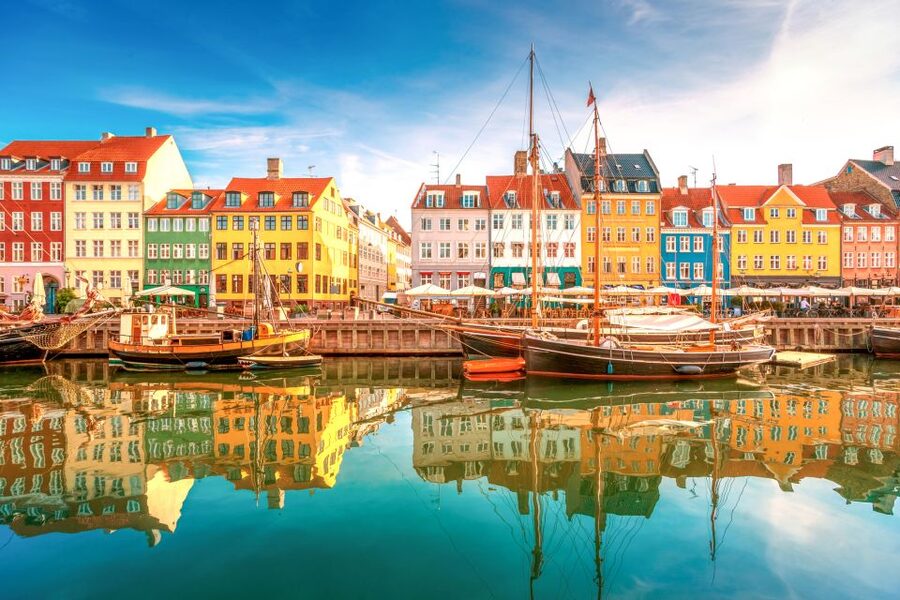
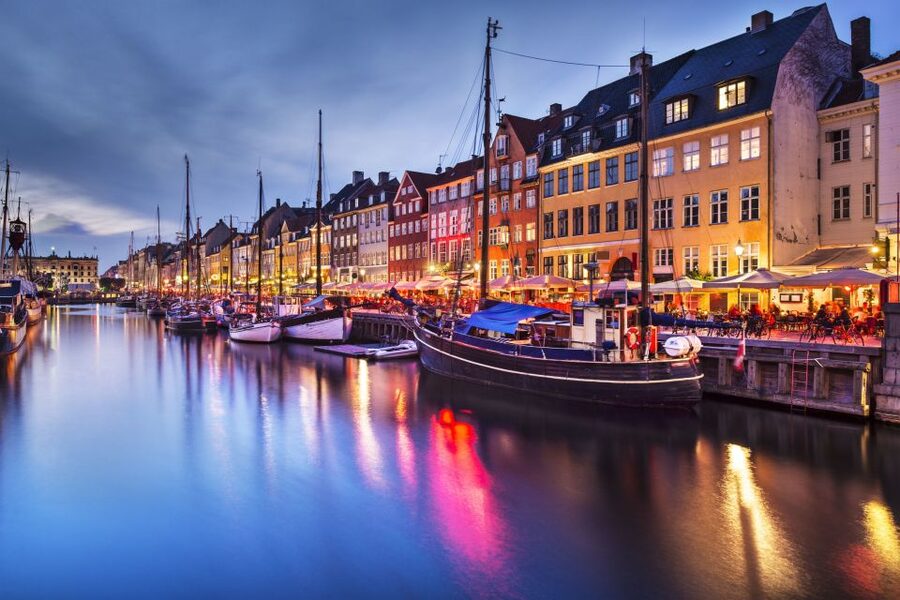
Nyhavn is Copenhagen’s most instantly recognizable scene: colorful townhouses along the canal, traditional wooden boats, cafés, and restaurants. The route gives it about 30 minutes, enough to see the harborfront, hear its story, and take photographs.
The useful context is the change in Nyhavn’s role. It began as a working trade port and later became a popular dining and walking district. That shift gives the waterfront more meaning than its painted façades alone.
Nyhavn is also where the tour’s pace may feel most social. You will have cafés nearby, but food and drinks are not included. If the guide has time, a quick coffee or Danish pastry break may be possible, though you should not count on a full meal during the three-hour route.
The tour description also names the Little Mermaid as a highlight. However, the detailed sequence lists Copenhagen, Nyhavn, Amalienborg, Marmorkirken, and Strøget, with no separate Little Mermaid stop. Ask about this before booking if the statue is essential to your plan. Its location may require a different route or extra time.
Amalienborg and Marmorkirken finish the walk well
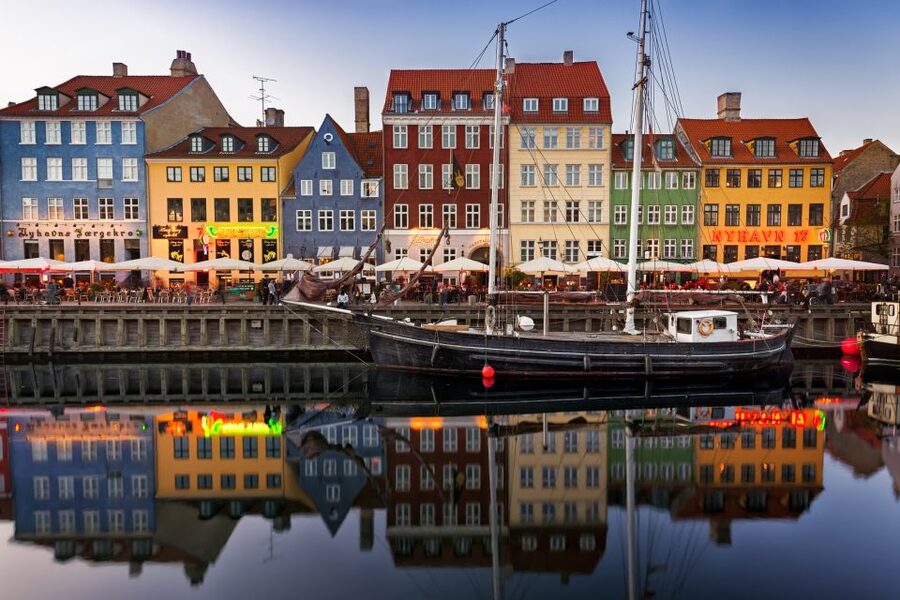
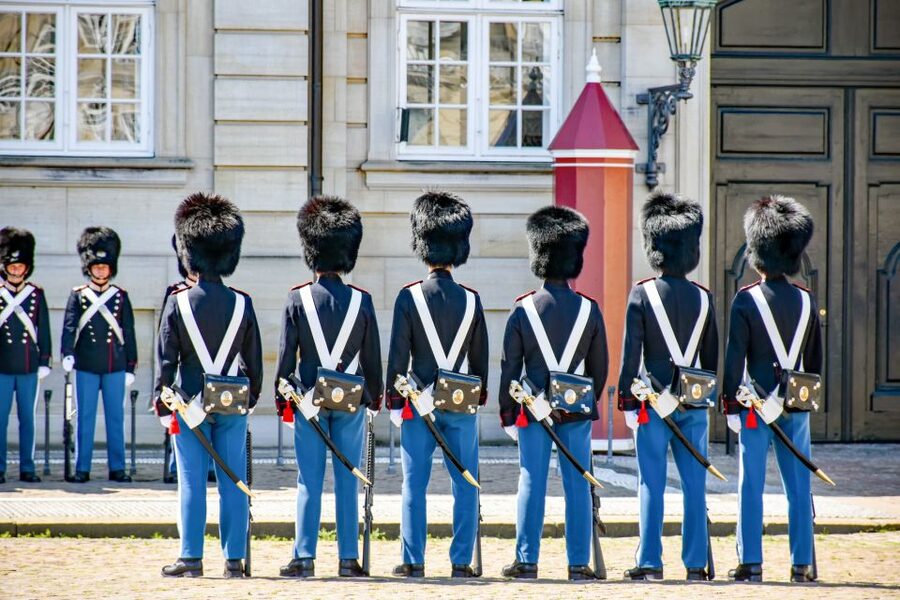
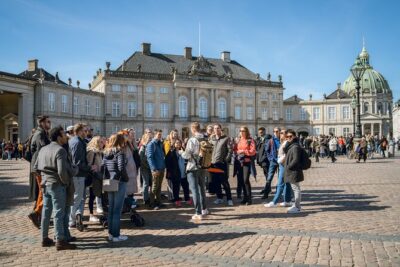
The tour ends at Amalienborg Palace, the official residence of the Danish royal family. The palace complex is arranged around a formal square, and the guide can explain the royal setting, the buildings around it, and Copenhagen’s continuing connection to the monarchy.
This is a good final stop because the route has moved from a civic square to a shopping street, then through political and royal landmarks. You finish with the polished architecture of the central royal district rather than being left at an ordinary street corner.
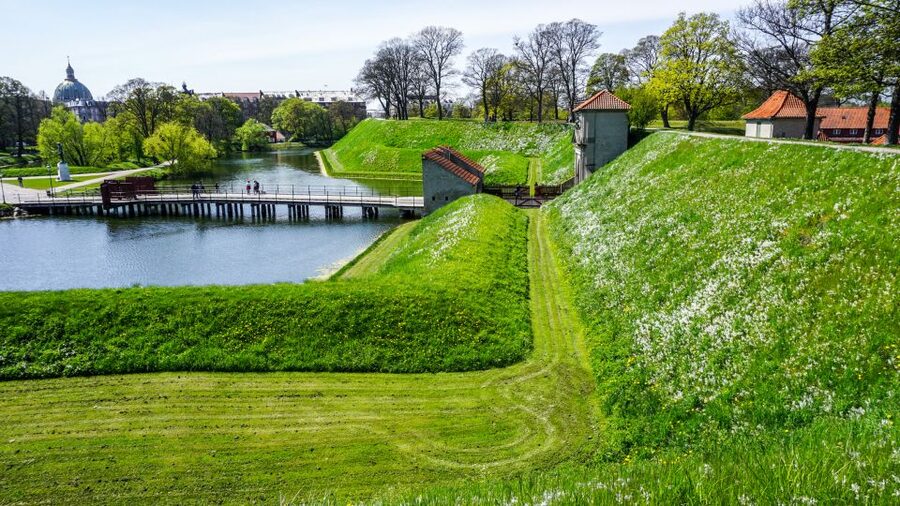
Marmorkirken, also called Frederik’s Church, is nearby and included as a guided stop. Its large dome gives the area a strong visual focus, and the guide can discuss its architecture and connection to the palace quarter.
The stated end point is Amalienborg Palace or a nearby landmark, while the detailed itinerary names Amalienborg as the finish. Plan your next move from there rather than assuming you will be returned to City Hall. That is convenient if you want to continue sightseeing in the central area, but less convenient if you need to collect luggage elsewhere.
The guides make the format more personal
The strongest part of this experience is the human element. The guide names connected with past tours include Lorena, Andrés, Alia, and Nicolas. Their reported strengths differ slightly, but the pattern is clear: stories, local context, and a willingness to respond to the group.
Lorena was praised for balancing historical facts with anecdotes. That is exactly what works well on a walking tour. A list of dates is hard to remember, while a short personal or cultural story can make a building stick in your mind.
Andrés was described as friendly, well informed about Copenhagen and its history, and willing to adapt the visit to what the group wanted to see and do. That flexibility is one of the main reasons to pay for a private tour instead of joining a fixed public walk.
Alia was appreciated for covering the key places while sharing her experience of the city. Nicolas brought enthusiasm and included both familiar landmarks and less obvious stops. You should not assume which guide you will receive, but these examples show the sort of approach the experience aims to provide.
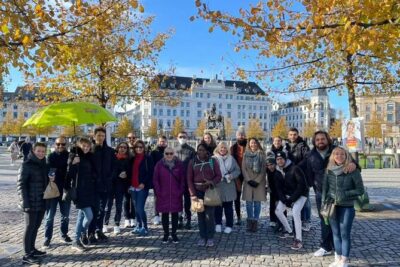
The English-language guiding is live, and the group is private. That means you can ask for clarification, slow down for photographs, or request more attention to architecture, royal history, Andersen, or everyday city life.
Three hours is enough for an overview, not every attraction
The route covers about 3 to 4 kilometers, or roughly 1.9 to 2.5 miles. At a leisurely pace, that is manageable for many people, with time for photographs and explanations.
Still, the tour covers a lot. City Hall Square, Strøget, Gammeltorv and Nytorv, Højbro Plads, Christiansborg, Nyhavn, Amalienborg, and Marmorkirken all compete for attention. If the Little Mermaid is added, the schedule becomes even tighter.
I would book this as a first look at Copenhagen. Afterward, you will know which areas deserve a longer return visit. I would not book it expecting admission to every palace, a long café stop, or detailed time inside each sight.
Wear comfortable shoes and dress for the weather. The activity is outdoors for much of its duration, and Copenhagen’s conditions can change quickly. Bring water, especially if you plan to keep sightseeing after the walk.
Is $189 per person a fair price?

At $189 per person, this is not a budget introduction. The price makes the most sense for a couple, family, or small private group that values personal attention and wants to shape the conversation around its interests.
You are paying for a three-hour English-language guide rather than transport, meals, or a package of entrance tickets. That makes the value depend heavily on how much you use the private format. Ask questions, request local recommendations, and explain your priorities at the start.
For a first visit, the route saves you from working out how the central sights fit together. It also gives you useful context that you may miss while walking alone. For a large group splitting the cost, the private arrangement may feel more reasonable. For a solo visitor comparing it with a low-cost public walk, the price will be harder to justify.
Free cancellation up to 24 hours before the tour and the reserve-now, pay-later option make planning less rigid. Those terms are useful if your Copenhagen schedule is still changing, but they do not change the central price question: book this for the guide and flexibility, not for included extras.
Who should choose this Copenhagen walk?
I would recommend it to first-time visitors who want a clear introduction before exploring alone. It also suits families and private groups that prefer to ask their own questions rather than follow a large fixed group.
It is a good fit if you enjoy history, architecture, royal sites, politics, and literary connections. Andersen fans may especially like the focus on his statue and the possible department-store story.
I would be cautious if mobility is limited. The activity is specifically not suitable for wheelchair users, people with mobility impairments, or people with heart problems. If you need a fully accessible route, this is not the right choice based on the stated restrictions.
Should you book it?
Book this private Copenhagen walk if you want a well-paced overview, personal guiding, and a route that links the city’s main central sights. The best reasons are the guide interaction, the mix of civic, royal, literary, and waterfront landmarks, and the chance to request the kind of stories you care about.
Skip it if $189 per person feels too high for a walking orientation, or if your priority is entering palace interiors, eating along Nyhavn, or seeing the Little Mermaid with certainty. Before paying, confirm whether that statue is included and what Christiansborg access means.
For the right group, this is a practical first morning or afternoon in Copenhagen. You finish near Amalienborg with a better sense of the center and a useful list of places to explore at your own pace.
FAQ
How long is the Copenhagen walking tour?
The tour lasts three hours.
Where does the tour begin?
It begins at the HC Andersen statue by Copenhagen City Hall. Wait there facing the Tivoli sign at City Hall.
Where does the tour finish?
The detailed route finishes at Amalienborg Palace. The general meeting information also allows for a nearby landmark.
Which language is the tour offered in?
The live tour guide speaks English.
Is this a private tour?
Yes. The group type is listed as private.
What sights are included?
The route includes Copenhagen City Hall area, Strøget, Nyhavn, Amalienborg Palace, and Marmorkirken. The broader highlights also include Gammeltorv, Nytorv, Højbro Plads, and Christiansborg Palace.
Is the Little Mermaid included?
The Little Mermaid is named among the tour highlights, but it is not included as a separate stop in the detailed itinerary. Ask the provider to confirm this before booking.
Are food and drinks included?
No. Food and drinks are not included. If time allows, you may be able to stop briefly for a Danish pastry or coffee.
Can I cancel for a refund?
You can cancel up to 24 hours in advance for a full refund. The reserve-now, pay-later option lets you book without paying immediately.
Just added around Copenhagen
- walking tour – Copenhagen and Christiansborg 3 hours★ 4.0 · 7 reviews
- The Hunt For The Six Forgotten Giants★ 5.0 · 45 reviews
- Copenhagen Walking Tour with Food Testing (smorrebrod dish & snap)★ 4.5 · 10 reviews
- The Philosopher’s Last Walk: An audio tour on the life of Søren Kierkegaard★ 4.5 · 5 reviews
- Small Group Guided Food Tour and Street Art Visit to Norrebro★ 5.0 · 9 reviews
- The Six Forgotten Giants Trolls Hunt with Minibus★ 4.5 · 27 reviews
- The Foodie Tour of Copenhagen★ 5.0 · 14 reviews
- The Forgotten Giants Private Tour★ 5.0 · 3 reviews
Walking Tours, compared.

Past & Present Small Group Guided Walking Tour
Read our review →
Walking Tour in Bergen of the Past and Present
Read our review →
Browse the lists this tour appears in