
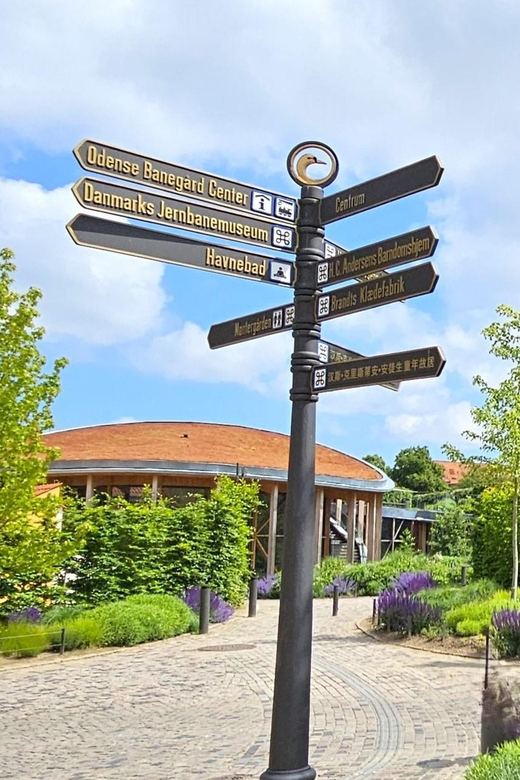
Reviewed · CITY TOURS
Odense: City walk – The new green Odense – City development
Odense is easier to understand when you look past H.C. Andersen and the pretty old streets. This two-hour walk follows the city’s change from an industrial center into a greener, more people-focused city, with the harbor, new districts, and former traffic corridors all part of the story. I like the focus on real urban decisions, not just postcard sights.
I also like the small-group format and the chance to ask direct questions about Danish schools, housing, transport, and daily life. Guides including Jørn Asmussen and Johan are praised for friendly conversation and strong German, as well as English. The main consideration is simple: you’ll walk about 4 kilometers, or roughly 5,500 steps, and the tour suits curious minds more than visitors seeking a classic monument-by-monument introduction.
Key points to know before booking

- See the six-lane road that disappeared: Walk through a completed city area built where a major traffic route once cut through central Odense.
- Follow the route from old center to harbor: The walk connects historic Odense with its modern waterfront and former industrial zones.
- Ask about more than buildings: The discussion includes education, affordable housing, infrastructure, economics, and everyday Danish life.
- Expect a genuine local conversation: The small group makes it easier to ask questions and follow topics that interest you.
- Plan for 4 kilometers: This is a steady city walk, not a short stroll between nearby sights.
- Choose English or German: The tour is offered in both languages, with guides such as Jørn Asmussen and Johan.
Why this Odense walk is different

Many city tours give you a useful list of old buildings, famous residents, and dates. This one asks a more interesting question: how does a city decide what it wants to become?
Odense is presented here as a city in transition. You start in the old center, then walk toward the harbor and through areas shaped by industrial use, road planning, new housing, and environmental goals. The result is less about collecting sights and more about seeing the choices behind the city you are standing in.
That approach is valuable if you have already spent time exploring Odense on your own. You may recognize streets and squares from earlier in your visit, but now they connect to a larger story about how people move, where they live, and how a city tries to bring young residents back into its center.
The tour also reaches beyond urban design. You can ask about the Danish education system, the economy, infrastructure, and ordinary life. One particularly wide-ranging conversation even included an aside about life in Greenland. That tells you something about the style: this is a discussion-led walk, and your questions can shape part of the experience.
The tone is local and conversational rather than formal. Jørn Asmussen is one guide associated with the experience, while Johan has also led it. Both are described as friendly and easy to talk with, and German-speaking visitors have found the language clear and strong. English is also available.
More Walking Tours in Denmark:
- Private Walking Grand Tour of Copenhagen
★ 5.0 · 3,953 reviews - Copenhagen Highlights Walking Tour
★ 5.0 · 2,324 reviews - Politically Incorrect Private Highlights Walking Tour
★ 5.0 · 1,244 reviews
Meeting the guide at Overgade 3
The walk begins at Overgade 3, on the pedestrian street in central Odense. Look for the small ruin in the pedestrian area and a guide carrying a KnowledgeWalks sign.
This is a sensible starting point. You are not being asked to find a remote bus stop or an obscure suburban address. The area is small, so locating the guide should be straightforward, but arrive with enough time to look around rather than rushing in at the start.
From here, the route makes a round trip. You finish back at Overgade 3, which is useful if you want to continue exploring the center, stop for food, or return to your accommodation.
Albani Torv and the old city setting

The first substantial section takes place around Albani Torv and lasts about 30 minutes. This is where the walk establishes the contrast between old Odense and the newer city being built around it.
Rather than treating the historic center as a separate museum piece, the guide uses it as the starting point for explaining change. You can expect discussion of how the center connects to the harbor, how traffic has shaped the city, and why modern planning has focused on making central areas more suitable for people who live there.
This stop is likely to work best if you pay attention to the relationship between the buildings, streets, and open areas. The focus is not only on what something looks like, but on how the space functions.
That may disappoint you if you want a detailed architectural tour of every old façade. It is not designed for that. The value comes from context, especially the link between the old center and the modern projects you see later.
Donkey Republic and the practical side of movement

The next section takes about 30 minutes and includes Donkey Republic. The name points to the bicycle-sharing system, but the larger subject is urban mobility and infrastructure.
This part helps you think about how people get around Odense and how transport fits into the city’s plans. The tour’s broader message is that a greener city requires more than planting trees. It also depends on how streets are used, how people reach the center, and how the city balances cars, bicycles, walking, housing, and business.
You should expect a walking discussion rather than a technical demonstration. The supplied information does not promise a bike ride or a bicycle rental, so do not book this expecting to cycle. You will be on foot throughout the route.
I see this as one of the more useful sections for anyone interested in city planning. You can ask practical questions that rarely appear in a standard sightseeing tour, such as how infrastructure affects daily routines and how a city tries to make central housing work for younger residents.
A few more Denmark days worth weighing up
- Copenhagen: Canal Cruise with Guide
★ 4.6 · 9,115 reviews - Copenhagen: Hop-On Hop-Off Bus Tour with Boat Tour Option
★ 3.9 · 4,122 reviews - From Copenhagen: Lund and Malmö 2-Country Tour
★ 4.7 · 2,772 reviews - Copenhagen: Highlights 3 Hour Bike Tour with a Local Guide
★ 4.8 · 2,312 reviews
The Port of Odense and the industrial-to-green shift

The harbor is the centerpiece of the modern transformation. You spend about 30 minutes here, looking at an area that symbolizes Odense’s move away from its older industrial identity.
A harbor can tell you a lot about a city. It reveals where industry once needed space, how land use changes over time, and why waterfront areas often become targets for new development. Here, the harbor helps explain the declared goal of creating a greener city with room for innovation and creativity.
This is also where the tour’s before-and-after material becomes useful. The guide has used earlier photographs to show how parts of Odense looked before the changes. Seeing old images alongside the present-day streets gives the walk a clear visual thread.
Do not expect a polished waterfront attraction with a long list of formal sights. The appeal is in seeing the harbor as a working part of the city’s story. The guide explains what has changed and why, giving you a way to read construction, open space, and new buildings with more care.
The tour also raises a practical question about affordability. Odense wants young people to find housing in the center, not only commute into it. That makes the walk more grounded than a simple celebration of new architecture. You hear about the social aim behind development, not just its appearance.
Storms Pakhus and the former industrial area

The 15-minute stop at Storms Pakhus, home to Odense Street Food, adds a more everyday layer to the route. The building and its surroundings connect food, social life, and the reuse of former industrial space.
This is a good place to notice how old working areas can be given new purposes. Instead of discussing redevelopment only through planning terms, the walk brings you to a place people use for eating and meeting. The change from industrial function to public gathering space is easier to grasp when you are standing inside the new use.
The stop is brief, so you should not assume that there is time for a full meal. The food hall may tempt you, but the tour continues and finishes its loop. If you want to eat there, plan to return later or allow extra time after the walk.
Storms Pakhus also gives the tour a welcome change of pace. After the larger ideas of roads, housing, and harbor redevelopment, you see how urban change can affect ordinary leisure. It is a small stop, but it makes the city’s transformation feel less abstract.
H.C. Andersen Haven and the route back

The final 15-minute section includes H.C. Andersen Haven before the group returns to Overgade 3. The garden brings the route back toward the familiar Odense associated with the city’s most famous writer.
This closing section provides a useful contrast. You have spent much of the walk looking at current development and future goals, then finish near a place tied to Odense’s cultural identity. The city is not replacing its old character with something entirely new. It is trying to add new ways of living around the historic core.
The return to Overgade 3 completes a roughly circular route. Since the total walking distance is about 4 kilometers, wear comfortable shoes and expect a steady pace. The tour is not described as difficult, but it is more exercise than a short central orientation.
What the $31 price buys you

At $31 per person, this is reasonably priced if you want interpretation rather than a quick list of sights. You are paying for two hours with a local guide, a small group, and a route that connects several parts of Odense that can otherwise feel unrelated.
The value is strongest for visitors who enjoy asking questions. A guide can explain why a road was removed, how housing goals shape development, or what the city’s transport choices mean in daily life. That kind of information is difficult to pick up by walking alone.
The value is weaker if you mainly want entrance to attractions, formal historical narration, or a large number of famous landmarks. There are no museum tickets, meals, or transport rides included. This is a guided walking conversation, and its worth depends on how much you care about the ideas behind the city.
The small-group setting matters here. With fewer people, you have more room to ask about your own interests, and the guide can respond rather than delivering a fixed speech. The two-hour length is also well judged: long enough to reach the harbor and redevelopment areas, but short enough to fit into a day of sightseeing.
Flexible booking adds some practical value. You can reserve and pay later, and cancellation is free up to 24 hours before the activity for a full refund. Starting times vary, so check availability when choosing your date.
Who will enjoy this walk most

I would recommend this tour to you if you like understanding how places work. It is especially suitable for:
- Visitors who have already seen central Odense and want a second layer
- Students and professionals interested in planning, housing, transport, or environmental policy
- People who prefer local conversation to a scripted sightseeing route
- German-speaking visitors who want a strong German-language explanation
- Couples or small groups who enjoy asking detailed questions
- Anyone curious about how Danish cities handle change
Families may enjoy it if older children or teenagers are interested in cities and society, but the supplied information does not give a recommended minimum age. Young children who need constant entertainment may find two hours of urban discussion slow.
You should also be comfortable walking. The route covers about 4 kilometers and includes several parts of the city rather than staying within one compact square.
English, German, and the small-group feel
The tour is offered in English and German. This is more than a minor booking detail. A discussion about urban policy, education, economics, or daily life is easier to follow when the guide can explain ideas naturally in your preferred language.
The guide’s personality also matters. The experience has been praised for friendly conversation, clear German, and the ability to answer questions without making the walk feel stiff. Jørn Asmussen is specifically associated with the tour, and Johan has also guided it.
Because the group is small, you may find the experience feels closer to a local meeting than a standard group excursion. That can be a major benefit, but it also means the exact emphasis may change with the questions people ask. Go ready to participate rather than simply follow along silently.
My booking advice
Book this walk if you want to understand why Odense looks the way it does today, especially the connection between the old center, the harbor, new districts, and the former six-lane road corridor. It is a smart choice after a few days of independent sightseeing, when you already know the basic streets and want the story behind them.
Skip it if you want castles, museum interiors, or a fast introduction to famous landmarks. The tour is built around ideas, local knowledge, and conversation.
For $31, the strongest reason to go is the access to a local guide who can connect urban change with housing, education, transport, and daily life. Put on comfortable shoes, meet at the small ruin on Overgade, and bring questions. That is how you get the most from it.
FAQ
Where does the city walk begin?
The meeting point is Overgade 3, 5000 Odense, on the pedestrian street. Look for a small ruin and a guide carrying a KnowledgeWalks sign.
Where does the tour finish?
The route is a round trip and returns to Overgade 3.
How long is the tour?
The walking tour lasts two hours.
How far do I walk?
The route is approximately 4 kilometers, equal to about 5,500 steps.
What languages are available?
The tour is available in English and German.
Is this a private tour?
The activity is offered as a small-group tour. The information provided does not state that it is private.
What places does the route include?
The route includes Overgade, Albani Torv, Donkey Republic, the Port of Odense, Storms Pakhus, Odense Street Food, and H.C. Andersen Haven.
Does the tour include food?
No food is listed as included. Storms Pakhus, which contains Odense Street Food, is visited briefly during the walk.
What does the tour focus on?
It focuses on Odense’s change from an industrial city toward a greener city with new urban development and innovation. It also covers education, daily life, infrastructure, the economy, and housing.
Can I cancel the booking?
You can cancel up to 24 hours in advance for a full refund. You can also reserve now and pay later, keeping your plans flexible.
Just added around Denmark
- E Biking Adventure to Kronborg Castle★ 5.0 · 3 reviews
- SUP – Stand Up Paddle – Kitesurfing – Wingfoil & Kitefoil courses★ 5.0 · 14 reviews
- walking tour – Copenhagen and Christiansborg 3 hours★ 4.0 · 7 reviews
- a day at North Zealand Castle Tour★ 4.5 · 19 reviews
- Climbing and events★ 4.5 · 10 reviews
- The Hunt For The Six Forgotten Giants★ 5.0 · 45 reviews
- Copenhagen Walking Tour with Food Testing (smorrebrod dish & snap)★ 4.5 · 10 reviews
- The Philosopher’s Last Walk: An audio tour on the life of Søren Kierkegaard★ 4.5 · 5 reviews
City Tours, compared.

City Archipelago Sightseeing Cruise with Guide
Read our review →
Group Walking Tour – City Highlights – 2 Hours
Read our review →
City Sightseeing Copenhagen Hop-On Hop-Off Bus Tour
Read our review →
Browse the lists this tour appears in