

Reviewed · WALKING TOURS
Oslo Walking Tour with Passionate Founder, Shared or Private
Oslo’s best introduction may be a walk that links its new waterfront to its old center. This tour starts beside the Opera House, follows Bjørvika’s striking buildings and floating saunas, then moves through Kvadraturen, Akershus Fortress, Karl Johan street, and Aker Brygge. I especially like the personal route and the stop at the fortress, where fjord views give you a quick sense of Oslo’s setting.
I also like that the guide does more than point at monuments. You get practical advice about the National Museum, Nobel Peace Centre, restaurants, shopping, and fjord trips. The main consideration is the walking: uneven ground, stairs, and a long route make this a poor fit for wheelchair users or anyone with limited mobility.
Key points to know before you book
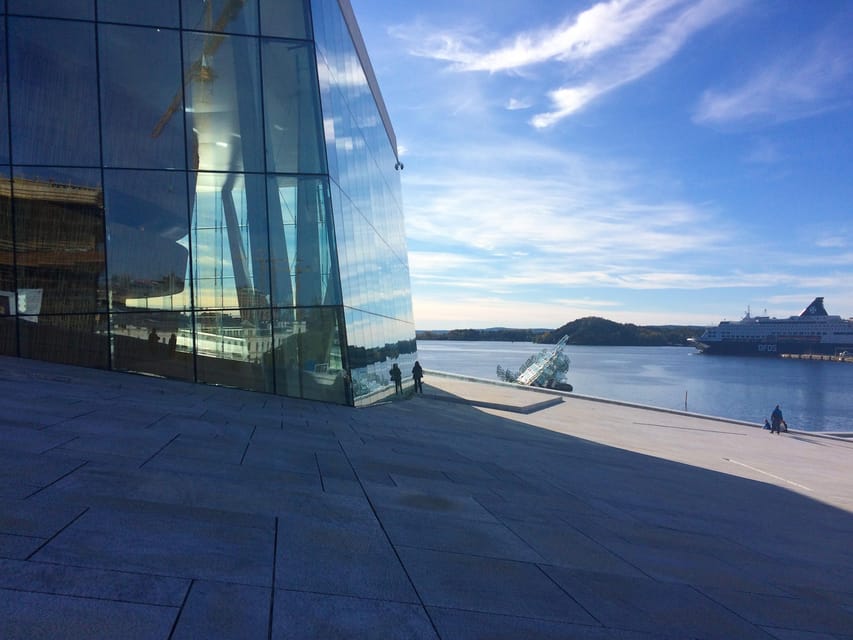
- Start beside the Opera House: Meet at the Creature from Iddefjord sculpture outside Deichman Bjørvika Library.
- See old and new Oslo together: The route connects Bjørvika’s modern architecture with Kvadraturen’s older streets and Akershus Fortress.
- Expect a personal guide: Independent guide Romy, and at times Tony, lead small groups with local advice and historical context.
- Get a high viewpoint: Akershus Fortress offers broad views across the Oslofjord and, on a clear day, toward Holmenkollen Ski Jump.
- Add Vigeland Park: The optional extension takes you by tram to Oslo’s famous sculpture park and adds about 50 minutes of guided touring.
- Plan for the weather: Comfortable shoes and clothing for rain, cold, or wet park paths are essential.
Why this walk gives you a useful first look at Oslo
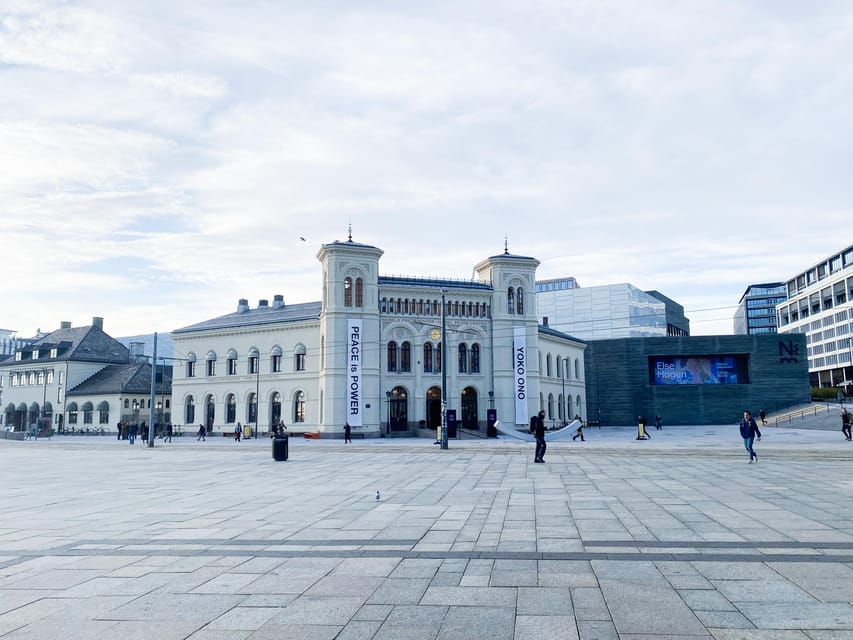
A city tour can either leave you with a blur of names or give you a mental map you can use for the rest of your stay. This one is designed for the second purpose. You move from the waterfront toward the historic center, then continue along Oslo’s main ceremonial street before finishing near Aker Brygge.
That route matters because Oslo’s character is spread across several areas. Bjørvika shows the city’s newer ambitions, Kvadraturen gives you older urban history, and Karl Johan connects political, cultural, and royal buildings. The walk also gives you a few practical anchors, so you can return later to the National Museum, City Hall, the Nobel Peace Centre, or the fjord boat area.
The guide’s approach is personal rather than scripted for a large coach group. The tour allows up to 10 people, but the usual group is smaller. That can make it easier to ask questions, stop for a photo, or adjust the conversation to your interests.
Romy is the main guide named for this experience, and Tony also leads tours. The strongest praise has focused on the guides’ warm manner, storytelling, patience, and ability to explain both Oslo’s past and its current culture. One useful detail is that Romy has lived in other countries, which can add a wider point of comparison when she talks about Norwegian customs and city life.
More Walking Tours in Norway
- Oslo Nature Walks: Island Hopping Tour
★ 4.8 · 2,713 reviews - Oslo Nature Walks: Island hopping
★ 5.0 · 570 reviews - Oslo: Best of Oslo Walking Tour
★ 4.5 · 458 reviews
Meeting the guide at Bjørvika’s Creature from Iddefjord
Your meeting point is the sculpture called Creature from Iddefjord, outside the main entrance to Deichman Bjørvika Library. This is close to the Opera House, but do not expect a taxi driver to recognize the sculpture by name.
If you arrive by taxi, ask for Deichman Bjørvika Library or the main entrance of the Opera House. The meeting place is described as a quiet spot that is not shared by several tour companies, so finding the guide should be fairly simple once you reach the library.
Starting here is a smart choice. Deichman Bjørvika, the Opera House, and the Munch Museum are all part of the city’s modern waterfront district. You begin with architecture, public spaces, and Oslo’s plans for redeveloping Bjørvika before turning toward older parts of town.
Bjørvika and the Opera House: Oslo’s modern face
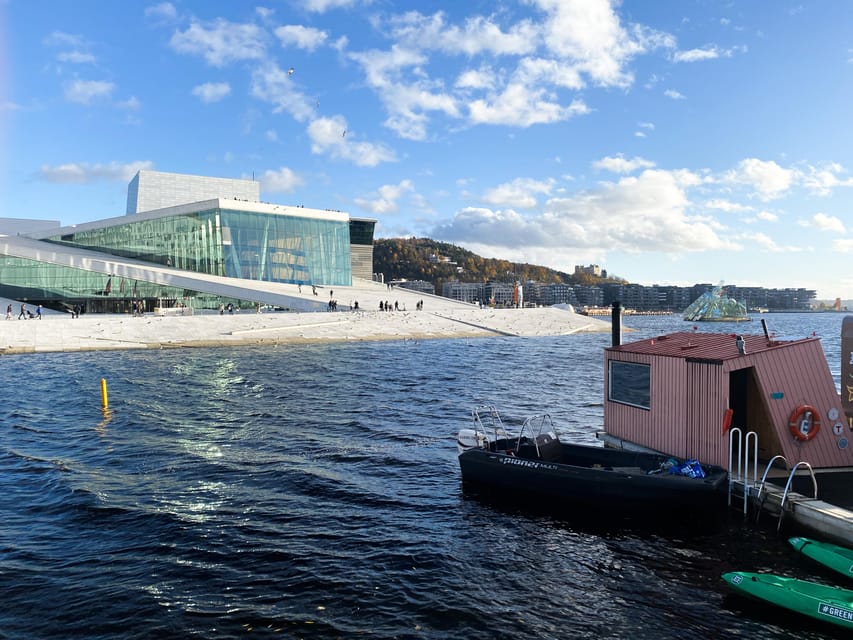
The Norwegian National Opera House is the first major stop, with about 15 minutes set aside for a visit. Its broad, sloping roof is built for walking, and the building has become one of Oslo’s defining sights.
The tour uses the Opera as more than a photo stop. You hear how Bjørvika has changed through a large urban development project, with the Opera, Munch Museum, library, and other new buildings forming a modern waterfront district. This is a useful introduction if you want to understand why Oslo can feel both compact and newly built at the same time.
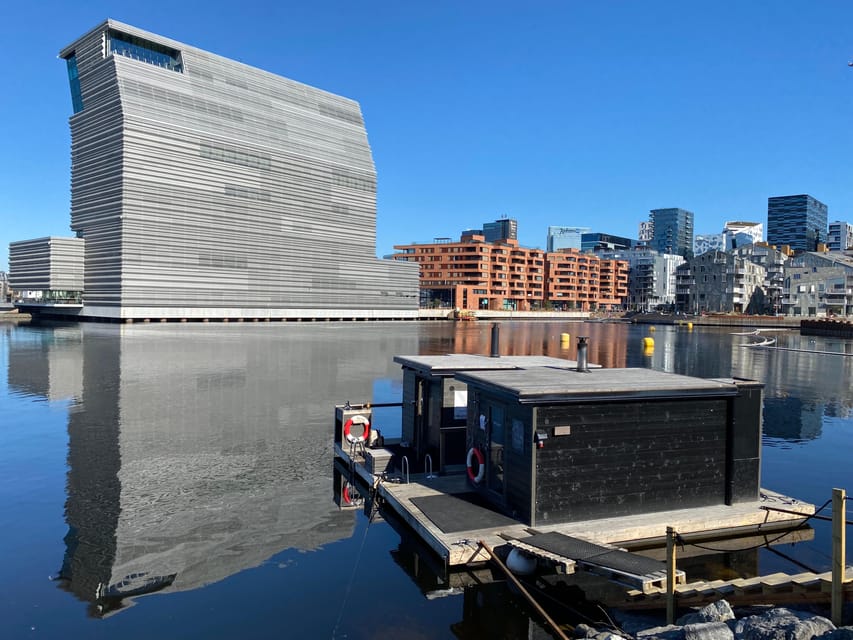
The route then continues along Langkaia for roughly 10 minutes. Here, the waterfront views become part of the experience. You may also hear about Oslo’s growing floating sauna scene, which gives the harbor a distinctly local and slightly quirky touch.
The waterfront section suits photographers especially well. There are bold lines, open views, and contrasts between water, glass, older buildings, and public spaces. Allow yourself a little time before the tour to take photos, but keep in mind that the walk follows a schedule.
Kvadraturen and the story of Christiania
From Bjørvika, the route heads toward Kvadraturen, where around 15 minutes is spent looking at the older city center. This is where the guide explains how Oslo came to be known as Christiania for just over 300 years.
That name change is not a minor footnote. It helps explain the layers of Oslo’s identity and gives context to the streets you are walking through. The tour does not treat the city as a set of unrelated buildings. Instead, it connects political changes, urban growth, and the way Oslo has developed around the harbor and fortress.
You should expect plenty of walking between stops, with short visits rather than long indoor admissions. That is useful for a first orientation, but it also means this is not the right tour if you want extended time inside every attraction.
More Walking Tours in Oslo
- Oslo: Guided Walking Tour of Central Oslo
★ 4.7 · 438 reviews - Oslo: Historic Myths & Legends Evening Walking Tour
★ 4.8 · 408 reviews - Taste of Oslo Walking Tour
★ 4.5 · 282 reviews - Central Oslo Guided Walking Tour with Local Guide
★ 4.5 · 278 reviews
Akershus Fortress and the best viewpoint on the route
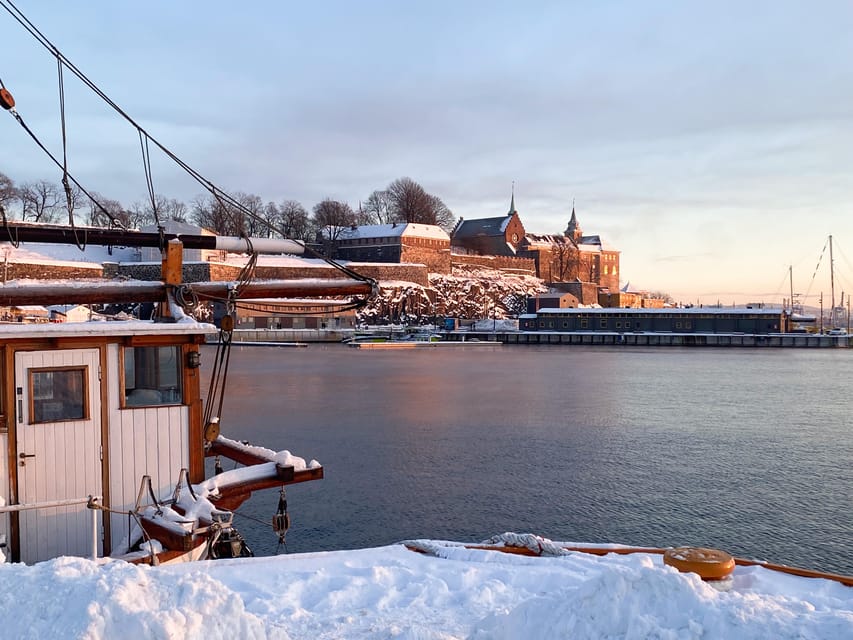
Akershus Fortress is one of the most rewarding sections of the walk. You spend about 15 minutes on the grounds and climb to their highest point for views over the Oslofjord.
The viewpoint gives you a better sense of Oslo than a street-level walk alone. You can look across the water and see how closely the city is tied to the fjord. On a sunny day, you may even spot the Holmenkollen Ski Jump.
The fortress stop does involve an ascent, and the overall route includes walking on historic grounds. Wear shoes with good support, especially if the weather is wet. The schedule allows time for the view and the guide’s explanation, but not an extended visit to every part of the fortress.
This is one of the places where the tour’s mix of history and geography works best. You are not only hearing about Oslo’s past. You are also seeing the position that helped shape the city.
Karl Johan street, Parliament, and the Royal Palace
The walk continues toward Karl Johan street, Oslo’s main central thoroughfare. About 15 minutes is set aside here, followed by views of key buildings connected with Norway’s government, culture, and royal life.
You pass the Norwegian Parliament, the National Theatre, and the Royal Palace. The guide explains how the city and country are governed, educated, and entertained, giving you a useful civic overview without turning the walk into a formal lecture.
The Parliament and Royal Palace are pass-by stops rather than lengthy interior visits. If you want to tour the inside of either building, you will need to arrange that separately. Still, seeing these places along one route helps you understand how compact central Oslo is.
Karl Johan is also the practical part of the tour for shoppers. If you spot shops or cafés you want to revisit, make a note of them. The guide can point out areas worth returning to after the walk.
City Hall and Aker Brygge: where the tour becomes practical
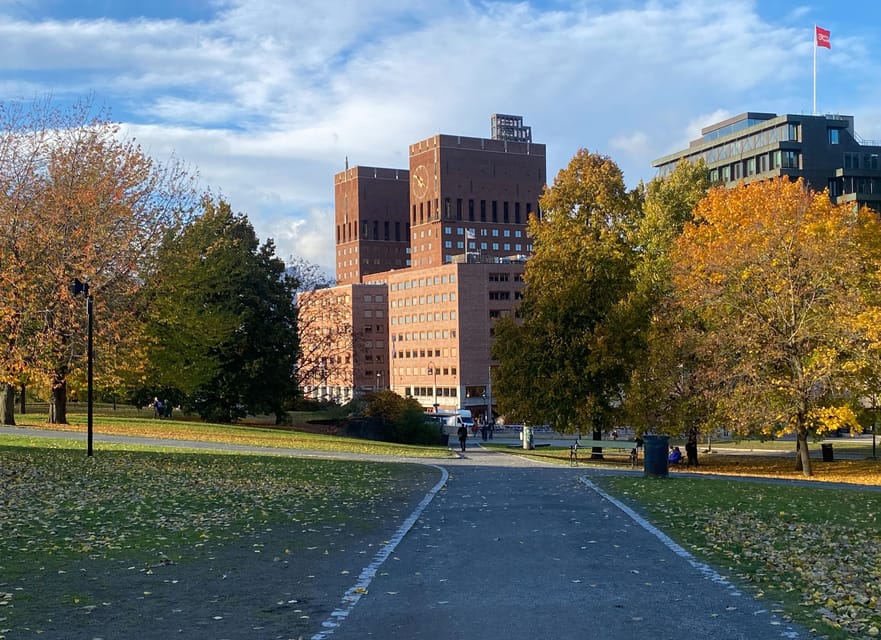
The route then heads toward Oslo City Hall and Aker Brygge. Both are listed as pass-by stops, with about 15 minutes associated with each part of the route.
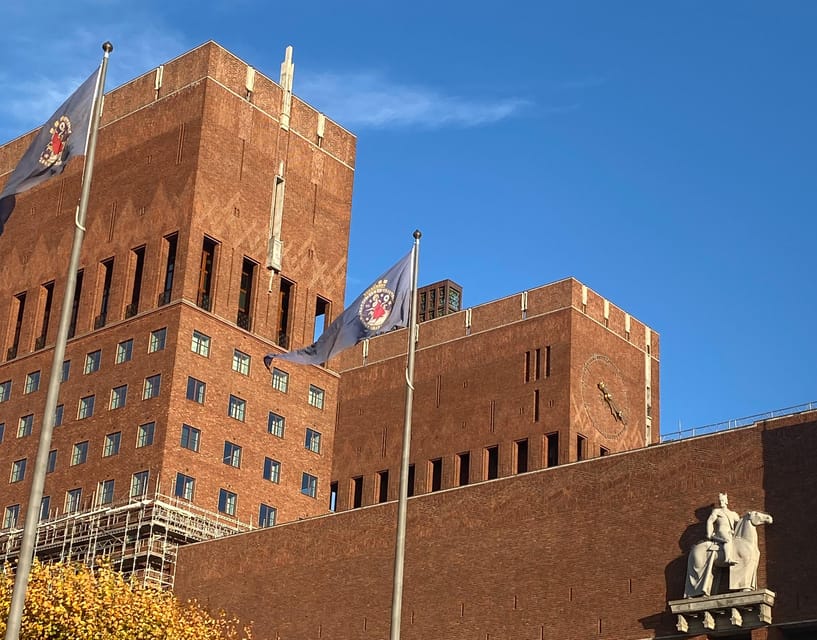
City Hall is an important stop for anyone interested in Norwegian public life. The route also gives you access to advice about the Nobel Peace Centre nearby. If art is high on your list, the guide can help you decide how to use your time at the National Museum.
Aker Brygge is a natural place to finish the main walk. This waterfront district has restaurants and access to Oslofjord excursions, so it is a useful place to continue your day. The guide provides suggestions for eating and for choosing a fjord tour, which can save you from making those decisions without context.
The main walking route lasts about 135 minutes, though the stated duration can extend to 3.5 hours depending on the option and timing. Check the departure details carefully when booking, especially if you have a train, cruise, museum reservation, or dinner planned afterward.
The Vigeland Park extension adds art and extra walking
You can add a visit to Vigeland Sculpture Park. After reaching Aker Brygge, you board a tram, with the tram ticket included in the added option. The extension ends at the park’s main entrance or at Kronprinsesse Märthas plass, depending on the arrangement.
The guided visit to the park takes about 50 minutes. Vigeland Park is known for being the world’s largest sculpture park created by a single artist, and it gives the tour a different feel from the first half. Instead of moving through streets and civic buildings, you spend time with a large group of human figures and public sculptures.
Several people who chose the extension particularly valued it, and I can see why. The park adds a major Oslo sight that is not part of the standard central walk. It also gives the guide room to discuss art in a more focused way.
The drawback is timing. The extra stop turns a fairly brisk city introduction into a much longer outing. The park can be muddy after rain, and winter ice may make parts of the visit uncomfortable. Bring suitable footwear, and ask in advance about shoe spikes if winter conditions concern you.
What the guide adds beyond the route
The route itself covers many of Oslo’s headline sights, but the guide’s local advice is where the experience earns its price. You get suggestions for restaurants, museums, shopping, and fjord trips that relate to the exact places you see.
The personal format also helps if you are new to Oslo. You can ask how to spend the rest of your day, which sights deserve more time, or how the city’s newer districts fit with its older center. That kind of conversation is hard to get on a large group tour.
The guides are praised for being easy to spend an afternoon with, for answering questions patiently, and for making history approachable. Romy in particular is described as a strong storyteller who can explain Oslo’s past and present without losing the human side of the city.
Still, the value depends on what you want. If you prefer to explore at your own pace, stop inside several museums, or take long photo breaks, the fixed route may feel brisk. If you want a clear introduction with a person who can help shape the rest of your visit, the format makes more sense.
Price, group size, and who gets the best value
At $60 per person, the tour is not the cheapest way to walk around central Oslo. You are paying for a guide-led route, local context, a small group, and practical recommendations rather than admission to a series of attractions.
I think the price is reasonable for a first day in Oslo, particularly if you are traveling alone, as a couple, or with friends who want to cover a lot of ground. A private option can be especially useful if you want to ask many questions or tailor the conversation to architecture, history, art, or food.
The tour works well for:
- Solo visitors who want company and a city overview
- Couples looking for a personal introduction
- Friends who want an efficient route through central Oslo
- Photographers interested in modern buildings and fjord views
- First-time visitors who want advice for the rest of their stay
- People deciding between museums, restaurants, and fjord trips
It is not suitable for wheelchair users or people with mobility impairments. The route includes substantial walking, a climb within Akershus Fortress, and possible uneven or wet surfaces.
Weather, footwear, and small practical details
Bring comfortable shoes. This is essential even for the main route, and it matters more if you add Vigeland Park.
Wear clothing suited to the forecast. Oslo weather can change quickly, and the experience spends much of its time outdoors. Rain does not necessarily ruin the walk, but it can make the fortress grounds and park paths less comfortable.
Pets require advance checking. Do not assume that bringing one will be fine.
The tour is offered in English and German. You can cancel up to 24 hours ahead for a full refund, and the reserve now, pay later option gives you some flexibility while finalizing your Oslo plans.
Should you book Oslo By Heart?
Book this tour if you want to get your bearings quickly, learn how Oslo’s districts connect, and receive useful advice from an independent guide. The route has a good balance of new architecture, old streets, political buildings, public art, and fjord views.
I would choose the Vigeland extension if you have at least half a day and want to see one of Oslo’s major art sights with guidance. I would skip it if your schedule is tight, the weather is poor, or you prefer a slower visit to the central route.
For most first-time visitors, the main walk is the safer choice. It gives you a strong overview without requiring a full day, and the small-group format should leave room for questions. If you want a large number of interior visits or need step-free access, choose a different way to see Oslo.
FAQ
Where does the Oslo walking tour start?
It starts at the Creature from Iddefjord sculpture outside the main entrance to Deichman Bjørvika Library.
What should I tell a taxi driver?
Ask to be dropped at Deichman Bjørvika Library or the main entrance of the Oslo Opera House. Taxi drivers may not recognize the sculpture by name.
How long does the main walking tour last?
The activity information gives a duration of about 135 minutes, with available options ranging up to 3.5 hours. The longer timing relates to tour options such as the Vigeland Park extension.
How many people can join?
The maximum group size is 10 people, though the usual group is smaller. Private tours are also available.
Which languages are offered?
The tour is offered in English and German.
Is Vigeland Sculpture Park included?
It is an optional add-on. The extension includes tram tickets and a guided visit of about 50 minutes.
Where does the Vigeland option finish?
The extended tour can finish at Kronprinsesse Märthas plass or at the main entrance to Vigeland Sculpture Park.
Is food included?
No. Food and drinks are not included, though the guide gives restaurant suggestions near the end of the route.
Is hotel pickup included?
No. Hotel pickup and drop-off are not included.
Is the tour suitable for wheelchair users?
No. The tour is not suitable for wheelchair users or people with mobility impairments.
What should I bring?
Bring comfortable shoes and weather-appropriate clothing. If you add Vigeland Park, bring footwear suited to muddy paths after rain. In winter, you can contact the guide in advance about possible shoe spikes if conditions are icy.
Just added around Oslo
- Oslo Winter Highlights Bike Tour★ 5.0 · 36 reviews
- Unknown war. Oslo and Norway during 1940-45★ 5.0 · 74 reviews
- The Viking Planet Museum – Mini Group (4 adults)★ 4.0 · 16 reviews
- 4 hours Best View of the Oslofjord Winter Edition★ 4.0 · 15 reviews
- The Viking Planet Museum Ticket★ 4.0 · 197 reviews
- The Ultimate Norwegian Skiing Experience★ 5.0 · 16 reviews
- The Ultimate Study of the Human Form at Vigeland’s Sculpture Park with a Local★ 4.0 · 14 reviews
- The Oslo Beer Adventure★ 4.5 · 11 reviews
Walking Tours, compared.

Past & Present Small Group Guided Walking Tour
Read our review →
Walking Tour in Bergen of the Past and Present
Read our review →
Browse the lists this tour appears in