
Reviewed · WALKING TOURS
Oslo Nature Walks: Island Hopping Tour
Oslo’s best surprise may be how quickly the city gives way to quiet islands. For $69, you ride public ferries across the fjord, walk forest paths and rocky shores, and see a nearly 1,000-year-old abbey, old cannons, empty beaches, and brightly painted cabin gardens.
I like the mix of ferry rides and walking, because you get moving views of Oslo as well as time on shore. I also like the way the guides add local context, from Viking-era Norway to island life today. The main catch is the walking: about 7 kilometers over gravel, dirt, and stones, with weather that can turn cold, wet, or icy.
Key points at a glance

- Hovedøya’s medieval abbey ruins: Walk through the remains of a powerful religious center founded by English monks nearly 1,000 years ago.
- Three islands in summer: From April through August, the route usually includes Hovedøya, Gressholmen, and Lindøya.
- Two islands in winter: From September through March, the tour lasts about 3.5 hours and visits two islands instead.
- A real walking outing: Expect roughly 7 kilometers, or about 10,000 steps, on uneven paths and stones.
- Cabins, beaches, and fjord views: Lindøya offers traditional wooden homes, flower gardens, and lookout points above the water.
- Strong guide element: Guides such as Patrick, Shaf, Giovanni, Neil, Jon, and Carolina have been praised for history, humor, local tips, and careful group management.
Why this Oslo island tour is worth your time

Many visitors see Oslo from the streets, museums, and waterfront. This tour shows you the city’s other face: a scattering of wooded islands just offshore, reached by the same public ferries used by local residents.
That matters because the ferry is not a sightseeing boat built only for tourists. You board at Oslo’s central harbor, travel across the fjord, and arrive at islands where the pace changes at once. The city remains visible, but the sounds and sights become simpler: trees, water, old paths, small houses, and open shore.
I especially like the balance between information and fresh air. Your guide might explain how Oslo moved from its Viking past into Christian Europe, then point out a sheep pasture or a good place for a photograph. The subject changes often enough to keep the walk lively.
The tour costs $69 per person. That is fair value if you would otherwise need to work out the ferry routes, choose trails, find the historic remains, and understand what you are seeing. You are paying for the guide as much as the transport. The public ferries themselves are part of Oslo’s ordinary transport system, but the guided route turns a simple boat ride into a connected half-day outing.
The strongest reason to book is access to several different sides of the fjord in one trip. The main reason to think twice is the physical effort. This is not a gentle harbor cruise with a few steps on shore. You walk around 7 kilometers on gravel, dirt paths, and stones.
More Walking Tours in Norway
- Oslo Nature Walks: Island hopping
★ 5.0 · 570 reviews - Oslo: Best of Oslo Walking Tour
★ 4.5 · 458 reviews - Oslo: Guided Walking Tour of Central Oslo
★ 4.7 · 438 reviews
Start at Rådhusbrygge 4 and leave Oslo behind
The meeting point is near the public ferry departure area at Platform E, beside the restaurant Fisketorget. Arrive 10 minutes early, since the tour begins with a public ferry and the group needs to board together.
The first ride takes about 10 minutes. It is short, but useful. You get an immediate sense of how close the islands are to central Oslo. The change is not remote or difficult to reach, yet it feels far removed from the traffic and buildings around the harbor.
The ferry rides also give your legs a break between walks. This is one of the tour’s practical strengths. Instead of walking continuously for four hours, you alternate between shore trails, short boat rides, viewpoints, and stops for explanation.
Your guide leads in English. Names reported for this experience include Patrick, Shaf, Giovanni, Carolina, Neil, Jon, Kat, and others, but the guide is not fixed. The best guides make the route feel conversational, with time for questions and local suggestions. Shaf, Giovanni, Patrick, and Jon have been singled out for a mix of humor, history, and practical advice about Oslo.
Hovedøya combines abbey ruins with open coastline
Hovedøya means Main Island, and it is the most important historical stop. The island is known for the remains of a Cistercian abbey founded almost 1,000 years ago by English monks.
The ruins are unusually useful for understanding Norway’s change from the Viking era to a Christian European kingdom. Rather than seeing only a few scattered stones, you walk among chambers and rooms that show the scale of the abbey and the power it once held.
A guide adds real value here. Without context, medieval walls can blur together. With an explanation of how the monks arrived, why the abbey mattered, and how Christian institutions shaped Oslo, the remains become easier to picture.
After the abbey, the walk moves through birch woods and sheep pastures. That shift is part of the charm. One moment you are looking at old stonework, and soon you are following a rural path with the water nearby.
The island also carries military history. You reach old ramparts and cannons connected with the Napoleonic Wars in the 19th century. From there, the route continues along rugged coastline, with beach stops and lookout points.
Hovedøya is likely the best all-round stop on the tour. It has the strongest historical content, wooded trails, open shore, and several places to pause. The drawback is that the hour allocated here can feel short if you want to examine the ruins slowly, take photographs, and linger at the coast.
Gressholmen adds nature and old airport history

The next ferry takes about 10 minutes to Gressholmen. This island is known for its nature reserve and its mix of natural and military history.
The most unusual detail is the remains of Oslo’s first airport. You walk among old buildings and sites linked to the island’s military past, giving the stop a different character from Hovedøya. Here, the story is less about medieval Christianity and more about modern Norway’s earlier infrastructure and defense.
Gressholmen also offers a quieter, more open setting. The nature reserve makes it a good place to notice the fjord’s smaller details rather than simply chase major sights. The guide may point out places that are easy to miss if you explore without local direction.
The stop lasts about an hour in the summer route. That gives you enough time for a guided walk and photographs, but not for a long, leisurely wander in every direction. Keep your attention on the guide and the group’s pace, especially since ferries run to a schedule.
More Walking Tours in Oslo
- Oslo: Historic Myths & Legends Evening Walking Tour
★ 4.8 · 408 reviews - Taste of Oslo Walking Tour
★ 4.5 · 282 reviews - Central Oslo Guided Walking Tour with Local Guide
★ 4.5 · 278 reviews - Oslo: Snowy Forest Torchlight Walk with Campfire
★ 4.6 · 254 reviews
Lindøya shows Oslo’s summer cabin culture
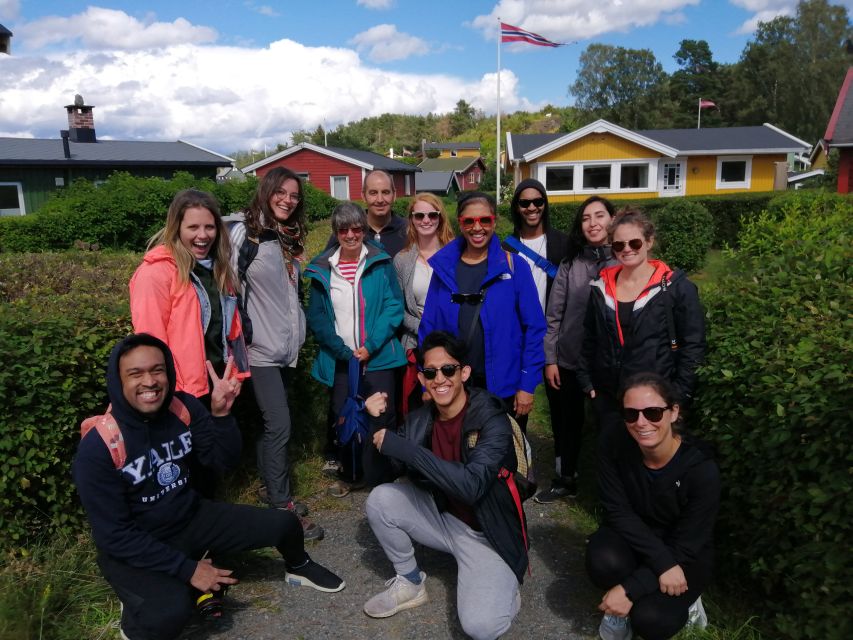
After another ferry ride of about 15 minutes, the summer route reaches Lindøya, one of Oslo’s cabin islands. This is where the tour feels most like a visit to a local holiday retreat.
Traditional wooden homes line paths bordered by gardens. Flowers, small houses, and bright colors contrast with the surrounding fjord and wooded hills. The charm is not grand or polished. It comes from seeing how people use a small island for simple summer life.
The guide leads you along village paths and up to lookout points. You may find the island more appealing for its atmosphere than for a single landmark. It is a chance to see a side of Norway that does not fit neatly into a museum display: seasonal homes, gardens, footpaths, and a close relationship with the water.
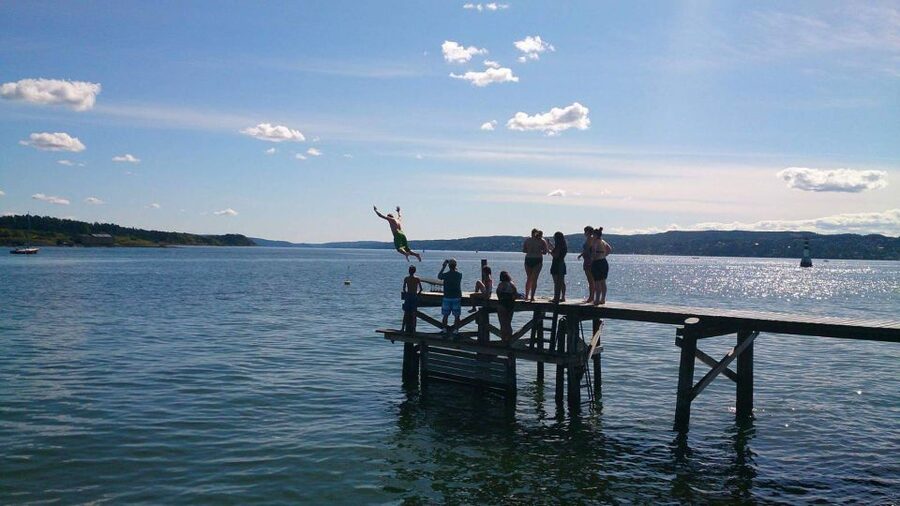
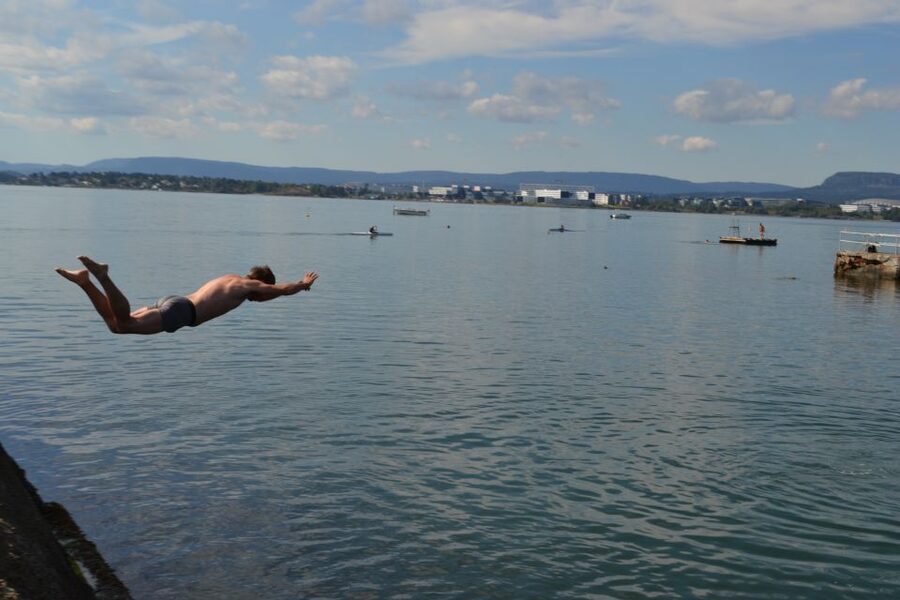
Lindøya is also the usual setting for a picnic break. In the warmer months, bring your own lunch, water, and perhaps swimwear and a towel if you want to make use of a beach stop. A kiosk may be open for snacks or ice cream, depending on the day and its opening hours, but you should not rely on it as your meal plan.
From October through March, the route is shorter and warm drinks are provided by the guide. Coffee, tea, hot chocolate, and ginger biscuits have been part of the cold-weather break. That small touch matters when you have been walking outdoors in winter.
The ferry ride back gives you Oslo’s best entrance
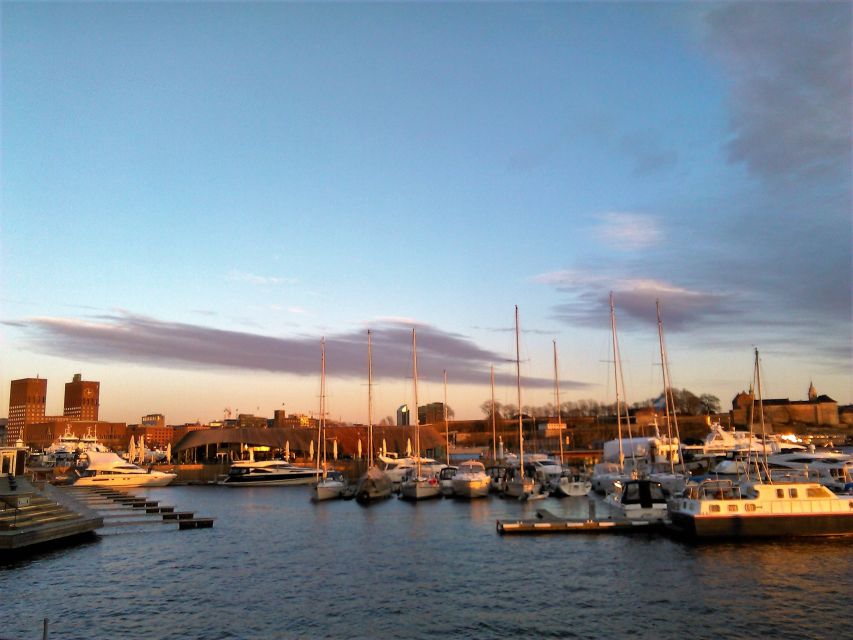
The return ferry takes about 10 minutes and brings you back to Rådhusbrygge 4. The final approach to the city is part of the experience, not just transport back to the meeting point.
You get views of Akershus Fortress, City Hall, and the renewed waterfront around Aker Brygge. After several hours of trees, cabins, beaches, and old ruins, the return to the harbor gives the outing a satisfying shape.
This is also a good reason to take the tour near the start of your stay. Guides often offer suggestions for places to eat or walks to try in Oslo. Shaf, Neil, Jon, and others have been praised for practical city advice as well as island information. You can use the ferry ride back to mark places you want to visit later.
Summer and winter are different experiences

The season changes the tour in a meaningful way.
From April through August, expect 4 to 4.5 hours and three islands: Hovedøya, Gressholmen, and Lindøya. This is the fuller version, with more time for cabin gardens, beaches, and summer scenery. Bring a packed lunch, water, sun protection, and a backpack that leaves your hands free.
From September through March, expect about 3.5 hours and two islands. The exact pair can vary, but Hovedøya and Lindøya are commonly part of the colder-season route. The shorter schedule reduces the time outside, and warm drinks are supplied.
Winter can be striking, but you need proper clothing. Several outings took place in cold, wet, rainy, or icy conditions. One guide supplied crampons on a particularly slippery day, but you should not assume that equipment will always be available. Wear sturdy trail shoes, bring rain gear, and dress in layers.
Rain does not remove the scenery, but it does change the experience. Paths can be slick, and the open ferry deck can feel cold. If you dislike outdoor walking in poor weather, summer is the safer choice. If you enjoy crisp air, quiet paths, and a hot drink after a chilly walk, winter has its own appeal.
How hard is the 7-kilometer walk?
The route is manageable for a reasonably active person, but the distance deserves attention. The tour covers around 7 kilometers, or roughly 10,000 steps, over gravel, dirt paths, and stones.
You should wear good walking shoes, not casual sandals or smooth-soled city shoes. The terrain is not described as technical hiking, but uneven ground can be tiring, especially in rain or ice.
The guide usually controls the pace and includes rest stops. Neil was specifically praised for adjusting the pace for a person with a knee injury, and several guides have been noted for checking that no one falls behind. Still, this is a group activity. You need to be comfortable walking for long stretches and staying with the group.
The tour is not suitable for children under 9 or wheelchair users. It is best for older children, adults, couples, solo visitors, and anyone who wants nature without arranging a full day outside Oslo.
What the guides add to the experience
You can ride public ferries to Oslo’s islands without booking a tour. That is an important point. If you are happy with independent exploring and do not need historical explanation, you may prefer to buy your own ferry ticket and walk at your own pace.
The guided version earns its price through the stories and organization. Guides have explained the abbey, Oslo’s Viking-to-Christian transition, military sites, geology, Norwegian culture, and the meaning of nature in Norwegian life.
The tone varies by guide, but the strongest examples combine facts with warmth. Patrick has been described as friendly and funny. Giovanni has offered detailed background and kept an eye on the group. Shaf has mixed local suggestions with history. Carolina has been praised for her stories and friendly manner. One guide, Lola, even sang Norwegian folk songs during the walk.
You should not book expecting one specific person unless the operator confirms it. But you can reasonably expect an English-speaking guide who leads the route, keeps track of ferry timing, and explains what you are seeing.
Is $69 good value?
At $69, I see this as good value for a first visit to Oslo, especially if you want an easy way to reach the fjord islands without planning the route yourself.
The price includes the guided tour and public ferry tickets. In the colder months, it also includes warm drinks. Food is not included, and you need to bring lunch from April through September.
The value is strongest if you would otherwise spend time researching ferry connections, finding the abbey, locating the old airport remains, and choosing a suitable walking route. The guide also adds local tips that you would not get from simply riding the ferry.
The value is weaker if your main goal is a relaxed boat trip. This tour spends much of its time walking, and the schedule leaves limited time for lingering at each site. You are buying an active half-day outing, not a luxury cruise.
Practical preparation for a better day
Bring comfortable trail shoes, water, and a small backpack. In the warm months, pack lunch, swimwear, a towel, and an extra layer for the boat.
Rain gear is not included. Oslo weather can shift, so a waterproof jacket is more useful than an umbrella on narrow paths and windy ferry decks.
Arrive 10 minutes early at Platform E near Fisketorget. Keep your ticket information ready and avoid arriving at the last moment, since the group must board a public ferry.
The tour has free cancellation up to 24 hours before departure, and you can reserve now and pay later. Starting times vary, so check availability for your date.
Who should book the Oslo island-hopping tour?
Book it if you want nature, history, and local life in one half-day. It is particularly good for a first Oslo visit, a second day after seeing the main museums, or anyone who wants a break from the city center without arranging a complicated trip.
It suits you if you enjoy walking, ferry rides, old ruins, small homes, and changing scenery. The high rating of 4.8 from 2,713 reviews reflects a very consistent strength: guides make the outing feel personal, informative, and well managed.
Think twice if you need step-free access, dislike uneven paths, have limited walking stamina, or want a slow sightseeing cruise. Also check the season carefully. The three-island summer version offers the fullest route, while the two-island winter version is shorter but can be cold and slippery.
For most active visitors, I would book it early in an Oslo stay. You get a clear picture of the fjord, useful advice for the rest of your visit, and a memorable look at the city’s island life for less than the cost of many full-day excursions.
FAQ
Where does the Oslo island-hopping tour start?
The tour starts at Rådhusbrygge 4, near the public ferry departure point at Platform E beside the restaurant Fisketorget.
How long does the tour last?
From April through August, it lasts about 4 to 4.5 hours. From September through March, it lasts about 3.5 hours.
How many islands does the tour visit?
The warmer-season route visits three islands, usually Hovedøya, Gressholmen, and Lindøya. The colder-season route visits two islands.
What should I bring?
Bring comfortable trail shoes, water, a small backpack, and suitable clothing for the weather. From April through September, bring your own lunch for the picnic stop. Swimwear and a towel are also suggested.
Is food included?
Food is not included. A kiosk may be open for snacks or ice cream, depending on weather and opening hours. From October through March, the guide provides warm drinks.
How much walking is involved?
You walk approximately 7 kilometers, or about 10,000 steps, on gravel, dirt paths, and stones. Good trail shoes are recommended.
Is the tour suitable for children or wheelchair users?
The tour is not suitable for children under 9 years old or wheelchair users.
Just added around Oslo
- Oslo Winter Highlights Bike Tour★ 5.0 · 36 reviews
- Unknown war. Oslo and Norway during 1940-45★ 5.0 · 74 reviews
- The Viking Planet Museum – Mini Group (4 adults)★ 4.0 · 16 reviews
- 4 hours Best View of the Oslofjord Winter Edition★ 4.0 · 15 reviews
- The Ultimate Norwegian Skiing Experience★ 5.0 · 16 reviews
- The Ultimate Study of the Human Form at Vigeland’s Sculpture Park with a Local★ 4.0 · 14 reviews
- The Viking Planet Museum Ticket★ 4.0 · 197 reviews
- The Oslo Beer Adventure★ 4.5 · 11 reviews
Walking Tours, compared.



Past & Present Small Group Guided Walking Tour
Read our review →
Walking Tour in Bergen of the Past and Present
Read our review →
Browse the lists this tour appears in