
Reviewed · RIB BOAT TOURS
Skjervøy: Whale Watching with RIB Boat and Local Guide
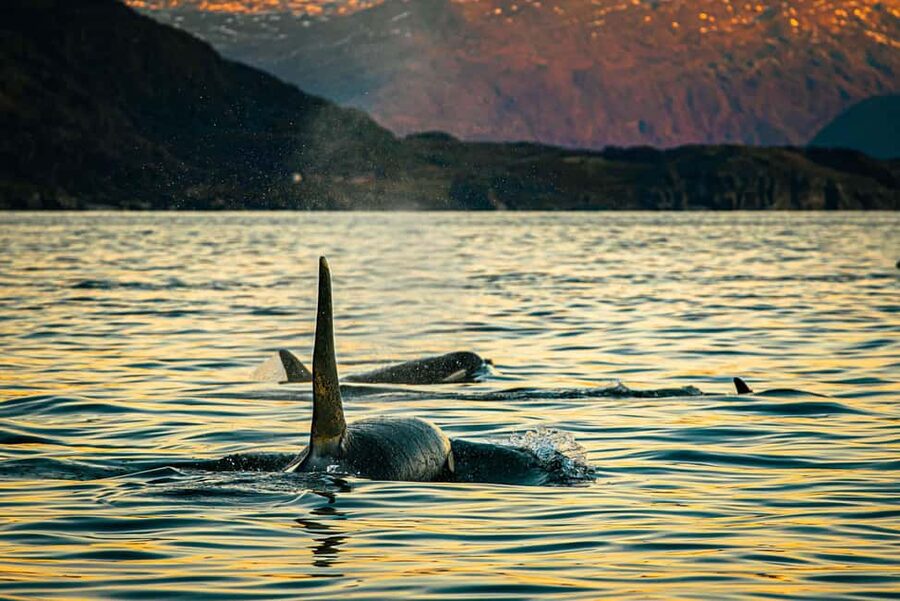
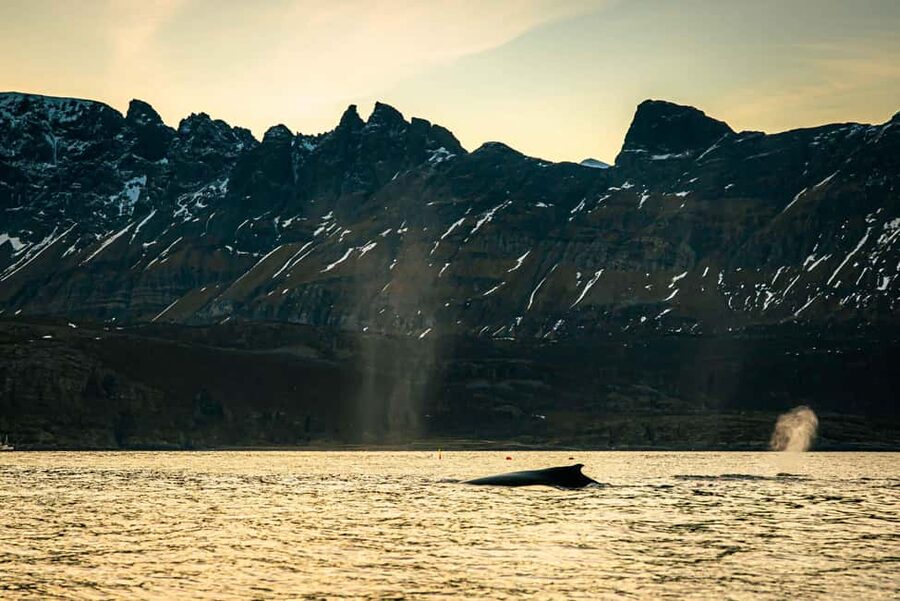
The main draw is simple: orcas can come remarkably close as they work together around the herring, while humpback whales surface in the same cold northern waters. From Skjervøy, you ride a powerful RIB into a fjord and coastal setting framed by snow-covered mountains.
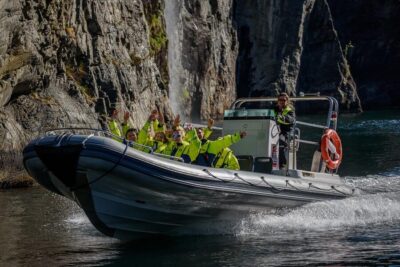
I like the combination of a small, lively boat and a guide who actively searches for whales rather than simply circling one spot. I also like the practical touches: warm suits, boots, hats, goggles, and hot chocolate with cookies afterward. The catch is the cold. Even with the supplied gear, you need proper gloves, neck protection, and warm layers.
Key points
- Orcas at feeding time: You may see family groups working together to catch herring, sometimes close to the boat.
- A fast RIB ride: The boat makes the trip exciting, but spray and waves can be rough.
- Viktor’s local guiding: He has been praised for finding whales, explaining their behavior, and recognizing some orcas by name.
- A short seasonal window: Tours run from roughly mid-October through February, when whales follow herring north.
- Full cold-weather kit: Suits, thermal footwear, hats, life jackets, and goggles are provided, but bring your own warm gloves and neck covering.
- Tromsø connection: Arctic Route buses run daily between Tromsø and Skjervøy, making this possible as a longer day trip.
Why Skjervøy is the place for this whale safari
Skjervøy sits in northern Norway, well beyond Tromsø, where seasonal herring draws large numbers of whales. The timing matters. This is not a year-round sightseeing cruise with a general promise of marine life. It is a winter whale safari built around a specific feeding season, usually from the middle of October through February.
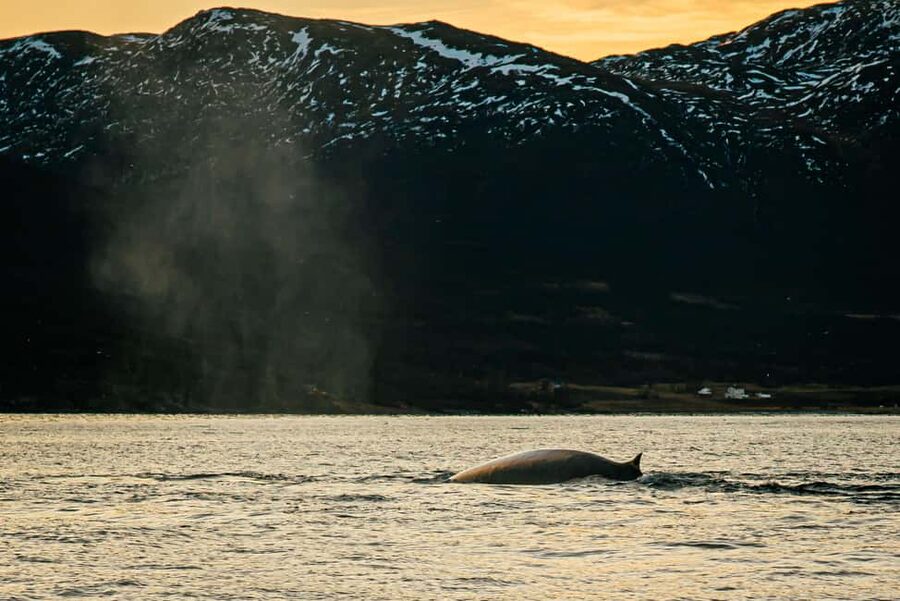
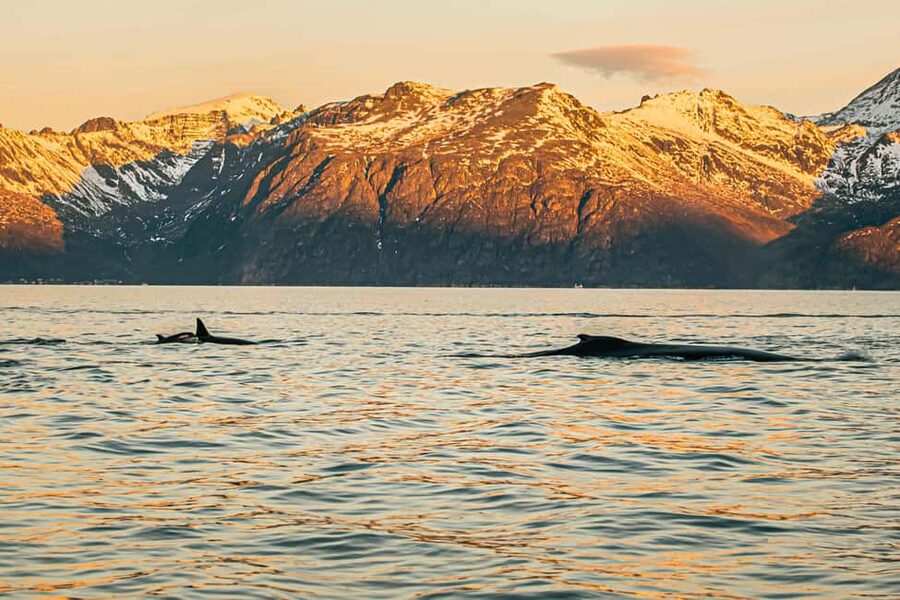
That seasonal pattern gives the trip its focus. Orcas follow the herring and may gather in family groups. Humpback whales arrive for the same food source and can appear alone or in small groups. Fin whales have also been seen during the season, adding another possible species to the day.
I like that the setting is part of the reward. You are not only looking at the sea. You are moving through northern Norway with snowy mountains, cold air, and wide views around you. On clear days, the scenery can be almost as striking as the animals. On rough or cloudy days, the Arctic feels more serious, and you will need to be ready for that.
More Boat Tours in Norway
- Tromsø: Whale Watching Tour by Hybrid-Electric Boat
★ 4.5 · 4,217 reviews - Tromsø’s Top-Rated Fjord & Fishing Cruise – All-Inclusive
★ 4.7 · 4,017 reviews - Tromsø: Arctic Fjord Cruise With Stop On Land At Fish Racks
★ 4.5 · 2,268 reviews
Starting at Strandveien 96
The meeting point is on the harbor side of the old white building at Strandveien 96, downhill from the Ekstra grocery store. The exact coordinates are 70.02948760986328, 20.968090057373047.
This is useful because Skjervøy’s waterfront has several operators and boats. Do not simply walk toward the largest group of people or the first RIB you see. Find the old white building and the area behind it, then look for the local team.
The arrival routine is practical. You meet the guide, enter a changing area, and put on the supplied equipment before heading to the boat. The setup has been described as organized, with guests getting help with jackets and gear. If you are coming straight from a bus, allow enough time to locate the building and change without rushing.
The three-hour route from harbor to whales
The activity lasts three hours, including the boat ride out, the search for whales, and the return to the harbor. There is no separate sightseeing stop. The RIB is the experience, and the goal is to spend as much useful time as possible in the feeding area.
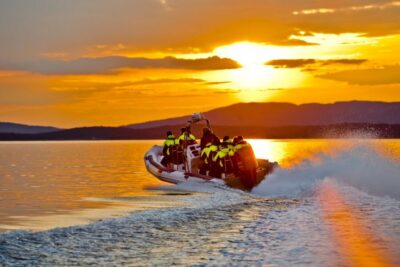
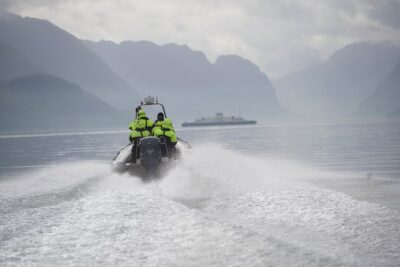
At first, the ride itself is part of the fun. A RIB is quick and responsive, so you feel the boat move across the water rather than simply glide along in a cabin. That speed helps the guide cover more sea while looking for whale activity.
The tradeoff is comfort. The boat can bounce in waves, and spray may reach you even when you are wearing the supplied outer suit. One account described the ride as rough but fun, while another advised protecting a camera from heavy spray with a plastic bag. I would take both warnings seriously.
The exact amount of time spent searching can vary. Early in the season, the guide may need to drive back and forth before finding orcas. Once whales are located, the search changes into careful observation. If the animals are feeding actively, the trip may run a little longer so you can watch the action.
Watching orcas work together
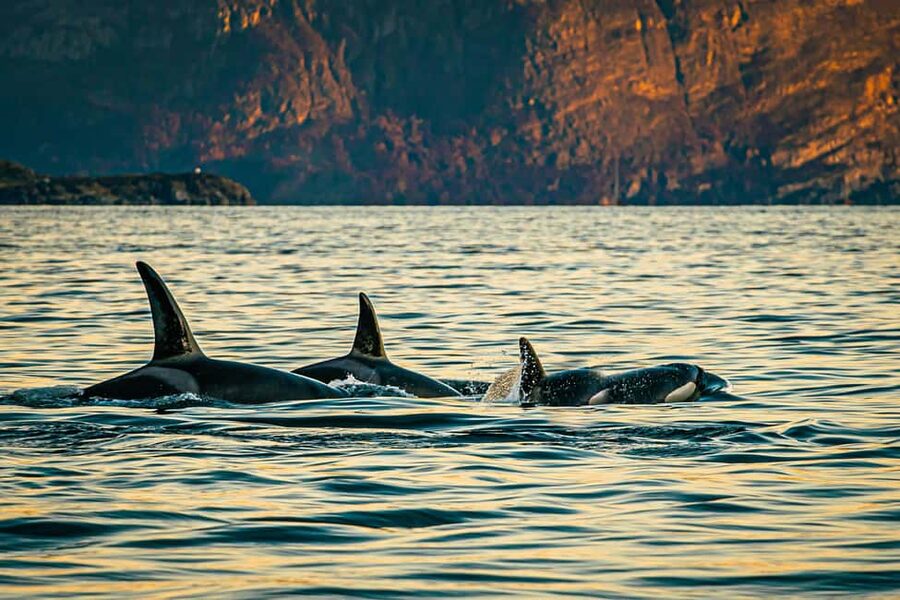
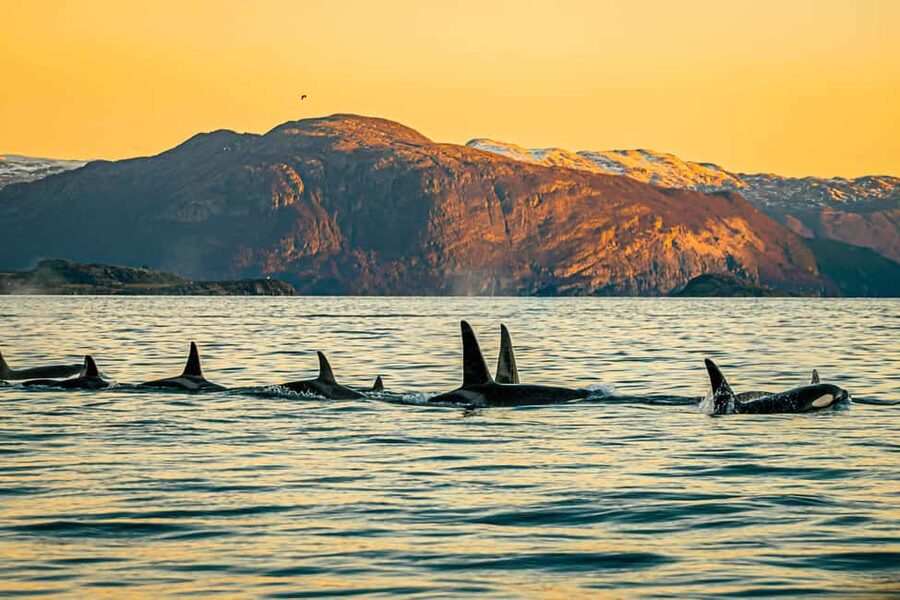
Orcas are the stars of this trip, and their social behavior makes the sighting more than a quick fin breaking the surface. Their black bodies and white markings are easy to recognize, even from a distance. In the right conditions, you may see several animals traveling together or moving as a coordinated group.
The most exciting reports came from feeding encounters. Orcas can work as a team to catch herring, which may involve repeated appearances, sudden changes of direction, and several animals surfacing in the same area. One outing saw around 50 orcas, while another had the unusual luck of watching orcas, humpbacks, and fin whales on the same day.
Those numbers are possibilities, not promises. Wildlife does what it wants, and the guide cannot control how many animals appear or how close they come. The value of a good guide is in finding likely areas, reading the water, and keeping the boat in a sensible position once the animals are located.
The guide also explains orca communication, including whistles and pulse sounds that people can hear. Viktor has been praised for recognizing some individual orcas by name, which adds a local and personal touch to the wildlife lesson.
More Boat Tours in Tromsø
- Tromsø: Evening Aurora Cruise (dinner optional)
★ 4.4 · 1,570 reviews - Tromsø: Arctic Fjord Cruise in Polar Landscapes
★ 4.7 · 1,442 reviews - Tromsø: Northern Lights Cruise with 2nd Chance Guarantee
★ 4.3 · 1,280 reviews - Silent Whale Watching by Hybrid-Electric Boat from Tromsø
★ 4.5 · 1,017 reviews
Humpback whales and the chance of fin whales
Humpback whales behave differently from orcas. You may see one alone or a small group, with a slower rhythm and larger, more dramatic movements. A breach is never guaranteed, but humpbacks are capable of spectacular jumps, and their long songs are one of the distinctive parts of their natural history.
The guide also points out that each humpback has a unique tail pattern. If you get a clear view of a raised tail, you may notice markings that help identify that whale later. This gives you something specific to watch for instead of simply waiting for a large animal to surface.
Fin whales are another possible sighting. One January trip saw fin whales, humpbacks, and orcas together. That kind of mixed-species encounter is unusual enough to make the day memorable, but it should be treated as good fortune rather than a standard part of the route.
The guide’s role is important here. A whale may surface only briefly, and a quiet moment on the boat can change quickly. You will get more from the trip if you listen for directions, keep scanning the water, and avoid staring through a camera for the entire ride.
What the supplied gear really means
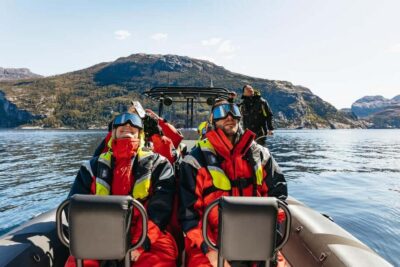
Reisafjord Xperience provides warm outerwear, life jackets, hats, thermal shoes, and goggles. The goggles are especially useful because they protect your eyes from cold air and spray during the fast ride.
The suits help, but they do not make the Arctic warm. You should still wear warm layers underneath and bring your own gloves. Neck protection is important too. A warm scarf or neck covering can make the final part of the trip much more comfortable, especially if the wind rises.
One useful clothing warning is that gloves supplied by an operator may not suit everyone. Bring gloves you trust, provided they work safely with the life jacket and other equipment. Keep your camera or phone in a waterproof bag, and do not assume a pocket in the outer suit will protect it from spray.
The boat has seating for up to 12 guests plus Viktor, based on the reported setup. That is small enough to feel like a boat trip rather than a large cruise, but it is not a private safari. When the boat is full, you may need to share sight lines and turn quickly when the guide points out a whale.
Viktor and the guiding style
Viktor is the guide most closely associated with this departure. His work combines driving, wildlife spotting, safety, and commentary, so the quality of the trip depends heavily on his judgment.
He has been praised for finding orcas even in poor weather, locating humpbacks afterward, and keeping a respectful distance from the animals. That last point matters. A good whale trip is not measured only by how close the boat gets. The boat should give you a clear view without pressing into the whales’ space.
Viktor also appears to adjust the outing to the conditions and the group. When orcas were putting on an especially active feeding display, he extended the time slightly so the group could enjoy it. That kind of flexibility is valuable, though you should not book the tour assuming every departure will run long.
The guide speaks English and Norwegian. Information is shared while the boat is moving and while you watch the animals. Because the RIB is open and can be noisy, commentary may be less detailed than it would be on a heated cabin cruiser. If you want a quiet, lecture-style wildlife trip, compare the boat types before booking.
RIB excitement versus a heated cabin boat
The RIB is the right choice if you want speed, open air, and a close connection with the water. You feel the weather and movement directly. The boat can cover ground quickly, and the open design gives you wide views in every direction.
A heated cabin boat is likely to be the better match if you are especially sensitive to cold, motion, or spray. The supplied information includes several other Skjervøy whale options, including heated boats and cabin cruisers. Those boats may feel calmer and allow easier commentary, while the RIB gives you the more active ride.
There is also a crowd issue at the harbor. Several operators may gather and leave from the same area, especially during the busy whale season. The operation itself has been described as well organized, but the departure zone can feel crowded. If that atmosphere bothers you, arrive early and confirm the guide and changing area before the group heads out.
Getting from Tromsø to Skjervøy
This activity starts in Skjervøy, not Tromsø. If you are based in Tromsø, the Arctic Route runs daily bus trips between the two places. That creates a possible connection, but you need to check the bus schedule against the selected boat departure.
The journey makes this more than a quick Tromsø excursion. You are committing much of a day to reach Skjervøy, take the three-hour safari, and return. The upside is access to a whale area that has shifted farther northeast as the herring moved. The downside is less flexibility if transport is delayed or the boat schedule changes.
If whale watching is one of your main reasons for visiting northern Norway, staying in or near Skjervøy gives you a more relaxed start. If you are staying in Tromsø, check the transport plan carefully before paying for the boat. The tour itself offers free cancellation up to 24 hours before departure, and reserve-now, pay-later booking is available, but those options do not remove the need to coordinate transport.
Value, timing, and the wildlife gamble
No tour price is provided here, so I cannot judge the exact cost against competing departures. I can judge what you are paying for: a three-hour outing, a local guide and boat driver, cold-weather equipment, a small RIB, and access to a seasonal whale area outside Skjervøy.
That package offers solid value if you want an active wildlife trip and would otherwise need to arrange transport, gear, and a boat separately. The warm equipment also saves you from buying specialist clothing for one day.
The value drops if you want guaranteed sightings, a heated cabin, or a long naturalist talk. No whale safari can promise animals, and the RIB’s engine, wind, and open layout limit how much detailed commentary you can hear at speed.
The timing of your trip matters. Early-season departures may require more searching, while later visits can coincide with large feeding groups. The strongest sightings in the available accounts came from late October through January, but that does not create a guarantee for any particular date.
Who should book this Skjervøy RIB trip?
I would choose this tour if you want an active Arctic outing, can handle cold and boat movement, and care more about wildlife than indoor comfort. It suits couples, families with older children, and anyone who likes the feeling of being out on the water rather than behind glass.
It is also a good fit for photographers, with one warning: protect your equipment. A waterproof phone pouch or plastic bag is a sensible addition, and you should be ready to watch rather than spend every moment framing a shot.
I would think twice if you dislike rough rides, have limited tolerance for cold, or need a quiet and fully heated setting. In that case, compare the heated cabin options from Skjervøy. You may sacrifice some speed and open-air excitement, but gain comfort and easier listening.
Should you book it?
Book this Skjervøy RIB safari if your priority is the best chance of an exciting, close-to-the-water whale encounter with an active local guide. Viktor’s reported ability to find orcas, explain their behavior, and give the animals space is a major reason to choose this departure.
Come prepared for real Arctic conditions. Wear warm layers, bring proper gloves and neck protection, protect your camera, and expect the boat to bounce. If you accept those limits, the reward can be extraordinary: orcas hunting together, humpbacks surfacing nearby, snowy mountains behind them, and hot chocolate waiting when you return.
FAQ
Where does the whale-watching tour start?
The tour starts at Strandveien 96 in Skjervøy. Meet behind the old white building in the harbor, downhill from the Ekstra grocery store. The meeting point coordinates are 70.02948760986328, 20.968090057373047.
How long does the experience last?
The whale-watching activity lasts three hours, including the boat trip from the harbor and the return to Strandveien 96. Starting times vary, so check availability for the date you want.
What whales might I see?
The main possibilities are killer whales, humpback whales, and fin whales. Orcas may gather around herring, while humpbacks are often alone or in small groups. Wildlife sightings are not guaranteed.
Is equipment provided?
The company provides warm outerwear, life jackets, hats, thermal shoes, and goggles. You should still dress warmly and bring your own gloves and neck covering for extra comfort.
What languages does the guide speak?
The live guide speaks English and Norwegian.
Can I travel from Tromsø to Skjervøy for the tour?
Yes. Arctic Route runs daily bus trips between Tromsø and Skjervøy. You need to check the bus schedule against the whale-watching departure time.
More RIB Boat Tours in Tromsø
- From Stavanger: RIB Tour to Lysefjord
★ 4.9 · 1,288 reviews - From Stavanger: Lysefjord Sightseeing RIB Boat Tour
★ 4.9 · 821 reviews - RIB Geiranger – Fjordsafari
★ 4.8 · 807 reviews - Lysefjord RIB Safari from Stavanger
★ 5.0 · 665 reviews
More Whale Watching Trips in Tromsø
- Tromsø Whale Safari with MS Gabriele
★ 4.3 · 1,937 reviews - From Tromsø: All-Inclusive Whale & Orca Safari
★ 4.5 · 1,221 reviews - Whale Watching RIB Safari at Skjervøy
★ 4.8 · 136 reviews - Skjervøy: Whale and Orca Watching Tour by RIB Boat
★ 4.1 · 87 reviews
Just added around Tromsø
- Small Group Wilderness Husky Sledding 2h from Tromsø (car needed)★ 5.0 · 77 reviews
- Aurora Crystal Lavvo Overnight with Activities from Tromsø★ 5.0 · 5 reviews
- From Tromsø: Sea Kayaking Tour at Sommarøy with Transfer★ 4.8 · 63 reviews
- Skjervøy: Birds and Wildlife of Arctic Norway★ 4.2 · 6 reviews
- Skjervøy: Whale and Orca Watching Tour by RIB Boat★ 4.1 · 87 reviews
- Skjervøy: Orca and Whale-Watching comfort heated Boat Trip★ 4.9 · 27 reviews
- Senja: Guided Tour around Senja★ 4.9 · 30 reviews
- Northern lights Tromsø – small group tour with local guide★ 4.9 · 15 reviews
RIB Boat Tours, compared.
Lofoten RIB Sea Eagle Safari Trollfjord Cruise
Read our review →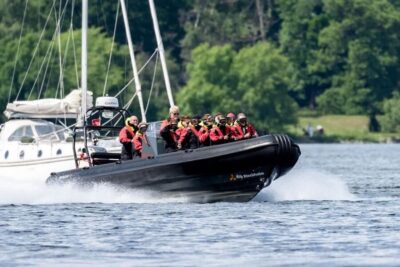
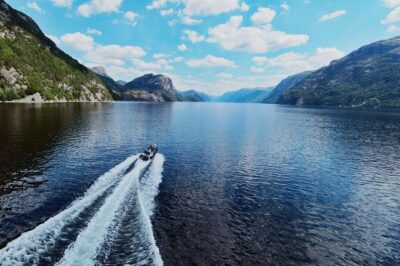
Lysefjorden & Pulpit Rock RIB-Safari from Stavanger
Read our review →Browse the lists this tour appears in