
Reviewed · WALKING TOURS
Walking Tour in Bergen of the Past and Present
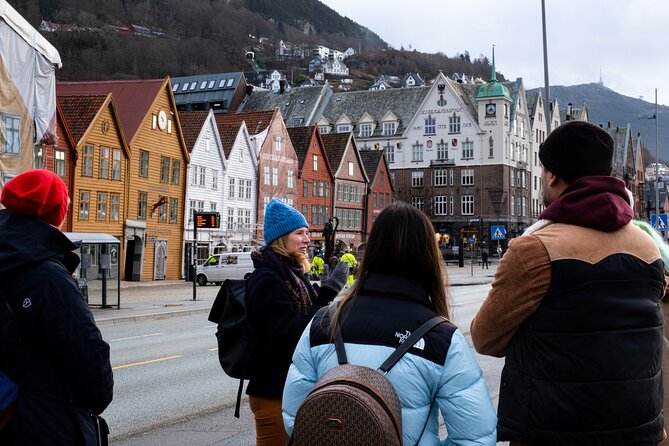
Bergen’s story comes into focus when you walk from the old royal fortress to the Hanseatic wharf, then climb into the wooden lanes where people still live. I like the way this tour links medieval power and trade with everyday subjects such as food, taxes, house prices, and working life. It gives you more than a list of monuments.
I also like the small group size, capped at 16, and the local advice built into the walk. Guides such as Jeff, Janine, Dane, Emma, Anaïs, Magda, and Neil have been praised for clear English, humor, restaurant suggestions, and thoughtful answers. The main drawback is that you stay outside the buildings, and the route includes uneven cobblestones and an uphill stretch.
Key points to know before you book
- A two-hour introduction to Bergen: You cover the fortress, Bryggen, St. Mary’s Church, Fjellsiden, Skostredet, and the Fish Market.
- History with a modern Norwegian angle: The guide moves from royal power and Hanseatic trade to food, taxes, work, housing, and outdoor life.
- Bryggen gets about 40 minutes: You explore its lanes and trading past, but you do not enter the buildings.
- The walk climbs into Fjellsiden: This brings you to old wooden houses and quieter streets, but it requires moderate fitness.
- The funicular is only a talking point: You pass its station but do not ride it, saving about an hour and 150 NOK.
- Good value at $33.47: You receive an authorised English-speaking guide and no extra tour fee, though museum and church admissions are separate.
Starting at Bergenhus Fortress
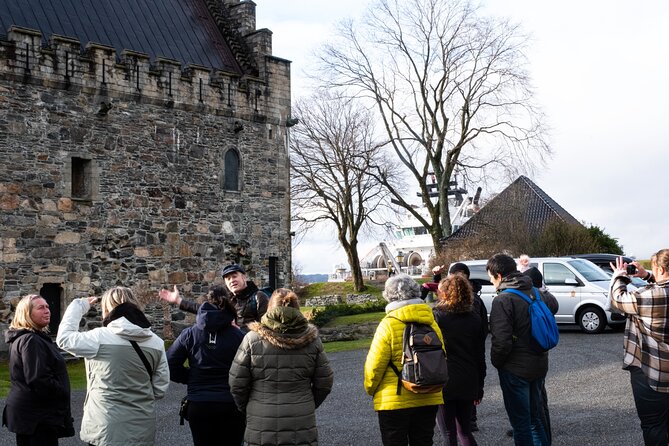
Meet at Bradbenken 1, near Bergenhus Fortress. The location is a short walk from public transportation, and it is a smart place to begin because Bergen’s early political story began here.
The fortress area once held the palace when Bergen was Norway’s capital. That fact gives the opening some weight: you are not simply starting beside an old stone complex, you are beginning where royal government once operated.
The guide leads you around the fortress and explains how Bergen functioned when it held national power. This opening works well for first-time visitors because it gives the city a clear starting point before you reach the more famous waterfront.
On rare occasions, the fortress may close for a private event. If that happens, the route can be affected, so keep your schedule a little flexible.
More Walking Tours in Bergen
- Bergen: Past & Present Small Group Guided Walking Tour
★ 4.9 · 1,609 reviews - Bergen: City Tour on Foot
★ 4.9 · 1,327 reviews - City Walking Tour – Bergen On Foot
★ 5.0 · 436 reviews
Håkon’s Hall and Norway’s shifting alliances
The next major sight is Håkon’s Hall, the best-preserved part of Bergen’s medieval palace. Here the guide places Bergen’s past within the wider story of Norway, including the period when the country operated independently and its later unions with Denmark and Sweden.
You do not enter Håkon’s Hall. It is a paying museum, and the tour remains outdoors. That is worth knowing before you book. If you want an interior visit, plan a separate stop and budget for admission.
Still, seeing the hall from outside while hearing its political background can be enough for a first orientation. The guide can explain why the building matters, rather than leaving you to admire its stone walls without context.
Bryggen, where trade shaped Bergen
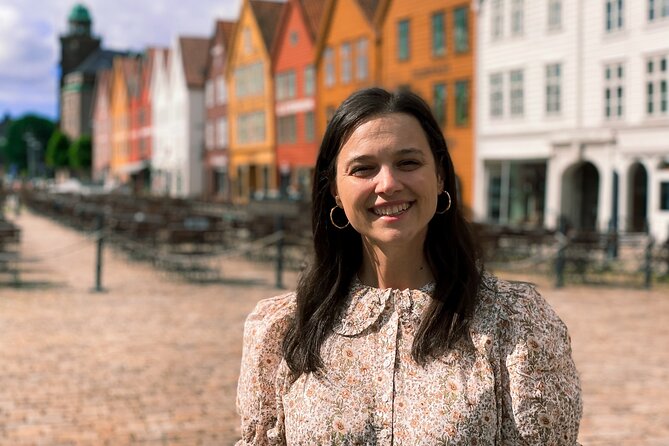
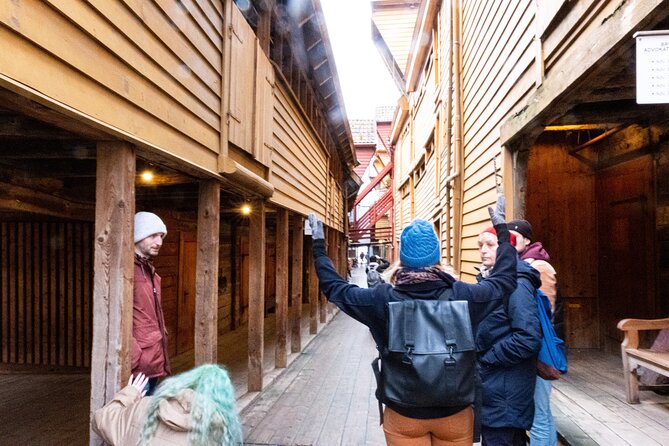
From the fortress, you walk to Bryggen, Bergen’s UNESCO-listed Hanseatic wharf. This is the visual heart of the tour, with narrow wooden passageways and colorful, leaning buildings along the waterfront.
The site has served merchants for about 1,000 years. Its success came largely from the Hanseatic League, a network of German merchants who controlled major trading links across northern Europe.
The guide explains how the Hanseatic merchants worked, how goods moved through the wharf, and how the trading system shaped local life. This is more useful than simply taking a photograph of the famous facades. You begin to see Bryggen as a working commercial district, not just a picturesque row of old buildings.
Around 40 minutes are spent here. That is enough time to get a feel for the lanes and hear the main story without turning the walk into a long architectural lecture.
You do not go inside the Bryggen buildings. Today they contain shops and small businesses, not museums, so the tour focuses on the outdoor passageways and waterfront setting. If you want museum interiors, you will need to visit them separately.
Bryggen can feel crowded, particularly around the best-known lanes, but the small group limit should make it easier to hear the guide. Keep your footing in mind. The wooden and cobbled surfaces can be uneven.
St. Mary’s Church and the oldest surviving building
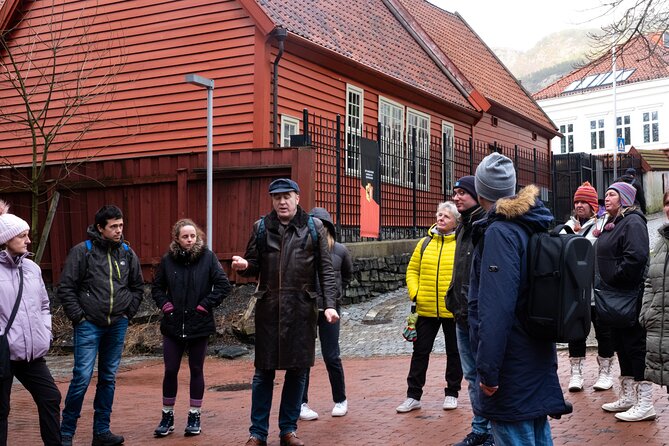
The route continues to St. Mary’s Church, built in the 12th century and described as Bergen’s oldest building still standing. It remains a working church, which gives the stop a sense of continuity rather than treating it as a monument frozen in the past.
Again, the tour does not enter. The church charges a separate admission fee, so this is an exterior stop. The guide uses the building to continue the story of medieval Bergen and its religious and civic life.
For many people, this is one of the quieter moments of the walk. Bryggen is the major visual attraction, but St. Mary’s helps fill in the older city around it.
More Walking Tours in Norway
- Discover Bergen on Foot and Boat
★ 5.0 · 300 reviews - Bergen: Sightseeing Walking Tour with Ferry Ride
★ 4.9 · 296 reviews - Food and Culture walk
★ 4.5 · 243 reviews - Walking Tour of Central Bergen
★ 5.0 · 46 reviews
Climbing into Fjellsiden’s wooden lanes
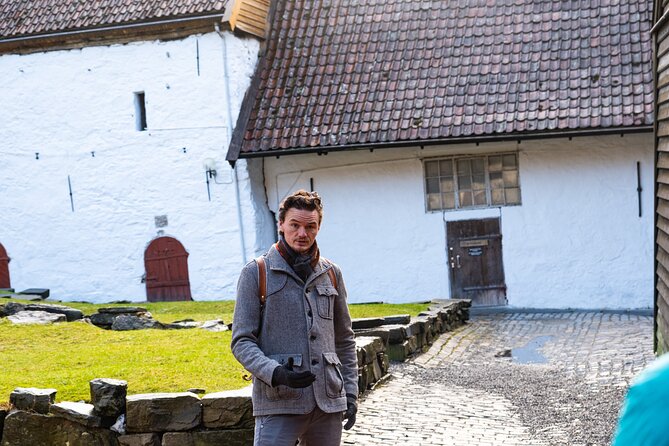
After the main historical sites, the character of the walk changes. You head uphill into Fjellsiden, a well-preserved district of wooden houses.
This section is less about famous dates and more about how people live in Norway. The conversation may cover what people eat, when they work, how much a house costs, and how taxes affect daily life. The exact route depends on the guide, which means you may see a local street or corner selected for that day’s interests.
I like this part because it puts Bergen’s landmarks into a living setting. You are no longer looking only at the city’s royal and commercial past. You are seeing the kind of residential area that helps explain the city’s present character.
The uphill section also gives the tour a physical challenge. You need moderate fitness, and uneven cobblestones can make the walk less comfortable for anyone with mobility concerns. Wear shoes with a steady grip, and be ready for the weather. This is an outdoor tour in a city known for changeable conditions.
The funicular stop, without the funicular ride
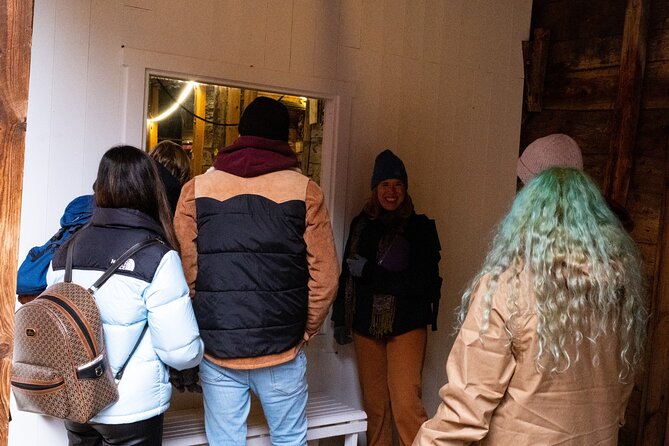
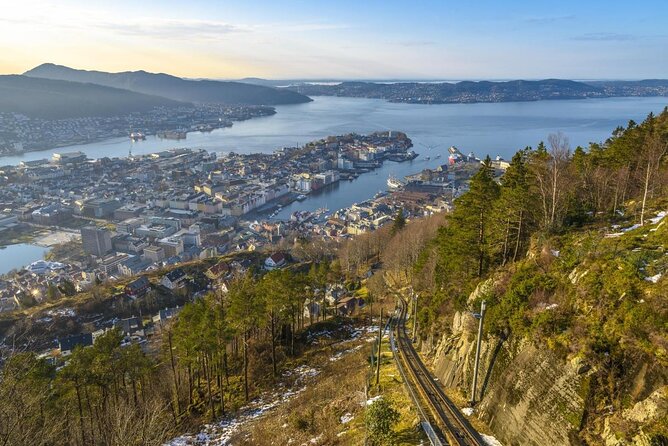
The walk passes the funicular station. The guide uses this moment to discuss Norway’s outdoor culture and the importance of hiking.
You do not ride the funicular as part of this experience. Adding the ride would take about an extra hour and cost 150 NOK. That may disappoint you if the funicular is high on your Bergen wish list, but skipping it keeps the tour to roughly two hours and leaves you free to ride at a better time.
That flexibility is useful. You might want to take the funicular later for sunset, or use it as the starting point for a hike. By showing you the station without adding a fixed ride, the tour gives you the information needed to plan that visit on your own.
Skostredet and Bergen’s food culture
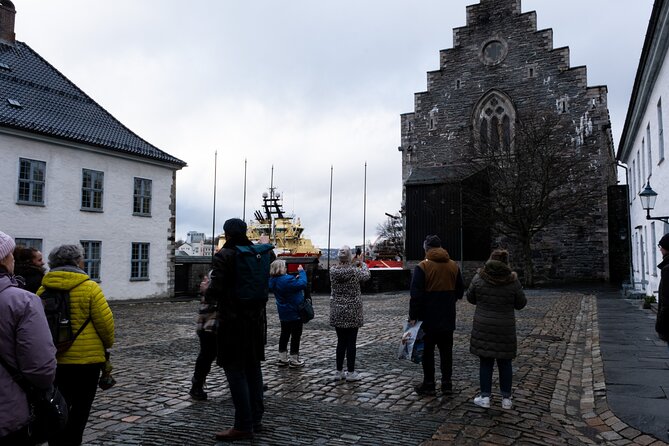
The final part moves back toward the old center along Skostredet, a popular street for restaurants. The focus shifts to modern Bergen and local food.
Bergen is a UNESCO City of Gastronomy, and this is where that title becomes practical for you. The guide can point out places for coffee, dinner, and local treats. Past guides have also offered suggestions based on what each person wanted to eat, which is more useful than receiving a generic restaurant list.
Only about 10 minutes are assigned to Skostredet, so do not expect a food tasting or a full meal. The value is in the orientation. You finish knowing which streets may be worth returning to after the walk.
Finishing at the Fish Market
The tour ends outside Bergen’s fish market and tourist office at Vågsallmenningen 2. This is close to the city center and gives you an easy place to continue exploring.
The fish market is a natural ending because it connects Bergen’s waterfront identity with its food culture. It also makes the tour convenient for planning the rest of your day. You can continue toward the harbor, return to Bryggen, ask the guide a final question, or use the nearby tourist office for more information.
The finish is not a private meal or market tasting. Think of it as a useful central handoff point.
What the guides add
The guide is the main reason to choose this experience over a self-guided walk. The route itself covers places you can visit without paying for a tour, but a good guide connects them into one clear story.
The guides who have led this walk include Jeff, Janine, Dane, Magda, Emma, Anaïs, Neil, and Erik or Eriik. Their styles vary, but the strongest qualities are consistent: clear English, local perspective, humor, patience with questions, and advice about food and nearby sights.
Jeff has been praised for explaining Norwegian history in plain language while also discussing the pros and cons of living in Bergen. Dane has brought more attention to the meaning and effects of historical events, not just dates. Emma has combined historical facts with current information, while Anaïs has been noted for clear explanations and useful food suggestions.
That variation is worth keeping in mind. This is a local-led walk, not a recorded script delivered in exactly the same way every time. The route may change slightly with the guide’s interests, and that can be a benefit if you prefer a personal neighborhood walk.
Is $33.47 a fair price?
At $33.47 per person, I consider this a reasonable price for a two-hour guided introduction, especially in a small group of no more than 16 people.
You are paying for an authorised guide, a planned route, historical context, and local recommendations. You are not paying for museum entry, the funicular, food, or transportation. The phrase no hidden fees means there is no extra charge for the walking tour itself, but you should still budget separately if you want to enter Håkon’s Hall or St. Mary’s Church.
The value is strongest when you take the tour early in your stay. You can use the restaurant suggestions later, return to Bryggen with a better understanding of what you saw, and decide if the funicular or nearby museums deserve your time.
The price may feel less attractive if you want a long museum visit, a food tasting, or a ride up the mountain. This is an outdoor orientation walk, not an all-inclusive sightseeing package.
Who should book this walk?
I would choose it for a first visit to Bergen, especially if you want a fast but thoughtful introduction. It is also useful on a cruise stop because the walk covers central sights and ends near the tourist office.
You will get the most from it if you enjoy asking questions and want more than landmark photographs. The mix of history, current life, food, and hiking culture gives you several ways into the city.
It suits solo visitors and couples particularly well, since a small group makes conversation easier. Families may also enjoy it, provided everyone can manage the uphill stretch and cobblestones.
You might choose another option if you need step-free access, want to enter historic buildings, or prefer a completely flat route. The tour requires moderate physical fitness, and the guide cannot control every surface or weather condition.
The experience requires good weather and a minimum number of participants. If poor weather or low enrollment cancels the tour, you are offered another date or experience, or a full refund. You can cancel for a full refund up to 24 hours before the local start time.
My booking advice
Book this walk near the beginning of your Bergen stay, and allow some room afterward for your own plans. The tour ends in a useful central location, but the funicular and museums are not part of it.
I would also wear comfortable shoes, bring weather protection, and treat the outdoor format as part of the deal. You will hear about Håkon’s Hall and St. Mary’s Church without going inside, and Bryggen is explored from its lanes rather than through museum exhibits.
For a short, friendly introduction that explains both old Bergen and present-day Norway, I think this is a strong buy. Choose it if you want local conversation, practical food advice, and a manageable route through the city’s main historic areas. Skip it only if your priority is indoor access, a flat walk, or included attractions.
FAQ
How long does the Bergen Past and Present walking tour last?
The tour lasts approximately two hours.
Where does the tour begin?
It begins at Bradbenken 1, 5003 Bergen, Norway, near Bergenhus Fortress and within a short walk of public transportation.
Where does the tour end?
The walk ends at Vågsallmenningen 2, 5014 Bergen, outside the fish market and close to the Bergen tourist office.
Does the tour enter Håkon’s Hall, Bryggen buildings, or St. Mary’s Church?
No. The tour is outdoors only. Entry to Håkon’s Hall and St. Mary’s Church requires a separate admission fee, and the Bryggen buildings contain shops and small businesses rather than being included museum visits.
Is the funicular ride included?
No. The tour passes the funicular station and discusses hiking culture, but it does not take the funicular. A ride would add about an hour and cost 150 NOK.
What is the cancellation policy?
You can cancel at least 24 hours before the experience’s local start time for a full refund. Changes or cancellations made less than 24 hours before the start are not accepted for a refund. If poor weather or insufficient enrollment cancels the tour, you are offered another date or experience, or a full refund.
Just added around Bergen
- Mostraumen Private Pontoon Cruise★ 4.5 · 7 reviews
- Walking Tour of Central Bergen★ 5.0 · 46 reviews
- Bergen : Private Waterfalls and Wonders Tour in Norway★ 5.0 · 6 reviews
- Walk with a Witch in 16th Century Bergen: A Self-Guided Fictional Tour★ 4.5 · 12 reviews
- Walking tour: Medieval Spirit of Bergen + sweet Arctic gifts★ 5.0 · 17 reviews
- Bergen: Private Full-Day Roundtrip to Hardangerfjord with cruise★ 5.0 · 20 reviews
- 3-Hour Private Norwegian Hiking Experience with Local Guide★ 5.0 · 27 reviews
- Three-summit hike in Bergen★ 5.0 · 3 reviews
Walking Tours, compared.


Past & Present Small Group Guided Walking Tour
Read our review →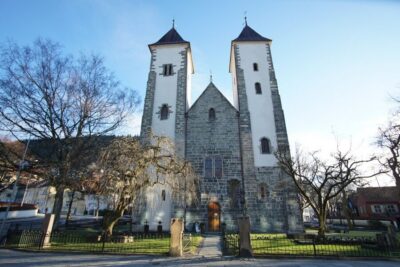
Browse the lists this tour appears in