
Reviewed · COPENHAGEN TOURS
Copenhagen Alternative Private Tour: Vesterbro & Christianshavn
Copenhagen’s most revealing sights are often tucked behind ordinary streets. This private walk takes you from working-class Vesterbro, with its resistance stories and old market halls, across the harbor to Christianshavn and its canals, churches, and free-spirited Christiania. Guides such as Alessandro, Grazi, and Karolina have been praised for explaining local life in a personal, easygoing way.
I like the route’s social history, especially the stories of overcrowded workers’ housing, the BBC broadcasts from Stjerne Radio, and shelters serving people in need. I also like the way the tour links two very different districts instead of stopping at postcard Copenhagen. The main drawback is price: at $147.96 per person, the value depends heavily on your group size and on choosing the Full Option if you want the tasting and drink.
Key points to know before you book

- A private walk with a local English-speaking guide: Only your group participates, so you can ask questions and request more detail about subjects that interest you.
- A strong Vesterbro history section: Istedgade, Saxogade, Stjerne Radio, the old meat market, and Maria Church reveal the district’s working-class and wartime past.
- A change of mood in Christianshavn: Canals, old warehouses, baroque churches, naval buildings, and quiet cobbled streets replace Vesterbro’s tougher urban character.
- Christiania is the finish, not a guided visit: Your guide cannot go inside, so you explore the self-governed community on your own.
- The Full Option includes a Danish tasting and drink: Lunch is listed only with that option, so check exactly what you are booking.
- Expect plenty of walking: The route lasts about 3 hours 30 minutes to 4 hours, with metro tickets included if needed.
Why Vesterbro gives this tour its character

The tour begins at Viktoriagade 8, a useful starting point because the street looks like a normal Copenhagen residential lane but carries an older story. It follows the line of a former moat built into Christian IV’s fortifications. By the mid-1800s, the land was being sold in lots, and several buildings were created for charitable purposes, including housing for officers’ widows.
Numbers 8, 10, and 12 are protected buildings. You will not spend long here, about 15 minutes, but this first stop sets the tone: the guide is looking past the obvious streetscape and showing you how Copenhagen grew over earlier defensive works.
From there, you reach Det Ny Teater, opened in 1908. Its original purpose was practical as well as cultural. The theater was meant to provide a large performance space and create a passage between Gammel Kongevej and what is now Vesterbrogade. The building gives you a quick look at Copenhagen’s entertainment and city-planning ambitions at the start of the 20th century.
Værnedamsvej adds a different layer. Its name is linked to Werner Dam, a beer collector who acquired land here in the 1700s and opened a popular beer garden. The street was also known as Slagtergaden, or Butchers’ Street, because of the many butchers operating in the area. You get only about 10 minutes here, so think of it as a short story stop rather than a shopping break.
A few more Copenhagen days worth weighing up
- Copenhagen: Canal Cruise with Guide
★ 4.6 · 9,115 reviews - Copenhagen: Hop-On Hop-Off Bus Tour with Boat Tour Option
★ 3.9 · 4,122 reviews - Private Walking Grand Tour of Copenhagen
★ 5.0 · 3,953 reviews
Saxogade and the human side of urban Copenhagen
Saxogade is one of the places where the tour shifts from architecture to living conditions. In the early 1950s, residents sent a large protest letter about miserable housing. These families were largely factory workers who had come from the countryside hoping to improve their lives in the city.
The problem was severe overcrowding. Small one-room apartments could hold families of up to 10 people, and much of the pressure for better housing came from concern for children. This is an important stop because it keeps Vesterbro from becoming a string of pretty facades. You hear about the people who lived behind them.
At Skydemuren, the old shooting-range wall looks almost like a small castle. It was built as a bullet trap to protect traffic on Istedgade from the Royal Danish Army’s shooting range, located where Skydebanehaven is today. The wall also forms the view at the end of Skydebanegade, a street lined with uniform, decorated homes.
I like this stop because it is both odd and easy to understand. A military facility once fired toward an area that later became part of ordinary city life. The wall is a reminder that Copenhagen’s residential districts often grew right up against older military sites.
Istedgade, resistance, and a difficult present

Istedgade is one of Vesterbro’s key streets. It was named after the 1850 Battle of Isted during the First Schleswig War, but its modern identity is tied to World War II, drug use, and prostitution. The street has long had a rougher reputation than the more polished central districts.
During the German occupation, Istedgade became an important refuge for the Danish resistance. A popular wartime saying claimed that the Germans could take Rome and Paris, but Istedgade would never fall. The tour gives you time to consider how a commercial street can become part of a city’s political memory.
At Istedgade 31, you hear the story of Stjerne Radio. Carl Munck and J. K. Søndergård opened the shop in 1942, then began transmitting BBC broadcasts through loudspeakers. In a country under occupation, those broadcasts gave people access to news that official channels could not provide. The stop lasts about 15 minutes and is one of the clearest links between a physical address and the resistance.
The route does not pretend that Vesterbro’s past is finished. It also points to current social work. The Men’s Home, founded in 1910, helps homeless and vulnerable people make use of their own resources and take part in society. Nearby, Maria Church, opened in 1909, provides shelter and daily support for homeless people, families in need, undocumented immigrants, people with drug problems, prostitutes, and others whose lives have been pushed to the margins.
These stops are brief, but they matter. You see that Copenhagen’s social welfare story is not only about policies and clean streets. It also involves churches and organizations dealing with difficult lives day by day.
Meatpacking District and the old hay market

The Meatpacking District shows Vesterbro in transition. The former industrial area now has restaurants and nightlife, but the tour keeps its working history in view. Oksnehallen, in the Brown District, was built in 1891 with offices for merchants and room for 1,600 cattle.
The cattle market continued until the White District opened in the late 1950s. Oksnehallen is now an exhibition space, yet its size and original purpose help you picture the scale of the food trade that once occupied this part of town.
At Halmtorvet, you learn about Copenhagen’s hay market. It first operated inside the Western City Gate, near today’s City Hall Square, before moving outside the new livestock market in 1888. Wednesdays and Saturdays brought several hundred loads of hay and straw, which were distributed to the city’s horses and cattle.
This is a good example of the tour’s method. Instead of treating the square as a photo stop, it explains why the street pattern and open spaces exist. The city’s transport, animals, markets, and workers all shaped modern Vesterbro.
If you select the Full Option, lunch at a classic Danish restaurant is included, along with a local tasting and drink. This is not designed as a full food tour. If you expect several tastings or a long meal, you may be disappointed. It is better viewed as a short regional break within a history walk.
A different sort of day out, same corner of Copenhagen:
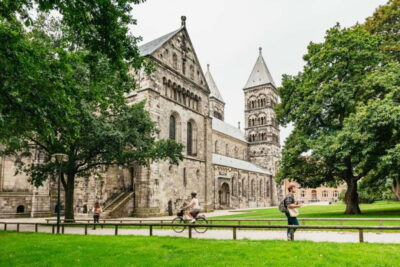
- From Copenhagen: Lund and Malmö 2-Country Tour
★ 4.7 · 2,772 reviews - Copenhagen Highlights Walking Tour
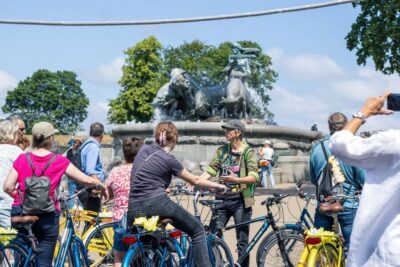
★ 5.0 · 2,324 reviews - Copenhagen: Highlights 3 Hour Bike Tour with a Local Guide
★ 4.8 · 2,312 reviews - Hamlet and Sweden Tour – Two Countries in one day !
★ 5.0 · 2,223 reviews
Crossing to Christianshavn by metro and bridge

The route includes metro tickets, although the exact need depends on the pace and route on your day. One person on an abbreviated version walked the entire way and did not use the metro ticket. That makes the ticket useful rather than guaranteed to be necessary.
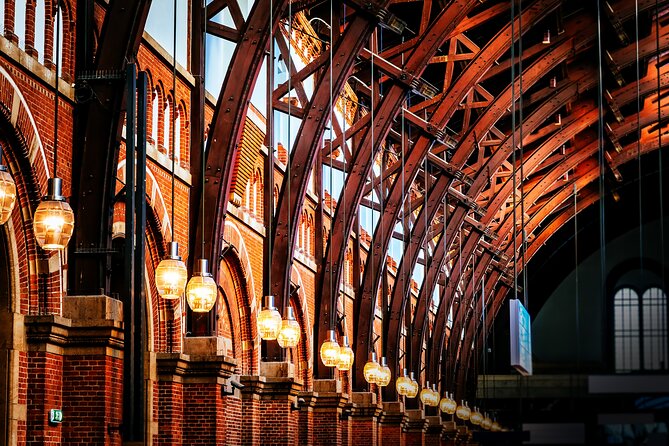
The tour passes København H, Copenhagen Central Station, built in 1911. Its architecture was inspired by the city hall building, and the station has seven platforms and 13 tracks. It is the largest railway station in Denmark by size, although Nørreport has the highest daily passenger flow.
From there, the route reaches Knippelsbro, a 115-meter drawbridge linking Copenhagen with Christianshavn. The present bridge dates from 1937, while its name comes from Hans Knip, who operated the bridge and collected tolls from ships in 1641. He reportedly lived on the bridge with his family, a detail that makes an otherwise ordinary crossing more memorable.
Churches, warehouses, and harbor trade

Christians Kirke brings you into the district’s German connection. Built in the rococo style between 1754 and 1759, it was first called Frederik’s German Church and served Copenhagen’s German-speaking congregation. The church is a quick stop, but its presence shows how trade and migration shaped Christianshavn.
At Strandgade 4, the focus shifts to Danish industry. The building once housed the DieselHouse Museum, which has since moved to København SV. The story reaches back to B&W, founded in 1843 as a one-person smithing workshop and later developed into one of Denmark’s largest workplaces. The company became a major symbol of Danish industry before its historic period ended in 1979.
Asiatisk Plads was once the base of the Danish Asia Company, active from 1732 to 1843. Today the area houses Denmark’s Ministry of Foreign Affairs and a convention center. The stop connects Copenhagen’s harbor to long-distance trade and state power without requiring a museum visit.
Sankt Annæ Kirke and the surrounding buildings offer some of Christianshavn’s oldest surviving domestic architecture. The houses at numbers 8 through 22 include remains from about 1650, with number 14 particularly well preserved. These are short stops, usually five minutes, so you should expect an explanation while standing outdoors rather than an extended architectural study.
Wildersgade is quieter and more residential. The street dates from the founding of Christianshavn in 1617 to 1622 and includes cobbled stretches, mansions, old houses, and warehouses from the 1700s and 1800s. Nearby Wilders Plads was once a busy market square and is now a calm place for water views.
The guide points out Wilders Plads 10, a two-story timber-framed house built in 1736 as a sailmaker’s workshop and home. You may also see the large yellow neoclassical building from 1754 to 1756, once a naval hospice and later home to the Danish Naval Museum until 2016. These details give the harbor a working past, not just a scenic one.
Our Saviour and the old defensive ring

Church of Our Saviour is one of the route’s most recognizable stops. Its baroque design is famous for the twisted spire and external spiral staircase leading toward the top. It remains a parish church for roughly 8,000 people, so it is not only an architectural attraction.
The route also touches the former defensive zone created during Christian IV’s time. This system helped close Copenhagen’s protective ring and guard the capital against Swedish attack. Again, the value is in the connection: Christianshavn’s streets were shaped by defense, trade, industry, worship, and housing.
Finishing at Christiania

The tour ends at Freetown Christiania, a partially self-governed community created in 1971 by hippies who occupied military land abandoned by the Danish army. About 1,000 people live across roughly 34 hectares, and the area is now one of Copenhagen’s most visited sights.
Your guide cannot enter Christiania, so the guided portion ends at its entrance. That limitation is important. You receive context about the community, but you explore inside on your own. Christiania is car-free and has its own rules and atmosphere, so you should allow extra time only if your schedule permits.
Because the stop is about 10 minutes in the formal route, this is not a long guided tour of the community. Think of it as the conclusion to a walk that explains how Copenhagen has handled military land, alternative housing, and self-government.
Price, timing, and who gets the best value
The listed price is $147.96 per person. For one or two people, that is a serious expense for a walking tour with mostly free admission. The price makes more sense for a group that values a private guide, flexible questions, and a route that would be hard to assemble from disconnected sights.
You should confirm the Full Option before booking if the tasting, drink, and restaurant stop matter to you. One person expected a larger food experience and felt the cost was high when no food or drink appeared. The activity includes a tasting and drink only with the Full Option, and it is not presented as a dedicated food tour.
The advertised duration is about 3 hours 30 minutes to 4 hours. A shorter version took around three hours after the group chose to skip lunch and finish early for a cruise. If you have a ship departure or another fixed appointment, tell the guide at the start and keep a generous time buffer.
The tour operates in rain and is not canceled for bad weather. Wear shoes suited to several hours on city streets and cobbles. Most people can participate, service animals are allowed, and the route is near public transportation.
Should you book this Copenhagen walk?
Book it if you want local social history rather than a checklist of royal sights, especially if you are interested in resistance work, housing, industry, churches, and the people who shaped these districts. It suits a small private group that enjoys asking questions and wants a guide who can adapt the conversation.
Skip it if you mainly want a food tour, a long interior visit, or a guided walk inside Christiania. The price is hardest to justify for a solo participant or for anyone who will rush through the route. For a couple, family, or group that wants Copenhagen’s less polished but more revealing side, the combination of Vesterbro and Christianshavn offers a thoughtful half-day outing.
FAQ
How long does the tour last?
The scheduled duration is approximately 3 hours 30 minutes to 4 hours.
Where does the tour begin?
It begins at Viktoriagade 8, 1620 København, Denmark.
Where does the tour end?
It ends at Freetown Christiania in Copenhagen Municipality.
Is the tour private?
Yes. Only your group participates in the private activity.
What language is offered?
The tour is offered in English.
Is lunch included?
Lunch at a classic Danish restaurant is included only with the Full Option.
Is a tasting included?
A local tasting and drink are included only with the Full Option.
Are metro tickets included?
Yes. Metro tickets are included, although the route may be completed on foot depending on the group’s pace and plans.
Does the guide enter Christiania?
No. Guides are not allowed to go inside Christiania, so the guided portion ends before the community entrance.
Can I cancel for a refund?
You can cancel up to 24 hours before the experience start time for a full refund. Cancellations or changes made less than 24 hours in advance are not accepted for a refund.
Just added around Copenhagen
- walking tour – Copenhagen and Christiansborg 3 hours★ 4.0 · 7 reviews
- The Hunt For The Six Forgotten Giants★ 5.0 · 45 reviews
- Copenhagen Walking Tour with Food Testing (smorrebrod dish & snap)★ 4.5 · 10 reviews
- The Six Forgotten Giants Trolls Hunt with Minibus★ 4.5 · 27 reviews
- The Philosopher’s Last Walk: An audio tour on the life of Søren Kierkegaard★ 4.5 · 5 reviews
- Small Group Guided Food Tour and Street Art Visit to Norrebro★ 5.0 · 9 reviews
- The Foodie Tour of Copenhagen★ 5.0 · 14 reviews
- The Forgotten Giants Private Tour★ 5.0 · 3 reviews
Copenhagen Tours, compared.
Hop-On Hop-Off Bus Tour with Boat Tour Option
Read our review →
Highlights 3 Hour Bike Tour with a Local Guide
Read our review →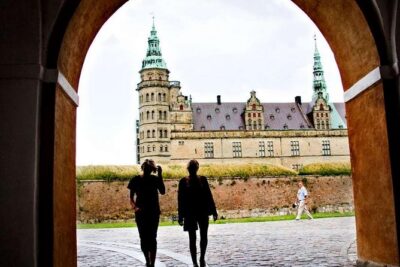
Hamlet and Sweden Tour – Two Countries in one day !
Read our review →
Browse the lists this tour appears in