
Reviewed · MORNING
Good Morning, Copenhagen: Feel The Danish Hygge & Happiness
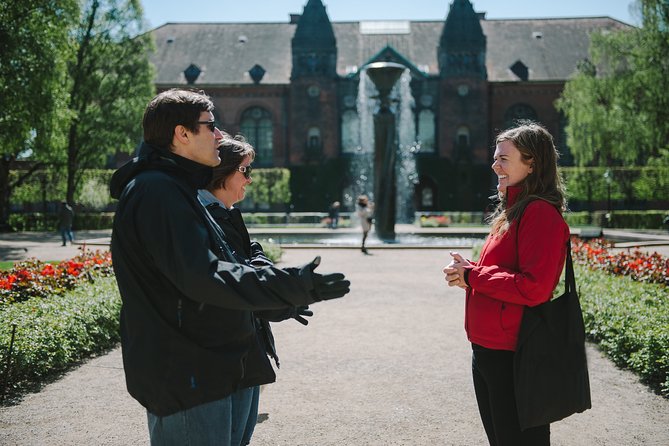
Copenhagen’s idea of hygge makes more sense when you see it in practice: a quiet alley, a warm drink, a pastry shared with new companions, and time to notice the details. This small-group walk links those simple pleasures with old streets, royal gardens, castles, Danish politics, and everyday local customs.
I like the maximum group size of 10, which gives your guide room to answer questions and keep the walk personal. I also like the mix of sights and snacks, especially the Danish pastry, flødeboller, coffee, or tea. The main consideration is focus: this is a cultural walking tour, not an inside visit to Copenhagen’s major buildings, and some people may find the pace brisk or the historical detail lighter than expected.
Key points at a glance
- Small group of up to 10: You get a better chance to speak with your local guide and ask about Danish life.
- Three distinctive tastings: Expect a Danish pastry, flødeboller, and coffee or tea during the walk.
- Royal Copenhagen from the outside: See Rosenborg Castle, Kongens Have, and Christiansborg Palace without entering the buildings.
- Quiet streets over a checklist: Krusemyntegade, Pistolstræde, and Magstræde show a softer side of the city.
- Local culture takes center stage: Learn about hygge, Danish trust, the welfare system, religion, and the law of Jante.
- Useful first-day orientation: The tour ends near artisan shops in the city center, and your guide offers personal suggestions for the rest of your stay.
Why this Copenhagen walk feels different
Many city walks march from one famous building to the next. This one uses Copenhagen’s streets, sweets, and social habits to explain how the city works.
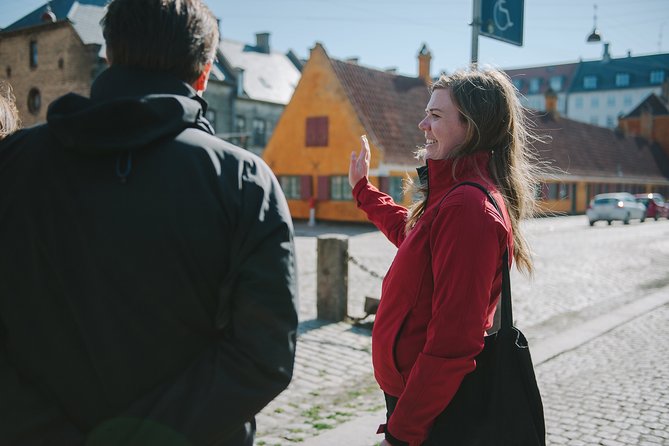
You begin near Nyboder’s yellow houses and finish on Læderstræde, a central street lined with artisan shops. In between, you move through old lanes, green spaces, royal landmarks, and busy pedestrian areas. The route gives you a useful first look at Copenhagen without trying to cover every major sight.
The word hygge is often reduced to candles and wool socks. Here, your guide connects it to a broader Danish habit of making room for comfort, conversation, shared food, and calm. You also hear about Danish happiness, public trust, the welfare system, and Jante, a cultural idea that discourages people from acting superior to others.
That makes the tour especially useful if you want more than postcard views. You get a sense of how Danish customs fit into daily life. At the same time, you should know what this experience does not provide. You will not go inside Rosenborg Castle, Christiansborg Palace, Nikolaj Kunsthal, the old yellow houses, or other buildings along the route.
A few more Copenhagen days worth weighing up
- Morning hike in Abisko National Park
★ 5.0 · 239 reviews - Abisko National Park: Scenic Morning Hike with Transfer
★ 4.7 · 172 reviews - Kiruna: Morning Husky Sled Ride with Coffee Break
★ 4.8 · 118 reviews
Starting beside Nyboder’s yellow houses
The meeting point is Krokodillegade 21, near Nyboder’s Mindestuer and the characteristic yellow houses of Nyboder. This is a fitting place to begin because the neighborhood gives you an immediate look at an older Copenhagen, before the city’s broad shopping streets and modern traffic take over.
Your local English-speaking guide introduces the group and sets the tone for the morning. Guides can vary, but past tours have been led by people such as Therese, Laura, Oskar, Karoline, Peter, Sandra, Lukas, and Jacob. The common thread is local connection. Some guides have shared personal knowledge of Danish life, and one guide mentioned in the tour material was born and raised in Denmark and served in the Royal Guard.
The first stop is short, around 15 minutes, so think of it as an opening story rather than a full visit. The small group format matters here. With no more than 10 people, you can ask about the neighborhood, Danish customs, or anything you notice without having to shout across a crowd.
Cobblestones, timber frames, and a slower city
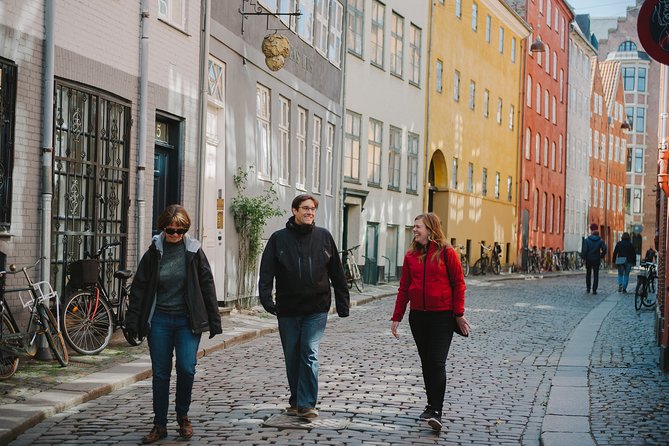
From Nyboder, the route heads through the older parts of Copenhagen. Krusemyntegade is one of the streets singled out for its cobbles and old-world appearance. It is the sort of place you could easily miss if you stayed on the main routes.
I like this part of the walk because it explains hygge through place rather than definition. The narrow streets, older houses, and pockets of quiet make the idea easier to understand. Copenhagen does not need a grand attraction at every turn. Sometimes the appeal is simply having a street where you can slow down.
This section lasts about 10 minutes, but the route continues to use smaller streets and calm corners later. You should wear shoes that can handle uneven paving. The tour asks for a moderate level of fitness, and an umbrella or rain jacket is sensible in Copenhagen’s changeable weather.
Danish pastry as a lesson in everyday culture
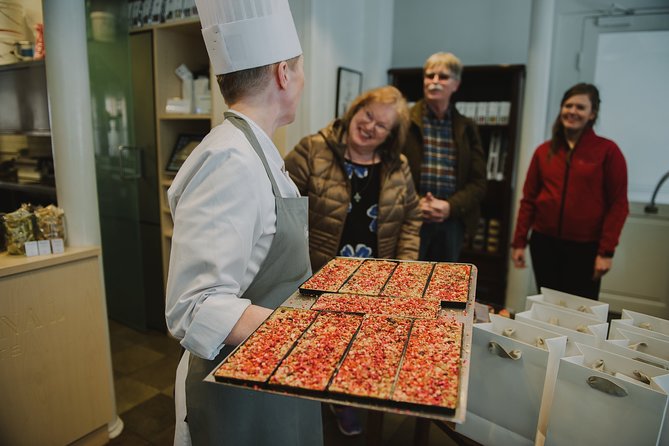
Food is not an afterthought here. The group stops for Danish pastries, which your guide uses to explain the place these treats hold in Danish childhood and adult routines.
The tasting is included in the tour price, but it is also part of the cultural lesson. You are not simply handed a snack while walking between sights. The guide explains why pastries matter and how small food rituals can create a sense of comfort and connection.
This is one of the tour’s strongest features for first-time visitors. A pastry gives you something concrete to remember, and the relaxed pause breaks up the walking. It also makes the experience work well for families and mixed-age groups.
Do not expect a full breakfast or a food tour with large portions. One assessment of the experience found the food modest, though still a fun part of the route. If you need a substantial meal in the morning, eat beforehand or plan lunch after the tour.
A different sort of day out, same corner of Copenhagen:
- Copenhagen: Canal Cruise with Guide
★ 4.6 · 9,115 reviews - Copenhagen: Hop-On Hop-Off Bus Tour with Boat Tour Option
★ 3.9 · 4,122 reviews - Private Walking Grand Tour of Copenhagen
★ 5.0 · 3,953 reviews - From Copenhagen: Lund and Malmö 2-Country Tour
★ 4.7 · 2,772 reviews
Kongens Have and Rosenborg Castle

The route then leaves the streets for Kongens Have, the King’s Garden. This public park offers a welcome change from the built-up center, with open green space around one of Copenhagen’s most recognizable royal settings.
Your guide tells the park’s dramatic story, including former kings, grand ambitions, mental illness, and an unsuitable love triangle. The tale gives the garden more personality than a simple stop for photographs. You learn how a former royal space became one of the first public parks in the world.
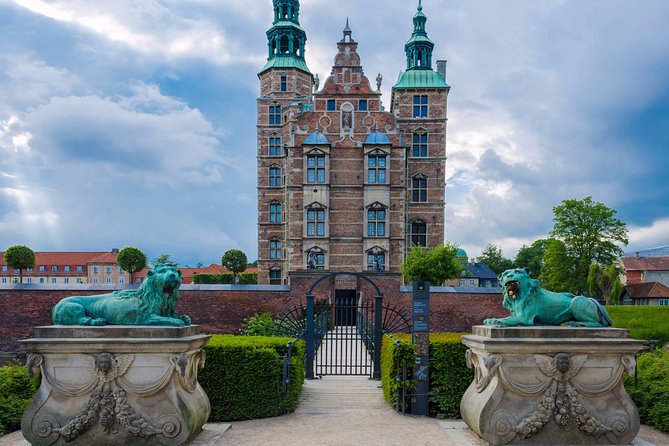
Rosenborg Castle comes next, viewed from outside. Christian IV built the small castle in the 17th century, and your guide explains his ideas and the building’s place in Copenhagen. The castle is a visual highlight, but this portion remains an exterior visit.
That distinction matters. If you want to see the crown jewels or castle interiors, you will need a separate visit. This tour gives you the setting, the story, and the view, but not the admission experience.
A quiet pause on Pistolstræde
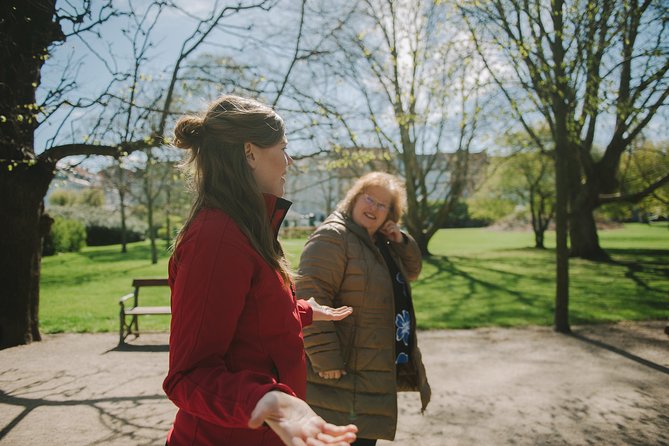
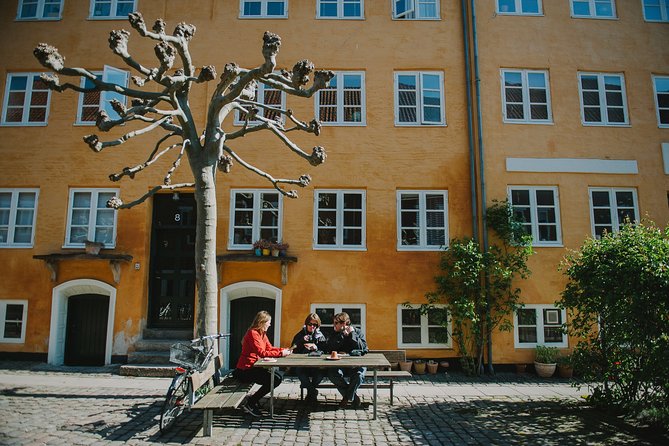
Pistolstræde provides another change of mood. This tucked-away alley has the old-world feel the tour is designed to find, and the group pauses here for flødeboller.
Flødeboller are Danish chocolate-covered marshmallow treats, often associated with childhood. Your guide explains the sweet and its connection to Danish hygge before you try it. The tasting is scheduled for about 20 minutes, long enough to sit, talk, and enjoy the pause.
This may be the clearest example of what the tour is trying to do. You are not rushing through a list of monuments. You are sitting in a quiet corner, sharing a local treat, and talking with the group. That said, the experience can feel less satisfying if you want constant historical information. One of the fairer criticisms of the tour is that its cultural focus can come at the cost of more detailed Copenhagen history.
From shopping streets to Nikolaj Kunsthal
The route includes a contrast between Copenhagen’s quieter lanes and one of Europe’s busy pedestrian streets. Your guide points out how the mood changes as you move from sheltered corners into the city’s main shopping flow.
That comparison is useful. Hygge is not just an architectural style or a collection of pretty streets. It also depends on how you choose to spend time within a busy city. After showing you the busier side, the guide turns back toward a quieter cobbled square near Nikolaj Kunsthal.
Here, you look up at the striking spire above what appears to be a church. The building’s present role and Copenhagen’s views on religion provide the talking points. The stop lasts about 15 minutes and is another exterior visit.
While you take photographs, the guide may step into a nearby shop to collect part of the next tasting. The arrangement keeps the group in one place and adds a small local touch, though anyone expecting entry to the art center should plan a separate visit.
Christiansborg and the Danish idea of happiness
Christiansborg Palace is one of the most important stops for understanding modern Denmark. The building houses the Danish parliament, and your guide uses it to discuss politics, the welfare system, and the cultural law of Jante.
The tour’s explanation of Danish happiness is not presented as a simple claim that Denmark is always cheerful. Instead, it connects happiness with trust and social systems. You hear how the two-tiered structure of the welfare system and a high level of public trust may shape daily life.
This is where the tour’s title has the most substance. The focus is not only on cozy cafés. It is also on the rules and expectations that influence how people treat one another.
If this is the part you most want, ask questions. Some guides place more emphasis on Danish happiness than others. Oskar, for example, has been praised for discussing hygge, Danish society, and the meaning of the concept, while another tour participant wanted more direct explanation of the country’s happiness rankings. The small group makes it easier to guide the conversation toward the subjects you care about.
Magstræde and a final café pause
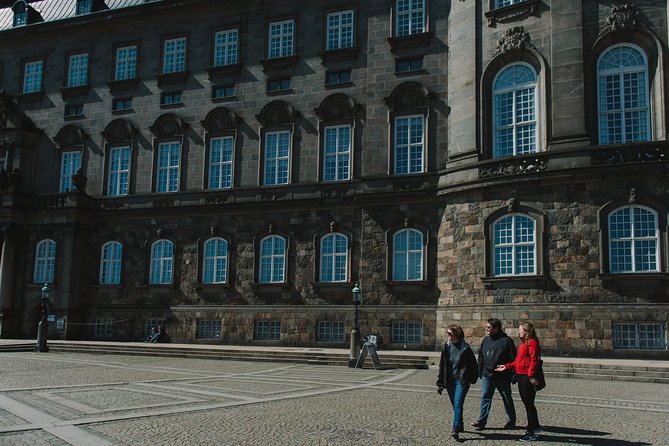
On the way back from Christiansborg, you pass along Magstræde, one of Copenhagen’s prettiest old streets. The stop is brief, around five minutes, but it reinforces the connection between older buildings, shared spaces, and local ideas about community.
The final part takes place in a cute café on a quieter central street. You receive coffee or tea and a pastry or other Danish treat, depending on the route and what has already been served. The café pause is meant to be hygge in practice: sit down, talk, and let the morning settle.
You also receive a sustainable slice of Copenhagen as a souvenir. The wording is broad, so do not book this expecting a large gift. The more useful benefit is the time to ask your guide for recommendations. Guides have helped people choose restaurants and plan the rest of their day, which makes the final stop valuable beyond the included drink.
The tour ends on Læderstræde in the city center, near artisan shops. That location is convenient for continuing on foot, though it is not the same as returning to the starting point.
What the $82.23 price buys you
At $82.23 per person, this is not the cheapest way to see Copenhagen. You are paying for a local guide, a small group, several tastings, and a route designed around cultural interpretation rather than transport between major sights.
The value improves if you use the tour as an introduction. You see several central areas, learn how they connect, and receive personal suggestions for later. The included coffee or tea, pastry, and flødeboller add real value, even though the food is light rather than a meal.
I would not choose this tour mainly for admission savings because there are no inside visits included. I would choose it for the guide’s local perspective and the chance to understand Copenhagen beyond its royal buildings.
The tour takes about three and a half hours, though one experience ran closer to four hours from start to finish. The pace is generally gentle, with pauses for food and conversation, but the amount of ground covered can still feel brisk. An 85-year-old participant was able to enjoy the walk with a comfortable pace, yet you should still expect several hours on your feet.
Who will get the most from this experience
I would recommend the tour to first-time visitors who want to get their bearings and understand Danish culture early in a stay. It also suits people who prefer a small group, enjoy local snacks, and want a guide who can answer questions about daily life.
Families can join, including children aged six through 11 at the listed child rate. Children under six may join free, but you need to mention them when booking. Service animals are allowed, and the route is near public transportation.
This is also a good choice if you enjoy seeing how a city feels between its major sights. It is less suitable if your main goal is to enter castles, museums, churches, or parliament buildings. It may also disappoint you if you expect a detailed political lecture or a full explanation of Denmark’s happiness rankings.
Book at least 24 hours ahead if your plans might change, since cancellations made less than 24 hours before the start are not refunded. Confirmation arrives when you book, and the experience is offered in English.
Should you book Good Morning, Copenhagen?
Book it if you want a warm, social introduction to Copenhagen that combines old streets, royal views, Danish sweets, and practical cultural insight. The small group and local guides, including names such as Therese, Laura, Oskar, and Peter, are the tour’s biggest strengths.
Skip it if you need extensive inside access or a full historical survey. The tour is at its best when you slow down, ask questions, taste something sweet, and pay attention to the quieter corners between the famous sights.
For many first-time visitors, I would schedule it near the start of the trip. You finish with a better sense of where you are, what Danish hygge means in real life, and which parts of central Copenhagen deserve a return visit.
FAQ
How long does the Copenhagen hygge tour last?
The tour lasts approximately three hours and 30 minutes. Some departures may take closer to four hours from start to finish.
Where does the tour begin?
The meeting point is Krokodillegade 21, 1326 København K, Denmark, near Nyboder’s yellow houses.
Where does the tour end?
The tour ends on Læderstræde in Copenhagen City Centre, on a street with artisan shops.
How large is the group?
The group has a maximum of 10 participants.
Is food and drink included?
Yes. The experience includes coffee or tea, a Danish pastry, and flødeboller. Additional food and drinks are not included.
Do you enter Rosenborg Castle or Christiansborg Palace?
No. Rosenborg Castle, Christiansborg Palace, Nikolaj Kunsthal, the old yellow houses, and other buildings along the route are viewed from outside.
Is the tour suitable for children?
Yes. Children aged six through 11 can join at the listed child rate. Children under six may join free, but you must mention them when booking.
What happens if I need to cancel?
You can cancel for a full refund up to 24 hours before the experience begins. Cancellations or changes made less than 24 hours before the start time are not accepted for a refund.
Just added around Copenhagen
- walking tour – Copenhagen and Christiansborg 3 hours★ 4.0 · 7 reviews
- The Hunt For The Six Forgotten Giants★ 5.0 · 45 reviews
- Copenhagen Walking Tour with Food Testing (smorrebrod dish & snap)★ 4.5 · 10 reviews
- The Philosopher’s Last Walk: An audio tour on the life of Søren Kierkegaard★ 4.5 · 5 reviews
- Small Group Guided Food Tour and Street Art Visit to Norrebro★ 5.0 · 9 reviews
- The Six Forgotten Giants Trolls Hunt with Minibus★ 4.5 · 27 reviews
- The Foodie Tour of Copenhagen★ 5.0 · 14 reviews
- The Forgotten Giants Private Tour★ 5.0 · 3 reviews
Morning, compared.


Abisko National Park: Scenic Morning Hike with Transfer
Read our review →

Sunrise Zen Husky Tour (10:00 to 13:00 – sitting on the sled)
Read our review →

Preikestolen Sunrise Hike with Breakfast Buffet
Read our review →

Guided sunrise hike to Pulpit Rock Preikestolen
Read our review →Browse the lists this tour appears in