Reviewed · OLD TOWN WALKING TOURS
Stockholm- A Beauty On The Water: Old Town Walking Tour and Boat Trip Combined
Stockholm makes its best first impression when you see it two ways: from the cobbled lanes of Gamla Stan and from the water that gives the city its character. This tour links both views in about three hours, with a guided walk through royal squares, political landmarks, and medieval alleyways, followed by a 50-minute cruise along Djurgårdsbrunn Canal.
I like the small maximum group of 10, which gives guides such as Bengt and Natalie room to answer questions and adjust the walking pace. I also like the useful ending: the boat docks near Kungsträdgården, close to the tram for Djurgården’s museums. The main drawback is value. At $135.16 per person, the boat is shared and uses an audio guide, so the price makes the most sense if you want a compact orientation to Stockholm rather than a deeply personal tour of every sight.
Key points to know before booking
- Royal Stockholm comes first: Begin at the Royal Swedish Opera and learn how the monarchy, government, and city center fit together.
- Gamla Stan is the heart of the walk: See Stortorget, the Nobel Prize Museum, old merchant streets, and narrow medieval lanes.
- Bengt and Natalie are named guides: Their tours focus on clear explanations, questions, and a comfortable pace.
- The boat is a restful second act: The 50-minute cruise runs through Djurgårdsbrunn Canal and gives you a fresh view of Stockholm.
- Audio equipment matters: English commentary is available, but you may need headphones or the boat’s headphone sockets for the best result.
- The finish is useful: You end near Kungsträdgården, with easy access toward Djurgården’s museums.
Why this combination works in Stockholm
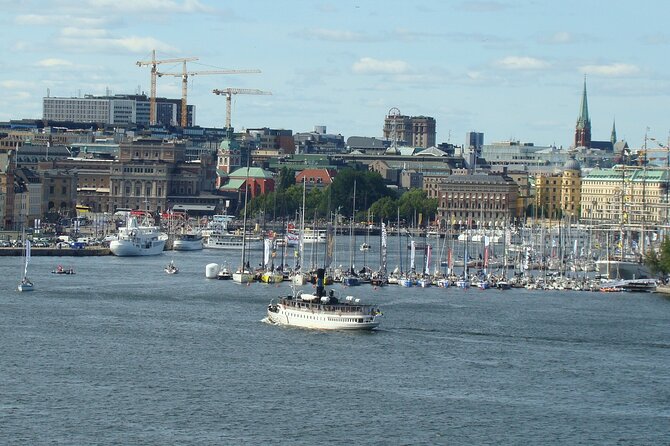
Stockholm is spread across islands, bridges, canals, and neighborhoods. A walking tour alone shows you the city’s streets and buildings, but it cannot explain how water shapes daily life here. A boat cruise alone gives you attractive views, but it can leave you unsure what you are looking at.
This outing solves that problem in a tidy half-day. You first build a mental map on foot. Then you sit down, rest your legs, and see parts of the city from the water. I find that order sensible. The walk gives meaning to the views, while the boat provides a change of pace before the experience ends.
The group size is another practical advantage. With no more than 10 people, you are less likely to lose the guide in a crowded square. Bengt is praised for his historical explanations, humor, and ability to keep a group of nine engaged. Natalie is described as patient and willing to move at the group’s pace, with suggestions for lunch and further sightseeing.
The tour is offered in English and lasts about three hours. The walking portion takes roughly two hours, followed by the 50-minute cruise. You need moderate physical fitness, since the route includes city streets, bridges, and old-town lanes. It is not a museum-heavy tour, and there is no long palace visit included.
More Boat Tours in Stockholm
- Stockholm: City Archipelago Sightseeing Cruise with Guide
★ 4.3 · 10,798 reviews - Stockholm: Archipelago Boat Tour
★ 4.4 · 3,110 reviews - Stockholm: Highlights Boat Tour
★ 4.3 · 2,542 reviews
Starting beside the Royal Swedish Opera
Meet at the Royal Swedish Opera on Gustav Adolfs torg. This opening stop gives your guide a chance to place Stockholm and Sweden in context before the group starts moving.
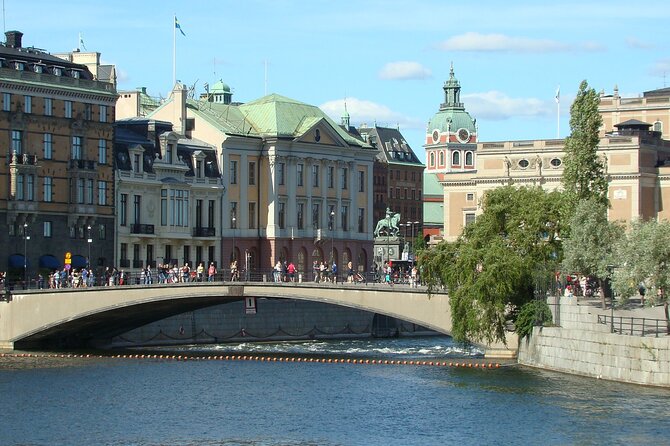
The square is surrounded by buildings with royal connections. Across the water, the Royal Palace rises in Baroque style. The opera house is linked to the story of King Gustav III, whose assassination inspired Giuseppe Verdi’s opera Un ballo in maschera, commonly known as The Masked Ball. On the other side of the square, the stately building now used by the Ministry of Foreign Affairs was once the palace of the heir presumptive.
This is a good opening because you get architecture, politics, and royal drama right away. You also learn that the formal name of the country is the Kingdom of Sweden, a small detail that helps set the tone for a tour built around institutions and national history.
The stop lasts about 15 minutes and does not require a separate admission ticket. Expect an outdoor introduction rather than entry into the opera house or palace.
Parliament, bridges, and the story of Swedish power
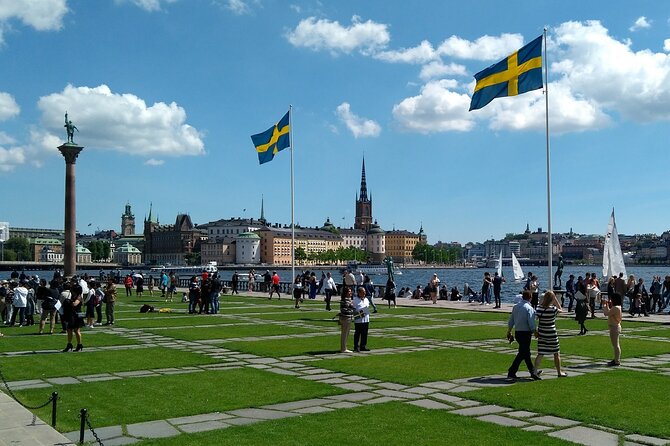
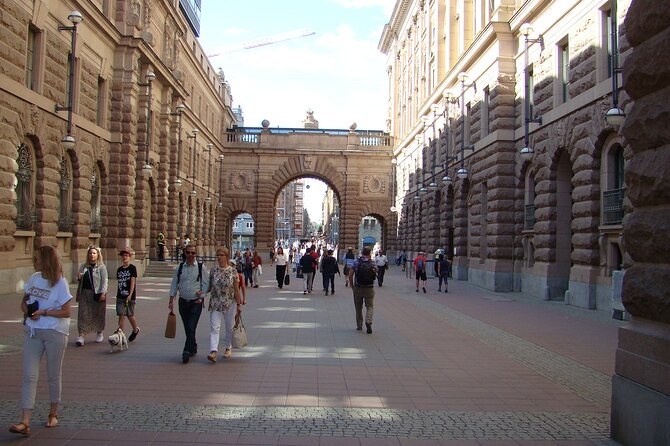
The walk continues to the Parliament Building, or Riksdagshuset. Its Neo-Renaissance design and Neo-Baroque facade reflect the late 19th-century confidence of the Swedish state. Construction took place from 1897 to 1905.
The building is more than a photo stop. It gives your guide a chance to explain how Swedish government changed over time. The old Riksdag of the Estates brought together nobles, clergy, burghers, and peasants in separate groups. That system ended in 1866, when a two-chamber parliament was introduced.
General suffrage arrived only after a long political struggle, with the first elections held in 1921. In 1975, the two parliamentary chambers became one, while the king’s role was confirmed as representative rather than political. If you enjoy seeing how a country’s institutions developed, this section adds useful background to the handsome buildings around you.
At Riksbron bridge, the city opens up. You can look toward Riddarholmen, often called Knights Island, and see the prime minister’s residence, government buildings, and the House of Nobility. Stockholm City Hall is also visible. Its Blue Hall hosts the Nobel Prize banquet, even though the Nobel Prize Museum itself is elsewhere in Gamla Stan.
The bridge stop takes about 15 minutes. It is one of the better places for a broad city view, though the experience depends somewhat on weather and how crowded the bridge is.
Palace views from Lejonbacken and Slottsbacken
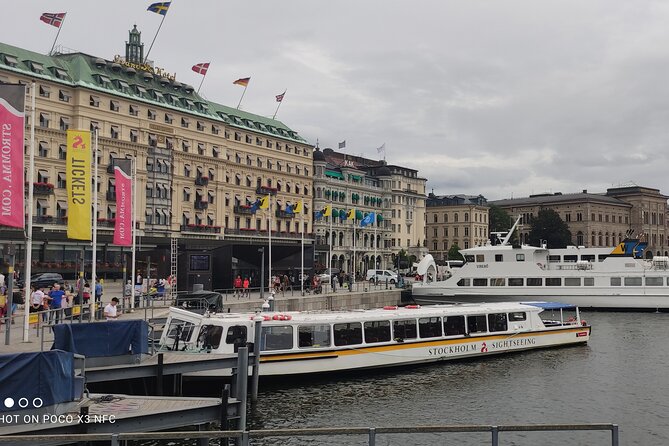
Lejonbacken sits on the north side of the Royal Palace and is one of Stockholm’s most familiar photo locations. The name refers to the lion sculptures guarding the approach. From here, you can look toward the palace, the Royal Garden, and the statue of Karl XII.
Karl XII was the last of Sweden’s warrior kings. During the 17th and 18th centuries, Sweden was a major power in northern Europe, and this part of the walk helps explain that earlier period of military influence. You also get a look toward the Financial District, whose buildings reflect the changing architectural tastes of the late 19th and early 20th centuries.
The Grand Hotel is another landmark in view. It is Stockholm’s most prestigious hotel and the place where Nobel laureates stay during the prize ceremonies. This is the sort of detail that makes a city walk more useful than a simple list of buildings. You begin to understand how the royal, financial, and cultural parts of Stockholm sit beside one another.
At Slottsbacken, the group passes through the Royal Palace courtyard and makes a short visit to the Palace Chapel. The chapel is used for royal baptisms. Since this is a brief stop, do not expect a full palace tour or a long interior visit.
Outside, the statue of Carl XIV Johan introduces the Bernadotte dynasty, which still occupies the Swedish throne. Carl XIV Johan began life in France and served in Napoleon’s army before being adopted into the Swedish royal family. He became king and chose diplomacy, infrastructure, and education over a campaign to recover territory lost to Russia.
That story gives the tour a useful Swedish angle. The country marked 200 years of peace in 2014, and the guide connects that long period of stability with industrial growth, natural resources, inventions, and the development of the welfare state.
More Boat Tours in Sweden
- Stockholm Archipelago Cruise with Guide
★ 4.0 · 1,125 reviews - Stockholm: Royal Djurgården Boat Tour
★ 4.1 · 639 reviews - Open Electric Boat Ride in Stockholm with Live-Guide
★ 5.0 · 637 reviews - Stockholm: Guided City Sightseeing Open Electric Boat Tour
★ 4.8 · 516 reviews
Stortorget and the dark side of Gamla Stan
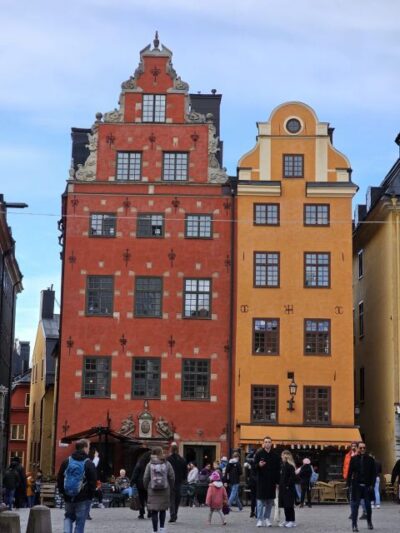
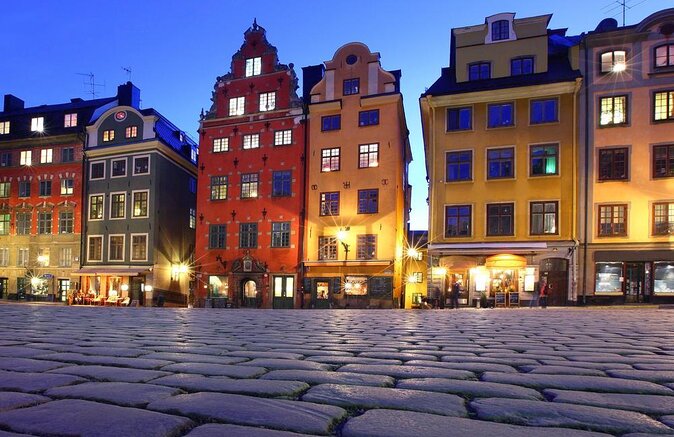
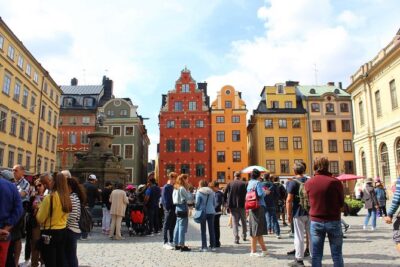
The walk reaches Stortorget, the central square of Gamla Stan. This is Stockholm’s most photographed square, with colorful buildings in Scandinavian Renaissance and 18th-century Classical styles.
The square is attractive, but its past is grim. In November 1520, the Stockholm Bloodbath took place here. Around 100 noblemen and priests were beheaded by the Danish king Christian II, who became known in Sweden as Christian the Tyrant.
The story matters because it shows that Stockholm’s old center is not only pretty. Its buildings and streets witnessed struggles between Sweden and Denmark, between monarchs and political groups, and between the old order and a changing nation.
Stortorget is also home to the Nobel Prize Museum. The Swedish Royal Academies and other committees select winners in science, literature, and other fields. The tour does not include museum admission, but the guide helps place the institution within the square’s story.
You have about 15 minutes here. That gives you time to look closely at the facades and take photographs, but not enough for a proper museum visit. If the Nobel Prize Museum is a priority, plan to return later.
Medieval lanes from Köpmangatan to Skeppsbron
From Stortorget, you walk along Köpmangatan, or Merchants Street. Written references to this street date to 1350, making it one of the clearest links between modern Stockholm and the medieval town.
The route then uses narrow alleyways before continuing along Österlånggatan toward Skeppsbron. These lanes are where the walking portion feels most atmospheric. You see how compact the old town is and how its streets were shaped long before cars, wide sidewalks, or modern city planning.
At Skeppsbron, the view opens toward the waterfront. Ships have loaded cargo here since the 17th century, and the harbor helps explain why Stockholm became such an important trading city.
This section is one of the strongest parts of the experience. You are not merely passing famous buildings. You are moving through the old town in a way that connects street names, commerce, royal power, and waterfront trade.
The pace is described as comfortable, and the small group helps the guide point out details without rushing. Still, wear sensible shoes. Three hours is not a long day of walking, but old-town streets and bridges can be tiring, especially if you have already spent the morning sightseeing.
Boarding at Strömkajen for Djurgårdsbrunn Canal
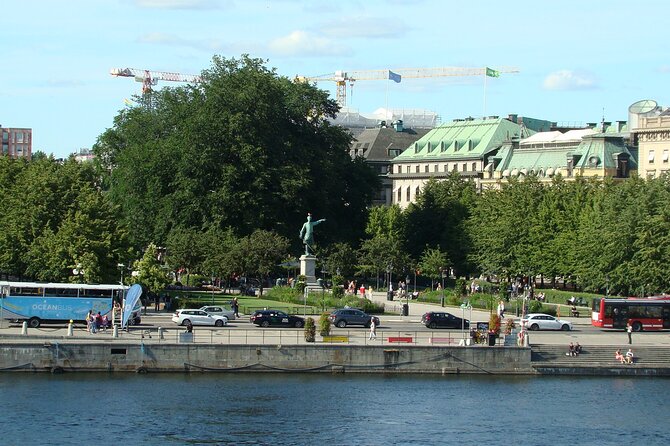
The walking portion ends at Strömkajen, where the Royal Canal Tour operated by Stromma begins. The boat ride lasts about 50 minutes and passes through Djurgårdsbrunn Canal.
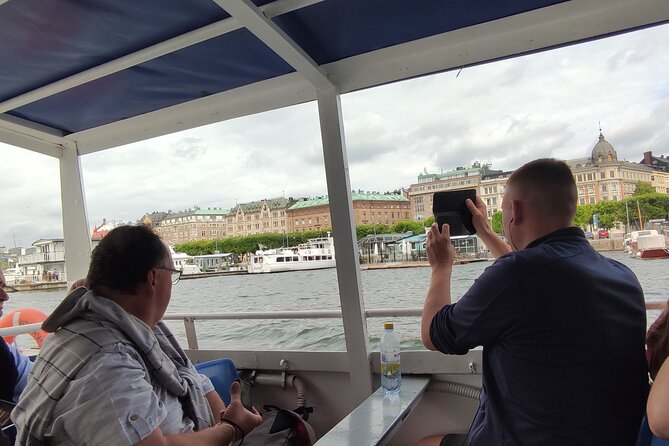
This is the relaxed part of the experience. After the palace approaches, government buildings, and old-town lanes, you can sit back and watch Stockholm slide past from the water. The canal offers a quieter view than the city center, along with changing views of the skyline.
The boat has a bar selling Swedish fika, including coffee and a cinnamon roll, as well as tea, soft drinks, and pastries. Beer, wine, sandwiches, and snacks are also available. Buying something on board is optional, but fika can be a pleasant way to mark the transition from walking to cruising.
The boat tour uses an audio guide in English and several other languages, including Spanish, Chinese, Estonian, Finnish, French, German, Italian, and Russian. The audio setup is the least reliable part of the experience. If you use the mobile phone option, make sure you understand how to access it before the boat leaves.
Headphone sockets are available by seats in the front half of the boat, and earphones are provided for passengers who need them. I would choose the simplest available setup and ask the crew for help at once if the audio is not working. Otherwise, you may spend much of the cruise looking at the view without hearing the explanation.
Another point to note is photography. The boat provides good views, but the ability to go outside and take pictures can be limited. If you want a fully open-air boat ride, this may feel less satisfying than expected. The cruise is best understood as a comfortable sightseeing ride with commentary, not an adventurous harbor trip.
What the $135.16 price really buys you
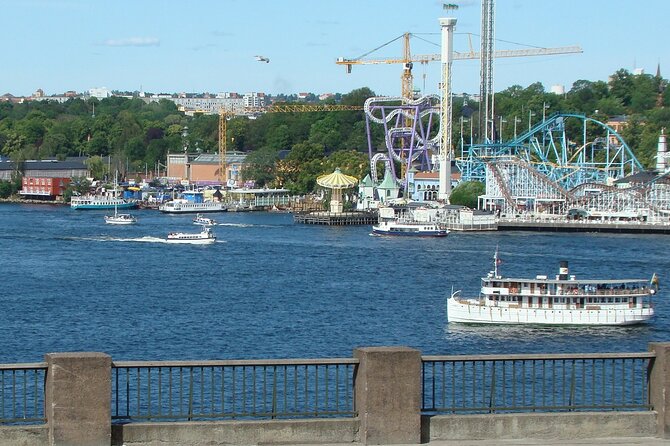
The cost is $135.16 per person, which places this well above a basic free walking tour or a standard canal cruise booked alone. The value comes from the combination and the small group, not from exclusive access to major attractions.
You are paying for a guided introduction to central Stockholm, a compact history lesson, and a boat trip. You do not pay separate admission at the walking stops, and the cruise is included. The guide also saves you the trouble of connecting the old town with the boat departure point yourself.
For a first day in Stockholm, that orientation can be useful. You finish with a clearer sense of where the Royal Palace, Parliament, Gamla Stan, Kungsträdgården, and Djurgården sit in relation to one another.
Still, the price is hard to justify if you mainly want a boat ride. The walking portion receives the strongest praise, while the cruise is more functional than special. I would book this for the guide and the well-planned combination, not for luxury or private touring.
Who should book this Stockholm tour?
I would recommend it to first-time visitors who want the main central sights explained in plain language. It also suits families and small groups that prefer a set route and a guide who can answer questions without the feel of a large bus tour.
It works particularly well near the start of a stay. Natalie has offered suggestions for lunch and later sightseeing, and Bengt has given groups a list of additional things to do. The ending near Kungsträdgården also makes it easy to continue toward Djurgården, where you can visit the Vasa Museum, Viking Museum, ABBA Museum, or Skansen.
You may want a different plan if you dislike audio guides, need extensive indoor time, or want a fully open boat deck. The tour also may not suit anyone looking for a palace interior visit, since the Royal Palace appearances are brief and focused on exterior history and the chapel.
The experience requires moderate physical fitness and is offered in English. Confirmation arrives when you book, and free cancellation is available up to 24 hours before the start time. The tour can be canceled if its minimum group size is not met, in which case you are offered another date or a full refund.
Should you book it?
Book this tour if you want a clear first look at Stockholm, enjoy historical storytelling, and like the idea of ending with a quiet canal cruise. The walk through Gamla Stan is the real strength, especially with a guide such as Bengt or Natalie, while the boat gives your legs a break and adds a useful second view of the city.
Skip it if $135.16 feels high for a shared cruise and a guided walk with no major admissions included. You can find cheaper ways to see Stockholm, but you will lose the convenience of having the royal center, Parliament, medieval old town, and Djurgårdsbrunn Canal joined into one well-paced outing.
FAQ
How long does the tour last?
The experience lasts approximately three hours. The walking portion takes about two hours, followed by a 50-minute boat ride.
Where does the tour begin?
It begins at the Royal Swedish Opera at Gustav Adolfs torg 2 in Stockholm.
Where does the tour end?
The tour ends at Södra Blasieholmshamnen 9, where the boat docks near Kungsträdgården.
Is the boat ride included in the price?
Yes. The 50-minute Royal Canal Tour is included.
What language is the tour offered in?
The guided walking tour is offered in English. The boat has audio guides in English, Spanish, Chinese, Estonian, Finnish, French, German, Italian, and Russian.
Is the tour suitable for families?
Yes. The small group format and flexible walking pace make it suitable for groups and families.
How large is the group?
The experience has a maximum of 10 participants.
Can I buy food or drinks on the boat?
Yes. The bar offers Swedish fika with coffee and cinnamon rolls, along with tea, soft drinks, pastries, beer, wine, sandwiches, and snacks.
Does the tour include entry to the Royal Palace or Nobel Prize Museum?
No separate admission to those attractions is included. The route includes palace-area sights, a short Palace Chapel visit, and the Nobel Prize Museum exterior area at Stortorget.
What is the cancellation policy?
You can cancel up to 24 hours before the start time for a full refund. Changes or cancellations made less than 24 hours before the start are not accepted for a refund.
More Walking Tours in Stockholm
- Stockholm: Ghost Walk and Historical Tour
★ 4.7 · 2,206 reviews - Best of Stockholm Walking Tour-3 Hours, Small Group max 10 people
★ 5.0 · 645 reviews - The Nordic Food Walk Stockholm
★ 4.5 · 642 reviews - Stockholm: Old Town Historical Walking Tour
★ 4.9 · 344 reviews
More Old Town Tours in Stockholm
- Walking Tour of Stockholm Old Town
★ 5.0 · 1,175 reviews - The Original Stockholm Ghost Walk and Historical Tour – Gamla Stan
★ 4.5 · 1,165 reviews - Stockholm: Old Town Walking Tour with Local Guide
★ 4.7 · 719 reviews - Walking Tour of Stockholm’s Old Town, Gamla Stan
★ 5.0 · 451 reviews
Just added around Stockholm
- Traditional Persian Cooking Class in Stockholm with a Local★ 5.0 · 20 reviews
- Stockholm Top attractions all-inclusive Gran Tour Winter Edition★ 5.0 · 6 reviews
- Airport Limousine Transfer: Arlanda Airport to Stockholm City 1-7 Passengers★ 4.0 · 5 reviews
- Scandinavian Art, Architecture and Design Tour in Stockholm★ 4.5 · 11 reviews
- Wolf and Wildlife Tracking in Sweden★ 5.0 · 9 reviews
- Walking Tour of Stockholm’s City Center★ 4.5 · 26 reviews
- Stockholm: Sunset Hike in Tyresta National Park with Meal★ 5.0 · 79 reviews
- Private Tour: Swedish History Day Trip to World Heritage Candidate Markim-Orkesta from Stockholm★ 5.0 · 8 reviews
Old Town Walking Tours, compared.
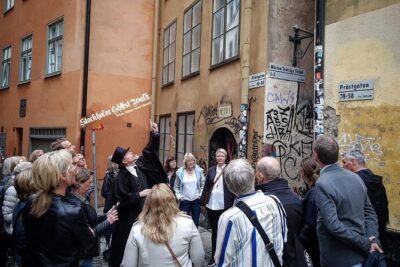
The Original Stockholm Ghost Walk and Historical Tour – Gamla Stan
Read our review →
Walking Tour of Stockholm’s Old Town, Gamla Stan
Read our review →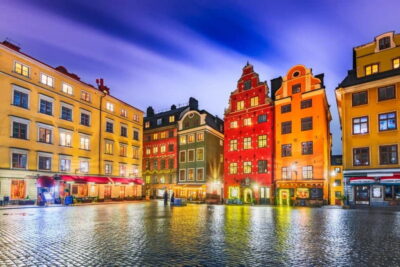

Old Town Guided Walking Tour (English / Deutsch)
Read our review →