
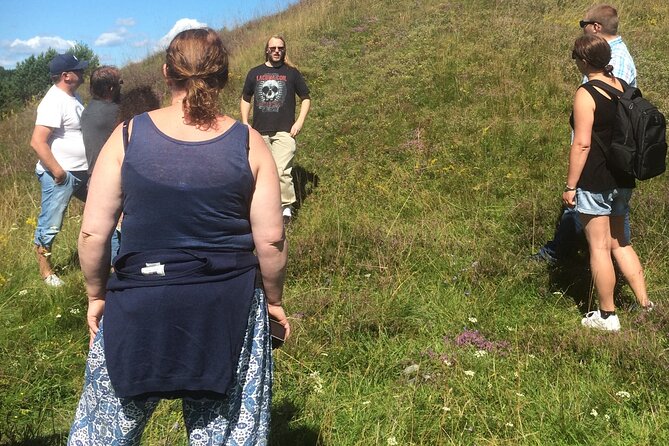
Reviewed · 2-HOUR EXPERIENCES
Bloody Stockholm 2h – ghosts, horror and Dark Folklore Tour
Stockholm’s prettiest lanes carry some very grim stories. This walk turns Stortorget, Prästgatan, doorways, church steps, and waterfront corners into settings for executions, curses, restless souls, trolls, and water spirits. It is less a theatrical ghost show than a dark history and folklore walk.
I like two things here: you get far more than standard sightseeing facts, and the route stays small-scale and walkable through Gamla Stan. Guides Jonathan and Åsa have both been praised for lively storytelling and for handling questions and humor well. The main drawback is that the advertised timing is about 90 minutes, while one tour lasted 2.5 hours, so the pace and length may vary.
Key points to know before you book
- Stortorget opens the story with executions and death magic, including the fate of around 90 people connected with the Danish capture of Stockholm.
- The route mixes documented history with Swedish folklore, so expect both grim events and creatures such as Näcken, bäckahästen, and Skogsrået.
- You walk from the Nobel Prize Museum to Saint Jacob’s Church, ending just outside the Old Town near Kungsträdgården.
- Jonathan and Åsa are named guides associated with the experience, and both are described as engaging, well informed, and open to questions.
- The group can reach 30 people, though a very small group can make the storytelling feel more personal.
- The tour is guide-led and has no separate admission fees, making the value depend mainly on the quality and length of the commentary.
Stockholm’s dark side begins at Stortorget

Meet at the Nobel Prize Museum on Stortorget, the central square in Stockholm’s Old Town. This is a fitting place to begin because the square looks inviting today, with colorful buildings and busy walking routes, yet the tour quickly shifts your attention toward death, punishment, and fear.
The opening section covers executions connected with the Danish King Kristian’s seizure of Stockholm. Around 90 people were killed in that period, and the guide uses the square to discuss what happened and how stories of death stayed alive in local folklore.
You also hear about the magical use of human remains. The themes include beliefs about the blood of the dead, body parts used in curses, and gallows parts brewed into potions. This is not a light introduction, and it gives the walk its strongest connection to the title Bloody Stockholm.
I like this opening because it places the folklore beside real events. You are not simply hearing a string of spooky inventions. The guide moves between executions, beliefs, and the ways people once tried to explain danger and death. If you prefer clean historical fact with no supernatural material, parts of this section may feel uncomfortable or strange. That mixture is the point here.
The stop lasts about 10 minutes, though the total timing can stretch. One session ran for more than two and a half hours, far longer than the stated approximate duration. If your evening plans are fixed, allow extra room rather than treating the 90-minute estimate as exact.
A few more Stockholm days worth weighing up
- Stockholm: 2-Hour RIB Speed Boat Tour of the Archipelago
★ 4.9 · 396 reviews - Stockholm Speed Boat 2 Hour Archipelago Tour
★ 5.0 · 139 reviews - Södermalm: 2-Hour Sightseeing Tour
★ 4.0 · 46 reviews
Prästgatan and the lane once called Hell
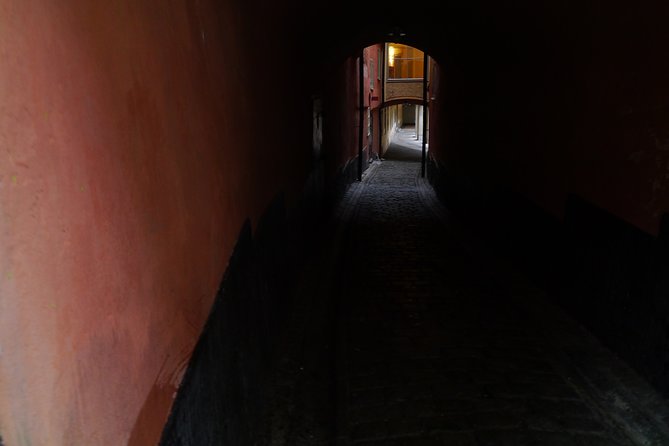
From Stortorget, the group walks along Prästgatan. The route is short, but the setting does much of the work. Gamla Stan’s narrow streets can feel cozy in daylight, then rather different when the guide explains the grim names and stories attached to them.
Part of Prästgatan was once called Hell, and the guide explains who lived there and why the name mattered. The stop is another 10-minute section, so you should not expect a long lecture at one doorway or corner. Instead, the guide keeps the walk moving and layers small pieces of local belief onto the streets around you.
This is where the tour’s method becomes clear. You are not being taken into a museum or presented with costumes and stage effects. You stand outside, look at an ordinary lane, and hear how its past changes the way you see it. One review described the outing as more of an informative stroll than a traditional ghost tour. That is a useful expectation.
You may enjoy this most if you like atmosphere, old streets, and stories that leave room for your imagination. The experience does not appear to rely on actors, props, or manufactured scares. The horror comes from the subject matter and the contrast between charming surroundings and disturbing tales.
Iron, doorways, and protection from the unseen
The next section takes place at the door of a house in Stockholm’s Old Town. Here, the subject turns from human violence to protection against vaesen, the supernatural beings of Swedish folklore.
The guide explains how iron was used for protection against elves and other beings associated with mist and restless souls. You also hear about the Swedish Tomte, a familiar figure in Nordic folklore, but in this setting the focus is not on cheerful holiday decoration. The story deals with old fears, household safety, and the need to protect people who were considered vulnerable.
Newborn children receive special attention. Before baptism, a baby was thought to lack certain protections against trolls and the Devil. The tour explores the measures people were meant to take, including protection connected with the home and its door.
This 10-minute stop is valuable because it shows how folklore could shape ordinary life. A door was not simply an entrance. It could be a weak point, a boundary, and a place where danger might enter. I find these details more memorable than a long list of dates because they show what people feared in daily life.
The material can also work for families with older children. A 10-year-old enjoyed the stories on one outing, but the subject includes death, the Devil, curses, and supernatural threats. Use your judgment, especially if your child is sensitive to dark themes.
Water spirits at Logårdstrappan

At Logårdstrappan, the tour turns toward the water. This section covers several Swedish folklore beings linked with drowning, temptation, and the dangers beneath the surface.
You hear about Näcken, the bäckahästen, the Swedish version of the kelpie, the Sjörå, and the skepps-rå. The guide explains how these beings could lure people into the water or pull them toward the deep. The stories connect naturally with Stockholm’s setting, since waterways are such a visible part of the city.
This is one of the more distinctive parts of the walk. You are not simply hearing about generic ghosts. The folklore belongs to a northern tradition and includes different beings for different settings. Some are associated with streams, some with the sea, and some with ships.
The section lasts about 10 minutes. It may appeal especially to you if you enjoy mythology but want something more local than the usual haunted-house story. At the same time, the supplied information does not promise supernatural sightings or paranormal activity. Think of this as folklore storytelling, not a séance or a search for proof of ghosts.
Weather matters here because the tour stays outdoors. One person enjoyed the outing despite poor weather, but rain, cold, or slippery streets can make a walking route less comfortable. Wear shoes suited to Old Town streets and check the forecast before leaving.
A different sort of day out, same corner of Stockholm:
- Stockholm: City Archipelago Sightseeing Cruise with Guide
★ 4.3 · 10,798 reviews - Stockholm: Skansen Open-Air Museum Admission Ticket
★ 4.5 · 3,427 reviews - Stockholm: Archipelago Boat Tour
★ 4.4 · 3,110 reviews - Stockholm: Highlights Boat Tour
★ 4.3 · 2,542 reviews
Kungsträdgården and the creatures of the forest
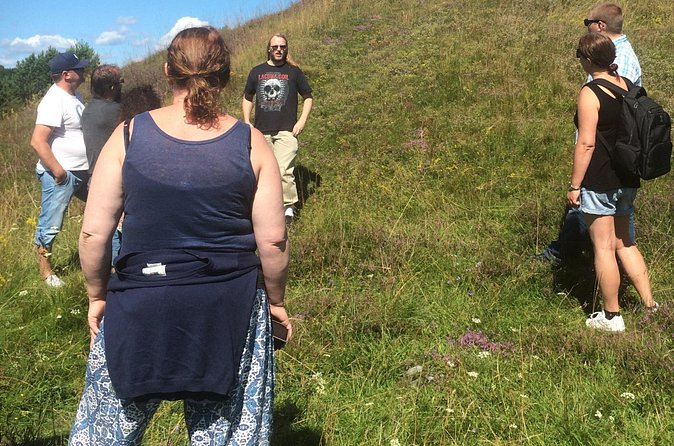
The route continues to Kungsträdgården, where the guide introduces more dangerous beings from Swedish folklore. This is the longest listed stop, at about 20 minutes.
The main figure here is Skogsrået, also known as the huldran. The tour also covers the Myrling, described as an undead living child, along with other creatures from older Swedish belief.
This section gives the experience a broader reach. The opening at Stortorget focuses on real executions and human cruelty. Later, you hear about household protection and water spirits. At Kungsträdgården, the guide expands into forest folklore and the unsettling idea that danger could come from a child, a stranger, or a beautiful figure in the woods.
I like the progression. The walk does not stay stuck in one kind of horror. It moves from public punishment to domestic fears, then to water and forest beings. You get a sense of how different places generated different stories.
The guide’s delivery matters greatly here. The material can sound like a list of unfamiliar names if rushed. Jonathan has been praised for his facts and his willingness to answer questions, while Åsa has been described as engaged and well informed. A small group of three made one outing feel especially personal. The maximum group size is 30, so your experience may be more intimate or more crowd-based depending on the departure.
Saint Jacob’s Church and the final warnings
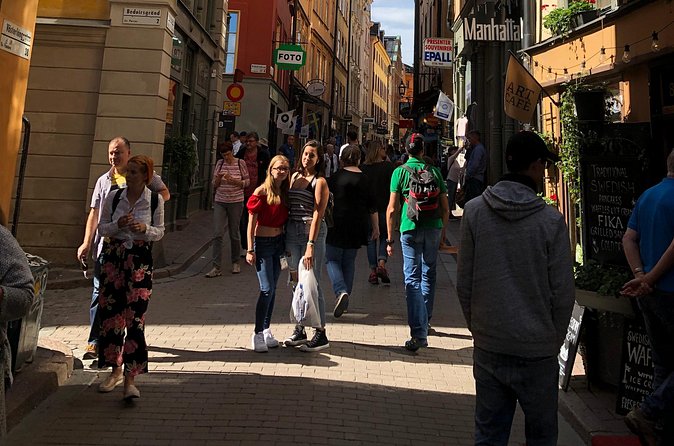
The walk ends outside Saint Jacob’s Church on Västra Trädgårdsgatan. This final stop lasts about 15 minutes and focuses on the church door, weak points in the church, baptism, exorcism, and ways to punish a worst enemy.
The church door returns you to a theme that appeared earlier: boundaries. A home needed protection, and so did a church. The guide discusses where danger might enter and how people viewed the church as a place that could be threatened or defended.
The baptism story is one of the more unusual topics. It concerns the exorcism of a child at baptism, connecting religious practice with fears about evil and spiritual danger. The final discussion also covers what to do if you wanted to punish a serious enemy, which brings the tour back to curses and human motives.
The end point is practical for sightseeing. Saint Jacob’s Church is just outside the Old Town on the north side, beside Kungsträdgården. You are about a 10-minute walk from the starting area, so you can return to Stortorget without needing public transport. The route itself runs through the Old Town and around it, with no separate admission tickets at the stops.
What the tour does especially well
The strongest feature is the guide’s storytelling. The most positive comments focus on guides who know the material, share unpleasant details without losing the thread, and welcome questions and humor. That matters on a theme like this. Dark folklore can become silly if the guide overplays it, or dry if the guide simply recites names. The best moments appear to come from the balance of facts, stories, and atmosphere.
The second strength is the subject matter. Many Stockholm walks stay with royal buildings, architecture, and major civic events. This one asks what people feared, how punishment worked, and how supernatural beliefs shaped ordinary choices. You get a different view of Gamla Stan without leaving its main streets.
The tour also offers good value if you want a guided introduction rather than an attraction with admission fees. The guide is included, and each stop is free to enter because the stories take place outside. Since no tour price is provided here, I cannot judge the exact cost, but the value rests on the guide’s skill and the amount of time you receive.
There is one clear limitation. One Swedish-language outing lasted more than 2.5 hours and included less dangerous folklore than intended, according to the guide’s own response. The guide planned to adjust the balance. That tells you the experience can be flexible and conversational, but it also means the actual emphasis and length may not be perfectly uniform.
Who should book Bloody Stockholm?

I would choose this tour if you enjoy dark local history, folklore, old streets, and stories about how people once understood danger. It suits couples, families with older children, and curious visitors who want something beyond the usual palace and museum route.
It is also a good match if you like asking questions. The guides are described as open to humor and discussion, and a small group can make that exchange easier.
I would skip it if you want a polished theatrical ghost show, jump scares, actors, or proof of paranormal activity. The experience is an outdoor history walk with supernatural folklore woven through it. It may also be a poor fit if you have a tight schedule and cannot allow for a longer-than-advertised outing.
Book at least 24 hours ahead if you want the option of a full refund. Cancellations made at least 24 hours before the start time qualify for a full refund. Changes or cancellations inside that period are not accepted for a refund.
My verdict on this Stockholm night walk
I would book Bloody Stockholm if you want to see Gamla Stan through its fears as well as its architecture. The walk offers executions at Stortorget, the old Hell quarter on Prästgatan, iron protection against supernatural beings, water spirits at Logårdstrappan, forest creatures near Kungsträdgården, and church folklore at Saint Jacob’s.
The experience earns its strong reputation from the guides and the unusual subject. Just keep your expectations straight: this is an informative, sometimes grim folklore stroll, not a haunted attraction. Allow extra time, dress for the weather, and you should come away seeing Stockholm’s narrow lanes in a much less innocent light.
FAQ
How long does Bloody Stockholm last?
The experience is listed as approximately 1 hour and 30 minutes. One outing lasted more than 2.5 hours, so you should allow extra time.
Where does the tour start?
It starts at the Nobel Prize Museum, Stortorget 2, 103 16 Stockholm, Sweden.
Where does the tour end?
It ends outside Saint Jacob’s Church at Västra Trädgårdsgatan 2A, near Kungsträdgården and just outside the Old Town.
Is the return walk to the starting point far?
The end point is about a 10-minute walk from the start.
What language is the tour offered in?
The tour is offered in English.
What topics are covered?
The tour covers executions, death magic, curses, restless souls, trolls, the Swedish Tomte, water spirits, forest beings, baptism, exorcism, and church protection.
Are admission tickets included?
The stops have free admission, and a guide is included.
How large can the group be?
The tour can have a maximum of 30 participants.
Are service animals allowed?
Yes, service animals are allowed.
Can most people take part?
Yes. Most people can participate, and the tour is near public transportation.
What is the cancellation policy?
You can cancel at least 24 hours before the start time for a full refund. Cancellations or changes made less than 24 hours before the start time are not refunded.
Just added around Stockholm
- Traditional Persian Cooking Class in Stockholm with a Local★ 5.0 · 20 reviews
- Stockholm Top attractions all-inclusive Gran Tour Winter Edition★ 5.0 · 6 reviews
- Airport Limousine Transfer: Arlanda Airport to Stockholm City 1-7 Passengers★ 4.0 · 5 reviews
- Scandinavian Art, Architecture and Design Tour in Stockholm★ 4.5 · 11 reviews
- Wolf and Wildlife Tracking in Sweden★ 5.0 · 9 reviews
- Walking Tour of Stockholm’s City Center★ 4.5 · 26 reviews
- Stockholm: Sunset Hike in Tyresta National Park with Meal★ 5.0 · 79 reviews
- Private Tour: Swedish History Day Trip to World Heritage Candidate Markim-Orkesta from Stockholm★ 5.0 · 8 reviews
2-Hour Experiences, compared.
Group Walking Tour – City Highlights – 2 Hours
Read our review →
2-Hour Oslo Fjord Sightseeing Cruise by Sailing Ship
Read our review →
Segway Tours Copenhagen w. Guide & Concierge Service. 2 Hours+
Read our review →



Browse the lists this tour appears in