
Reviewed · WALKING TOURS
Unique walking tour Stockholm
Stockholm is made for an unusual city walk, and this tour takes that idea seriously. Instead of stopping only at the postcard sights, guide Tomas, a fourth-generation Stockholmer, connects royal squares, modern Swedish politics, neighborhood life, and even the city’s underground art. I especially like the mix of major landmarks and less expected corners, plus the way the tour uses the metro to cover more ground than a standard walking route.
I also like the personal touch. Tomas has been praised for his clear English, local perspective, funny stories, and willingness to tailor a small group’s experience. The main drawback is that the tour is mostly about places seen from outside, and a metro ticket may cost extra, so the $65.69 price pays mainly for the guide and the stories rather than admission to sights.
Key details that shape the experience

- A local guide with deep Stockholm roots: Tomas brings personal knowledge of the city as well as facts about its past and present.
- More than the usual royal route: You visit the Royal Palace, Riddarholmen, Södermalm, and lesser-known city corners in one outing.
- Stockholm’s underground art may be part of the day: The tour uses the metro, with special attention to art on the blue line.
- Small groups keep the walk personal: The maximum is 15 people, though the group can be much smaller.
- Outdoor sightseeing keeps the pace moving: The Concert Hall, Gallerian, Riddarholmen, and Royal Palace are viewed from outside.
- A good first-day orientation: The tour ends at the castle after crossing several parts of central Stockholm.
A city tour built around stories, not entry tickets
The best reason to book this experience is the guide’s storytelling. Stockholm has plenty of polished sights, but the city makes more sense when you hear how public spaces, political events, local customs, and neighborhood identities connect.
Tomas focuses on unusual details that are easy to miss. You may hear why a full Swedish flag flies over the Royal Palace when the King is working, while a pennant is used at other times. You may also hear the local background behind Stockholm syndrome, stories about public protests, or how Stockholm residents pushed back when changes threatened Kungsträdgården.
That approach gives the walk a human scale. You are not simply collecting photographs of statues and buildings. You are learning how Stockholmers relate to their city.
The group limit of 15 matters here. A large crowd can make a city walk feel like a lecture delivered to the back row. A small group makes it easier to ask about Swedish culture, local restaurants, neighborhoods, or anything that catches your eye. One particularly useful detail is that Tomas has sometimes offered personal suggestions during the tour, including restaurant recommendations and a bookstore stop for a solo participant.
More Walking Tours in Stockholm
- Stockholm: Ghost Walk and Historical Tour
★ 4.7 · 2,206 reviews - Walking Tour of Stockholm Old Town
★ 5.0 · 1,175 reviews - The Original Stockholm Ghost Walk and Historical Tour – Gamla Stan
★ 4.5 · 1,165 reviews
Starting at Kungsträdgården and Berzelii Park
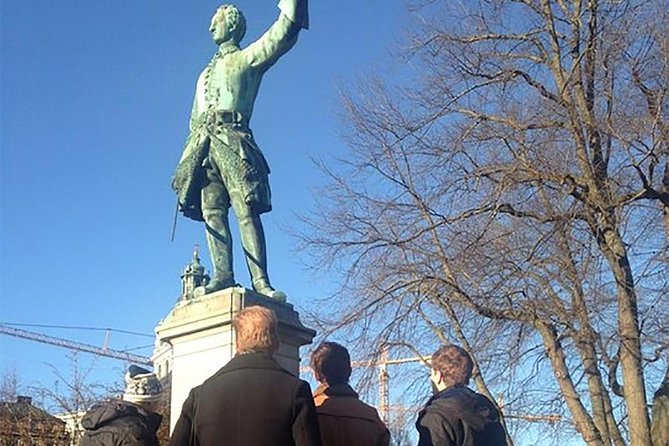
The meeting point is outside Café Opera at Karl XII:s torg 5, beside Kungsträdgården. This is a sensible place to begin because you are right in the middle of central Stockholm, close to water, major public buildings, and several easy-to-reach transit links.
At Kungsträdgården, expect an opening talk filled with Stockholm trivia and background. The park is more than a pleasant green space. It has long been an important public gathering place, and the story of local opposition to proposed changes helps explain how residents view shared urban spaces.
You then move to nearby Berzelii Park. The stop is brief, about 10 minutes, but it helps you shift from the broad public setting of Kungsträdgården to the city’s more formal central streets. This early part of the walk should give you useful bearings before the route moves farther afield.
Both stops are free, as are all the listed outdoor stops. That is convenient, but it also explains why the tour’s value rests on interpretation rather than admission access.
From Kungstornen to the Concert Hall
The next stops bring you into Stockholm’s central commercial and cultural district. Kungstornen, the twin towers, provide a chance to discuss architecture, city growth, and the changing character of central Stockholm.
From there, the route continues to the Stockholm Concert Hall. You view the building from outside rather than going in. The stop lasts roughly 10 minutes, so think of it as a focused look at the building and its place in Swedish public life, not a concert hall visit.
The same applies to Gallerian, Stockholm’s central shopping center. You do not enter for a shopping session. Instead, the guide uses the area as a setting for more city trivia and observations about daily life in the capital.
I appreciate this choice because it keeps the outing moving. You see how historic squares, cultural buildings, retail streets, and working parts of the city fit together. If you want long interior visits, this is not the right product. If you want a broad orientation with short stops, the format works well.
Olof Palme and the modern Swedish story
The Olof Palme Memorial Plaque adds a more serious note. The stop brings modern Swedish politics into the walk and gives Tomas a chance to explain an event and a public figure that remain important to Sweden’s national story.
This is one of the tour’s useful differences from a purely medieval or royal Stockholm walk. The city is not presented as a museum piece. You get stories about recent decades, public debate, and the values that shape Swedish society today.
The guide’s personal connection appears to matter here. Tomas has been described as comfortable discussing both established facts and the meaning places have for local people. That can make the stop feel more like a conversation than a formal speech.
Still, the amount of time at each location is short. You should expect a concise explanation, not a full political history lesson. If this subject interests you, use the opportunity to ask questions while the group is together.
More Walking Tours in Sweden
- Stockholm: Old Town Walking Tour with Local Guide
★ 4.7 · 719 reviews - Best of Stockholm Walking Tour-3 Hours, Small Group max 10 people
★ 5.0 · 645 reviews - The Nordic Food Walk Stockholm
★ 4.5 · 642 reviews - Walking Tour of Stockholm’s Old Town, Gamla Stan
★ 5.0 · 451 reviews
Södermalm and Mosebacke Torg
The route then reaches Södermalm, one of Stockholm’s best-known neighborhoods, with about 20 minutes set aside for the area. This is where the tour’s promise of seeing a different side of the city becomes most clear.
Södermalm has its own identity, and the walk gives you a chance to see how it differs from the grand central streets near the palace. Mosebacke Torg provides another local setting for stories, observations, and city views. The stop is short, but it adds a neighborhood feel that you will not get from a route limited to royal buildings.
This section should appeal to you if you want to understand Stockholm as a collection of distinct communities rather than one continuous tourist center. The guide discusses culture and everyday life, not only dates and monuments.
The route may also involve the metro around this point or elsewhere in the tour. That is a practical advantage: Stockholm is spread across islands and districts, and public transport lets you cover more ground in two to three hours. It also means the outing is not a pure walk from start to finish.
One important cost detail is easy to miss. A metro ticket may be needed for the underground portion and may not be included in the tour price. Bring a little extra money for transport, and confirm the current arrangement when booking.
Stockholm’s famous subway art
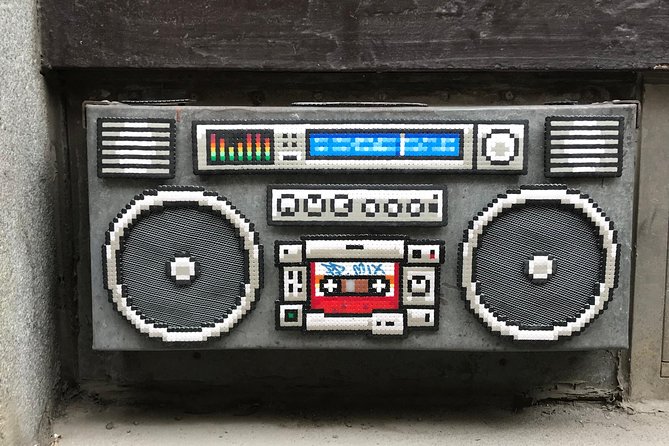
The underground system is one of the most distinctive parts of the experience. A particularly praised feature is the chance to see art on the blue metro line, with the striking observation that the blue route’s stations are known for their individual artistic treatment.
This adds real value to the tour because the metro becomes part of the sightseeing rather than just a way to get from one stop to another. You get a look at a public art program that many first-time visitors would otherwise miss.
The exact stations visited can depend on the day’s route and timing, so I would not book this expecting a fixed museum-style sequence. Treat it as an added city experience within a wider walk.
There is also a practical tradeoff. You may need to buy a separate train ticket even if the group does not travel far. That extra cost is small compared with the tour price, but it can feel irritating if you assumed all transport was included.
Skeppsholmen, Riddarholmen, and the palace
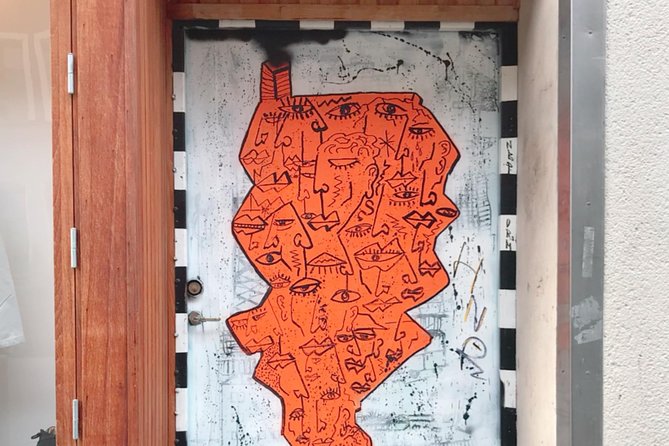
Skeppsholmen is another welcome change of scene. The stop lasts about 10 minutes and adds an island setting to a route already covering parks, commercial streets, neighborhoods, and the underground.
Riddarholmen follows, with the buildings and waterfront viewed from outside. This is an especially useful stop for understanding Stockholm’s island-based layout. The city can look compact on a map, but its districts have very different moods and positions. Moving between them helps you see how the capital is arranged.
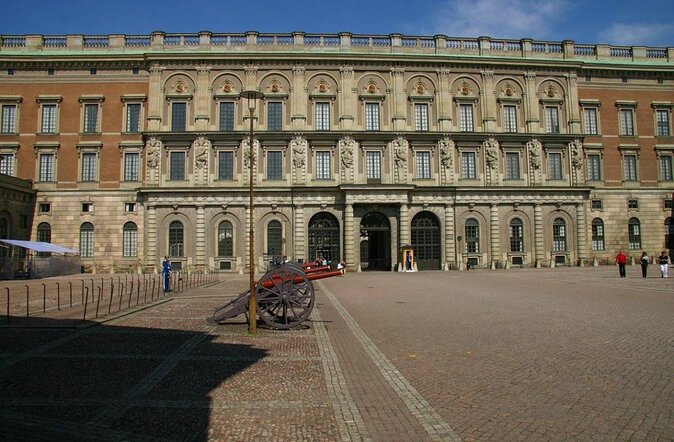
The final stop is the Royal Palace at Slottsbacken 8. The tour ends at the castle, not back at the starting point. That makes the route useful if you plan to continue sightseeing in Gamla Stan or the palace area afterward.
Again, the palace is viewed from outside. Admission to the royal rooms is not part of this experience, and the tour does not replace a dedicated palace visit. Instead, it gives you context before you decide if you want to pay for entry and spend more time inside.
The end point also makes the tour practical for a first day in Stockholm. You finish near one of the city’s major sights with a better sense of how central Stockholm’s districts connect.
How the pace and group size feel
The scheduled stops add up to roughly two hours, while the full activity lasts about two to three hours. Walking between locations and using public transport account for the difference.
You should be ready to walk at a steady city pace. The available information says most people can participate, and the activity is near public transportation. Service animals are allowed. Still, anyone who finds extended walking difficult should consider asking about the exact route before booking, since the experience moves through several districts.
The group maximum is 15. That is large enough to create a social atmosphere but small enough for questions and conversation. In some cases the group may be tiny, even one person, which can create a much more flexible outing.
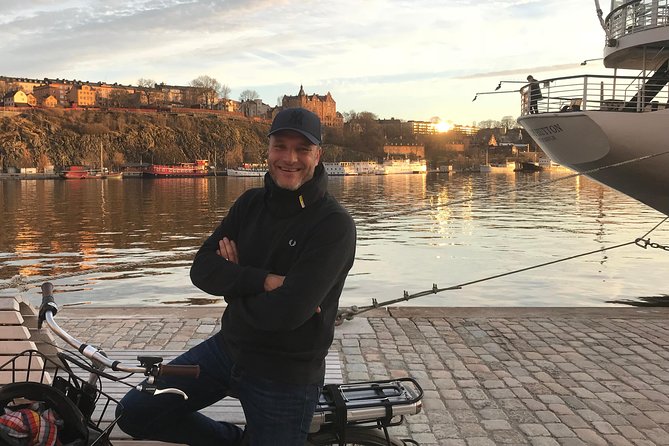
Tomas’s style appears to be friendly and interactive. He has been described as patient, clear, enthusiastic, and easy to understand in English. Those qualities matter more than polished presentation on a walk like this because the route depends on spoken stories and quick explanations.
What $65.69 gets you
At $65.69 per person, this is not a bargain sightseeing loop based on included admissions. Every named stop is free, and several buildings are viewed only from the outside. You are paying for the guide’s time, local knowledge, route design, conversation, and the chance to connect places that you might otherwise see separately.
I think the price can be fair if you value context and personal guidance. The tour covers a lot of ground, includes both familiar and less obvious parts of Stockholm, and may add the blue-line subway art. It can also save you the effort of planning a route across several islands and neighborhoods.
The value is weaker if you mainly want entry to monuments or a slow visit inside one major attraction. In that case, you may prefer to spend the money on a palace admission, museum ticket, or a tour that includes more formal access.
The timing also matters. This experience is booked, on average, about 33 days ahead, so advance planning may be sensible during busy periods. Free cancellation is available up to 24 hours before the start time. Cancellations made inside that 24-hour window are not refunded, and changes then are not accepted.
Who should choose this Stockholm walk?
I would choose this tour for a first or second day in Stockholm, especially if you want a quick sense of how the city works before exploring on your own. It is also a good fit for repeat visitors who have already seen the main royal and medieval sights and want more local stories.
You will probably enjoy it most if you like:
- Personal stories mixed with history
- Neighborhoods and public spaces, not only famous monuments
- Short stops across a wide area
- Swedish culture and modern political context
- Small groups and the chance to ask questions
- A guide who can suggest places to eat or continue exploring
I would think twice if you dislike walking, do not want to use public transportation, or expect to enter every major building. The route is active and broad rather than slow and museum-focused.
Final verdict: a strong choice for context and local character
I would book the Unique Walking Tour Stockholm if I wanted an informed introduction with more personality than a standard central-city walk. Tomas brings together Kungsträdgården, Södermalm, the palace, Riddarholmen, Skeppsholmen, modern Swedish politics, and subway art in one compact experience.
The main caution is simple: the $65.69 fee does not include a series of paid attractions, and a metro ticket may be extra. Book it for the guide, the unusual route, and the stories. Skip it if your priority is interior access or a cheap way to check off landmarks.
FAQ
Where does the tour start?
It starts at Café Opera, Karl XII:s torg 5, Stockholm.
Where does the tour end?
It ends at The Castle, Slottsbacken 8, near the Royal Palace.
How long does the tour last?
The experience lasts approximately two to three hours.
What is the price?
The listed price is $65.69 per person.
What language is the tour offered in?
The tour is offered in English.
How many people can join the tour?
The maximum group size is 15 people.
Does the tour enter the Stockholm Concert Hall?
No. The Concert Hall is visited from outside.
Does the tour enter Gallerian?
No. Gallerian is toured from outside.
Does the tour enter the Royal Palace?
No. The Royal Palace is viewed from outside.
Can I cancel for a full refund?
Yes. You can cancel at least 24 hours before the scheduled start time for a full refund. Cancellations or changes made less than 24 hours before the start time are not accepted for a refund.
Just added around Stockholm
- Traditional Persian Cooking Class in Stockholm with a Local★ 5.0 · 20 reviews
- Stockholm Top attractions all-inclusive Gran Tour Winter Edition★ 5.0 · 6 reviews
- Airport Limousine Transfer: Arlanda Airport to Stockholm City 1-7 Passengers★ 4.0 · 5 reviews
- Scandinavian Art, Architecture and Design Tour in Stockholm★ 4.5 · 11 reviews
- Wolf and Wildlife Tracking in Sweden★ 5.0 · 9 reviews
- Stockholm: Sunset Hike in Tyresta National Park with Meal★ 5.0 · 79 reviews
- Walking Tour of Stockholm’s City Center★ 4.5 · 26 reviews
- Private Tour: Swedish History Day Trip to World Heritage Candidate Markim-Orkesta from Stockholm★ 5.0 · 8 reviews
Walking Tours, compared.

Past & Present Small Group Guided Walking Tour
Read our review →
Walking Tour in Bergen of the Past and Present
Read our review →
Browse the lists this tour appears in