
Reviewed · ARCHIPELAGO TOURS
Culinary Kayaking Adventure – Saint Anna Archipelago of Sweden
The best part of this four-day trip is the way kayaking and cooking fit together. You paddle through old island settlements, bird sanctuaries, and wind-shaped outer islets, then help turn foraged greens, berries, mushrooms, and a local fisherman’s catch into dinner over a fire. Chef Helena’s camp kitchen is far more ambitious than the usual expedition fare.
I like the small group, limited to eight people, and the fact that you do not simply set up camp and disappear into your tent. You help gather ingredients, make pickles and jam, and prepare meals with the guides. I also like the flexible base-camp approach, which lets you explore without packing every item into your kayak each morning.
The main consideration is physical comfort. You are outdoors for four days, paddling for several hours, sleeping in tents, and depending on the weather for the outer-archipelago excursion. Beginners can join, but you should bring proper warm layers and have a real interest in cooking.
Key points before you book
- Small-group kayaking: The trip accepts a maximum of eight participants, which keeps instruction and camp chores personal.
- A serious food program: Helena prepares ambitious meals over a fire, with foraged plants, homemade preserves, locally sourced ingredients, and a fisherman’s catch.
- Three distinct island zones: You move from forested inner islands to smaller middle-archipelago islets, then possibly to the barren outer skerries.
- Base camp makes the trip easier: You can paddle out on day trips rather than moving every piece of equipment each morning.
- Beginners are welcome: You do not need advanced kayaking experience, but you need to manage several active days outdoors.
- Norrköping is the practical starting point: Pickup is at 10:00 a.m. from the train station or a hotel or hostel in town.
Why the food changes the whole kayaking trip
Many kayaking trips treat meals as fuel. This one makes food part of the reason to go.
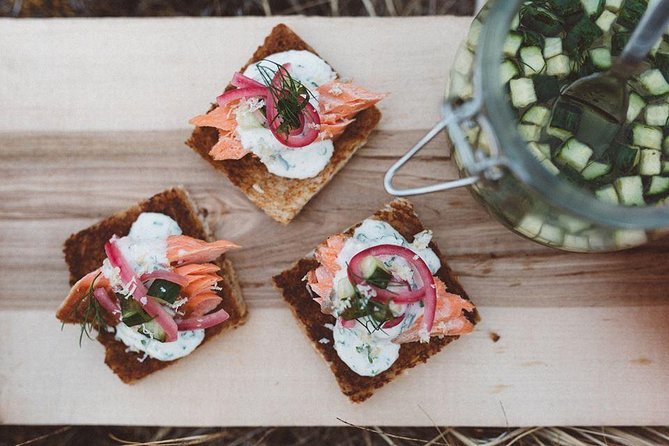
You help forage for sorrel, orpine, chives, juniper berries, oregano, ground-ivy, rose hips, hawthorn, and barberries. The exact ingredients depend on what is available, but the point is clear: the islands become your pantry and your classroom. You may also make jam and pickles, then use what you gathered in later meals.
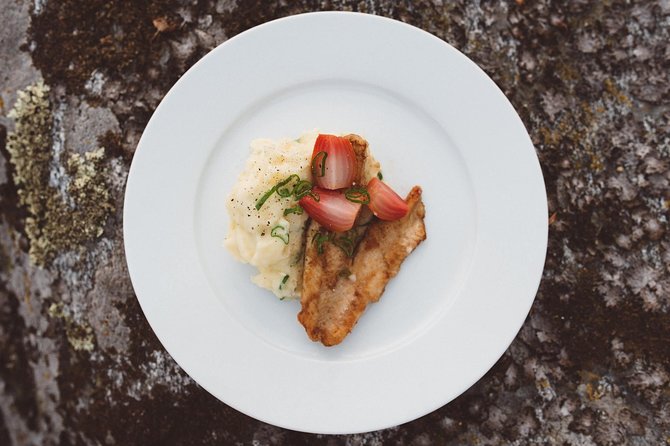
Helena’s cooking is a major reason this trip costs more than a standard guided paddle. The food is not limited to packets, sandwiches, or a pot of pasta. The camp kitchen has been described as capable of producing restaurant-level dishes despite rain and a fire-based setup. That matters after a long day in a kayak, when a carefully prepared meal feels like part of the adventure rather than a reward for enduring it.
You also share the work. That is worth understanding before booking. You will help prepare meals and set up camp rather than arriving at a fully serviced outdoor lodge. The group cooking creates a relaxed social rhythm, but anyone seeking a private, hands-off holiday may find it too participatory.
Alcoholic drinks, coffee or tea, three dinners, three lunches, and three breakfasts are included. The three-night setup means the food coverage is substantial, not a token picnic added to a day tour.
More Food Tours in Sweden
- The Nordic Food Walk Stockholm
★ 4.5 · 642 reviews - Stockholm Food Tour
★ 4.5 · 404 reviews - Skip the Line: Disgusting Food Museum Entrance Ticket
★ 5.0 · 359 reviews
Day 1: Forested islands and old wooden homes
Pickup begins at 10:00 a.m. in Norrköping. You can meet the team at the railway station or at a hotel or hostel of your choice. From there, the route reaches the inner part of the Saint Anna Archipelago, where large forested islands and traditional wooden houses give the first day a settled, old-fashioned character.
This opening section is a good introduction to the area because it does not throw you straight into the most exposed water. You start among larger islands, bays, and a cultural setting shaped by earlier island communities. The old houses and small settlements make it clear that this is not untouched wilderness in the strict sense. It is a lived-in coastal region where nature and human use sit close together.
After a short paddle, you stop beside a sea meadow. This is one of the archipelago’s unusual habitats, with plants adapted to salt and regular contact with the sea. You forage for edible greens and small fruits, including rose hips, hawthorn, and barberries. The guides can connect these plants to the island’s earlier use, when people depended more directly on what grew around them.
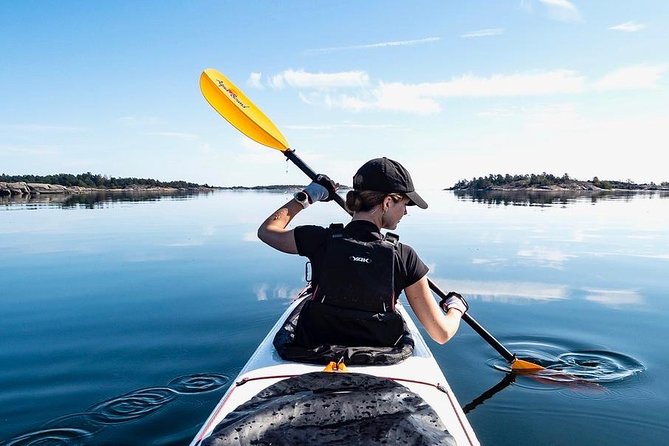
The paddle continues through a maze of islands. From the water, the route feels larger than a map suggests because islands block the horizon and create new channels at every turn. You do not simply point the kayak in one direction and follow a straight shoreline. You work through passages, open bays, and sheltered water.
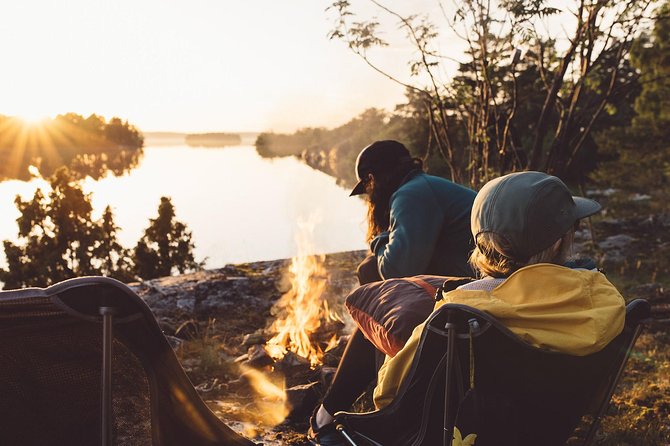
By late afternoon, you reach camp. The culinary guide is already preparing the evening meal and getting ingredients ready for the next days. You help collect sorrel, orpine, chives, and juniper berries, then work together on dinner and future preparations.
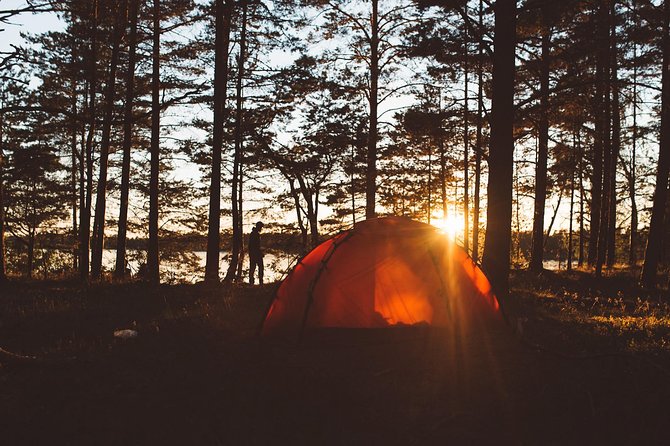
The camp is on an island, and the supplied equipment has earned strong praise for its quality. Expect proper tents and comfortable sleeping mats rather than bare-bones survival camping. Still, this is camping. Rain, wind, damp clothes, and shared chores are possible parts of the deal.
Day 2: Bird sanctuaries and a softer woodland camp
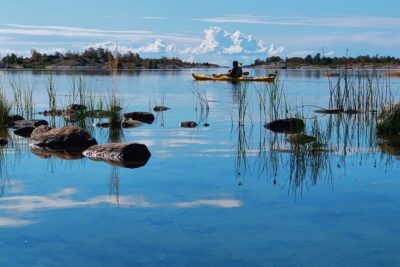
Day two begins with the chance for a morning swim, assuming the conditions suit you. A calm sea and blue reflection can make this a memorable start, but no one should mistake the setting for a controlled swimming pool. You are waking outdoors, and the water and air can be chilly.
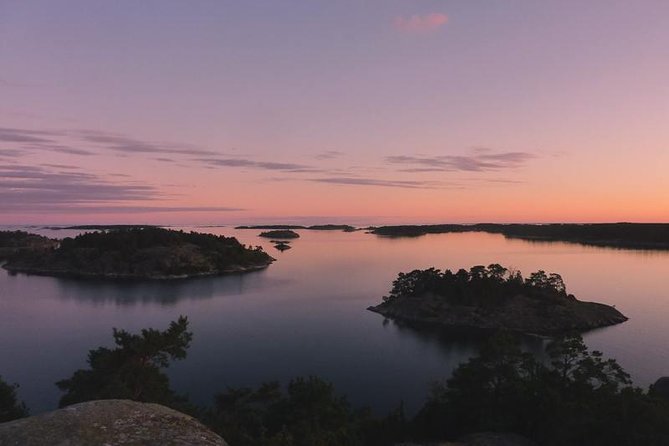
After breakfast, you paddle through the middle section of the archipelago. Here the islands are smaller and more numerous, creating a busy pattern of rocks, channels, and nesting areas. Bird sanctuaries are a key feature, and sea eagles may glide overhead. With good luck, seals may appear as well.
Wildlife sightings are never guaranteed, so I would treat them as a bonus rather than the purpose of the day. The reliable pleasure is the quiet water and the changing arrangement of the islands. You may spend much of the morning scanning the sky and the shoreline, but the trip remains worthwhile if the animals stay out of sight.
The next camp has a different feel from the first. Instead of pine trees and moss, you find deciduous woodland, open glades, and signs of grazing animals. This change matters because Saint Anna is not one uniform stretch of rock and forest. The habitats shift noticeably as you move through the island chain.
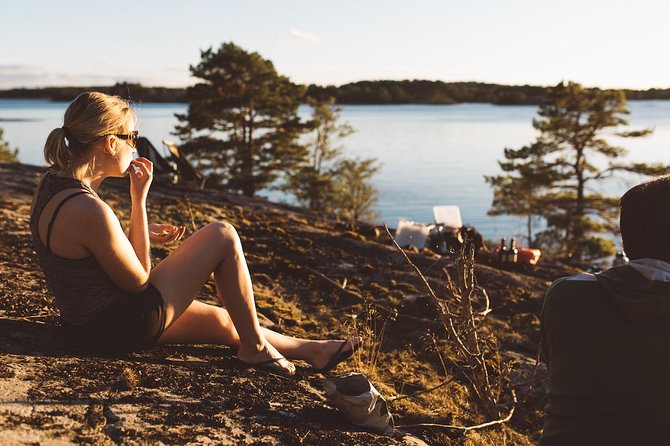
The area also offers better opportunities for mushrooms, berries, and meadow herbs. You collect oregano and ground-ivy for dinner. The combination of paddling and foraging keeps the day varied, but it also means you are not signing up for a pure sightseeing trip. You will be active, attentive, and involved.
The schedule aims to reach camp in the early afternoon. That gives you time to settle in and work on the evening meal rather than arriving at dusk with no energy left. The base-camp design is one of the trip’s practical strengths. It allows the guides to build a comfortable camp and then send you out on explorations without turning each day into a full pack-and-move operation.
Day 3: The outer archipelago, if conditions allow
Day three is the most exposed and ambitious part of the trip. If the weather cooperates, you head toward the outer archipelago, where hundreds of tiny, mostly barren islands replace the larger wooded islands of the first two days.
The trees here are sparse and shaped by wind. Salt-resistant plants cling to the exposed ground, and the horizon opens wide around you. The solitude can feel striking because there are fewer visual signs of settlement and less shelter from the surrounding sea.
This is also the day to take the weather seriously. The outer islands are not presented as a guaranteed route. Wind and sea conditions decide whether the group goes out. That is sensible guiding, not a flaw, but it means the advertised route is partly conditional.
The paddle can be strenuous. You should expect more effort than on the sheltered first day, especially if the group reaches the outer islands and conditions are less forgiving. A beginner can join, but you should be comfortable spending a long period in a kayak and following the guide’s instructions.
By late afternoon, you return to camp for the final evening feast. A local fisherman arrives with the catch of the day, and the group prepares a proper meal. The wider Do the North team may join for the occasion, giving the last night a more communal feel.
This meal captures the character of the trip. You are not only looking at the archipelago from a kayak. You are eating what the coast provides, working with your group, and learning how outdoor cooking can be imaginative rather than merely practical.
More Archipelago Tours in Sweden:
- Stockholm: City Archipelago Sightseeing Cruise with Guide
★ 4.3 · 10,798 reviews - Stockholm: Archipelago Boat Tour
★ 4.4 · 3,110 reviews - Stockholm Archipelago Cruise with Guide
★ 4.0 · 1,125 reviews - Gothenburg: Archipelago cruise with guide
★ 4.3 · 1,002 reviews
Day 4: A final paddle through the island maze
On the final morning, you break camp and eat a substantial breakfast before setting off. The return route heads toward a different mainland landing point, so you see new water rather than simply retracing the first day.
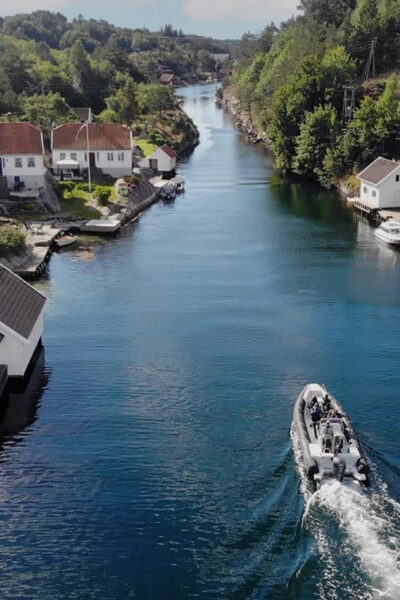
The route passes more bird sanctuaries as you approach the end of the trip. Near the finish, a narrow canal carries you out of the island maze. Then the scenery shifts quickly, with cabins and old houses appearing around a settled bay.
That change from remote camp to ordinary coastal life is a fitting finish. It shows how close the wild-feeling islands are to working communities and holiday homes. You leave with practical ideas for using wild ingredients and outdoor cooking methods at home, along with a clear sense of how much preparation it takes to run a small expedition well.
The day is listed at roughly 12 hours, so do not plan a tight onward connection immediately afterward. The trip is approximately four days, and the final paddle, pack-up, transfer, and changing water conditions all require flexibility.
What the $1,954.27 price includes
At $1,954.27 per person, this is not a budget kayaking break. The value comes from how many separate services are bundled into four days.
The price includes a driver and guide, local guide, hotel pickup and drop-off, private round-trip transfers, camping arrangements, coffee or tea, alcoholic drinks, and nine main meals: three breakfasts, three lunches, and three dinners. The equipment has also been described as high quality, including comfortable sleeping mats and well-made tents.
You are paying for more than paddle instruction. You are paying for route planning across changing island zones, camp organization, food preparation, local knowledge, transfers, and a maximum group of eight. A standard guided kayak outing may cost much less, but it will not normally include several nights of island camping and a dedicated culinary program.
The price makes the most sense if you value food and outdoor learning equally. If kayaking is your only priority, you may find the package expensive. If you want a guided Swedish island trip with memorable meals, the inclusions make the cost easier to justify.
Flights and airport transfers are not included. The practical plan is to arrive in Norrköping the night before. Stockholm Skavsta Airport is about 55 minutes away by shuttle, while Stockholm Arlanda requires a direct train of roughly two hours. If you fly into Linköping City Airport, the train to Norrköping takes about 25 minutes, followed by a short taxi ride to the station.
How demanding is the trip?
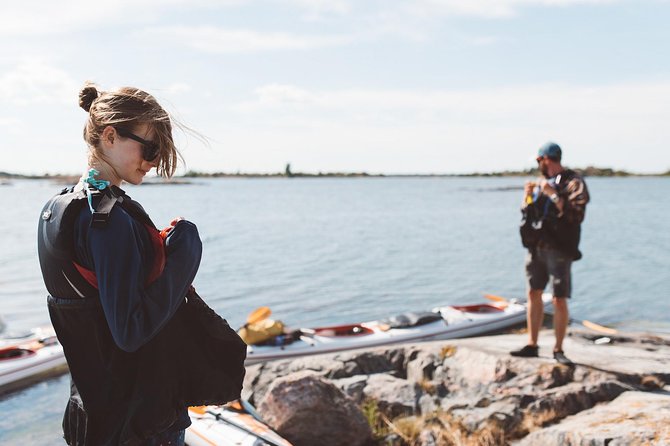
The operator welcomes kayaking beginners, so advanced paddling technique is not required. You should still have a genuine interest in cooking and be prepared for active days, shared camp work, and changing weather.
The group size helps. With no more than eight participants, the guides can give closer instruction and keep the camp manageable. Tomas and Rob handle the kayaking and wilderness side, while Helena leads the food program. One participant with a wrist injury received a temporary birch splint from the guide and was later taken out by water taxi, while the rest of the group continued by kayak. That shows practical care, but it should not be read as a promise that every medical problem can be handled on site.
Bring warm layers even in summer. One participant arrived without enough warm clothing and needed help from Rob. Rain is possible, and another group experienced extended wet weather while Helena continued producing strong meals. Proper clothing will affect your comfort more than almost anything else you pack.
The minimum age is 18, and the maximum listed weight is 120 kilograms. Most people can participate, but you should be able to manage a kayak, paddle for several hours, and help with basic camp tasks.
Who will enjoy Saint Anna most?
I would choose this trip if you like the idea of a small expedition with a strong food focus. It suits couples, friends, and solo participants who enjoy meeting a group and contributing to the daily routine.
It is especially good for you if you want to learn about edible plants, Swedish ingredients, and cooking over a fire. You will get more from the trip if you are curious about what grows around you, rather than simply waiting for Helena to serve the next meal.
It may not suit you if you want hotel rooms, private dining, a fixed schedule, or guaranteed wildlife and weather. The outer-archipelago paddle depends on conditions, and even the most comfortable tent remains a tent.
The four-day length is a good compromise. You have enough time to reach several parts of the archipelago without committing to a weeklong expedition. The base camp also keeps the trip from feeling like a daily equipment-hauling exercise.
Should you book this culinary kayak adventure?
Book it if you want excellent camp cooking, quiet island paddling, and real participation rather than a sightseeing cruise. The strongest parts are the small group, flexible route, quality camping gear, foraging, and Helena’s ambitious meals.
Think carefully before booking if you dislike rain, physical exertion, shared chores, or uncertain weather plans. For the right person, the $1,954.27 price buys a rare combination: a guided kayak journey through three distinct parts of the Saint Anna Archipelago, plus the skills and confidence to cook creatively outdoors. Arrange a night in Norrköping before pickup, pack warm clothing, and come ready to work for your dinner.
FAQ
Where does the tour begin?
Pickup is at 10:00 a.m. in Norrköping. You can be collected from the train station or from a hotel or hostel of your choice.
How long does the experience last?
The experience lasts approximately four days.
How many people can join?
The maximum group size is eight participants.
Do I need kayaking experience?
Beginners are welcome. You should still be prepared for several active days of paddling and have a genuine interest in cooking.
What meals are included?
The package includes three breakfasts, three lunches, and three dinners, along with coffee or tea and alcoholic beverages.
Is camping included?
Yes. The itinerary includes island camping, and the supplied equipment includes tents and sleeping mats.
Will the tour reach the outer archipelago?
The outer-archipelago excursion takes place if the weather allows. The route includes hundreds of small, exposed islands with sparse trees and salt-resistant plants.
Is airport transportation included?
No. Flights and airport transfers are not included. You arrange your own route to Norrköping, where the tour pickup takes place.
What is the cancellation policy?
You can cancel up to 24 hours before the start time for a full refund. Cancellations or changes made less than 24 hours before the experience are not accepted for a refund.
More Kayak Tours in Sweden
- 1-Day Small-Group Stockholm Archipelago Kayak Tour
★ 5.0 · 266 reviews - Stockholm City Kayak Tour
★ 5.0 · 194 reviews - Stockholm: Guided Kayak City Tour & Optional Midsummer Meal
★ 4.6 · 170 reviews - Stockholm: Winter Kayaking, Swedish Fika and hot Sauna Experience
★ 5.0 · 156 reviews
Just added around Sweden
- Sit Back and Relax Morning Husky Tour★ 5.0 · 92 reviews
- Traditional Persian Cooking Class in Stockholm with a Local★ 5.0 · 20 reviews
- Karlskrona Self Guided Sherlock Holmes Murder Mystery Game★ 4.0 · 3 reviews
- Stockholm Top attractions all-inclusive Gran Tour Winter Edition★ 5.0 · 6 reviews
- Private snowmobile day tours★ 5.0 · 16 reviews
- Ice Climbing Experience with Certified Guide★ 5.0 · 204 reviews
- Husky Sled Ride Northern Lights Tour from Kiruna★ 5.0 · 43 reviews
- Northern Light snowmobile tour in Kiruna 7:30 pm★ 5.0 · 75 reviews
Archipelago Tours, compared.
City Archipelago Sightseeing Cruise with Guide
Read our review →
1-Day Small-Group Stockholm Archipelago Kayak Tour
Read our review →
Browse the lists this tour appears in