
Reviewed · CITY TOURS
City walk in Ålesund: Art Nouveau, sea views, and insider tips
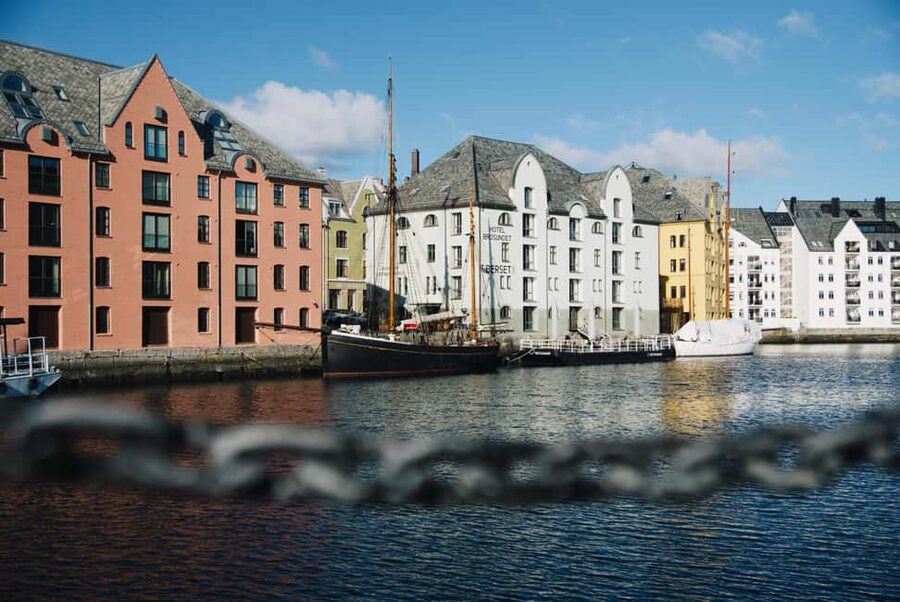
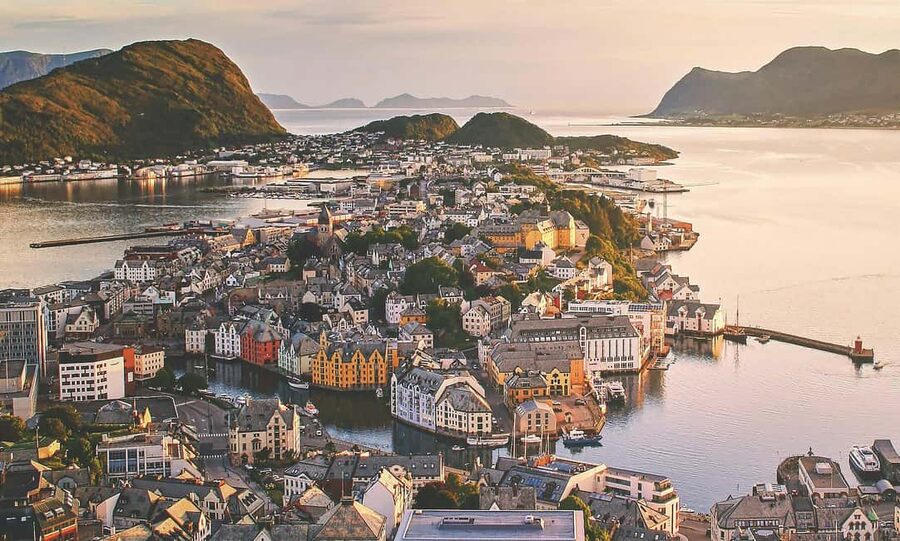
Ålesund’s best story is written in two very different places: along the harbor, where fishing and ferry links still shape daily life, and on Kongens gate, where ornate Art Nouveau buildings tell the story of a city rebuilt after fire. This two-hour walk connects both sides of Ålesund without rushing you through either.
I like the tour’s small-group feel, which gives you room to ask about Norwegian life, oil wealth, hydropower, or the city’s wartime past. I also like the guide’s personal angle. Lukas Klein is not Norwegian by birth, but chose Norway as home, and that gives his explanations a useful outsider’s perspective. The main drawback is that the route includes gentle inclines and stairs, so it is not suitable for wheelchair users or people with serious mobility limits.
Key points at a glance
- Start beside the Fisherman Boy: Begin with Ålesund’s connection to fishing, clipfish, the sea, and its position among islands and fjords.
- A clear Art Nouveau story: See how the 1904 fire led to a striking new town center filled with turrets, ornament, and hopeful symbols.
- More than pretty buildings: Talk about ferries, undersea tunnels, bridges, hydropower, oil, gas, and the choices behind modern Norway.
- A useful harbor walk: Follow the water for photo stops and views that are easy to miss when exploring on your own.
- Local questions welcome: Lukas leaves time for personal questions and can point you toward restaurants at the end.
- A practical two-hour format: English and German tours are offered, with private groups of up to four available.
Starting with Ålesund’s fishing roots
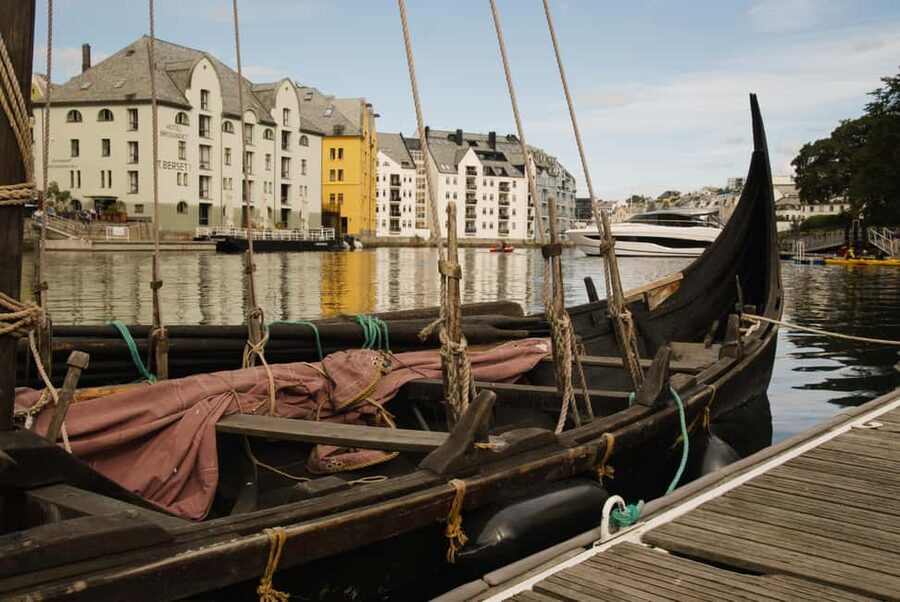
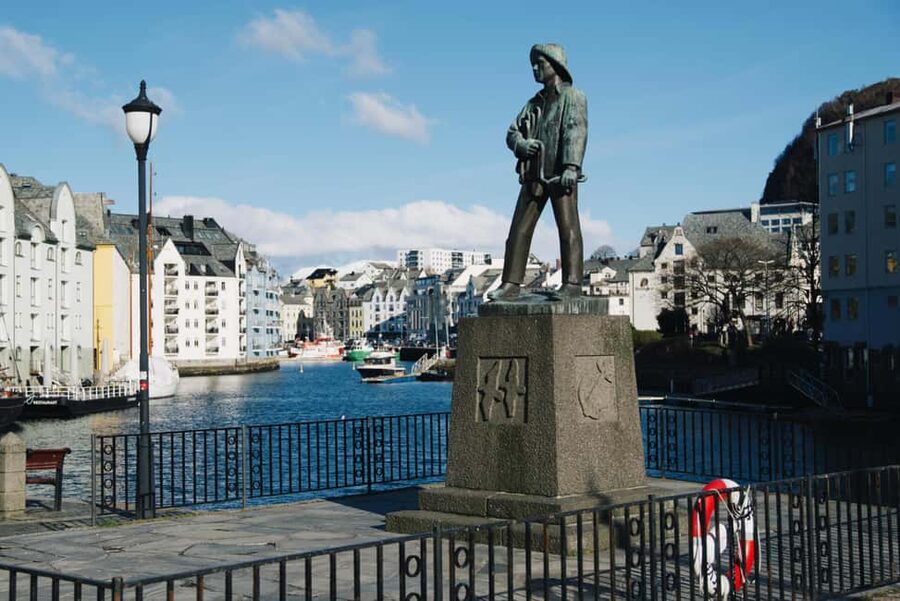
Meet at the large Fisherman Boy statue beside the bridge, directly opposite the Jugendstilzentrum. It is an easy place to identify, and the sculpture gives the walk a fitting start. Ålesund is a coastal city first, and the opening conversation places its streets in the wider setting of sea, islands, mountains, and trade.
Here you learn about the city’s early development and the clipfish trade. Clipfish, dried and salted cod, was central to coastal commerce and helps explain why Ålesund became an important port. This is a better introduction than simply beginning with a list of architectural dates. You first understand what made the city matter.
Lukas also explains how Norway’s geography has shaped its economy and daily routines. Ålesund is not just a scenic port with attractive buildings. It is part of a difficult coastal network where water often gets in the way of roads, commuting, trade, and public services.
That broader view is one of the tour’s strengths. You are not only looking at façades. You are learning why this town developed where it did and how people made a life here.
More City Tours in Norway
- Alesund: City Sightseeing Hop-On Hop-Off Bus Tour
★ 4.0 · 399 reviews - Amazing city walk in Ålesund
★ 4.5 · 68 reviews - City Sightseeing Alesund Hop-On Hop-Off Bus Tour
★ 3.0 · 42 reviews
Ålesund Square and the shape of the center
The walk continues toward Ålesund Square, with around 15 minutes devoted to guided sightseeing. This section helps you get your bearings in the center before the route turns toward the harbor and the Art Nouveau streets.
The square works as a useful pause between subjects. You may be looking at buildings and monuments, but the guide keeps connecting them to the city’s growth and changing identity. The story moves from fishing and trade toward the modern town you see today.
I would pay attention to the sequence here. Lukas is known for arranging the history in chronological order, so the city’s development does not arrive as a jumble of dates. That matters in Ålesund, where the old port, the fire, the rebuilding, and present-day Norway all sit close together.
You also have a chance to ask questions early. If you are curious about Norwegian customs, local work, or the city’s role in coastal life, this is a good time to speak up. The tour is designed for conversation rather than a one-way speech.
The harbor, ferries, tunnels, and island links
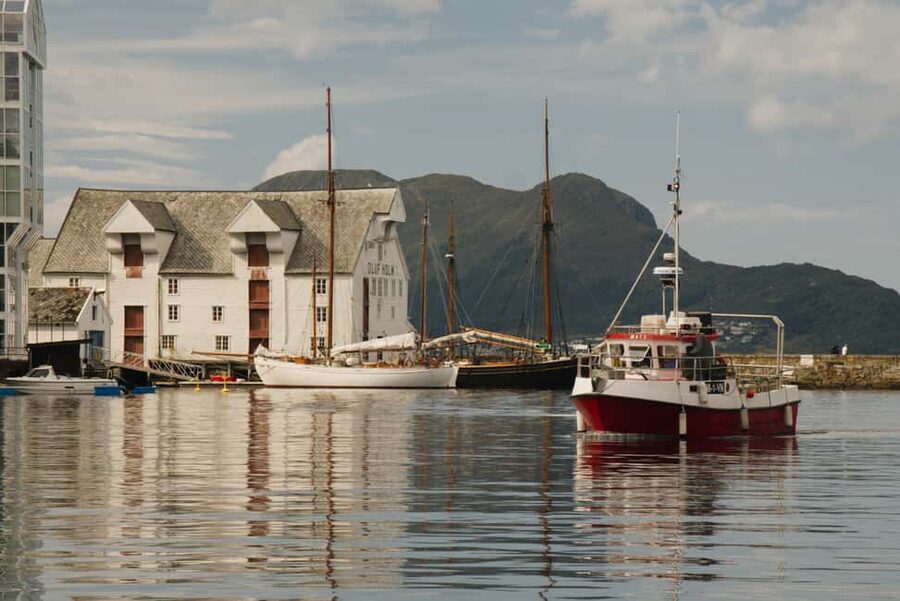
About 30 minutes are spent around Ålesund’s harbor area, where the walk turns from urban history toward modern engineering. The water provides open views and frequent photo stops, but the real value is the explanation of how Norway stays connected.
Norwegian coastal towns have long depended on ferries. Car ferries are not simply scenic transport for visitors. They have been a lifeline for communities separated by water, allowing people and vehicles to move along the coast and between islands.
Lukas also discusses tunnels beneath the sea and bridges crossing fjords. These projects show how Norway has responded to its difficult geography through engineering. The point is not to turn the walk into a technical lecture. It is to help you see infrastructure as part of ordinary life here.
I particularly like this part for visitors who want more than architecture. The harbor becomes a place to think about public spending, transport, and the practical problems of living on a long, broken coastline. The conversation can also turn to hydropower, oil and gas, and Norway’s model of prosperity.
That subject gives the tour some useful balance. Norway is often presented through dramatic nature and tidy towns, but its wealth and modern way of life also depend on energy, industry, and major public works. You get a more complete picture of the country without leaving central Ålesund.
The waterfront is also one of the easiest parts of the route for photographs. You can frame the harbor, buildings, bridges, and surrounding islands from several angles. If the weather changes, as it can on the Norwegian coast, the water section may feel exposed, so bring a waterproof layer and wear shoes with a good grip.
Kongens gate and the 1904 fire
The tour then reaches Kongens gate, with about 30 minutes focused on Ålesund’s Art Nouveau center. This is the architectural heart of the walk.
The great fire of 1904 destroyed much of Ålesund. The city was rebuilt in the Art Nouveau style, producing the unusual collection of towers, rounded forms, decorative details, and colorful façades you see today. The rebuilding was not just an act of repair. It created a new visual identity for the city.
A guide adds value here because Art Nouveau can become a blur of pretty details when you explore alone. Lukas points out how the buildings reflect optimism and a fresh start after disaster. Turrets, ornament, and symbolic features begin to feel like parts of a shared civic story rather than decoration placed at random.
This is also where the route earns its price for many visitors. You could walk along Kongens gate independently, but it is harder to understand why the buildings look so consistent and why the city’s appearance is unusual. A clear explanation turns a pleasant stroll into a meaningful one.
The route is sometimes described as visiting the Royal Road, a stretch of notable Art Nouveau buildings. Expect time to stop, look up, take photographs, and ask about details. The tour is not built around racing from one address to the next.
The Art Nouveau section suits first-time visitors especially well. It gives you a framework for returning later with your own camera or museum visit. You will know what to look for instead of simply deciding that the center is attractive.
More Walking Tours in Norway
- 3 Hour Guided Food Walk Tour in Alesund, Norway
★ 5.0 · 124 reviews - Ålesund: Guided Food Walking Tour
★ 4.9 · 59 reviews - Ålesund Two Hour Walking City Tour
★ 5.0 · 27 reviews - Oslo Nature Walks: Island Hopping Tour
★ 4.8 · 2,713 reviews
Museum park views and the city from above
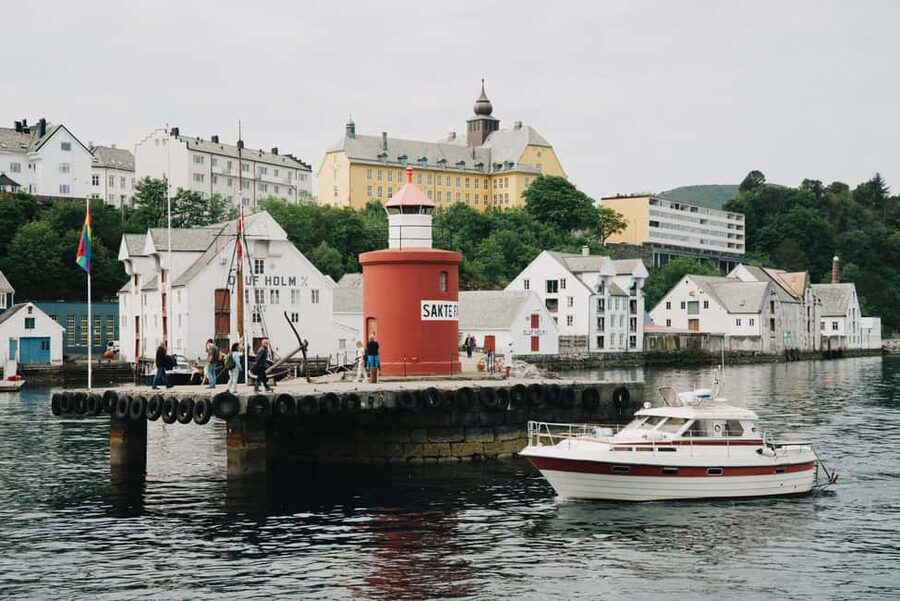
After the central streets, the group heads toward Museums-parken for roughly 30 minutes. This is a photo stop and a change of pace from the close-up architecture.
The park offers a view over the city, harbor, and surrounding islands. From here, Ålesund’s setting makes more sense. You can see how water shapes the town and why the city feels connected to both the coast and the mountains.
This is also one of the route’s practical advantages. It takes you to a viewing place you might miss if you only follow the main shopping streets or waterfront. The stop gives you time to take photographs and absorb the relationship between the buildings below and the wider setting around them.
The walk does include gentle inclines and stairs. That should not be treated as a minor detail if you have limited mobility. A stroller may need to be carried in places, and the activity is not suitable for wheelchair users. Comfortable shoes are essential, especially if the surface is wet.
Lukas is also a photographer. During the walk, he may take pictures of you, and an optional digital photo package is available for NOK 290, listed as about $25, €28, or £21. This is an extra purchase, not part of the tour price. I would see it as a personal choice: useful if you want a record of the day without managing your own camera, unnecessary if you already prefer taking your own pictures.
Tafjord Kraft and the modern Norwegian model

The stop at Tafjord Kraft Varmebenker takes about 15 minutes and brings the walk back to modern Norway. The name connects to energy and public infrastructure, fitting the discussion of hydropower and the country’s energy economy.
Hydropower is an important part of Norway’s green energy story, while oil and gas have played a major role in national prosperity. The tour does not treat Norway as a simple tale of untouched nature and clean living. Instead, it opens a conversation about how tradition, technology, energy, and public wealth fit together.
This is one of the more distinctive elements of the walk. Many city tours stop once the main buildings have been explained. Here, you get room to ask how people live, how Norway pays for its services, and how the country balances older coastal traditions with a modern economy.
Lukas’s own relationship with Norway adds another layer. He chose to make the country his home, so he can explain both the attraction and the practical side of life there. His personal experiences give the discussion a human scale without turning the whole walk into autobiography.
Wartime stories and local memory
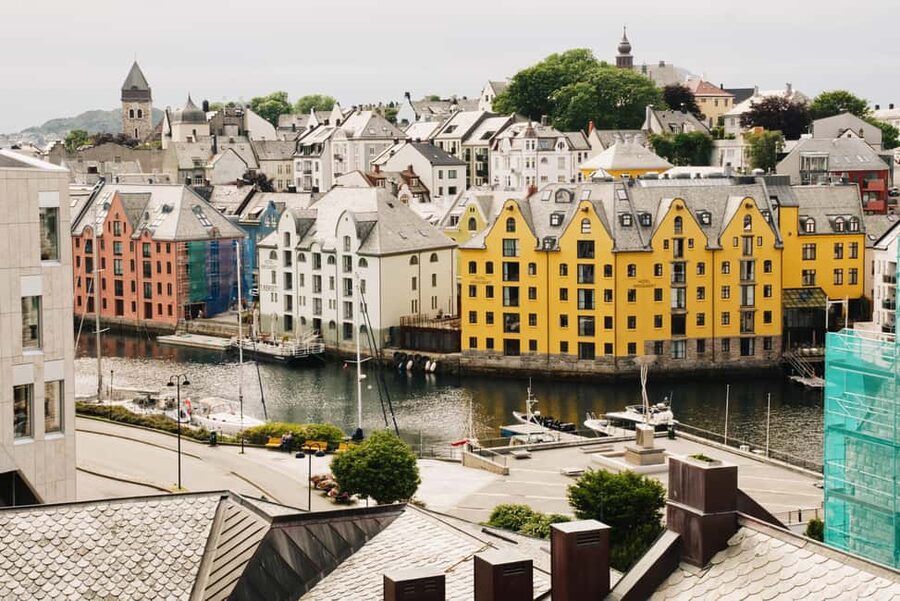
The tour also touches on Ålesund’s resistance during World War II. Statues and memorials connected with the Norwegian resistance become part of the route, adding a serious note to an otherwise bright architectural walk.
These stories matter because they remind you that the city is more than its rebuilt façades. Ålesund’s history includes trade, disaster, occupation, resistance, industry, and ordinary coastal life. The guide’s choice to include wartime memory gives the city extra depth without requiring a separate museum visit.
If this subject interests you, ask questions. The tour leaves personal time for exactly that. You may also want to return later to the Jugendstilzentrum or another museum, since a walking tour can introduce a subject but cannot cover every object and event in detail within two hours.
What the $61 price gets you
At $61 per person, this is not the cheapest way to spend two hours in Ålesund. You can walk the center without paying, photograph the harbor on your own, and admire the Art Nouveau façades from the pavement.
The value comes from the connections. You get the fire, the architecture, the harbor economy, coastal engineering, energy policy, wartime memory, and modern Norwegian life in one organized route. You also get a live guide who can answer questions rather than leaving you with a fixed audio track.
The price makes the most sense for a first visit, a short stay, or a cruise stop when you want a quick but intelligent introduction. It is also more attractive if you choose a private group of up to four, since the format allows more personal conversation. Larger groups may feel less flexible, though the exact group size depends on the booking option you select.
The tour lasts two hours, which is long enough to cover the main themes but short enough to fit around other plans. Snacks and drinks are not included, so eat beforehand or plan a stop afterward. At the end, the guide can point you toward restaurants in town.
Free cancellation up to 24 hours before the start and the option to reserve now and pay later make the booking less risky if your schedule is still changing. Starting times vary, so check availability before planning transport or a meal around it.
Who should take this walk?
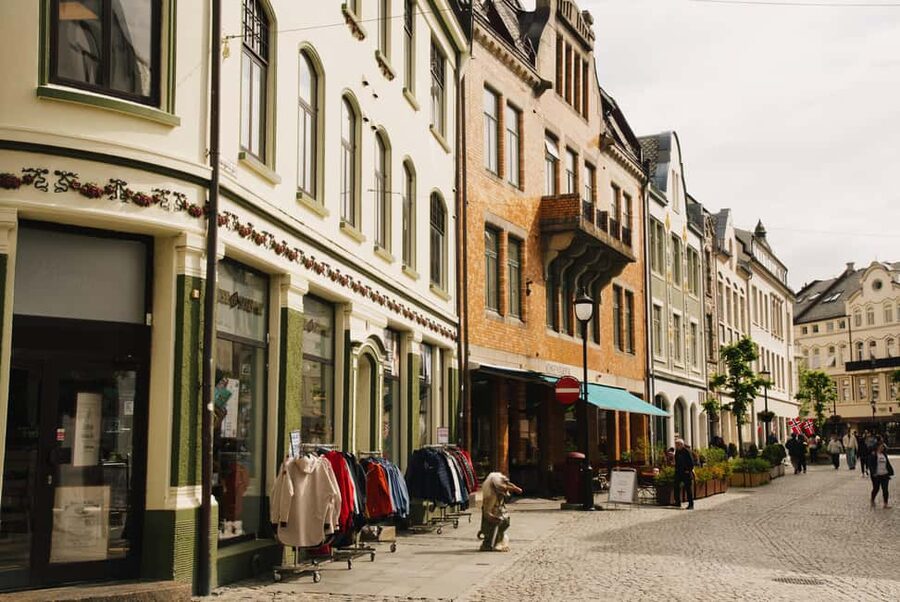
I would choose this tour if you want to understand Ålesund rather than simply photograph it. It suits people interested in architecture, coastal communities, Norwegian society, public works, and the way a small city responds to disaster and change.
It is a particularly good fit for:
- First-time visitors who want a clear introduction to the center
- Cruise passengers with a limited amount of time
- People who enjoy Art Nouveau but want historical context
- Visitors curious about ferries, tunnels, hydropower, oil, and Norwegian public life
- Couples or families who prefer a private group
- Anyone who wants local restaurant suggestions at the end
I would think twice if you dislike walking, need a fully step-free route, or want a tour focused only on architecture. The guide covers several subjects, and the conversation can move from statues to energy policy in the same morning. That variety is a benefit for some people and a mismatch for others.
English and German are available. Bring weather-appropriate clothing, since the harbor section is outdoors and Ålesund’s coastal weather can change. Wear comfortable shoes, and contact the provider before booking if stairs or inclines may be difficult.
Should you book the Ålesund city walk?
Book it if you want a well-organized introduction that links the city’s most attractive sights to real issues: fishing, rebuilding, transport, energy, resistance, and daily life. The guide’s clear chronology and personal knowledge make the route more useful than a simple photo walk.
I would especially recommend it at the start of a stay. After two hours, you will know where the key Art Nouveau streets are, how the harbor fits into the city, where to find a good view, and what questions to pursue on your own.
Skip it if you only want free time for shopping or a self-guided stroll. But if $61 fits your budget and you value a small group, thoughtful explanations, and direct access to a local guide, this is a strong way to get your bearings in Ålesund.
FAQ
Where does the tour start?
The meeting point is at the large Fisherman Boy statue beside the bridge, directly opposite the Jugendstilzentrum.
Where does the tour finish?
The activity ends at Grimmerhaugen, with the final stop near Tafjord Kraft Varmebenker.
How long does the walking tour last?
The tour lasts two hours. Starting times vary, so check availability when booking.
Which languages are available?
The tour is offered in English and German.
Is the tour suitable for wheelchair users?
No. The route includes gentle inclines and stairs, and the activity is not suitable for wheelchair users or people with mobility impairments. A stroller may need to be carried in some places.
Are photos included in the price?
The guided walk includes photo opportunities, but snacks and drinks are not included. An optional digital photo package taken by the guide costs NOK 290, listed as about $25, €28, or £21.
More Walking Tours in Ålesund
- Private Walking Grand Tour of Copenhagen
★ 5.0 · 3,953 reviews - Copenhagen Highlights Walking Tour
★ 5.0 · 2,324 reviews - Stockholm: Ghost Walk and Historical Tour
★ 4.7 · 2,206 reviews - Bergen: Past & Present Small Group Guided Walking Tour
★ 4.9 · 1,609 reviews
Just added around Ålesund
- Seakayak And Hike in Ålesund★ 5.0 · 11 reviews
- 6 Day Fjord Kayaking Trip Norway★ 5.0 · 14 reviews
- Hjørundfjord Fjord Tour Roundtrip from Ålesund★ 3.5 · 20 reviews
- City Sightseeing Alesund Hop-On Hop-Off Bus Tour★ 3.0 · 42 reviews
- E-bike And Hiking Tour In Ålesund★ 5.0 · 47 reviews
- Amazing city walk in Ålesund★ 4.5 · 68 reviews
- Shore Excursions Ålesund: Highlights Ålesund & Islands★ 3.5 · 33 reviews
- Alesund Private Excursion Viking`s islands★ 4.0 · 6 reviews
City Tours, compared.
City Archipelago Sightseeing Cruise with Guide
Read our review →
Group Walking Tour – City Highlights – 2 Hours
Read our review →
City Sightseeing Copenhagen Hop-On Hop-Off Bus Tour
Read our review →
Browse the lists this tour appears in