
Reviewed · FOOD & DRINK
Brew and Brunch Mastering the Perfect Espresso with Breakfast
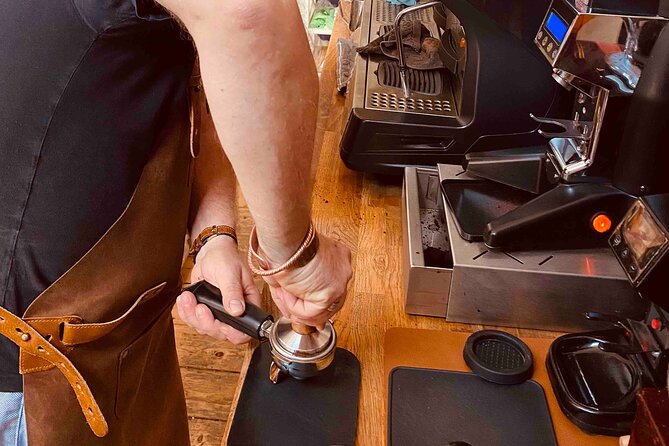
The most interesting part of this Copenhagen coffee class is that it takes place in a working neighborhood cafe, not a polished training room. Mark, the owner and an SCA-certified roaster and barista, teaches while the cafe carries on around you. At the 11:30 a.m. session, you may chat with local regulars or even prepare an espresso for a customer.
I like two things in particular: the class gives you a clear, repeatable method for making espresso on either a commercial or home machine, and the breakfast is a proper little meal rather than a token pastry. You get a soft or hard boiled egg, croissant, fresh orange juice, and a coffee of your choice.
The main consideration is the cafe setting. It brings warmth and local character, but it also means the class is not sealed off from the daily business of the shop. If you want a quiet, private lesson, this may feel distracting. If you enjoy a little real-life activity, it is part of the fun.
Key points at a glance
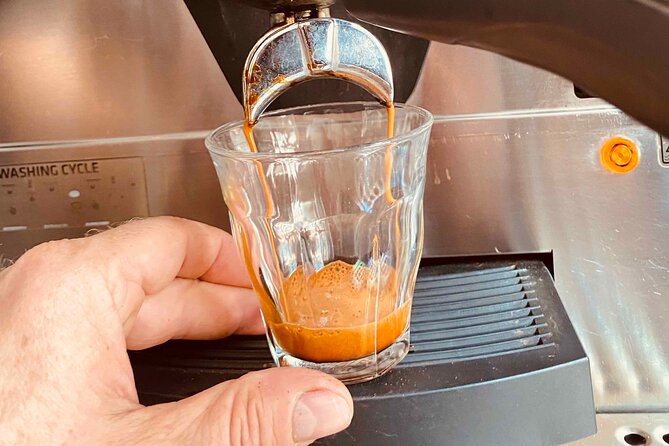
- Learn the full espresso process: Mark explains why each step matters, from preparation through extraction.
- Practice on the machine yourself: The class ends with every participant making an espresso.
- Eat a simple Danish breakfast: Expect a boiled egg, croissant, fresh orange juice, and your choice of coffee.
- Study in a real local cafe: The 11:30 a.m. session runs during opening hours alongside regular customers.
- Keep the group small: The maximum is 10 people, allowing room for questions and hands-on practice.
- Pay for useful instruction: At $38.99 per person, the class combines breakfast, coffee education, and a personal espresso-making session.
A coffee lesson inside a real Copenhagen cafe
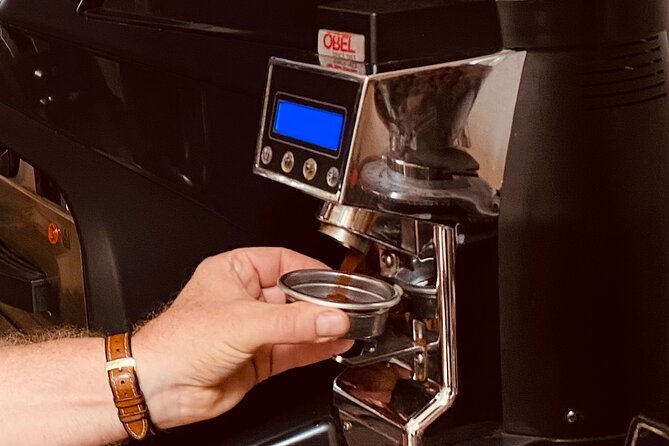
This experience begins at Holmbladsgade 14 in Copenhagen, in a cafe owned and operated by Mark. The setting matters. You are not being shown coffee theory in an abstract classroom. You are learning in the same kind of place where coffee is made and served every day.
That gives the class a practical feel from the start. You can ask how a particular step works, why it matters, and how the same idea applies to your machine at home. The aim is not simply to hand you a good espresso and call it a lesson. You are taught a sequence that you can repeat.
The cafe also focuses on local experiences for visitors, which helps keep the class connected to the neighborhood. The 11:30 a.m. session takes place during normal opening hours. You should expect regular customers to be present, and there may be moments when the lesson overlaps with the cafe’s ordinary work.
That is the tradeoff. The room may not be silent, and the attention is not limited to your group every second. Yet the setting gives you a better sense of how espresso works in daily service. You may even find yourself making a drink for a customer, an unusual practical test that a formal workshop would not offer.
More Food Tours in Copenhagen
- The Copenhagen Culinary Experience Food Tour
★ 5.0 · 959 reviews - Copenhagen Culinary Food Tour with 6+ Tastings of Danish Classics
★ 5.0 · 541 reviews - Politically Incorrect Beer Walk
★ 5.0 · 516 reviews
Meeting Mark and setting the tone
Mark leads the class in English, Portuguese, German, or French. His background as an experienced roaster and SCA-certified barista gives the lesson a strong technical base, but the tone is casual rather than stiff.
You are encouraged to ask as many questions as you like. That matters for a subject where small details can change the result. You might want to ask about your home machine, the role of the coffee itself, or why a certain step cannot be rushed. The format leaves room for those questions instead of forcing everyone through a fixed speech.
The strongest part of Mark’s teaching style is the link between precision and enjoyment. Coffee can become overly technical very quickly, filled with measurements and jargon. Here, the lesson keeps returning to the practical goal: follow the right steps and produce a better espresso.
The small maximum of 10 people also helps. You are not one face in a large demonstration crowd. There is a better chance to see the process clearly, ask something specific, and get your turn at the machine before the class ends.
Breakfast first, with coffee at the center
The food is simple and appropriate for a morning class. You receive fresh orange juice, a boiled egg that can be soft or hard, a croissant, and a coffee of your choice.
I like this combination because it gives the 90-minute experience a natural rhythm. You can settle in with breakfast while Mark explains the subject, then pay closer attention as the practical work begins. The food is not presented as a full brunch spread, so you should think of it as a generous mini-breakfast rather than a long restaurant meal.
The coffee is not just an extra drink on the side. It is part of the lesson. You have a chance to taste, compare, and understand what the class is trying to achieve. The breakfast also makes the $38.99 price easier to assess. You are paying for food and drink, but the main value comes from the instruction and your time using the machine.
If you are looking for a substantial meal, this will not replace lunch. If you want something satisfying before a day of sightseeing, it should do the job without taking over the morning.
The espresso method, step by step
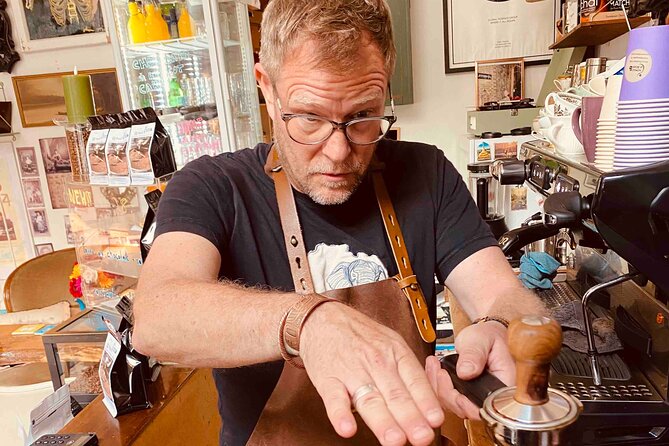
The class teaches that a great espresso depends on a chain of steps. The precise technical details are not specified in advance, so you should not expect a printed formula that guarantees the same result on every machine. Instead, Mark’s point is that you must follow a clear process and pay attention at every stage.
That lesson is useful for two reasons. First, it shows you that espresso is not improved by guessing. Second, it helps you understand why a good cafe routine can be difficult to copy at home. The machine, the coffee, and the way you handle each step all matter.
You will learn how the preparation stages fit together and why each one needs to be completed in order. Mark explains the process while you eat and drink, then shows how the method works in practice. The class is meant to give you a clear picture of what goes into a good result, not simply a chance to watch a professional do it.
This is also a good place to ask basic questions without feeling out of place. If you already know a lot about coffee, you can ask more focused questions. If espresso is new to you, the casual format should make it easier to keep up.
A different sort of day out, same corner of Copenhagen:
- Copenhagen: Canal Cruise with Guide
★ 4.6 · 9,115 reviews - Copenhagen: Hop-On Hop-Off Bus Tour with Boat Tour Option
★ 3.9 · 4,122 reviews - Private Walking Grand Tour of Copenhagen
★ 5.0 · 3,953 reviews - From Copenhagen: Lund and Malmö 2-Country Tour
★ 4.7 · 2,772 reviews
Your turn at the espresso machine
The class culminates with each participant making an espresso. This hands-on finish is important. You can listen to instructions and watch a demonstration, but operating the machine yourself exposes the points that are easy to miss.
Expect to put Mark’s method into practice rather than simply receive a finished cup. You will have to remember the order of the steps and carry them out with care. The experience should leave you with a better sense of what to repeat at home and what to watch when buying espresso in a cafe.
The small group size works especially well here. With no more than 10 people, the practical part should remain manageable. Still, each person’s time may be fairly brief if the class is full. You should book this for the chance to practice once under guidance, not for an extended private coaching session.
The possibility of preparing an espresso for a customer adds a little pressure and humor. It also connects the lesson to the cafe’s real purpose. You are not using equipment in isolation. You are seeing how the same steps fit into an active coffee business.
Why the working cafe setting matters
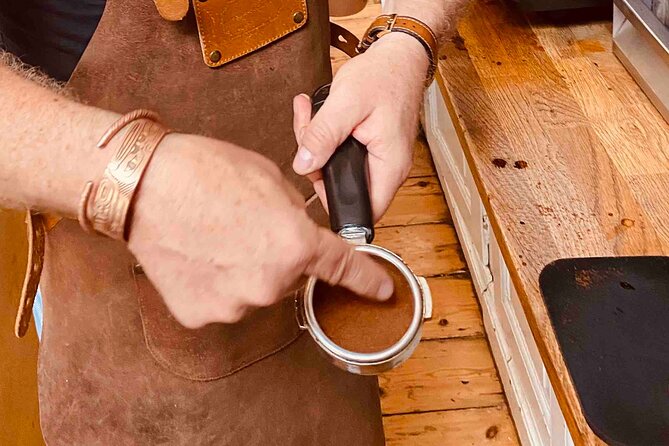
Many coffee classes remove distractions so the teacher can focus on the students. This one takes the opposite approach. The cafe stays open, and local regulars continue their routines around you.
I see that as a strong benefit if you want a more authentic Copenhagen morning. You get a glimpse of an ordinary neighborhood cafe rather than a staged attraction. The interaction with regulars was a key part of the experience for those who enjoyed it, and it gives the class a social quality that a private room would lack.
The same feature may not suit everyone. You may hear ordinary cafe activity while Mark is explaining a point. The lesson could feel less polished than a formal cooking school session. For me, that is a fair exchange for being in a real place where the coffee is made for paying customers every day.
Think about your own preference before booking. If you want to meet people, ask questions, and see local cafe life, this format should feel natural. If you need complete quiet or a tightly controlled lesson, choose a more formal workshop.
How the $38.99 price measures up
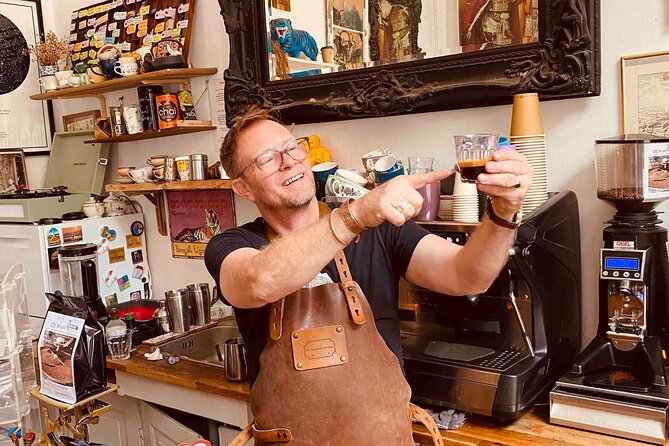
At $38.99 per person, this is not the cheapest way to get breakfast in Copenhagen. You could buy a croissant, egg, orange juice, and coffee for less in many places. The price makes sense only if you value the instruction and the practical session at the machine.
For that price, you receive about 90 minutes with an experienced roaster and barista, a small-group setting, breakfast, and the opportunity to make your own espresso. You also get advice that can transfer to a home espresso machine, which gives the class value beyond the morning itself.
The strongest return comes if you already own an espresso machine or plan to buy one. The method can help you avoid common trial-and-error mistakes. Coffee lovers should also appreciate the chance to ask Mark questions in person rather than rely on general advice.
The value is weaker if you only want a quick breakfast or a sightseeing stop with no interest in coffee technique. This is an activity built around learning. The food supports the lesson, but it is not the main event.
Timing, location, and group size
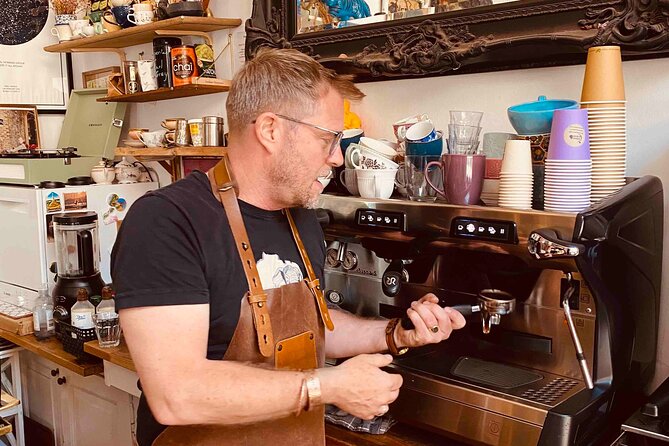
The class lasts about one hour and 30 minutes. Starting at 11:30 a.m. makes it easy to use as a late breakfast before an afternoon in Copenhagen. Since the cafe is open during the class, you should arrive ready for a normal cafe environment rather than a private appointment.
The meeting and ending point are both Holmbladsgade 14, 2300 København. The location is near public transportation, which makes the activity practical to reach without arranging special transport. A mobile ticket is provided, and booking confirmation arrives at the time of booking.
The maximum group size is 10 people. That is small enough for personal questions and hands-on participation, but it is not a one-on-one lesson. If your main goal is detailed advice about a specific home machine, ask your questions early and use the available time well.
Service animals are allowed. The supplied breakfast includes a boiled egg, croissant, orange juice, and coffee, so anyone with dietary needs should consider those fixed items before booking.
Who will enjoy this class most
I would recommend this experience to people who want more from coffee than a nice cup. It suits you if you like understanding how things work, enjoy talking with a passionate local host, or want to improve your espresso routine at home.
It is also a good fit for couples. One couple booked the class as a shared activity and found that even their existing coffee knowledge did not cover everything Mark taught. That is a useful warning for experienced coffee drinkers: do not assume the session is only for beginners.
The class can work for curious beginners, too. You do not need a long background in espresso to benefit from a clear process and a chance to practice. The friendly atmosphere helps keep the subject approachable, and questions are welcome.
I would be less likely to recommend it to someone who wants a large brunch, a private lesson, or a quiet, highly structured workshop. The cafe’s live setting is central to the experience, and the breakfast is modest by restaurant standards.
Booking and cancellation details
The experience is often booked about 27 days ahead, so I would not leave it until the last morning if your Copenhagen dates are fixed. It is particularly sensible to reserve early if you want the 11:30 a.m. start or are traveling with a small group.
Free cancellation is available up to 24 hours before the local start time for a full refund. Cancellations or changes made less than 24 hours ahead are not refunded or accepted. The experience may also be canceled if poor weather affects it or if the minimum number of participants is not reached. In either case, you are offered another date or experience, or a full refund.
The weather condition may seem unusual for a cafe class, but it is part of the stated policy. Read the terms before booking if your schedule is tight.
Should you book Brew and Brunch?
Book it if you want a friendly, hands-on coffee lesson in a real Copenhagen neighborhood cafe. The combination of Mark’s SCA training, breakfast, local regulars, and your own turn at the machine gives the 90 minutes more substance than a standard coffee tasting.
At $38.99, the class is worth it for coffee lovers and home barista hopefuls. It is less compelling if you are mainly shopping for a cheap meal. Go in expecting a small breakfast, useful instruction, and a little cafe noise, and you will know exactly what you are paying for.
FAQ
Where does the espresso class take place?
The class begins and ends at Holmbladsgade 14, 2300 København, Denmark. The cafe is near public transportation.
How long does the experience last?
The class lasts approximately one hour and 30 minutes.
What food and drink are included?
You receive a soft or hard boiled egg, a croissant, fresh orange juice, and a coffee of your choice.
Who teaches the class?
The owner of the cafe, Mark, teaches the class. He is an experienced roaster and barista certified by the Specialty Coffee Association.
What languages are available?
The guide can provide the experience in English, Portuguese, German, or French.
Can I cancel for a full refund?
Yes. You can cancel at least 24 hours before the local start time for a full refund. Cancellations or changes made less than 24 hours before the experience are not refunded or accepted.
Just added around Copenhagen
- walking tour – Copenhagen and Christiansborg 3 hours★ 4.0 · 7 reviews
- The Hunt For The Six Forgotten Giants★ 5.0 · 45 reviews
- Copenhagen Walking Tour with Food Testing (smorrebrod dish & snap)★ 4.5 · 10 reviews
- The Philosopher’s Last Walk: An audio tour on the life of Søren Kierkegaard★ 4.5 · 5 reviews
- Small Group Guided Food Tour and Street Art Visit to Norrebro★ 5.0 · 9 reviews
- The Six Forgotten Giants Trolls Hunt with Minibus★ 4.5 · 27 reviews
- The Foodie Tour of Copenhagen★ 5.0 · 14 reviews
- The Forgotten Giants Private Tour★ 5.0 · 3 reviews
Food & Drink, compared.

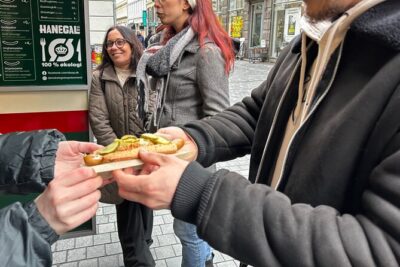
Copenhagen Culinary Food Tour with 6+ Tastings of Danish Classics
Read our review →
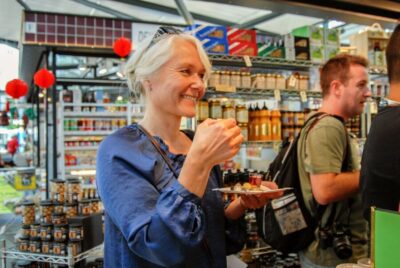
Copenhagen’s oldest and original food tour (Est. 2011).
Read our review →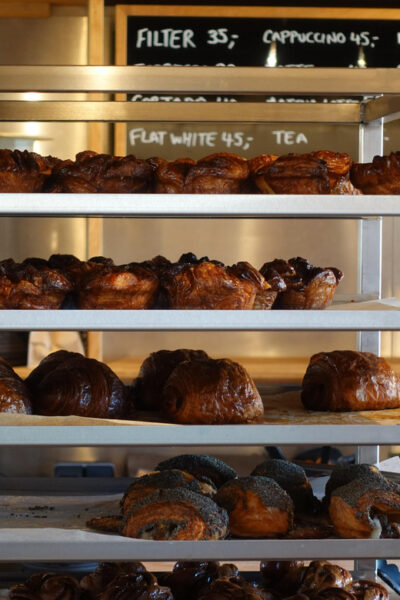


Skip the Line: Disgusting Food Museum Entrance Ticket
Read our review →Browse the lists this tour appears in