
Reviewed · WALKING TOURS
Classic Stockholm Small Group Walking Tour | 3 Hours
Stockholm’s story unfolds especially well on foot, and this tour links its best chapters in one long sweep: Slussen, Gamla Stan, the Royal Palace, Riddarholmen, Parliament, and City Hall. You’ll hear about Viking stones, medieval power struggles, Swedish politics, Nobel Prize history, and modern city life without spending the day inside museums.
I like the personal guiding style, especially the reports of Kenneth and Rachel answering questions as they come up and adjusting the pace to suit the group. I also like the useful local advice, from Swedish food suggestions to help finding your way by tram after the walk.
The main consideration is simple: three hours covers a lot of ground, but the tour does not include entry to museums, the Royal Palace, churches, or other paid sites. Expect cobblestones, some steps, and a fairly broad overview rather than a slow, detailed visit to each landmark.
Six useful things to know before booking

- You cross several historic districts: The route begins near Södermalm, continues through Gamla Stan, reaches Riddarholmen and Helgeandsholmen, and ends near City Hall.
- Kenneth and Rachel are the named guides: Their style is conversational, with room for questions, personal stories, photos, and practical advice.
- The tour is best taken early in your stay: It gives you a working map of Stockholm and helps you choose museums, restaurants, and neighborhoods to explore later.
- The attractions are viewed rather than entered: Plan and budget separately for the Nobel Prize Museum, Royal Palace, Storkyrkan, and City Hall interiors.
- The pace is manageable but not effortless: You need moderate fitness, comfortable shoes, and confidence on uneven cobblestones.
- The price is $66.52 per person: That is reasonable for a three-hour, English-language orientation if you value a live guide and local recommendations.
Why this route gives you a useful first look at Stockholm
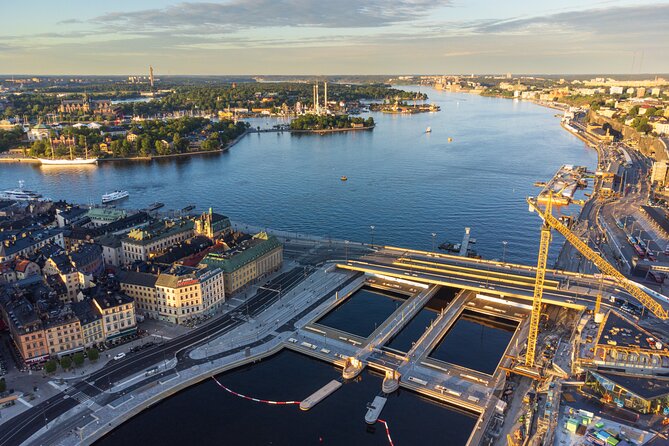
Stockholm can feel confusing at first. Water separates its districts, the oldest streets twist sharply, and major sights are spread across several islands. This route helps you connect the pieces.
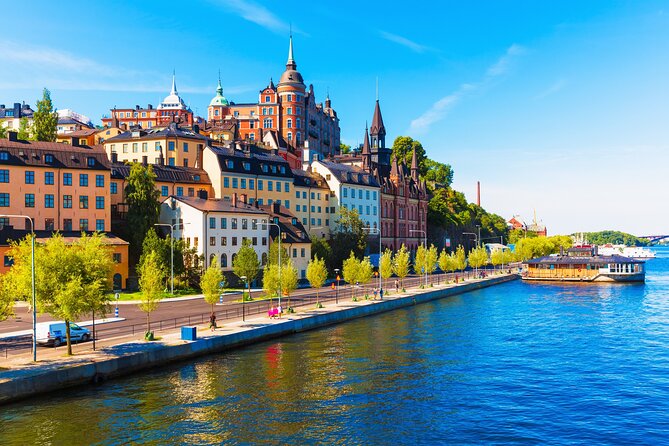
You begin at Södermalmstorg, by the east entrance of the Stockholm City Museum, then move through Slussen toward Gamla Stan. From there, the walk winds through medieval lanes and squares before crossing toward the government quarter, Riddarholmen, and City Hall.
That sequence matters. You are not simply checking off isolated monuments. You see how trade, religion, royal power, law, and modern government shaped one another. The guide also relates older events to present-day Stockholm, which makes the city easier to understand after the walk.
The route is sold as a small-group tour, although the listed maximum is up to 100 people. Actual group size can vary, and several bookings described a private or nearly private walk when few people had reserved that departure. Do not assume a private tour, but there is a real chance of a more personal experience during quieter periods.
More Walking Tours in Stockholm
- Stockholm: Ghost Walk and Historical Tour
★ 4.7 · 2,206 reviews - Walking Tour of Stockholm Old Town
★ 5.0 · 1,175 reviews - The Original Stockholm Ghost Walk and Historical Tour – Gamla Stan
★ 4.5 · 1,165 reviews
From Södermalm to Slussen, where Stockholm changes shape
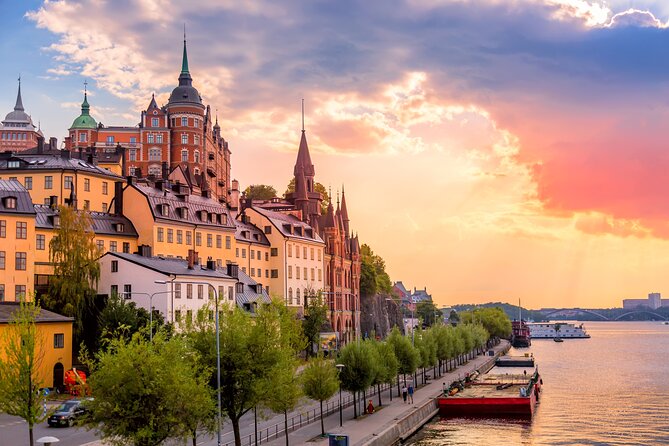
The meeting point is at Götgatan 1, with detailed directions sent before the tour. The written itinerary identifies the east entrance of the Stockholm City Museum at Södermalmstorg, so read the pre-tour message carefully rather than relying on a quick map search.
The opening stop is brief, but it puts you on Södermalm, one of Stockholm’s key urban districts. You then reach Slussen, whose name refers to the lock connecting waterways. The guide explains why this crossing has mattered to Stockholm from its early development through the modern redevelopment project, listed as running from 2016 to 2025.
This is a good start because Slussen is not just a place to hurry through on the way to Gamla Stan. It connects transport, water, neighborhoods, and the city’s growth. You get a sense of why Stockholm developed where it did.
The stop itself is short, about five minutes, so do not expect a full engineering or construction tour. Its value comes from setting up the rest of the walk and showing how the old city remains tied to current urban change.
Järntorget and the working life of Gamla Stan
Järntorget, or Iron Square, introduces the commercial side of Stockholm’s past. Its name points to the iron trade, and the guide connects the square with banking, commerce, buildings, and cultural figures.
This is one of the better places to listen for the link between an attractive old square and ordinary economic life. Medieval and early modern cities were shaped by cargo, money, workshops, and trade, not just palaces and churches.
The stop lasts about ten minutes. You will hear about a particularly important poet, but the supplied details do not name the poet in advance. If that subject interests you, ask your guide to explain the connection and point out the relevant setting.
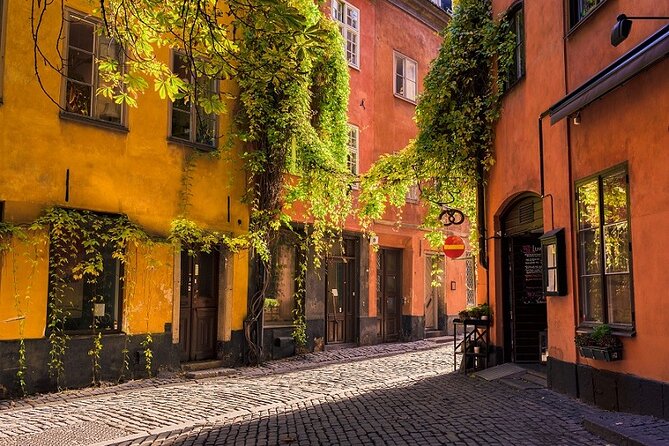
From here, the route moves into smaller lanes, where the scale changes quickly. Stockholm’s old center is best understood at walking speed. You can notice doorways, façades, narrow passages, and the way the street plan bends around the island.
Mårten Trotzigs Gränd and the charm of tight spaces
Mårten Trotzigs Gränd is one of the route’s most memorable physical moments. This passage narrows dramatically and includes 36 steps, taking you through a lane linked to a German merchant who purchased it in the 16th century.
The stop is short, around ten minutes, but it gives you a strong sense of old Stockholm’s cramped medieval fabric. It is also a useful reminder that famous sights do not always require an admission ticket. Sometimes a narrow lane and a few steps tell you more about the city’s layout than a grand façade.
The drawback is practical. The steps and cobblestones require care, especially in wet or icy weather. Wear shoes with good grip, and do not expect a smooth, fully accessible route.
More Walking Tours in Sweden
- Stockholm: Old Town Walking Tour with Local Guide
★ 4.7 · 719 reviews - Best of Stockholm Walking Tour-3 Hours, Small Group max 10 people
★ 5.0 · 645 reviews - The Nordic Food Walk Stockholm
★ 4.5 · 642 reviews - Walking Tour of Stockholm’s Old Town, Gamla Stan
★ 5.0 · 451 reviews
German Church, Finnish Church, and the city’s many communities
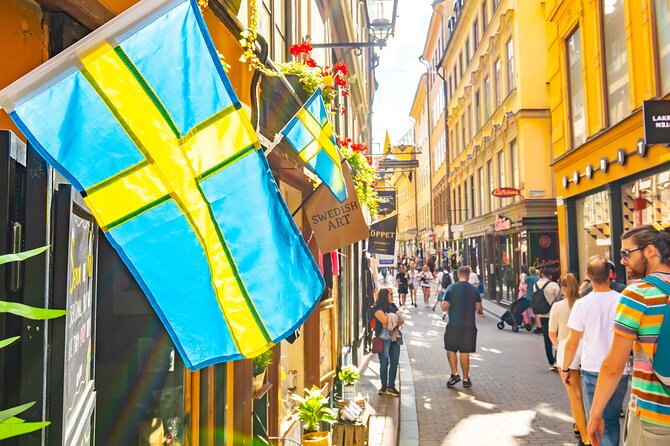
S:ta Gertrud, the German Church, reflects the long presence of German-speaking residents in Stockholm. The German congregation received permission to form its own church community in 1571, and by 1607 it had exclusive use of a church building previously shared with the Finnish-speaking parish.
The nearby Finnish Church adds another layer to the story. Its building began as a royal tennis court before becoming a place of worship for Stockholm’s Finnish community. That change gives the stop a practical human angle: buildings change purpose as communities grow and adapt.
Neither church is simply decorative background. Together, they show how trade and migration shaped Stockholm’s religious and cultural life. The route allows about ten minutes at each church, enough for an explanation and exterior viewing, but not a full interior visit.
A Viking runestone in the middle of modern Stockholm
The runestone identified as U 53 gives the walk a direct connection to Sweden’s Viking-era past. It is easy to miss such an object when surrounded by later buildings, traffic, and tourists, which is why the guide’s explanation adds real value.
The stop lasts only about five minutes. That is enough to examine the stone and understand why it matters, but not enough for a long study of its inscription or the wider runestone tradition.
I like this part of the route because it places a very old object inside the living city. Stockholm is not presented as a museum frozen in one period. Viking-era evidence, medieval streets, royal institutions, and modern government all occupy the same walk.
Stortorget, the Nobel Prize Museum, and Stockholm’s hardest history
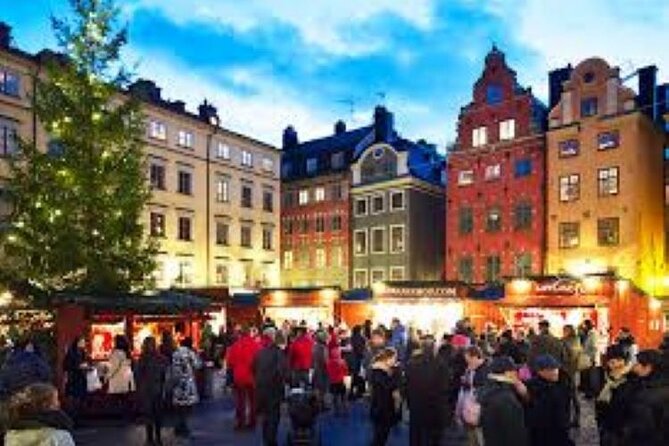
Stortorget is the oldest square in Stockholm and the center around which Gamla Stan grew. It is also linked to the Stockholm Bloodbath of November 1520, one of the darkest episodes in Swedish and Danish political history.
The guide points out the square’s notable buildings, including the Stock Exchange Building, Runestone House, Schantzska House, Seyfridtzska House, Scharenbergsska House, and Grillska House. The Stock Exchange Building now houses the Nobel Prize Museum, which opened in 2001 for the prize’s 100th anniversary.
You have about 15 minutes here. That is enough to understand the square’s layout, hear the major stories, and get your bearings for a later museum visit. Admission is not included, and the walk does not take you inside.
There are also modern cultural details. Stortorgsbrunnen appeared in a well-known 1976 photograph of ABBA, and Stortorgs Källaren at Stortorget 7 has its own cannonball story. These touches keep the stop from becoming a string of dates and battles.
St. George, the Iron Boy, and small details worth noticing
The sculpture of Saint George and the Dragon, associated with Stockholm Cathedral, brings medieval art and Swedish-Danish conflict together. The original wooden sculpture was placed in the cathedral in 1489 and is widely linked to Sten Sture the Elder’s victory at Brunkeberg in 1471.
The guide explains the symbolism of courage, struggle, and triumph. The tour does not include admission to the cathedral, so you should plan a separate visit if you want to see the original sculpture inside.
Nearby, Järnpojken, or the Iron Boy, offers a completely different kind of city story. This tiny sculpture attracts coins, pats on the head, and knitted winter clothing. Its appeal is intimate rather than grand, and it shows how a very small artwork can become part of daily local life.
These two stops work well together. One represents medieval power and national conflict. The other depends on affection, habit, and small acts from people passing by.
The Royal Palace without an interior visit
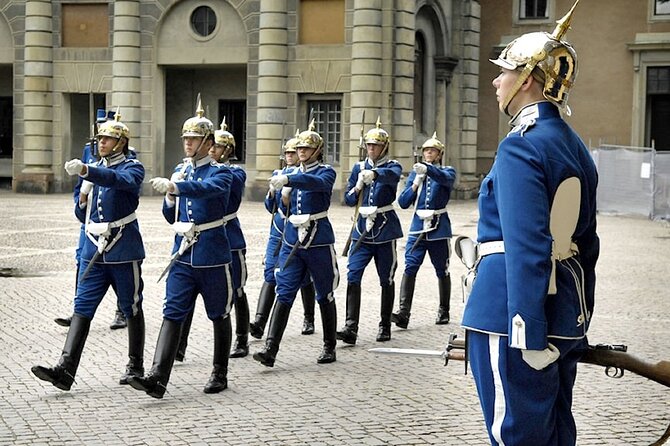
The Royal Palace is one of the route’s major stops, with about 15 minutes devoted to its history, architecture, and surrounding statues. The site began as part of the medieval Tre Kronor castle complex, and the palace later became the setting for royal apartments, receptions, and state events.
Your guide introduces statues including Karl XIV Johan, Gustav III, Olaus Petri, also known as Master Olof, and Kristina Gyllenstjerna. You also hear that the current royal family moved to Drottningholm Palace in 1981, leaving Stockholm’s palace primarily for official functions and public visits.
The Royal Palace admission fee is not included, and the walking tour does not take you through the interior. That is a limitation if you have only one day in Stockholm and want a palace visit built into your schedule.
On the other hand, the exterior explanation helps you decide if a separate visit is worth your time. If you want the Hall of State, Royal Chapel, or Gustav III’s Museum of Antiquities, reserve time and pay for entry independently.
Riddarholmen, Riddarhuset, and the machinery of power
Riddarholmen shifts the focus from royal residence to institutions. The island began changing in the 1200s with the Grey Friars Monastery. After the Tre Kronor castle fire in 1697, government agencies and courts gradually occupied more of the area.
The guide connects the island’s medieval religious past with its later legal and administrative role. You also hear about Riddarholm Church and the statue of poet Evert Taube. This gives you a more layered view of the island than a quick photo stop would provide.
At Riddarhuset, or the House of Nobility, the subject turns to Sweden’s aristocratic past. The palace was built between 1641 and 1674 and remains linked to Sweden’s knighthood and nobility.
Bonde Palace provides another institutional counterpoint. It is home to the Supreme Court, so the building represents Sweden’s judicial tradition rather than royal ceremony. Together, these sites show how authority moved through churches, noble families, courts, and elected government.
Parliament, Rosenbad, and modern Sweden
The Parliament Building, Riksdagshuset, gives the tour a clear present-day focus. Built between 1895 and 1904, the complex originally included the national bank in its western section.
When Sweden replaced its bicameral parliament with a unicameral system in 1971, the building was changed to accommodate the new arrangement. The former bank section became part of the parliamentary complex and was adapted for the plenary chamber.
The stop lasts about 15 minutes. You also hear about the Prime Minister’s official residence, Sergelska Palatset, and the artwork known as The Homeless Fox. Greta Thunberg is another modern figure associated with the building.
Rosenbad, the seat of the Swedish government, follows naturally. The stop is shorter, about five minutes, but it completes the shift from medieval monarchy to modern administration.
This part will suit you if you enjoy politics and civic design. If your priority is only old streets and picturesque buildings, it may feel less scenic than Gamla Stan. The tradeoff is a fuller picture of how Sweden works today.
Finishing at Stockholm City Hall
The walk ends at Stockholm City Hall, whose architecture combines Italian Renaissance and Nordic Gothic influences with the National Romantic style. The Blue Hall and Golden Hall are associated with the Nobel Banquet, making City Hall one of Stockholm’s best-known civic buildings.
The tour allows about 15 minutes here, but entry to the building is not included. That means you can admire the exterior and learn why the site matters, then decide if you want to return for a separate guided interior visit.
Ending here is practical. City Hall is a clear landmark, and the guide offers help with directions, restaurants, public transport, and your next stop. This extra assistance came through repeatedly in the guiding approach described by the company, including help with tram navigation and suggestions for Swedish meals.
Price, pace, and what you actually receive
At $66.52 per person, this is not the cheapest way to see Stockholm. You are paying for three hours of live explanation, route planning, local context, and the chance to ask questions as you go.
The value improves if this is your first day or two in Stockholm. A good orientation can save time later because you learn which places deserve a return visit. You also get restaurant and cafe suggestions, which can be more useful than another general list of attractions.
The price is less compelling if you want museum entry, a slow palace tour, or a narrowly focused architectural walk. You will need to add admission fees and possibly return to several places on your own.
The tour requires moderate fitness. Cobblestones, steps at Mårten Trotzigs Gränd, and three hours on foot are the main physical demands. Service animals are allowed, and the route is near public transport, but the information provided does not promise full wheelchair accessibility.
Free cancellation is available up to 24 hours before the start time. Changes or cancellations made inside that window are not refunded.
Should you book the Classic Stockholm Walking Tour?
Book it if you want a broad, well-explained introduction to Stockholm before choosing which sights to visit in depth. It is especially useful for first-time visitors, history fans, architecture-minded walkers, and anyone who likes asking questions instead of listening to a fixed speech.
The strongest feature is the human element. Kenneth’s tours are described as warm, flexible, and full of personal Stockholm stories, while Rachel is noted for clear explanations, local recommendations, photo help, and attention to pace. That style can make a long city walk feel more like time spent with an informed local than a formal lecture.
Skip it if you dislike walking on uneven streets, need every major attraction entered during the tour, or want a tightly focused visit to only Gamla Stan. For most first visits, though, the route gives you a strong mental map, useful next steps, and a surprisingly wide look at Stockholm in three hours.
FAQ
How long is the Classic Stockholm Small Group Walking Tour?
The tour lasts approximately three hours.
What language is the tour offered in?
The tour is offered in English. The guide service also lists Swedish as an available language.
Where does the tour begin?
The meeting information gives Götgatan 1, 116 46 Stockholm, Sweden, and identifies the east entrance of the Stockholm City Museum at Södermalmstorg. You should follow the detailed directions sent before the tour.
Where does the tour end?
The tour ends at Stockholm City Hall, in a different location from the starting point.
Are museum and attraction admission fees included?
No. The tour does not include entry fees, and the attractions are not entered during the walking route.
Is the Royal Palace included inside the tour?
The guide explains the Royal Palace, its history, and nearby statues, but admission is not included and the tour does not provide an interior visit.
How much does the tour cost?
The listed price is $66.52 per person.
Is the tour suitable for someone with limited fitness?
Participants should have a moderate level of physical fitness. The route includes walking on cobblestones and 36 steps at Mårten Trotzigs Gränd.
Can I cancel for a full refund?
Yes. You can cancel at least 24 hours before the local start time for a full refund. Cancellations or changes made less than 24 hours before the start time are not accepted for a refund.
More 3-Hour Experiences in Stockholm
- Stockholm Must See – Old Town, boat + Vasa Museum 3h small group
★ 4.5 · 34 reviews - 3-Hour Private Walking Tour in Stockholm
★ 5.0 · 26 reviews - Private Tour: 3h Viking History from Stockholm to Runic Kingdom
★ 4.5 · 23 reviews - Stockholm Private Group Walking Tour | 3 Hours
★ 5.0 · 8 reviews
Just added around Stockholm
- Traditional Persian Cooking Class in Stockholm with a Local★ 5.0 · 20 reviews
- Stockholm Top attractions all-inclusive Gran Tour Winter Edition★ 5.0 · 6 reviews
- Airport Limousine Transfer: Arlanda Airport to Stockholm City 1-7 Passengers★ 4.0 · 5 reviews
- Scandinavian Art, Architecture and Design Tour in Stockholm★ 4.5 · 11 reviews
- Wolf and Wildlife Tracking in Sweden★ 5.0 · 9 reviews
- Walking Tour of Stockholm’s City Center★ 4.5 · 26 reviews
- Stockholm: Sunset Hike in Tyresta National Park with Meal★ 5.0 · 79 reviews
- Private Tour: Swedish History Day Trip to World Heritage Candidate Markim-Orkesta from Stockholm★ 5.0 · 8 reviews
Walking Tours, compared.
Past & Present Small Group Guided Walking Tour
Read our review →
Walking Tour in Bergen of the Past and Present
Read our review →
Browse the lists this tour appears in