
Reviewed · GUIDED
Copenhagen Architecture and Sustainability Tour with local Guide
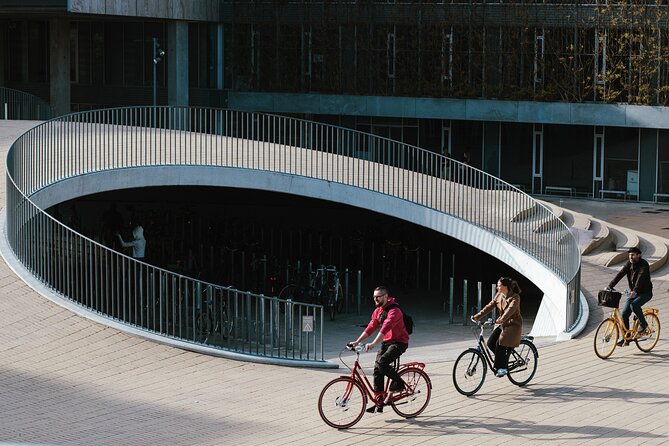
Copenhagen’s best story is not found in one grand palace. It is found in the way the city rebuilt its harbor, made room for bicycles, turned old defenses into parks, and designed housing around community life. This three-hour architecture and sustainability ride takes you to those working parts of the city, far beyond the usual postcard stops.
I especially like the chance to see modern Copenhagen in motion, rather than only admire its old center. I also like the small group, capped at 15, and the roughly 11 kilometers of cycling, which let you cover a lot of ground without turning the ride into a race. The main thing to consider is traffic and weather: you need moderate fitness, and a crowded summer harbor or wet day can affect the experience.
Key points at a glance
- See Copenhagen’s practical side: Learn how buildings, bridges, parks, and public spaces solve city problems.
- Cover about 11 kilometers by bike: The ride reaches areas too far apart for a relaxed walking tour.
- Expect a small group: A maximum of 15 people makes it easier to hear the guide and stay together.
- Spend time at 13 locations: Stops range from Blox and the Meatpacking District to Amager Fælled and Ørstedsparken.
- Use the included city bike: Helmets are free on request, while baskets, phone holders, child seats, and e-bikes cost extra.
- Plan around the weather: The tour requires good conditions and may be rescheduled or refunded if bad weather cancels it.
Why this bike tour shows the Copenhagen you came to understand
This is not mainly a sightseeing ride for famous facades. It is a guided look at how Copenhagen works.
You cycle through former industrial zones, reclaimed land, student housing, public parks, harbor swimming areas, and bike-only bridges. The guide connects these places to larger questions: How does a city share space? What makes a building socially useful? Can a park help prevent flooding? What happens when an old harbor changes from a place for ships and industry into a place for daily life?
That focus gives the tour a clear purpose. You are not simply ticking off attractions. You are seeing why Copenhagen feels so organized around bicycles, public access, and livable neighborhoods.
Guides named in the tour feedback include Jörn and Julia. Jörn is particularly praised for explaining recent city development, while Julia is noted for making the tour both interesting and easy to follow. Your guide will vary by departure, but the experience depends heavily on clear explanations while riding and at each short stop.
The English-language tour lasts about three hours. About 65 minutes are listed as cycling time, with roughly 11 kilometers between the stops. That is a fair amount of riding, but it is spread across the route rather than presented as one long push. You stop often, usually for five to 15 minutes, so this works best if you are comfortable riding in an urban setting.
A few more Copenhagen days worth weighing up
- Copenhagen: Canal Cruise with Guide
★ 4.6 · 9,115 reviews - Copenhagen: Hop-On Hop-Off Bus Tour with Boat Tour Option
★ 3.9 · 4,122 reviews - Private Walking Grand Tour of Copenhagen
★ 5.0 · 3,953 reviews
Starting at Blox and crossing Lille Langebro
The tour begins at Vester Voldgade 2, close to public transportation. The bike and guide are provided there, and toilets are available at the shop before you set off. Helmets are free if you want one, which I recommend if you are not used to cycling in city traffic.
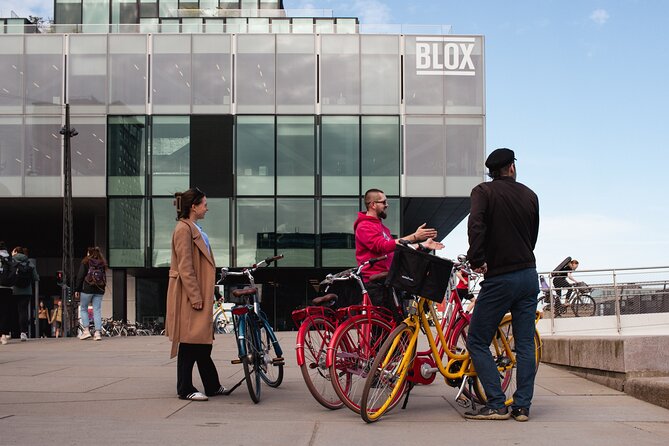
Blox is your first lesson in the tour’s theme. This mixed-use building was developed with both technical and social sustainability in mind. The Danish Architecture Center, known as DAC, is its most prominent renter and presents exhibitions about Copenhagen architecture.
The stop is short, around 10 minutes, so do not expect time for a full exhibition visit. Instead, use Blox as an introduction to the idea that sustainability is not only about energy systems or materials. It also includes how a building is used, who can access it, and how it fits into public life.
From there, you reach Lille Langebro. This bridge provides a connection across the harbor for cyclists and pedestrians. It is part of a wider effort to change the old merchant and naval harbor into a place where people spend free time, not merely a zone for working ships and industry.
The harbor is also where the route can feel crowded. In summer, the inner harbor may be packed, especially around the first stop. If you dislike busy cycling conditions, pay close attention here and let the guide set the pace.
Harbor swimming and community-minded housing
At Havnebadet Islands Brygge, the focus shifts from crossing the water to using it. When the harbor bath opened in 2003, it marked a major change in how Copenhagen related to its harbor.
The short stop helps you understand the harbor as a public amenity. It is not just scenery viewed from a bridge. It has become a place for recreation and everyday city life. The tour does not list swimming time, so treat this as a viewing and explanation stop, not a swim break.
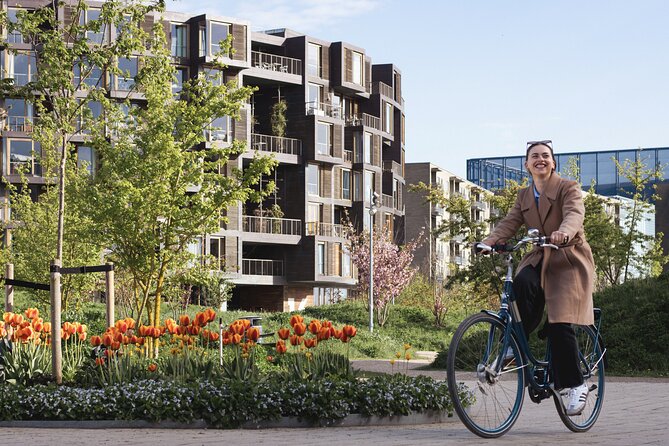
Next comes the Tietgen Residence Hall, one of the most useful examples of social sustainability on the route. The building houses about 400 people and is designed to balance private space with shared life.
Individual rooms are small and include a washroom. Kitchens, living rooms, and other facilities are shared by some or all of the residents. The concept is simple: give people enough private space, but make common rooms part of daily life.
This is where the tour moves beyond the usual green-building discussion. A sustainable building is not only one that uses less energy. It can also support social contact, shared resources, and personal development. You may find this stop especially useful if housing design and urban planning interest you.
Concert halls, reclaimed land, and Copenhagen’s unusual nature
DR Koncerthuset brings a different kind of architecture into the route. The building includes a main concert hall with 1,800 seats, home to the Royal Symphony Orchestra, along with smaller stages and recording studios.
The stop lasts about 10 minutes. You will view the building from the outside and hear how a major cultural institution fits into the city. It is a good reminder that this tour is not limited to ecological projects. Architecture also shapes access to music, performance, and public culture.
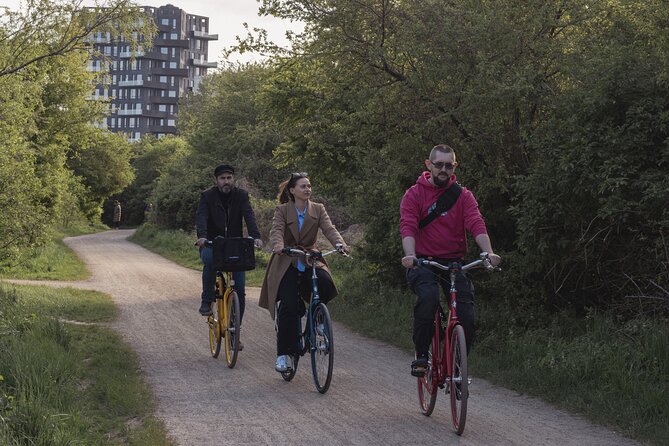
Then the route reaches Amager Fælled, one of the most unexpected sections. The area served as military training grounds and a shooting range from the 1700s until the 1950s. It later became a garbage dump, part of an old local joke about Amager as lorteøen, or shit island.
Today, Amager Fælled offers a relatively untouched natural area within Copenhagen. The irony is that much of it sits on artificially reclaimed land. That tension is worth paying attention to. The city’s open nature is not always untouched wilderness. Sometimes it is land with a complicated past that has been given another role.
You spend about 15 minutes here, the longest stop on the route. That extra time makes sense. Compared with the buildings and bridges, this area needs more explanation to appreciate. It also gives you a break from the hardest concentration required for urban cycling.
A different sort of day out, same corner of Copenhagen:
- From Copenhagen: Lund and Malmö 2-Country Tour
★ 4.7 · 2,772 reviews - Copenhagen Highlights Walking Tour
★ 5.0 · 2,324 reviews - Copenhagen: Highlights 3 Hour Bike Tour with a Local Guide
★ 4.8 · 2,312 reviews - Hamlet and Sweden Tour – Two Countries in one day !
★ 5.0 · 2,223 reviews
Cykelslangen and the logic of a bike-first city
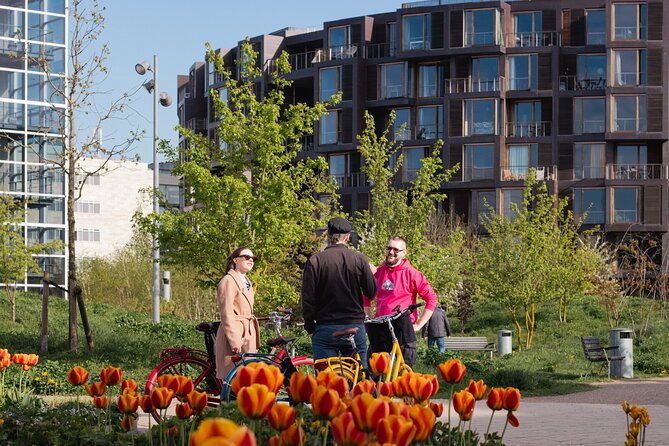
Cykelslangen is one of the route’s most memorable pieces of infrastructure. Together with Bryggebroen, it was among the first new harbor crossings built specifically for cyclists.
A dedicated cycle bridge does more than make a ride pleasant. It gives bicycles a direct route and reduces the need to compete with cars or squeeze across a pedestrian crossing. You see the bridge as part of a larger network rather than as an isolated design object.
The tour’s bike focus matters here. A walking guide can explain the bridge, but riding across it lets you understand its slope, width, and purpose in a more direct way. You feel how a city route changes when cyclists are treated as regular users of public infrastructure.
This is also a place where your own riding ability matters. You do not need racing fitness, but you should be able to brake, steer, and follow a guide in city conditions. The tour lists moderate physical fitness as necessary.
Enghave Park and managing heavy rain
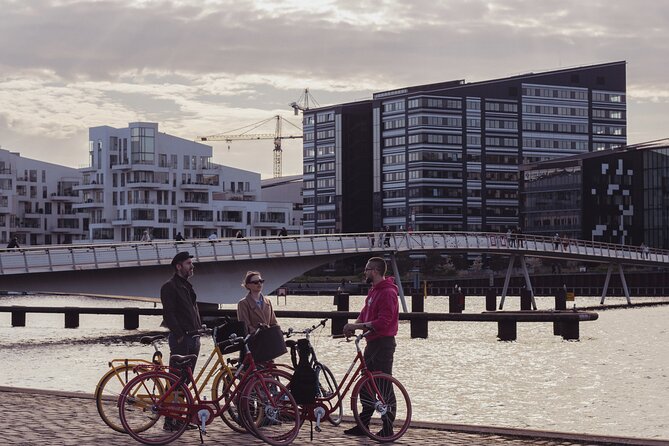
Enghave Park was created in the late 1920s on the site of former allotment gardens. Its original layout followed a neoclassical plan, with a bandstand, playground, and sports fields.
Between 2017 and 2019, the park received a full redesign. Its new role is not only recreation. It also helps control torrential rain in Copenhagen.
This is one of the strongest stops for showing how sustainability can be practical and visible. A park can be a place to play, relax, and gather, while also helping the city handle sudden downpours. You do not need a technical background to understand the basic point: public space can perform more than one job.
The park stop lasts about 10 minutes. That is enough for a clear explanation, but not enough for a leisurely walk through every section. Think of the tour as an overview of design choices, not a detailed landscape architecture visit.
Absalon, Kødbyen, and city life after working hours
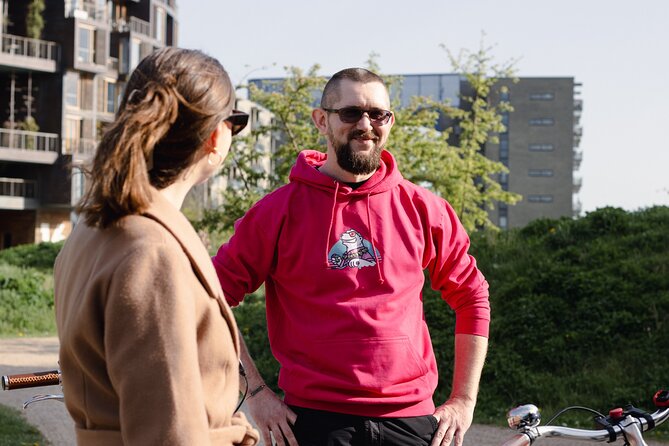
Folkehuset Absalon is a former church converted into a privately run community center. It offers another example of reuse, this time at a neighborhood scale.
The value here is not simply that an old building survived. It is that the building gained a new public purpose. The stop is only about five minutes, so the guide will likely focus on the conversion and the center’s role rather than offer a long interior visit.
The Meatpacking District, or Kødbyen, brings industrial history into the ride. The city planned the district to create cleaner and healthier conditions for the meat trade as Copenhagen grew. It expanded through several additions, leaving a record of industrial architecture from the 19th and 20th centuries.
Today, the district is a useful example of how working areas change over time. Its original function explains the buildings, street plan, and scale. The stop also helps you see why adaptive reuse matters. Places built for industry can later serve new urban needs without erasing their earlier purpose.
At around 10 minutes, the stop is fairly brisk. If you want to explore Kødbyen’s restaurants and cultural venues in detail, return on your own later. The bike tour gives you context and orientation rather than free time.
Israel’s Square and the old city edge
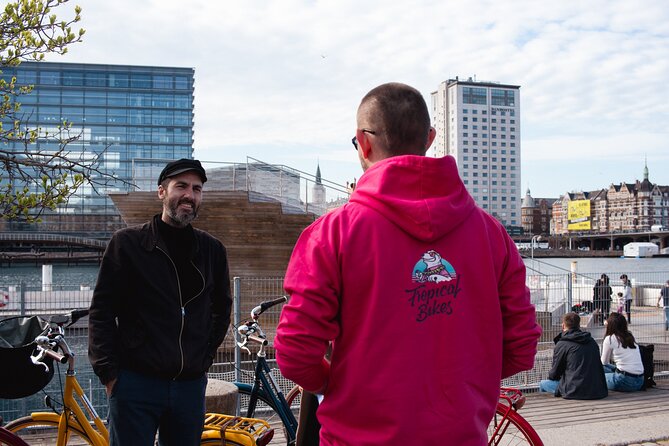
Israel’s Square, beside Torvehallerne, is now a meeting place for people interested in food. Its earlier use tells a more complicated story.
A farmers market operated here from the 1890s until the 1950s, after Copenhagen’s strict building rules within the walled city ended. Later, the area became a large parking lot. The square’s current role shows how public space can shift from market, to car storage, and back toward social use.
This stop works well after Kødbyen because both locations raise the question of what a city chooses to prioritize. You see food, trade, transport, and gathering places connected across different periods of Copenhagen’s growth.
The route then reaches Ørstedsparken, an early example of urban reuse. The park was once part of the city’s defenses outside the walls. After the fortifications were removed, the area became a public park, with parts of the old moat retained as a lake.
The dramatic hills and crooked paths give the park a different feel from the orderly layout of Enghave Park. The stop shows that reuse is not a new idea. Copenhagen has been turning former defensive infrastructure into public space for generations.
What the price includes, and what costs extra
At $72.57 per person, the tour is not the cheapest way to rent a bicycle, but the comparison is not quite fair. The price includes the bike, an English-speaking local guide, and a planned route linking 13 sites across the city.
You are paying for the explanation and the route design as much as for the bicycle. Covering these locations independently would require planning, map reading, and several hours of riding. A walking tour would take much longer, while public transportation would remove much of the connection between each neighborhood.
The basic bicycle is included. Children’s bikes in different sizes may be available, but you need to contact the provider about availability. Helmets are free on request.
Extras cost more:
- Phone holder or basket: 49 DKK each
- Child seat: 119 DKK
- E-bike: 249 DKK
- Cargo or tandem bike: 449 DKK
- E-cargo bike: 649 DKK
These options can make sense for specific needs, but reserve upgrades in advance. For most riders who are comfortable on a regular bicycle, the standard setup should be enough.
Who will get the most from this ride
I would choose this tour if you want to understand Copenhagen’s current city planning rather than spend three hours on a checklist of old buildings. It suits first-time visitors who want to cover ground quickly and returning visitors who have already seen the center.
It is also a good match for anyone interested in architecture, public space, cycling, housing, or environmental planning. The small group and short stops make it easier to ask questions than on a large coach tour.
You should think twice if you dislike cycling in traffic, need frequent long breaks, or want extended time inside museums and buildings. The tour is mostly outdoors, and the stops are brief. You also need good weather. If poor weather cancels the experience, you can receive a full refund or choose another date.
Free cancellation is available up to 24 hours before the start time. The tour may also be canceled if the minimum number of participants is not reached, with a different date, another experience, or a full refund offered.
My recommendation for booking
Book this ride if you want a practical, modern view of Copenhagen and feel comfortable cycling about 11 kilometers in three hours. The strongest parts are the clear theme, the wide range of stops, and the chance to cross the city by bicycle instead of staying in the historic center.
The $72.57 price is reasonable for the included bike, guide, and carefully connected route, especially if you have limited time. Just bring weather-appropriate clothing, consider requesting a helmet, and do not expect a slow architectural walking tour. You will see more places, learn how the city handles real problems, and finish with a better sense of why Copenhagen works the way it does.
FAQ
How long does the Copenhagen Architecture and Sustainability Tour last?
The tour lasts approximately three hours. The listed cycling time is about 65 minutes, with the rest spent at the stops and moving through the city.
How far will I ride?
You will bike roughly 11 kilometers between the stops. The tour requires a moderate level of physical fitness.
How many people can join the tour?
The group is limited to a maximum of 15 participants.
Is the tour offered in English?
Yes. The tour is offered in English and includes a local guide.
Is a bicycle included in the price?
Yes. Use of a bicycle is included. Children’s bikes in different sizes may be available, but you should contact the provider about availability.
Are helmets and bike accessories included?
Free bike helmets are available upon request. Phone holders and baskets cost 49 DKK per item. Other upgrades, including e-bikes, cargo bikes, tandem bikes, e-cargo bikes, and child seats, cost extra.
What happens if bad weather cancels the tour?
If poor weather causes the tour to be canceled, you will be offered a different date or a full refund. You can also cancel for a full refund up to 24 hours before the scheduled start time.
Just added around Copenhagen
- walking tour – Copenhagen and Christiansborg 3 hours★ 4.0 · 7 reviews
- Copenhagen Walking Tour with Food Testing (smorrebrod dish & snap)★ 4.5 · 10 reviews
- The Hunt For The Six Forgotten Giants★ 5.0 · 45 reviews
- The Philosopher’s Last Walk: An audio tour on the life of Søren Kierkegaard★ 4.5 · 5 reviews
- Small Group Guided Food Tour and Street Art Visit to Norrebro★ 5.0 · 9 reviews
- The Six Forgotten Giants Trolls Hunt with Minibus★ 4.5 · 27 reviews
- The Foodie Tour of Copenhagen★ 5.0 · 14 reviews
- The Forgotten Giants Private Tour★ 5.0 · 3 reviews
Guided, compared.
City Archipelago Sightseeing Cruise with Guide
Read our review →

Reindeer Sledding & Feeding with a Sami Guide
Read our review →
Scenic Fjord Cruise with Audio Guide Commentary
Read our review →
Highlights 3 Hour Bike Tour with a Local Guide
Read our review →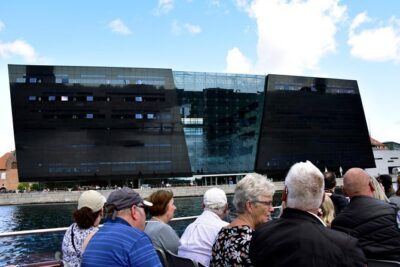
Copenhagen Sightseeing Classic Canal Tour With Live Guide
Read our review →
Past & Present Small Group Guided Walking Tour
Read our review →
Guided Sightseeing Fjord Cruise on Premium Silent Boat
Read our review →Browse the lists this tour appears in