
Reviewed · WALKING TOURS
Copenhagen: Guided Walking Tour
Copenhagen unfolds well on foot, and this tour links a remarkable sweep of the city in three hours: Tivoli Gardens, the medieval center, Christiansborg, Nyhavn, and Amalienborg. You start at Central Station and finish with a useful sense of how Copenhagen’s old streets, royal quarter, and modern city fit together.
I like the private-group format, which lets your guide adjust the pace and answer your questions without a crowd. I also like the human touch. Guides including Stuart, Facundo, Lucy, Edgar, Alessio, Tina, and Papito are praised for mixing history with Danish customs, humor, food advice, and practical help.
The main catch is simple: this is a serious walk. One group covered about seven miles, and the tour runs rain or shine. The route can also vary, so you may see many major sights without entering every building. Comfortable shoes and weather gear are essential.
Key points at a glance
- A full city orientation in three hours: The route can connect Tivoli, City Hall, the old squares, Strøget, Christiansborg, Nyhavn, and Amalienborg.
- Private for up to five people: Your group can ask questions, slow down, or request certain sights when time allows.
- Strong guide-led storytelling: History, Danish customs, current life, royal details, and local suggestions are all part of the experience.
- A route that can reach the palace district: Several guides have timed the walk for the changing of the guard or a royal arrival at Parliament.
- Best for first-time visitors: It gives you a useful map of central Copenhagen before you explore museums, palaces, and neighborhoods on your own.
- Plan for a long walk: The tour is three hours, with one report of roughly seven miles, and no large bags are allowed.
Starting at Central Station and Tivoli Gardens
Your meeting point is the Copenhagen Central Station exit facing Tivoli Gardens. This is a practical start, especially if you have just arrived by train or are staying near the station. Look for your guide at the Tivoli exit rather than wandering around the large station hoping to spot the group.
Tivoli is visited from the outside. That matters because this experience is a city walk, not an amusement park visit, and admission to Tivoli is not part of the tour. Your guide uses the gardens as a starting point for talking about Copenhagen today and the city’s long connection with entertainment, public spaces, and urban life.
From here, the walk heads toward the center. The first section helps you get your bearings fast. You are not simply moving from monument to monument. A good guide explains how the major streets connect and points out places you may want to return to later.
The route is not fixed to the last detail. Your guide may alter it to match your interests, the weather, walking speed, or what is happening in the city that day. If your group cares more about royal Copenhagen than shopping streets, say so early. If you want food advice or Danish customs explained, ask as you go.
More Walking Tours in Copenhagen
- Private Walking Grand Tour of Copenhagen
★ 5.0 · 3,953 reviews - Copenhagen Highlights Walking Tour
★ 5.0 · 2,324 reviews - Politically Incorrect Private Highlights Walking Tour
★ 5.0 · 1,244 reviews
City Hall, old squares, and Copenhagen’s medieval center
Copenhagen City Hall is one of the early landmarks you may see. The stop gives your guide a chance to place the city in a broader Danish setting, including how public life, government, and national identity have changed over time.
The walk then reaches Ny Torv and Gammel Torv, two central squares that help you picture older Copenhagen. This is where the tour’s medieval focus becomes clearest. You get a feel for the compact street pattern and the way the historic center still functions as part of the living city.
Do not expect a quiet museum route. Copenhagen’s center is active, and the walk takes place outdoors among ordinary city traffic and pedestrians. That is part of its value, but it also means you need to listen closely when your guide speaks.
Copenhagen Cathedral is another possible stop. The cathedral brings a religious and royal dimension to the story, while the surrounding streets show how closely packed the old center remains. The guide’s job here is not only to name the building, but to explain why it matters in Danish life and how it fits into the city’s past.
Several people have valued guides who explain both older events and present-day customs. That balance makes the walk more useful than a list of dates. You begin to understand not only what you are looking at, but how Danish society works today.
Strøget and the city as a place to live

The walk may continue along Strøget, Copenhagen’s well-known central shopping street. This section changes the mood. You move from medieval squares and religious landmarks into a busy pedestrian route lined with shops, cafes, and city activity.
Strøget is useful as a practical orientation point. Your guide can help you understand where the main center lies and where you might return for shopping, coffee, or a meal. Some guides also offer suggestions for places to eat, which can save you from picking a restaurant at random after the tour.
This is also a good place to ask about Danish customs. The tour is not limited to royal names and architecture. Guides have discussed everyday Danish life, current culture, and the habits that shape the city. Those conversations can be especially helpful if you have just arrived and want more than postcard views.
The drawback is pace. Three hours is not long for this much ground, so you should expect a moving tour rather than a long stop at every landmark. If you want to browse shops or sit inside the cathedral, save that for afterward and tell your guide which places deserve a return visit.
Christiansborg and the old seat of power
Christiansborg Castle is one of the most important stops on the route. It brings Danish government and royal history into the walk, and it gives you a chance to see how political power has been organized in Copenhagen.
The castle is particularly useful for understanding the city’s layers. The route can move from ordinary streets and shopping areas to the center of national government within a short distance. Your guide can tie together Parliament, the monarchy, and the changing role of the royal family.
Do not assume the tour includes a full interior visit. The supplied details describe a walking route and specifically identify Tivoli as an outside stop. The experience is designed around exterior sights and explanations, so plan separate admission visits if you want to tour interiors.
One memorable possibility is timing. A group happened upon the King and Queen arriving at Parliament, and the guide adjusted the walk so they could stay and watch. Another guide timed the route around the changing of the guard at the palace. These moments cannot be promised, but a private tour gives you a better chance to pause when something special is happening.
That flexibility is one of the strongest reasons to choose this format over a large group walk. You are not locked into a rigid schedule if the city offers an unexpected scene.
A different sort of day out, same corner of Copenhagen:
- Copenhagen: Canal Cruise with Guide
★ 4.6 · 9,115 reviews - Copenhagen: Hop-On Hop-Off Bus Tour with Boat Tour Option
★ 3.9 · 4,122 reviews - From Copenhagen: Lund and Malmö 2-Country Tour
★ 4.7 · 2,772 reviews - Copenhagen: Highlights 3 Hour Bike Tour with a Local Guide
★ 4.8 · 2,312 reviews
The Old Stock Exchange and the story of commerce
The Old Stock Exchange adds an economic thread to the tour. After hearing about government and monarchy, you see another side of Copenhagen’s rise: trade, money, and the city’s role as a commercial center.
This is a useful stop for visitors who prefer buildings to be explained in context. The guide can connect the structure to the wider development of Copenhagen rather than treating it as an isolated photo opportunity.
The attraction is viewed as part of the walking route, not as a separate museum visit. Depending on current conditions and your guide’s plan, you may spend more time hearing the story from outside than exploring inside.
A private group can make this kind of stop more rewarding because you can ask direct questions. You might ask how the city’s trading past connects with its modern economy, or how Danish society balances old institutions with current life. The guides are expected to speak in English or Spanish, and many have been praised for clear explanations and an easy sense of humor.
The Round Tower and Copenhagen from street level
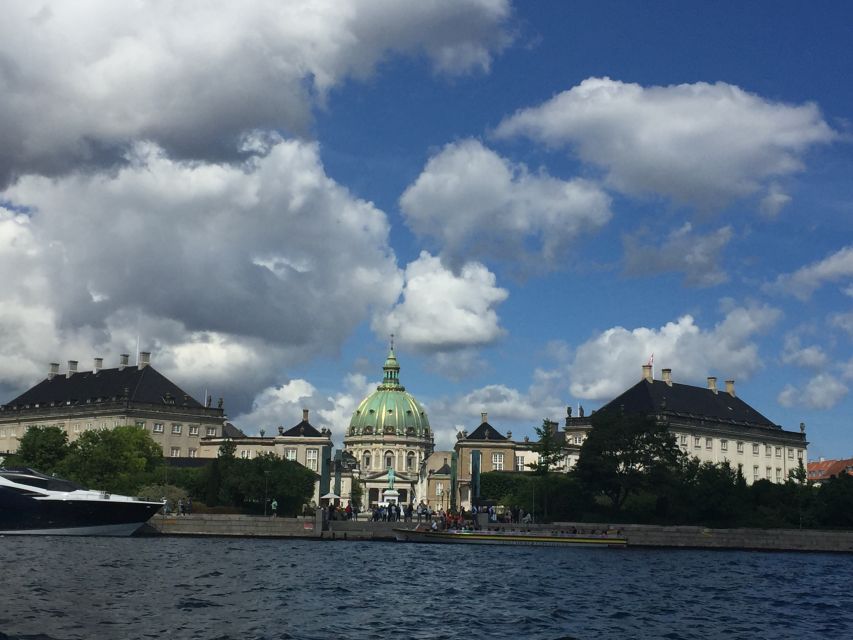
The Round Tower is another likely highlight in the old center. Its shape and location make it easy to recognize, but the value of the stop comes from the surrounding story. This is a place where your guide can explain Copenhagen’s older city plan and point out how the center’s landmarks relate to one another.
The tour does not promise a climb. If you want the tower’s interior or upper views, ask your guide whether you should return later and allow time for a separate visit. The walking tour’s purpose is to orient you, not to include every admission ticket.
That distinction helps you plan. You can use the tour to mark the buildings you want to explore in depth, then return with a shorter personal list. After three hours, you should know which sights deserve your limited museum time.
Rosenborg, Nyhavn, and the royal route
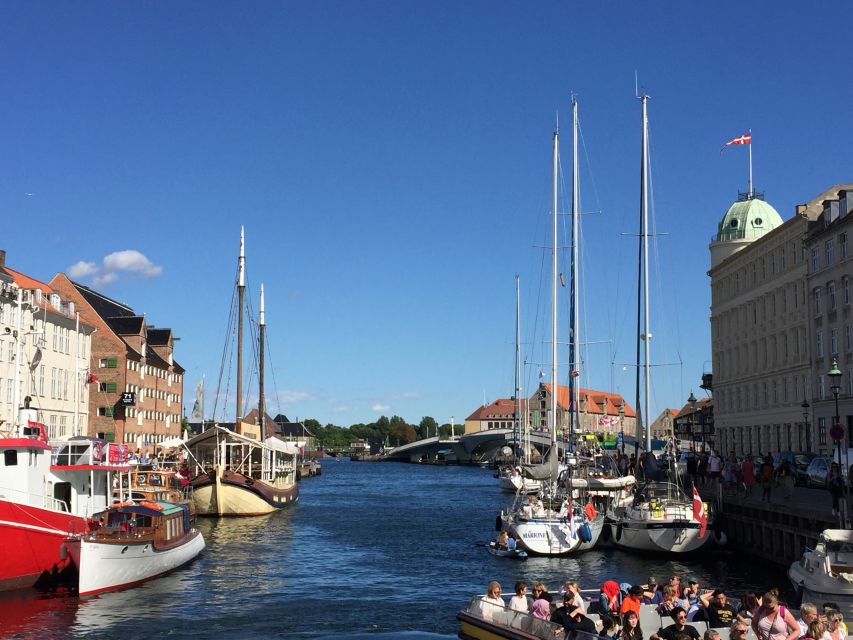
Rosenborg Castle may appear as the walk moves toward the royal part of Copenhagen. Its presence gives the guide another chance to explain Danish monarchy and the city’s changing relationship with its rulers.
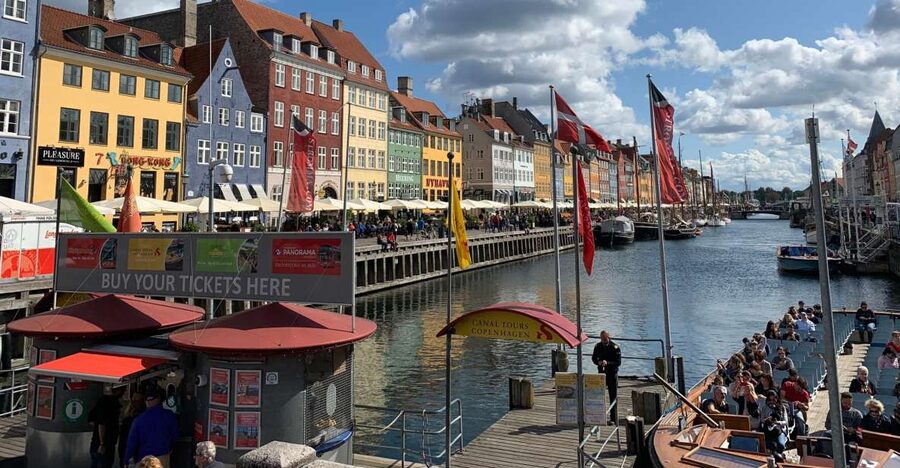
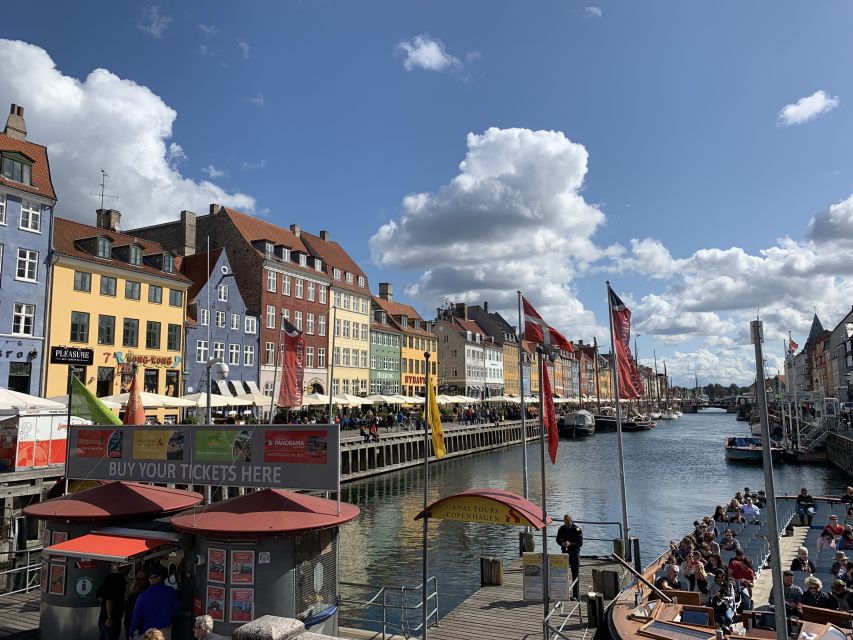
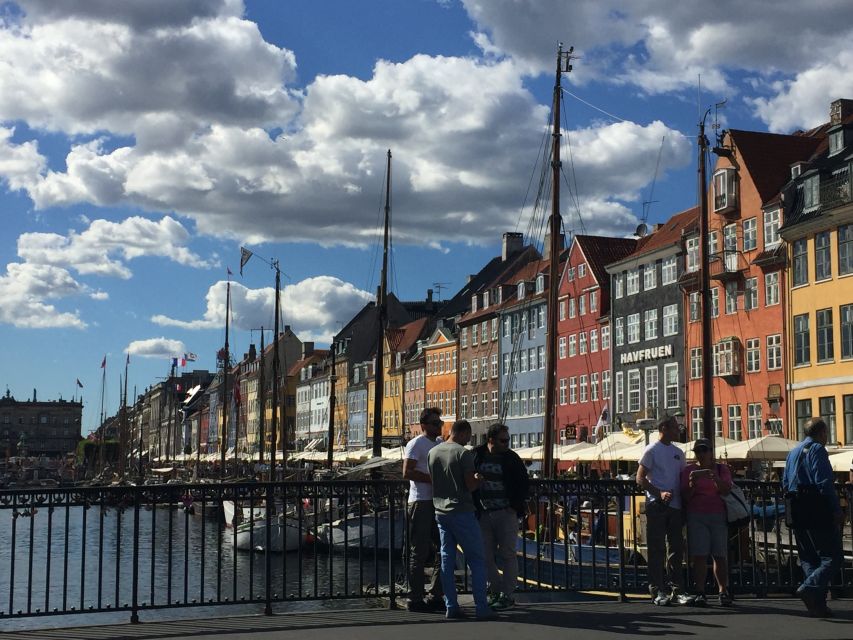
Nyhavn brings a very different visual scene. The colorful waterfront is one of Copenhagen’s most recognizable places, and it offers a clear change from the medieval lanes and government buildings. It is a natural place to take photographs, but your guide can also help you see it as part of the city rather than only as a pretty row of facades.
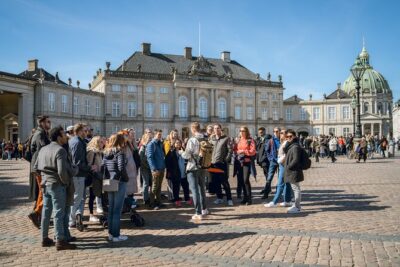
The route may end at or near Amalienborg Castle. This is one of the tour’s most useful finishing points because the palace district gives you a clear sense of Copenhagen’s royal center.
If timing works, you might see the changing of the guard. That happened for one group, but it is not guaranteed. Treat it as a bonus rather than a promise, and ask your guide at the start if the schedule makes it possible.
The route from Tivoli to Amalienborg covers a lot of central Copenhagen. You see the city change from station and amusement park to medieval streets, public squares, government buildings, waterfront, and palace. That broad progression is more valuable than seeing one landmark in isolation.
What the guides add to the walk
The guide is the deciding factor here. Names associated with especially strong experiences include Stuart, Facundo, Lucy, Edgar, Alessio, Tina, Papito, Martin, Nuria, Agustina, and others working in English or Spanish.
The most useful guides do three things well. They tell stories instead of reciting dates, they answer questions about Danish life, and they adjust the walk to the group. Stuart is noted for a relaxed, friendly style and for stepping in when another guide had to cancel at short notice. Facundo is praised for concise explanations, humor, and practical advice.
Lucy has been especially helpful in hot weather, making sure the group could keep going comfortably. Alessio has stayed longer than the scheduled three hours for some groups and adapted when a royal event appeared. These details show why it is worth telling your guide what matters to you.
Families can do well on this tour. An 11-year-old and a 14-year-old stayed interested during one family walk, and another guide kept three teenagers engaged. Still, children need to be ready for sustained walking and outdoor listening.
Price, pace, and practical value
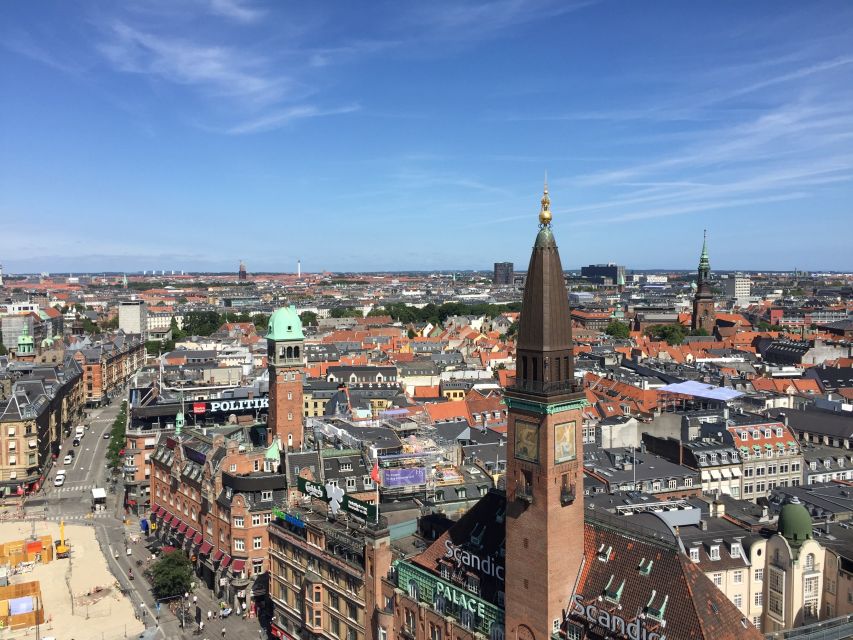
The cost is $343 for a private group of up to five people. At the full group size, that works out to $68.60 per person. For two people, the cost is much higher per head, so the value depends on how much you want a private guide rather than a cheaper shared walk.
I think the price makes the most sense for a family or small group that wants flexibility. You can ask questions freely, adjust the focus, and avoid being tied to a large group’s pace. It is less compelling if you only want a quick list of sights or plan to spend most of your day inside museums.
The tour lasts three hours, but the distance can be demanding. One group walked about seven miles, while another group appreciated a slower pace with stops for rest and scenery. Wear shoes you can trust, and bring a jacket, warm clothing, or an umbrella depending on the forecast.
The walk takes place rain or shine. Food and drinks are not included, and hotel pickup and drop-off are not provided. Large bags and luggage are not allowed, so this is not a good activity to schedule while dragging suitcases between hotels or stations.
The booking terms are useful for uncertain plans: you can cancel up to 24 hours in advance for a full refund, and you can reserve now and pay later. The tour is described as wheelchair accessible, but the same information says it is not suitable for people with mobility impairments. Because those statements conflict, ask the provider about the exact route and walking requirements before booking.
Who should book this Copenhagen walk?
I would choose this tour for a first day in Copenhagen, especially if you have only one day in the city or want a clear plan before exploring on your own. It gives you a broad look at central Copenhagen and leaves you with a sensible list of places to revisit.
It also suits families, couples, and small groups who want a private conversation rather than a scripted crowd experience. Ask for royal history, Danish customs, food suggestions, or medieval Copenhagen at the start, and your guide can shape the emphasis when time allows.
I would hesitate if you dislike long walks, need frequent indoor breaks, or want guaranteed entry to castles and churches. This is an outdoor orientation tour, not a series of interior visits.
Should you book it?
Book it if you want a personal introduction to Copenhagen, can walk for three hours, and value a guide who explains the why behind the sights. The route covers a lot, the guides have repeatedly been praised for humor and clear storytelling, and the private format adds real flexibility.
Skip it if your priority is a slow museum visit, a short stroll, or the lowest possible price. For everyone else, especially first-time visitors, this is a practical way to see how Copenhagen’s medieval center, government quarter, waterfront, and royal district connect.
FAQ
Where does the Copenhagen walking tour meet?
You meet your guide at Copenhagen Central Station, at the exit leading toward Tivoli Gardens.
How long does the tour last?
The walking tour lasts three hours.
How much does the private tour cost?
The price is $343 for a private group of up to five people.
Which languages are available?
The live tour guide is available in English or Spanish.
What sights may be included?
Possible highlights include Tivoli Gardens from the outside, City Hall, Ny Torv, Gammel Torv, Copenhagen Cathedral, Strøget, Christiansborg Castle, the Old Stock Exchange, the Round Tower, Rosenborg Castle, Nyhavn, and Amalienborg Castle.
Is the route fixed?
No. The sights may vary according to your preferences and your guide’s itinerary.
Does the tour include entry to Tivoli Gardens?
No. Tivoli is visited from the outside, and food, drinks, and admission costs are not included.
Is food included?
No. Food and drinks are not included in the tour price.
What should I bring?
Bring comfortable shoes, comfortable clothing, warm clothing, a jacket, an umbrella, and clothing suitable for the weather.
Can I bring luggage or a large bag?
No. Luggage and large bags are not allowed.
Does the tour operate in bad weather?
Yes. The walking tour takes place rain or shine.
Is the tour suitable for people with mobility impairments?
The activity information describes it as wheelchair accessible but also says it is not suitable for people with mobility impairments. Contact the provider before booking to confirm whether the planned route meets your needs.
Just added around Copenhagen
- walking tour – Copenhagen and Christiansborg 3 hours★ 4.0 · 7 reviews
- The Hunt For The Six Forgotten Giants★ 5.0 · 45 reviews
- Copenhagen Walking Tour with Food Testing (smorrebrod dish & snap)★ 4.5 · 10 reviews
- The Philosopher’s Last Walk: An audio tour on the life of Søren Kierkegaard★ 4.5 · 5 reviews
- Small Group Guided Food Tour and Street Art Visit to Norrebro★ 5.0 · 9 reviews
- The Six Forgotten Giants Trolls Hunt with Minibus★ 4.5 · 27 reviews
- The Foodie Tour of Copenhagen★ 5.0 · 14 reviews
- The Forgotten Giants Private Tour★ 5.0 · 3 reviews
Walking Tours, compared.


Past & Present Small Group Guided Walking Tour
Read our review →
Walking Tour in Bergen of the Past and Present
Read our review →
Browse the lists this tour appears in