Reviewed · WALKING TOURS
Copenhagen: Highlights and Hidden Gems Walking Tour
Copenhagen’s best-known sights line up neatly on this three-hour walk, from the royal palaces to the painted houses of Nyhavn. I like the way the route mixes big landmarks with everyday city details, including department-store life, shopping streets, and the Lur Blowers monument beside City Hall.
I also like the chance to shape the experience through questions. Guides such as Simona, Mood, and Frédéric have been praised for adapting explanations to personal interests and offering useful restaurant and weekend advice. The main drawback is simple: you will see many places from the outside, so this is better for orientation and context than for long interior visits.
Key points at a glance
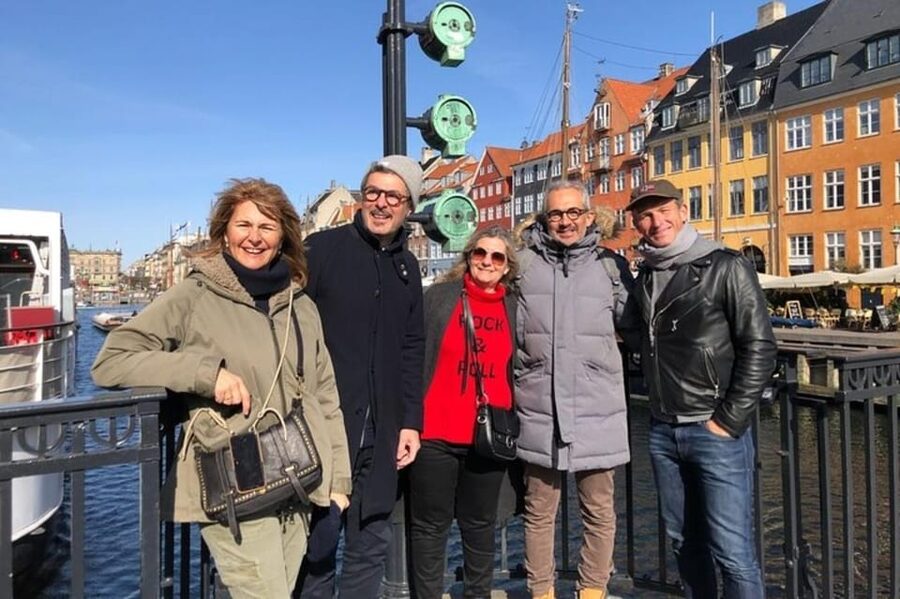
- Nyhavn closes the walk with Copenhagen’s most colorful waterfront view, a fine place for photographs and a first look at the city’s café culture.
- The royal section links Amalienborg Palace, Frederiks Kirke, and the Royal Danish Theatre, giving you a compact lesson in Denmark’s royal and cultural life.
- Strøget and Magasin du Nord add ordinary city life to a route otherwise filled with palaces and grand buildings.
- The Lur Blowers monument supplies an unusual local detail, with a connection to Danish heritage that you could easily miss alone.
- Private and shared options are available, with guides in English, French, Italian, or Spanish.
- The strongest value comes from the guide, especially if you ask for food suggestions and ideas for the rest of your stay.
A useful first walk through Copenhagen
I see this tour as a practical way to get your bearings early in a Copenhagen visit. It begins at Studiestræde 52 and moves through the central city on foot, linking major sights that can otherwise feel scattered when you look at a map.
The route lasts three hours. That gives you enough time to hear the story behind each place, stop for photographs, and ask questions without turning the walk into a fast march. It is still a city walk, so comfortable shoes matter, and the experience is mainly about seeing and understanding rather than entering every building.
You can book a shared group or a private group. The private choice should suit you if your party wants more room for questions or has a clear interest in royal buildings, Danish customs, shopping, or food. The shared version offers a lower-key way to see the same central sights with a guide.
More Hidden Gems Tours in Copenhagen
- Copenhagen: Old Canals and Hidden Gems Social Boat Tour
★ 4.7 · 342 reviews - Politically Incorrect Private Hidden Gems Walking Tour
★ 5.0 · 270 reviews - Copenhagen Private Tour: Highlights & Hidden Gems by Bike or Foot
★ 4.5 · 145 reviews
Strøget: Copenhagen’s city life begins
From the meeting point, the walk reaches Strøget, Copenhagen’s famous shopping street. This part of the route changes the tone. Instead of looking only at ceremonial buildings, you see how the city works as a place where people shop, meet, and move through the center.
The guide uses the street to explain Copenhagen in a more ordinary setting. That is useful because a city can seem like a museum when you only visit palaces and churches. Strøget adds shops and daily activity to the picture.
You have about 30 minutes listed for this stop, including a photo stop, sightseeing, and guided walking. The exact pace can depend on the group and on questions. I would use this section to ask your guide where to return later, especially if you want shopping time after the tour.
One point to keep in mind: Strøget is a public shopping street, not a private attraction. You will not get an included shopping experience or a special retail visit. Its value is the setting and the explanation, not admission.
Christiansborg Palace and Denmark’s political center
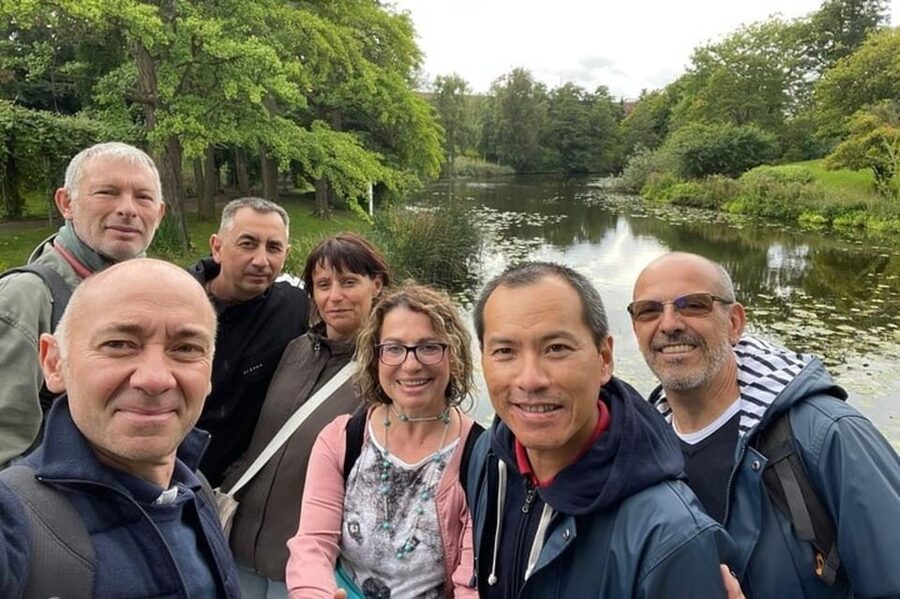
Christiansborg Palace brings the route into one of Copenhagen’s most important ceremonial and political areas. The palace is one of the central landmarks on the walk, and your guide explains its significance while you look around the grounds and take photographs.
This stop helps you place Denmark’s royal story within the wider life of the country. The tour also includes Amalienborg Palace later, so you can compare two major royal settings rather than treating every grand building as the same.
The scheduled time is about 30 minutes. That is enough for an introduction and a look at the exterior, but not a full palace visit. If entering Christiansborg is your main goal, check the details carefully before booking, because this experience is described as a walking and sightseeing tour rather than an interior palace tour.
I like this stop because it gives the route some weight. You are not only photographing attractive streets. You are also hearing how a major national building fits into Copenhagen.
Magasin du Nord and a more modern side of the city
Magasin du Nord is an easy landmark to overlook if you are focused on palaces and churches. The tour makes room for it, showing you a well-known Copenhagen department store and a different kind of city symbol.
This is a smart inclusion. A good first walk should explain not only old stone buildings but also the places that shape present-day city life. Magasin du Nord gives you a useful contrast with Christiansborg and the royal quarter.
The stop includes sightseeing, a photo opportunity, and guided walking, with about 30 minutes assigned. You should not expect a guided shopping session or a long period inside the store. Instead, the guide uses it as a reference point and part of the central Copenhagen story.
If you want to shop, you can note its location and come back independently. If shopping is not on your list, this section passes quickly enough and keeps the route varied.
More Highlights Tours in Copenhagen
- Copenhagen Highlights Walking Tour
★ 5.0 · 2,324 reviews - Copenhagen: Highlights 3 Hour Bike Tour with a Local Guide
★ 4.8 · 2,312 reviews - Politically Incorrect Private Highlights Walking Tour
★ 5.0 · 1,244 reviews - Copenhagen: 3-Hour City Highlights Bike Tour with Guide
★ 4.7 · 1,239 reviews
The Royal Danish Theatre and Copenhagen’s cultural side
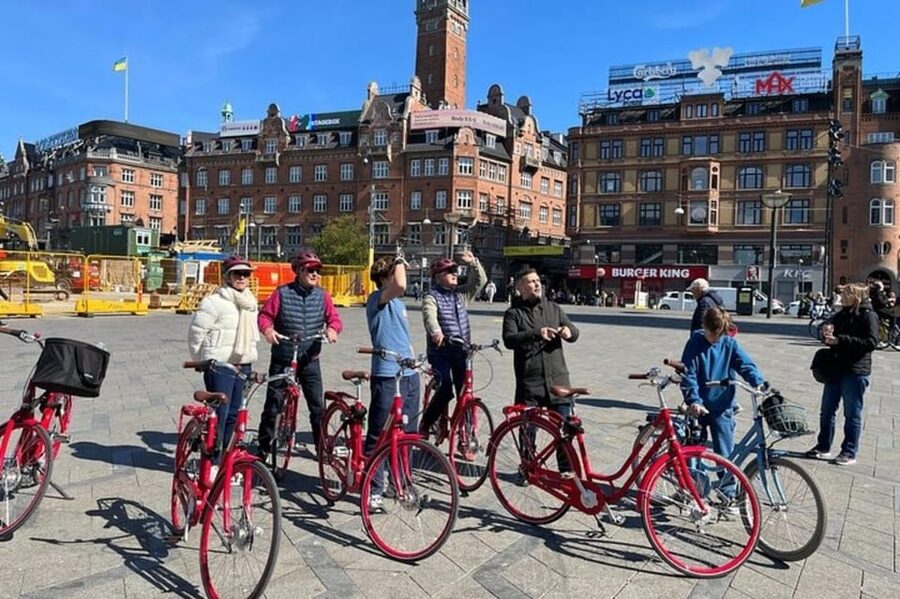
The Royal Danish Theatre adds performance and public culture to the walk. Its Play House is among the sights included in the route, giving you a look at Copenhagen beyond monarchy and shopping.
Your guide explains the importance of the theatre while you stop for photographs and walk through the area. The setting helps show how the city’s grand architecture is tied to music, drama, and public life.
Again, expect an exterior-focused stop. The provided plan does not include a performance or an interior tour. That makes this best for a first introduction, especially if you want to return later for a show or a closer look.
The theatre also helps break up the royal sequence. After Christiansborg and Magasin du Nord, it gives you another reason to pay attention to the city’s buildings and public spaces.
Frederiks Kirke, the Marble Church

Frederiks Kirke is known as the Marble Church, and its rococo architecture gives the route one of its most striking religious landmarks. The church is associated with the Amalienborg area, so it fits naturally into the next section of the walk.
You will pass the church while the guide explains its place in Copenhagen. The focus is on the building’s appearance and significance, not on a promised interior visit. That distinction matters if you have come specifically to see the inside.
I would pay attention to the relationship between the church and the palace district. The route does not treat the sights as isolated photo stops. It places them close together, allowing you to see how royal, religious, and civic buildings share this part of the city.
The Marble Church is also a useful place to slow down for photographs. Its design gives the guide an opening to explain architectural style in plain terms, which is often more helpful than memorizing dates.
Amalienborg Palace and the royal quarter

Amalienborg Palace is one of the main attractions on the walk. Your guide brings you into the royal quarter and explains the palace as part of Denmark’s monarchy and public identity.
This is one of the places where a live guide adds real value. A palace square can look impressive without making much sense. With context, you can understand why the buildings matter and how they relate to the surrounding church and theatre.
The tour includes a photo stop and guided sightseeing for about 30 minutes. You should expect to view the palace area from the outside rather than spend time touring royal rooms. That keeps the walk moving, but it also means you may want a separate palace visit if interiors are important to you.
I would save a few questions for this section. Ask about Danish royal customs, ceremonies, or the way the palace fits into modern Denmark. The available guide languages are English, French, Italian, and Spanish, so you can choose the language that lets you ask the most freely.
Nyhavn gives the walk its postcard finish
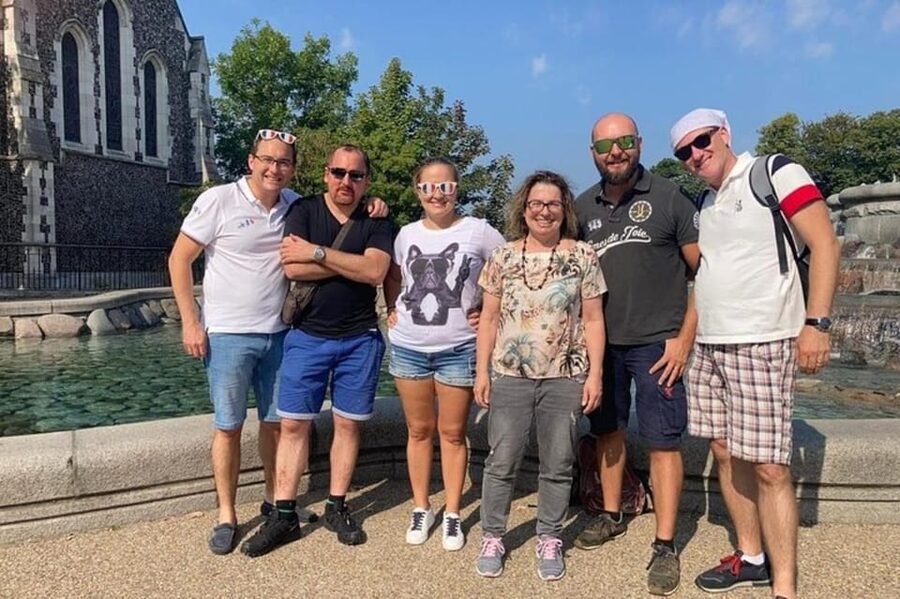
Nyhavn is the most instantly recognizable stop. Its rows of colorful 17th and 18th-century townhouses line the waterfront, with cafés filling the ground level and boats adding to the view.
The route saves Nyhavn for the final major stop, which works well. You spend the first part of the walk learning the city’s structure, then finish beside one of Copenhagen’s most memorable scenes. The waterfront is especially good for photographs, though you should expect plenty of activity around such a famous place.
Your guide explains the area rather than simply pointing out the painted façades. That context helps you see Nyhavn as more than a colorful backdrop. It is part of Copenhagen’s old harbor identity and one of the places where the city’s architecture and social life meet.
The stop is listed at about 30 minutes. That is enough for a guided look and photographs, but not necessarily enough for a full café break. If you want to sit by the canal, plan to return after the tour or ask your guide for a nearby recommendation.
The Lur Blowers monument: a small detail with local meaning

The Lur Blowers monument near City Hall is an unusual part of the experience. It is not as famous as Nyhavn or Amalienborg, and that is exactly why it earns a place on this route.
The monument connects the walk to Danish heritage and gives your guide a chance to explain a detail you might otherwise pass without noticing. Small public works often tell you more about local identity than another grand façade, provided someone gives you the context.
This part of the experience is especially useful if you enjoy stories that do not appear on every postcard. It also breaks up the sequence of royal and commercial landmarks with something tied to national tradition.
The information provided places the monument next to City Hall, while the listed stop sequence focuses on Strøget, Christiansborg, Magasin du Nord, the Royal Danish Theatre, Amalienborg, and Nyhavn. Ask your guide how the Lur Blowers fit into the walking route, since the exact order and timing can vary.
What the guides add to the walk
The most praised part of this experience is the guiding. Simona is repeatedly singled out for warmth, patience, enthusiasm, and the ability to answer a wide range of questions. Mood is also praised as an excellent guide, with strong French-language feedback about his historical explanations and practical advice.
Frédéric is described as friendly and helpful when explaining Copenhagen, Danish customs, and local ways of life. That matters because the tour is not just a list of building names. You can ask how the city works, what Danish habits mean, and what deserves your time after the walk.
One especially useful detail is the restaurant advice. Simona helped one group choose a restaurant that matched their needs, and the recommendation was considered exactly right. I would treat that as a reason to arrive with questions about dinner, cafés, or the best way to use the rest of your weekend.
The guides do not all bring the same personality, and that is normal for a tour with several language options. The consistent strength is the chance to speak directly with a local guide and adjust the discussion to your interests.
How much value do you get for $58?
At $58 per person, this is not the cheapest way to walk around central Copenhagen. You can see most of the exteriors on your own for free. The price makes sense when you value a planned route, live explanations, language choice, and the ability to ask for personal recommendations.
The value is strongest for a first visit or a short stay. In three hours, you cover Strøget, Christiansborg Palace, Magasin du Nord, the Royal Danish Theatre, Frederiks Kirke, Amalienborg Palace, Nyhavn, and the Lur Blowers monument. That is a lot of central Copenhagen without spending time deciding which street to take next.
The price is also easier to justify with a private group, especially if several people share the cost and want a tailored conversation. A shared group may be better if you mainly need orientation and a basic introduction.
Do not book this expecting museum admissions, palace interiors, a meal, or a long café stop. The cost covers the guide and walking tour. You are paying for access to local explanations and a sensible route, not for a package of tickets.
Practical details before you choose
The meeting point is Studiestræde 52. Make sure you have the address ready before setting out, and allow enough time to reach it without rushing.
The tour is listed as wheelchair accessible. Since the experience takes place on city streets and includes walking between several sights, confirm any specific needs when booking if your group requires detailed assistance.
You can cancel up to 24 hours before the start for a full refund. The reserve-now-and-pay-later option keeps your plans flexible, which is useful if your Copenhagen schedule may change.
The tour is available in English, French, Italian, and Spanish. Check the available starting time for your date, since the duration is fixed at three hours but the start time can vary.
Who should book this Copenhagen walk?
I would recommend it to first-time visitors who want a clear introduction before exploring alone. It also suits a weekend visit, when a single well-planned walk can help you decide where to return for food, shopping, palace interiors, or a longer waterfront visit.
It is a good choice for people who enjoy conversation. The strongest part is not simply the number of sights. It is the chance to ask about Danish customs, royal life, architecture, restaurants, and local habits.
Families and older visitors may appreciate the private option, since the group can keep questions and pace more personal. The accessibility information is also helpful, though you should still check your own requirements in advance.
I would choose something else if your top goal is entering attractions. This walk does not promise interior access to Christiansborg, Amalienborg, Frederiks Kirke, or the Royal Danish Theatre. It gives you a well-explained view of the city from its streets.
Should you book it?
Book this tour if you want a friendly, question-led introduction to central Copenhagen and plan to see the main sights from the outside. The route is broad, the language choices are useful, and the guides can add practical advice that helps shape the rest of your visit.
Skip it if you prefer to wander alone, already know the city, or want long visits inside palaces and churches. For a first day in Copenhagen, though, the combination of Nyhavn, the royal quarter, Strøget, City Hall details, and local restaurant advice makes $58 a fair price for three hours of orientation.
FAQ
Where does the Copenhagen walking tour begin?
The tour begins at Studiestræde 52 in Copenhagen.
How long does the walking tour last?
The walking tour lasts three hours.
Which sights are included?
The route includes Strøget, Christiansborg Palace, Magasin du Nord, the Royal Danish Theatre, Amalienborg Palace, Nyhavn, Frederiks Kirke, and the Lur Blowers monument near City Hall.
Is the tour private or shared?
You can choose a private group or a shared group, depending on the option selected.
Which languages are available?
The live guide is available in English, French, Italian, and Spanish.
Is the tour wheelchair accessible?
Yes, the activity is listed as wheelchair accessible.
Can I cancel for a full refund?
Yes. You can cancel up to 24 hours in advance for a full refund.
More Walking Tours in Copenhagen
- Private Walking Grand Tour of Copenhagen
★ 5.0 · 3,953 reviews - Copenhagen: Group Walking Tour – City Highlights – 2 Hours
★ 4.7 · 1,088 reviews - 3h walking tour, small group max 10 people Copenhagen
★ 5.0 · 686 reviews - Walk & Canal Tour: Copenhagen Highlights + Changing of the Guards
★ 5.0 · 580 reviews
Just added around Copenhagen
- walking tour – Copenhagen and Christiansborg 3 hours★ 4.0 · 7 reviews
- The Hunt For The Six Forgotten Giants★ 5.0 · 45 reviews
- Copenhagen Walking Tour with Food Testing (smorrebrod dish & snap)★ 4.5 · 10 reviews
- The Philosopher’s Last Walk: An audio tour on the life of Søren Kierkegaard★ 4.5 · 5 reviews
- Small Group Guided Food Tour and Street Art Visit to Norrebro★ 5.0 · 9 reviews
- The Six Forgotten Giants Trolls Hunt with Minibus★ 4.5 · 27 reviews
- The Foodie Tour of Copenhagen★ 5.0 · 14 reviews
- The Forgotten Giants Private Tour★ 5.0 · 3 reviews
Walking Tours, compared.

Past & Present Small Group Guided Walking Tour
Read our review →
Walking Tour in Bergen of the Past and Present
Read our review →