
Reviewed · SELF-GUIDED TOURS IN COPENHAGEN
Copenhagen Royal Conspiracy Exploration Game and Tour
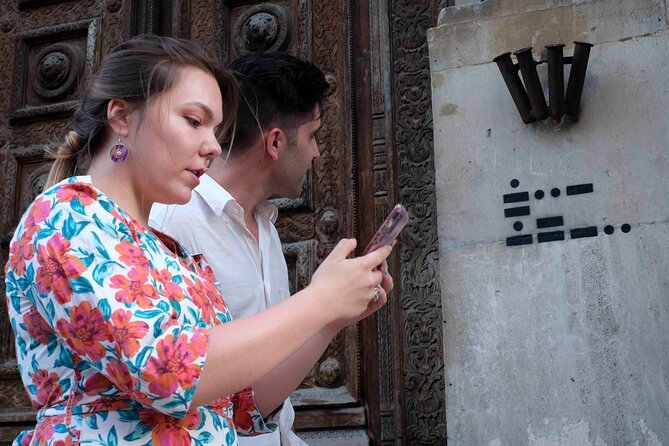
Copenhagen’s royal quarter becomes your game board in this app-led walking adventure. You follow clues from Amalienborg Palace to Kastellet, passing grand churches, harbor views, Danish design, and a Norse goddess along the way. I like the way it gives you a reason to notice small details instead of simply marching between sights.
I also like the low price, private format, and useful facts attached to the challenges. The main caution is the storyline: the route is playful, but some of the plot can feel unclear, and a translation issue may make it harder in languages other than English.
Key points at a glance
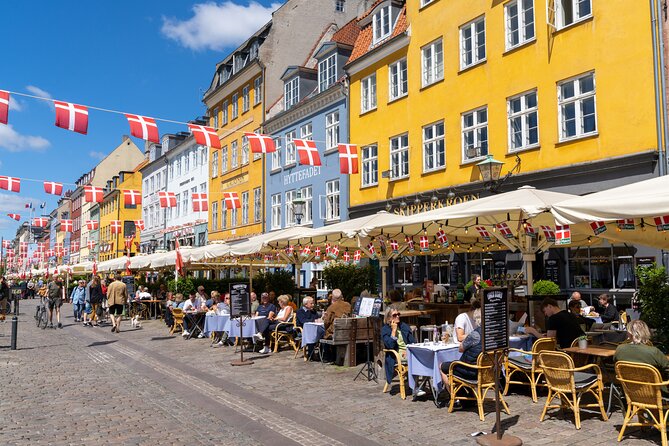
- A royal-quarter route: Walk from Amalienborg Palace through Toldbodgade, the Marble Church, and Kastellet.
- A phone-based challenge: Follow directions, open clues, and solve tasks without a live guide.
- A smart timer tip: The clock begins when you open a clue, so reach the location before reading it.
- Free-to-see landmarks: Every listed stop has free admission, though museum entry is not promised.
- Private and flexible: Only your group takes part, with a mobile ticket and group discounts available.
- Very low-cost sightseeing: At $7.14 per person, the game adds structure and facts to a self-guided walk.
A playful way to see Copenhagen’s royal quarter
This is not a standard guided tour with a guide leading you from one stop to the next. It is a self-guided exploration game delivered through your mobile phone. You begin at Amalienborg Slotsplads 5, receive directions and clues, and work out the route as you go.
That format changes the feel of the walk. Instead of hearing a continuous lecture, you stop, look around, solve a challenge, and then receive the next instruction. I find this useful when you want sightseeing to feel active, especially with children, friends, or a small private group.
The route takes about 1 hour 20 minutes to 1 hour 40 minutes. Each of the eight listed stops is assigned about 10 minutes, but the timing is not rigid. You can spend longer at a place before opening the next clue, which gives you some control over the pace.
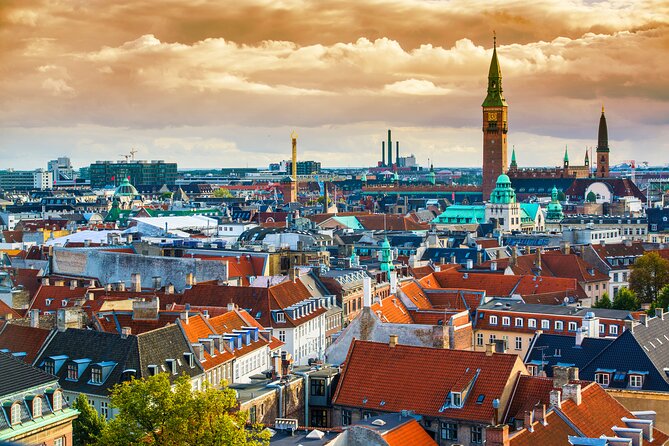
The route is also a good introduction to Copenhagen’s royal side. It links palaces, churches, a design museum, harbor areas, a fountain, and a fortress. You are not just looking at one famous building. You are moving through a compact part of the city with several different themes.
More Self-Guided Tours in Copenhagen
- From Copenhagen: Malmö Self-Guided Tour w/ Transport Tickets
★ 4.5 · 55 reviews - Copenhagen Little Mermaid Exploration Game and Self-Guided Tour
★ 4.0 · 36 reviews - Monstour: A Self-Guided Audio Tour of Danish Folk Legends
★ 4.5 · 19 reviews
Starting at Amalienborg Palace
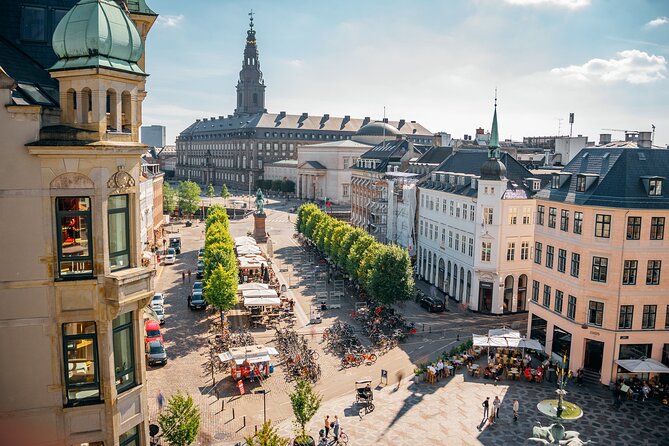
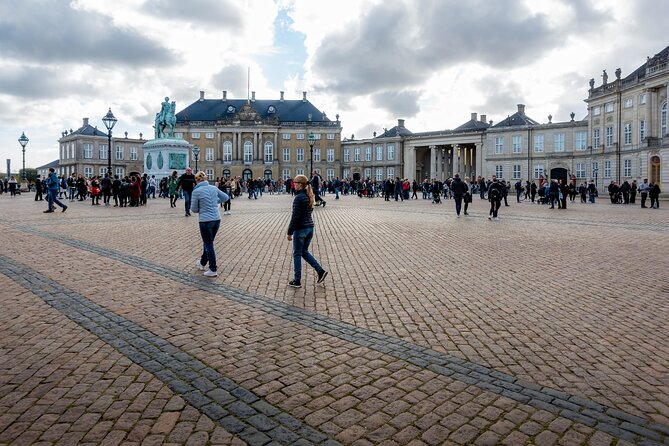
The first stop is Amalienborg Slotsplads, home of Amalienborg Palace, the official residence of the Danish monarch. The palace square is known for its Rococo architecture, with a formal layout that gives the opening of the game a strong sense of place.
You reach the palace by following the app’s directions and solving the first challenge. Admission to the stop is free. The experience does not promise a palace interior visit, so think of Amalienborg as the starting setting for the game rather than a palace tour.
This is a sensible place to begin because it gives the route a clear identity right away. You know you are entering Copenhagen’s royal district, and the first challenge asks you to look closely at your surroundings. If you are eager to spend time inside attractions, allow for that separately, since the listed experience focuses on outdoor discovery and clue solving.
Toldbodgade and the art of reading the clue
From Amalienborg, the game sends you to Toldbodgade. This is one of the less obvious pleasures of the route. A normal sightseeing walk might take you quickly toward the next major landmark, but a clue-based game makes you pay attention to the streets between the headline sights.
The challenge leads you onward, and you can stay at the location as long as you like before moving ahead. That flexibility matters because the game is not a tightly controlled group march. You decide when to continue.
There is one important practical detail. The timer starts as soon as you read a clue. If you open it too early, you may use up part of the challenge while still walking to the correct place. The best method is simple: follow the direction toward the next location, get close, and only then open the clue.
That small adjustment can make the game much less frustrating. It also keeps the challenge focused on observation rather than rushing through city streets.
Frederik’s Church, Copenhagen’s Marble Church
The next stop is Frederik’s Church, better known as the Marble Church. Its Rococo design and extensive use of marble make it one of the route’s most impressive architectural sights.
The church gives the game a useful change of scale. Amalienborg presents a broad royal square, while the Marble Church draws your attention upward to its grand form. The route’s extra facts help explain what you are seeing, which is one of the stronger parts of the experience.
You should not expect a full religious or architectural tour here. The game gives you a short stop of about 10 minutes, then moves you onward. Still, that is enough time to appreciate the building from outside and complete the related task.
If you want to inspect the church at a slower pace, treat the game as a framework rather than a strict schedule. The directions allow you to spend as much time as you wish before beginning the next challenge.
A different sort of day out, same corner of Copenhagen:
- Copenhagen: Canal Cruise with Guide
★ 4.6 · 9,115 reviews - Copenhagen: Hop-On Hop-Off Bus Tour with Boat Tour Option
★ 3.9 · 4,122 reviews - Private Walking Grand Tour of Copenhagen
★ 5.0 · 3,953 reviews - From Copenhagen: Lund and Malmö 2-Country Tour
★ 4.7 · 2,772 reviews
Alexander Nevsky Church and a change of architectural mood
The Russian Orthodox Church in Copenhagen, officially called the Alexander Nevsky Church, is the next stop. It adds variety to a route otherwise dominated by Danish royal architecture and formal public spaces.
This church is described as both beautiful and historically important, but the game’s role is to guide you there and provide a challenge, not to offer a long specialist explanation. That can be a plus if you prefer short bursts of information. It can also feel thin if you want a detailed account of the church’s background.
I like this stop because it prevents the walk from becoming a parade of only the most famous buildings. You get a glimpse of another religious tradition within Copenhagen’s central city. The experience works best when you pause to look at the details around you instead of treating each clue as something to finish as fast as possible.
Designmuseum Danmark and the Danish design angle
Designmuseum Danmark brings a new subject into the route: Danish and international design. The museum holds objects connected with furniture, textiles, ceramics, and industrial design.
Its inclusion makes sense in Copenhagen. The city is strongly associated with design, and this stop reminds you that the Danish capital is not only about monarchs, churches, and old fortifications. It also reflects the way everyday objects can be shaped by form and function.
The supplied experience information lists this stop with free admission, but it does not promise an interior museum visit as part of the game. I would therefore plan on the route taking you to the museum location for a challenge, not assume that a museum ticket or extended gallery visit is included.
If you want to tour the collections, check the museum’s own current entry details separately. The game itself is built around movement and clue solving, so a full museum visit would likely require extra time beyond the advertised 80 to 100 minutes.
Nordre Toldbod and Copenhagen’s waterfront
The route then reaches Nordre Toldbod, a historic area along the waterfront in Indre By. This stop changes the atmosphere again. After royal buildings and churches, you are brought toward the harbor and the city’s maritime edge.
Waterfront stops often work well in a walking game because they give you room to pause and take in the setting. Here, the location is part of the clue sequence rather than a scheduled lecture. You follow the directions, solve the task, and choose when to continue.
The listed stop time is about 10 minutes, but the open format means you can linger. If the weather is pleasant, you may want to slow down here. If conditions are poor, the route still gives you a clear next target rather than asking you to spend a long period outdoors.
This is one reason the experience suits people who want a flexible city walk. You can keep moving when the weather turns or take your time when the waterfront is especially inviting.
Gefion Fountain and Norse mythology
The Gefion Fountain in Churchillparken is among Copenhagen’s best-known public landmarks. It depicts the Norse goddess Gefion and gives the route a mythological highlight after its royal, religious, design, and harbor stops.
The fountain is visually different from the earlier architecture, which helps keep the experience from feeling repetitive. You are not solving the same kind of sightseeing problem at every location. The setting itself becomes part of the game.
The stop also introduces a bit of Norse mythology without requiring you to visit a separate museum or attraction. The game’s facts and challenges can put the monument into context, although the information is delivered in short pieces rather than through a long guided explanation.
I would use this stop as a chance to step away from the phone for a moment. Complete the challenge, then look at the monument and the park around it. The game is most rewarding when the screen helps you notice Copenhagen rather than keeps your eyes fixed on it.
Kastellet and the final challenge at King’s Gate
The final listed stop is Kastellet 14A, at or near Kongeporten, also called the King’s Gate. Kastellet is a well-preserved star-shaped fortress and one of Northern Europe’s best-preserved fortifications of its type.
Ending here gives the route a strong sense of completion. You begin with the Danish royal residence and finish at a major defensive site. The two places show different sides of Copenhagen’s past: one tied to monarchy and court life, the other to military protection.
The exact final location is reached by solving all the challenges and following the app’s directions. That means the end point is not simply a prearranged meeting spot that you can ignore. The final answer depends on completing the game.
This can be satisfying if you enjoy having a clear objective. It may be less appealing if you want to skip tasks or jump straight to Kastellet. The experience is built around the full sequence, so the clues are not just decoration.
How the story and translation affect the experience
The route’s city discovery is stronger than its plot. The game does give the walk a playful frame, but the storyline may feel bumpy from one stop to the next. Some sections can seem confusing rather than tightly connected.
Language can affect this. The experience is offered in English, and the supplied comments also describe translation problems when played in German. That does not mean the English version will be difficult, but the game depends on clear clues, so wording matters more here than it would on a normal audio tour.
I would book this for the puzzles, movement, and sightseeing rather than for a polished thriller. If you need a gripping story from beginning to end, this may not be the right choice. If you mainly want a reason to explore several central sights, the loose plot is less of a problem.
The extra facts are a real help. They place the buildings and statues into context, giving you more than a string of directions. Just remember that the main purpose is discovery, not a detailed history lesson.
Price, privacy, and who gets the best value
At $7.14 per person, this is an inexpensive way to add structure to a Copenhagen walk. You are paying for a private, app-based activity rather than a live guide, admission tickets, or transport.
That low price is especially useful for a group. Only your own party takes part, and group discounts are available. You can work at your own speed without waiting for strangers or worrying about keeping up with a guide.
The value depends on what you want. If you need expert commentary at every stop, the price reflects the fact that this is not a live guided tour. If you already plan to walk through the royal quarter, the game adds directions, challenges, and short facts for very little money.
A mobile ticket keeps the start simple. The activity is offered in English, runs daily from 8:00 a.m. to 8:00 p.m. during the stated operating period, and is near public transportation. Service animals are allowed, and most people can participate.
You can cancel for a full refund if you do so at least 24 hours before the start time. Cancellations within 24 hours are not refunded, and changes inside that period are not accepted.
Should you book the Copenhagen Royal Conspiracy game?
Book it if you want a low-cost, private way to connect several central Copenhagen sights. It suits couples, families, friends, and independent sightseers who like solving clues more than listening to a long talk.
The best reason to choose it is the route itself. You see Amalienborg, the Marble Church, Alexander Nevsky Church, Designmuseum Danmark, Nordre Toldbod, Gefion Fountain, and Kastellet in one compact outing. The extra facts and flexible timing make the walk more useful than simply following a map.
Skip it if you want interior visits, a live guide, or a carefully developed mystery plot. Also take the timer seriously: reach the next location before opening the clue. For $7.14, I see it as a fun walking aid and a good first look at Copenhagen’s royal quarter, not a replacement for a full museum tour or expert-led history walk.
FAQ
Where does the Copenhagen Royal Conspiracy game start?
It starts at Amalienborg Slotsplads 5, 1257 København K, Denmark.
Where does the experience finish?
The exact final location is reached by solving the challenges and following the app’s directions. The listed end point is MHVX+5JG in Copenhagen.
How long does the activity take?
The experience takes approximately 1 hour 20 minutes to 1 hour 40 minutes.
Is the activity guided?
It is a private, self-guided mobile activity. You follow directions and clues through the app, and only your group participates.
What language is offered?
The experience is offered in English.
Can I cancel for a refund?
Yes. You can cancel at least 24 hours before the start time for a full refund. Cancellations or changes made within 24 hours are not accepted, and no refund is provided.
Just added around Copenhagen
- walking tour – Copenhagen and Christiansborg 3 hours★ 4.0 · 7 reviews
- The Hunt For The Six Forgotten Giants★ 5.0 · 45 reviews
- Copenhagen Walking Tour with Food Testing (smorrebrod dish & snap)★ 4.5 · 10 reviews
- The Philosopher’s Last Walk: An audio tour on the life of Søren Kierkegaard★ 4.5 · 5 reviews
- Small Group Guided Food Tour and Street Art Visit to Norrebro★ 5.0 · 9 reviews
- The Six Forgotten Giants Trolls Hunt with Minibus★ 4.5 · 27 reviews
- The Foodie Tour of Copenhagen★ 5.0 · 14 reviews
- The Forgotten Giants Private Tour★ 5.0 · 3 reviews
Self-Guided Tours in Copenhagen, compared.

Copenhagen Little Mermaid Exploration Game and Self-Guided Tour
Read our review →
Monstour: A Self-Guided Audio Tour of Danish Folk Legends
Read our review →
Copenhagen Self-Guided Murder Mystery Tour by the Round Tower
Read our review →

e-Scavenger hunt Copenhagen: Explore the city at your own pace
Read our review →Browse the lists this tour appears in