

Reviewed · VIKING EXPERIENCES
Entrance ticket to The Viking Museum
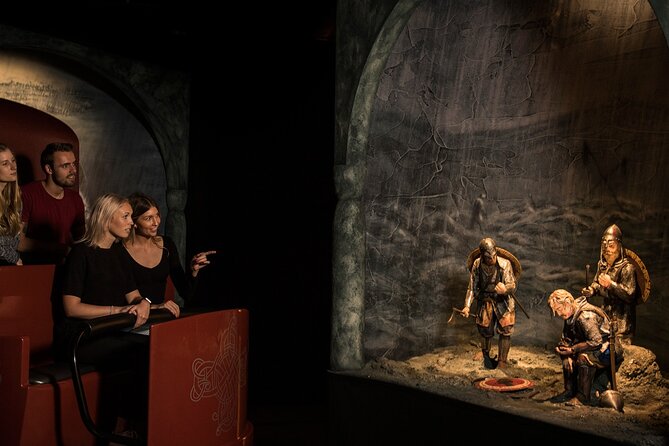
The most memorable part of The Viking Museum is Ragnfrid’s Saga, an 11-minute ride through Viking Age farms, forests, raids, and slave trading. It uses moving scenery, sound, light, and projections to follow Ragnfrid and her husband Harald from Frösala Farm into a dangerous world of travel and conflict.
I like the mix of real archaeological objects and hands-on replicas, since you can compare evidence with the popular image of Vikings. I also like being able to ask staff questions as you go, rather than relying only on panels and an audio guide.
The main drawback is scale. This is a small museum, and the displays can feel text-heavy for younger children or teenagers. The ride is a highlight for some people, but others find its story and motion less impressive than Stockholm’s nearby Vasa Museum.
Key points to know before you go
- Ragnfrid’s Saga lasts about 11 minutes: It is a short ride with sound, lighting, scenery, and a dramatic Viking story.
- The museum mixes fact with myth: Displays cover raids, shipbuilding, farm life, Norse beliefs, and the difference between legend and archaeology.
- You can use a multilingual audio guide: English is available, and other language options may be offered.
- Staff in Viking clothing answer questions: This adds a human touch to a museum that otherwise relies on reading and media.
- Plan for about one to two hours: The museum is compact, but careful reading and a guided presentation can extend your visit.
- The ticket costs about $22.68: It is most useful for people who value a focused, theatrical introduction to Viking life.
What you actually see inside The Viking Museum
The Viking Museum is built around a vivid presentation of the Viking Age rather than a large collection of precious objects. You move through displays that combine archaeological finds with films, projections, sound effects, scenery, and replicas.
That approach matters because the word Viking often brings up a jumble of helmets, longships, warriors, and mythology. The museum tries to sort out what is supported by evidence and what belongs more to later legend. You will encounter the familiar subjects, but you will also see attention given to farming, family life, travel, trade, slavery, shipbuilding, and religious beliefs.
I find that balance useful. A museum focused only on raids can make Viking society seem like a parade of violent warriors. Here, the farm and household setting gives you a better sense of ordinary life. The displays also connect the wider world of the Vikings with the work needed to support it: growing food, building ships, traveling by water, and maintaining a home.
The museum is not huge. That can be an advantage if you have only a few hours in Stockholm, but it also limits how much material can be shown. If you want a large collection of Viking objects or a long scholarly exhibition, you may find the visit too brief.
More Museum Visits in Stockholm
- Stockholm: Skansen Open-Air Museum Admission Ticket
★ 4.5 · 3,427 reviews - Stockholm Pass: Save up to 50% – Includes Vasa Museum Ticket
★ 4.1 · 2,392 reviews - Stockholm: Nobel Prize Museum and Exhibition Entry Ticket
★ 4.3 · 994 reviews
Beginning with artifacts, panels, and Viking life
The first part of the visit is a traditional museum experience, with archaeological objects and written information supported by media. You can move through the exhibition at your own speed, then use the multilingual audio guide to add context.
The displays cover several central parts of Viking life:
- Raids and warfare
- Long-distance journeys
- Shipbuilding
- Life on the farm
- Trade and slavery
- Norse mythology
- Daily work and family life
The museum’s replicas are an important part of the visit. They let you see and handle the past in a way that a case of fragile objects cannot. The aim is not simply to show you what a Viking object looked like, but to suggest how tools, clothing, household items, and other parts of life may have felt in use.
You should expect some reading. One weakness of the museum is that many displays rely on panels, so children who need constant activity may lose interest. Some teenagers may also find the presentation a little staged. I would give younger children the best chance of enjoying it by treating the replicas, films, and ride as the main attractions rather than expecting them to read every panel.
For adults and older children, the text is useful because it corrects familiar myths. The museum does not treat every Viking story as straightforward fact. It puts mythology beside archaeology and lets you see where the two meet and where they part company.
Ragnfrid’s Saga: the museum’s theatrical centerpiece
The most distinctive part of the visit is Ragnfrid’s Saga, a short ride that takes you into the Viking Age. The story begins at Frösala Farm, where Ragnfrid and her husband Harald set out on a journey.
From there, the experience moves through scenes linked to Viking travel, including plundering in the west and slave trading in the east. The story is told by Ragnfrid herself, and the 11-minute presentation uses light, sound, scenery, and atmospheric effects to create a sense of movement through different places.
This is not a long theme-park attraction. It is a compact museum ride designed to put the surrounding displays into a story. That makes it especially helpful if you learn better through scenes and sound than through labels.
The tone can become dark. The attack in the forest is meant to feel tense, and the treatment of raiding and slavery is not simply cheerful Viking entertainment. That seriousness gives the story more weight, but parents may want to decide if the youngest children are ready for it.
The ride divides opinion because its style is theatrical and its vehicle moves slowly. I think you should view it as an illustrated history lesson, not a major amusement-park ride. If you expect sweeping effects and a long adventure, it may feel underwhelming. If you enjoy a short story that gives a human face to the period, it can be the strongest part of the museum.
Meeting the staff and using the audio guide
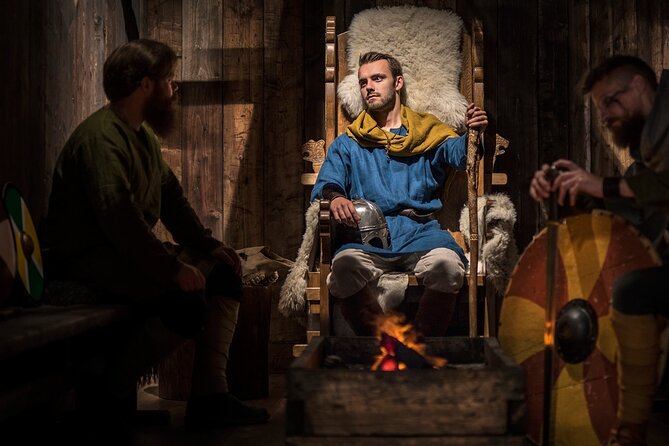
Staff members in Viking clothing are available to answer questions around the exhibition. Their presence gives the visit more warmth than a silent sequence of cases and panels. You can ask about an artifact, a Viking custom, a point in the story, or the difference between a historical claim and a popular myth.
That access is valuable because the museum covers a lot in a small space. A short explanation from a staff member can save you from trying to decode a dense panel. The staff also help the museum feel less formal, especially for families.
The audio guide adds another layer. The experience is offered in English, and the audio guide is multilingual, so you can learn in a language that suits you. The exact language schedule or format is not specified, so check at the museum if a particular option matters to you.
I would use the audio guide selectively rather than listening to every word. Start with the objects and scenes that catch your attention, then use the guide for extra detail. This keeps the visit moving and prevents a compact museum from turning into a long reading assignment.
More Viking Experiences in Stockholm
- Stockholm: The Viking Museum Exhibition and Viking Ride
★ 4.5 · 667 reviews - From Stockholm: Uppsala and Sigtuna Viking Sites Tour
★ 4.7 · 157 reviews - Full Day Viking Tour with Fika Swedish Coffee Break
★ 4.5 · 81 reviews - From Stockholm: Viking Culture Guided Tour with Transfer
★ 4.5 · 81 reviews
How long to allow, and who will enjoy it most
The stated visit time is about one to two hours. You can move through the museum in roughly an hour if you focus on the main displays, watch the films, take the ride, and avoid reading every panel.
Allow closer to two hours if you want to use the audio guide carefully, speak with staff, study the artifacts, and pause at the projections. The exact length depends on your pace and on how much time you spend with the written material.
I would recommend the museum most strongly to:
- Adults who want a clear introduction to Viking society
- Families with children who like props, films, and short rides
- Visitors interested in Norse mythology and the difference between myth and evidence
- People who want a compact cultural attraction rather than a full-day museum
- Anyone curious about Viking farm life, trade, travel, and shipbuilding
It may be less satisfying for visitors seeking a large collection of rare objects. It may also disappoint children who want constant interactive play. Some of the media are engaging, but this is still partly an old-style museum with panels and artifacts.
Is the $22.68 ticket good value?
At about $22.68 per person, the admission is not a bargain if you judge the museum only by the number of objects on display. The collection is relatively small, and the total visit can take only an hour if you move quickly.
The value improves if you make use of the full package: the audio guide, staff presentations, films, projections, replicas, and Ragnfrid’s Saga. You are paying for interpretation and atmosphere as much as for the artifacts themselves.
I would compare it with the kind of visit you want in Stockholm. The Vasa Museum offers a much larger central object and a more substantial museum experience. The Viking Museum gives you a shorter, more theatrical introduction to an entire period. If the Viking Age is high on your list, the price is easier to justify. If you are choosing between several museums and care mainly about the size of the collection, you may prefer to spend more time at Vasa.
Booking ahead is possible with a mobile ticket, and the experience is often reserved about 26 days in advance. But prebooking does not appear essential simply to gain entry, since admission may also be available at the museum. The useful reason to plan ahead is to fit the visit into your day and check the timing of any guided presentation or language option.
When to use the museum guides and presentations
The museum’s staff presentations can add more than the audio guide because you can ask questions and follow up on details. If you see a guided session offered in a language you understand, it is worth arranging your visit around it.
This is particularly helpful if you are traveling with children. A guide can turn a panel about shipbuilding or farm life into a short conversation, while a static display may not hold attention. It also gives you a chance to ask about subjects that the exhibition treats briefly.
The museum’s guide staff are described as friendly and well informed, but the quality of your visit will still depend on timing. A presentation may not start exactly when you arrive, so plan some flexibility if you want both the guided element and the ride.
A practical Stockholm stop
The Viking Museum is near public transportation, making it a manageable stop during a day of sightseeing. The available information does not specify a particular transit route, so check your Stockholm map or transit app before setting out.
A mobile ticket is convenient for a day when you are moving between attractions. Confirmation is provided when you book, and service animals are allowed. Most people can take part, though the information provided does not give detailed guidance about every mobility need, so contact the museum directly if you require specific access arrangements.
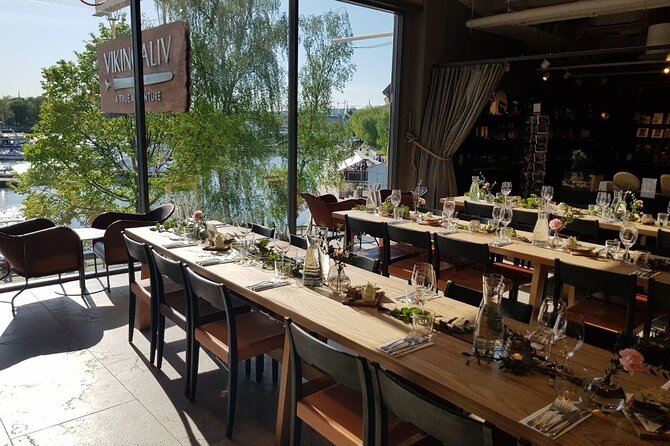
The museum also has a restaurant and gift shop. The restaurant serves Swedish food, including reindeer meatballs, which can make the visit more useful as a lunch stop. The shop has Viking-themed items and other souvenirs, though the exact selection changes.
How this museum fits into a Stockholm museum day
You can treat The Viking Museum as a focused stop rather than a full-day commitment. Its one to two hour length leaves room for another attraction, a meal, or a walk elsewhere in Stockholm.
I would avoid planning it as your only major museum visit if you want a large amount of historical material. Instead, use it for a clear introduction to Viking society, then choose another museum for greater depth. The contrast with the Vasa Museum is especially useful: Vasa centers on one preserved ship, while The Viking Museum uses many smaller objects and a narrative ride to explain a wider culture.
The museum also works well for mixed-interest groups. One person can focus on archaeology, another on mythology, and another on the ride and films. The compact size makes it less tiring than a huge museum, though the text-heavy sections may require encouragement for children.
Should you book The Viking Museum?
Book it if you want a short, accessible introduction to Viking life with films, replicas, staff interaction, and a story-based ride. I especially recommend it for families and first-time visitors who want more than a display of objects but less than a full day of academic history.
Think twice if you want a large collection, highly interactive technology at every turn, or a major ride. The museum can feel small for the price, and Ragnfrid’s Saga will not suit everyone.
At about $22.68, I see it as a specialized Stockholm stop. It is worth the money when you care about the Viking Age and take time to use the audio guide, talk with staff, and explore the displays. You can cancel for a full refund up to 24 hours before the start time, which gives you some flexibility if your schedule changes.
FAQ
How long does a visit to The Viking Museum take?
The visit takes about one to two hours, depending on how closely you read the displays, use the audio guide, watch the media, and speak with staff.
What is Ragnfrid’s Saga?
Ragnfrid’s Saga is an 11-minute Viking ride. It follows Ragnfrid and her husband Harald from Frösala Farm through Viking journeys, plundering in the west, and slave trading in the east, using scenery, lighting, sounds, and atmospheric effects.
Is an audio guide available in English?
Yes. The experience is offered in English, and a multilingual audio guide is available. Other language options may be offered as well.
Can I ask museum staff questions?
Yes. Staff members in Viking clothing are available around the exhibition and can answer questions as you explore.
Is the museum suitable for children?
Most people can participate, and the films, replicas, projections, and ride can appeal to children. However, the museum also includes a fair amount of reading, so younger children or teenagers who prefer constant hands-on activity may find parts of it slow.
Can I cancel my ticket?
Yes. You can cancel up to 24 hours before the experience start time for a full refund. Cancellations or changes made less than 24 hours before the start time are not accepted for a refund.
More Viking Experiences in Sweden
- 3-4h Viking History Short Day Tour from Stockholm
★ 5.0 · 41 reviews - Stockholm: Sigtuna and Uppsala Viking History Day Tour
★ 4.7 · 41 reviews - From Stockholm: Viking Culture and Heritage Small Group Tour
★ 4.7 · 29 reviews - Private Tour: 3h Viking History from Stockholm to Runic Kingdom
★ 4.5 · 23 reviews
Just added around Stockholm
- Traditional Persian Cooking Class in Stockholm with a Local★ 5.0 · 20 reviews
- Stockholm Top attractions all-inclusive Gran Tour Winter Edition★ 5.0 · 6 reviews
- Airport Limousine Transfer: Arlanda Airport to Stockholm City 1-7 Passengers★ 4.0 · 5 reviews
- Scandinavian Art, Architecture and Design Tour in Stockholm★ 4.5 · 11 reviews
- Wolf and Wildlife Tracking in Sweden★ 5.0 · 9 reviews
- Walking Tour of Stockholm’s City Center★ 4.5 · 26 reviews
- Stockholm: Sunset Hike in Tyresta National Park with Meal★ 5.0 · 79 reviews
- Private Tour: Swedish History Day Trip to World Heritage Candidate Markim-Orkesta from Stockholm★ 5.0 · 8 reviews
Viking Experiences, compared.

Viking Village, Nærøyfjord Cruise & Flåm Railway
Read our review →

Guided tour – Viking Village, Nærøyfjord Cruise and Flåm Railway
Read our review →
Full-Day; Castle, Palace, Cathedral & Viking ships Tour
Read our review →
Viking History, Runes & Countryside 9h Tour to Sigtuna & Uppsala
Read our review →
Stockholm Viking History Full Day Tour to Sigtuna + Uppsala
Read our review →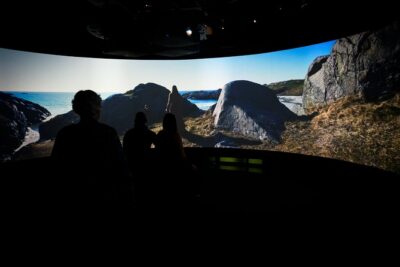
Browse the lists this tour appears in