
Reviewed · CASTLE & PALACE TOURS
Grand Tour of Copenhagen – The Little Mermaid to Royal Castle
Copenhagen packs royal palaces, old harbor streets, grand churches, and modern design into a compact city. This tour gives you the broad picture in about two and a half hours, with the Little Mermaid, Amalienborg Palace, Rosenborg Castle, Christiansborg, Christianshavn, and Nyhavn all on the route.
I like the wide range of sights and the practical use of an air-conditioned vehicle, especially if you have only a few hours before a cruise. I also like the chance to catch the changing of the guard at Amalienborg around noon, a useful bit of timing that adds ceremony to the morning.
The tradeoff is simple: this is a city overview, not an in-depth visit to each museum or palace. Many stops are photo stops or drive-bys, and the group can reach up to 33 people, so you should book it to get oriented, not to tour every interior.
Key Points at a Glance
- The Little Mermaid is a quick but essential stop: You get about five minutes to see Edvard Eriksen’s bronze sculpture on its harbor rock.
- Amalienborg adds a royal ceremony: The changing of the guard takes place at midday and the stop is planned for about 20 minutes.
- You cover old and modern Copenhagen: The route includes Rosenborg Castle, Christiansborg, Nyhavn, Christianshavn, the Black Diamond, and more.
- Transport saves time: An air-conditioned vehicle, onboard WiFi, and an audio guide make it easier to cover distant sights.
- It works well before a cruise: Pickup may be available, and previous bookings have included transfers toward the cruise port.
- The price favors breadth: At $61.40 per person, the value comes from seeing a lot of Copenhagen quickly rather than entering every attraction.
What This Copenhagen Tour Really Offers
This is a sightseeing circuit built for first impressions. You move between Copenhagen’s main districts by vehicle, with short stops for landmarks and photographs. The route mixes royal residences, canals, churches, museums, public squares, and harbor views.
The host or driver provides the live commentary, while an audio guide and WiFi add support during the ride. That combination matters because the itinerary contains many names and dates. You are not simply looking at buildings through a window without context.
The schedule begins at Banegårdspladsen 2 at 9:30 am. The stated duration is about two hours and 30 minutes, though the tour can take up to three hours. The end point is the meeting point unless another pickup arrangement has been confirmed.
Because the route is full, the pace depends on traffic, group movement, and how long each stop takes. You should wear shoes suitable for short walks and keep expectations realistic. The tour gives you a useful city framework, then you can return later to the places you want to explore properly.
More Castle Tours in Copenhagen
- Copenhagen: Kronborg, Frederiksborg Castle and Roskilde Tour
★ 4.9 · 1,763 reviews - Copenhagen: Rosenborg Castle Entry Ticket
★ 4.6 · 381 reviews - Full-Day; Castle, Palace, Cathedral & Viking ships Tour
★ 5.0 · 326 reviews
Tivoli, Museums, and Copenhagen’s Green Center
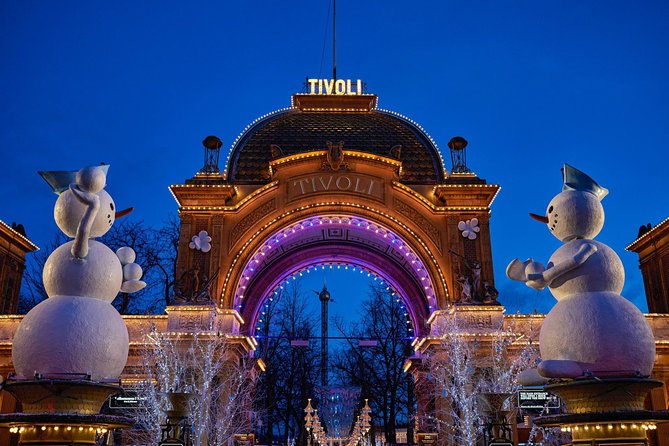
The tour begins with views of Tivoli Gardens, the amusement park that opened in 1843 under Georg Carstensen. Even if you do not enter, its age helps explain why Tivoli is part of Copenhagen’s identity. It is not just a modern ride park. It has been part of city life for generations.
The route also passes several cultural sites. One is an art museum with antique sculpture from the Mediterranean and French and Danish works from the 19th century. Another is the State Natural History Museum, whose plant collection is spread over 10 hectares. The Palm House and the old Østervold Observatory add a scientific side to the city tour.
You may also hear about Tycho Brahe, the Danish astronomer who lived from 1546 to 1601. These stops are likely brief, so think of them as pointers rather than museum visits. If art, botany, or astronomy interests you, note the names and plan a separate visit.
Rosenborg Castle and the Little Mermaid
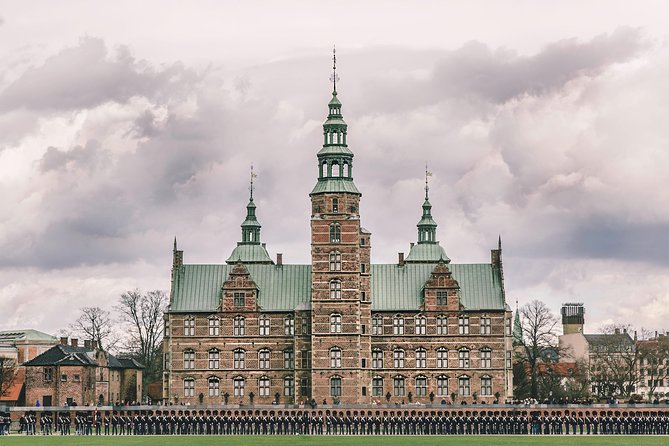
Rosenborg Castle was built in Dutch Renaissance style for King Christian IV. Its exterior remains much as it was when built, which gives the building unusual visual appeal. From the vehicle, you get a sense of its formal design and setting, but the tour does not include a full castle visit.
The Little Mermaid is the tour’s most famous stop. Edvard Eriksen’s bronze sculpture has sat on its granite rock since 1913. Carl Jacobsen, founder of the Carlsberg Brewery, gave it to the city. The sculpture draws on Hans Christian Andersen’s story of a mermaid who falls in love with a human prince who does not return her love.
You get about five minutes here, and admission is free. That is enough for photographs, but not enough for a long harbor walk or a quiet look at the sculpture from different angles. At low tide, the rock is accessible, though the visit remains short.
The mermaid has had a rough public life. She has been beheaded twice, lost an arm, been covered in red paint, and carried political messages. Those incidents have made the small statue even more famous, but the main appeal is still its simple pose and melancholy expression.
Resistance, Gefion, and the Royal Guard
The Danish Resistance Museum offers a different view of Copenhagen. Its current underground building opened in 2020 after the earlier museum burned in 2013. Much of the collection survived, and the museum tells the story of daily life during the German occupation from 1940 to 1945, with special attention to Danish resistance groups.
You should not expect time for a full museum visit on this tour. Still, its inclusion is useful because Copenhagen sightseeing can otherwise lean heavily toward palaces and pretty streets. This stop points to the difficult choices made during the occupation.
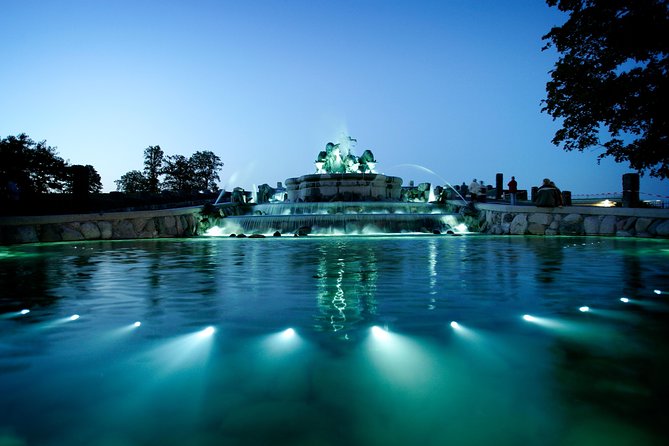
Near the harbor, the Gefion Fountain shows the goddess Gefion pulling the island of Zealand from the earth with four oxen. According to the story, the oxen were her sons. The Carlsberg Foundation paid for the fountain, which was designed by Anders Bundgaard between 1897 and 1899. The basin was completed in 1908.
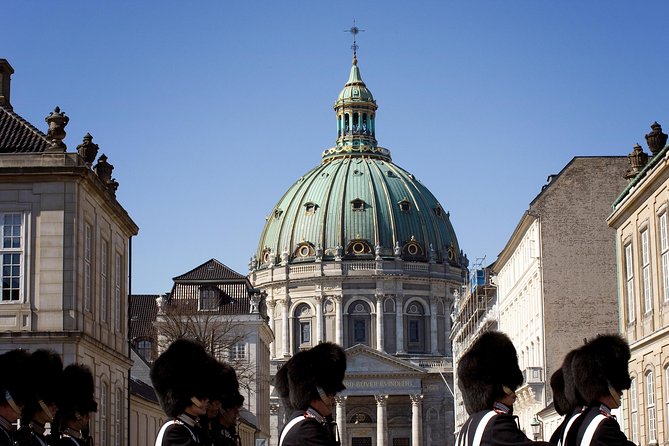
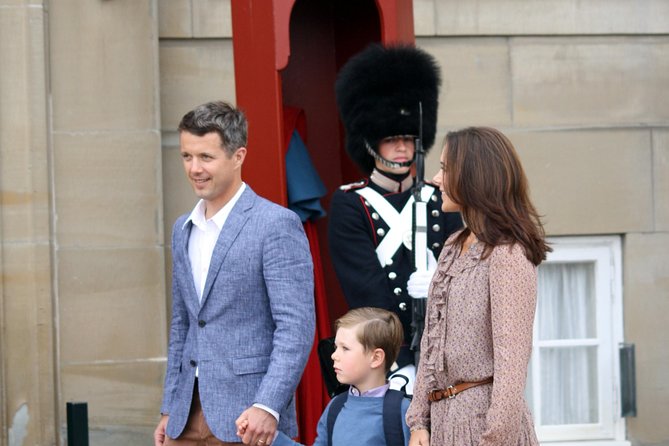
The tour then reaches Amalienborg. The complex has four palaces: Christian VII’s, Christian VIII’s, Frederik VIII’s, and Christian IX’s. The royal family moved here in 1794 after Christiansborg burned. Frederik VIII’s Palace is used by King Frederik X and Queen Mary when they are in Copenhagen.
The 20-minute stop at Amalienborg is one of the strongest parts of the schedule. The Life Guards change position here every day at midday, so the 9:30 start is designed to put you in the area at a useful time. The timing is not guaranteed in every practical sense, since traffic and group movement can affect arrival, but the plan makes sense.
More Castle Tours in Denmark
- Copenhagen: Amalienborg Palace Museum Entry Ticket
★ 4.3 · 291 reviews - Copenhagen City & Christiansborg Palace Private Walking Tour
★ 4.6 · 23 reviews - Rosenborg Castle Entry Ticket in Copenhagen
★ 3.5 · 22 reviews - 4-Hour Private Hamlet Castle Tour from Copenhagen
★ 4.5 · 19 reviews
The Marble Church and Christiansborg
Frederik’s Church, usually called the Marble Church, was commissioned by King Frederik V and designed by Nicolai Eigtved in 1740. Construction slowed after Eigtved died in 1754 and stopped in 1770. Ferdinand Meldahl later completed the church, using limestone instead of marble to control costs.
The dome is one of the largest church domes in Europe. You may see it from the vehicle or during a brief stop, but the tour is not designed as a full church visit. Even from outside, the dome gives this part of the city a grand focal point.
Christiansborg Palace brings together several parts of Danish public life. The Danish parliament, called the Folketing, meets here. The current building dates from 1928, while ruins below mark the first Copenhagen Castle, built by Bishop Absalon in 1167.
The first Christiansborg Palace was built for King Christian VI in 1740. The palace church suffered a roof fire in 1992, and repairs finished in 1997. Christiansborg is also connected with royal ceremonies, including the balcony appearance when Frederik X became king. Denmark does not have coronations.
Again, the value here is orientation. You learn that the palace is not only a royal residence. It is also a working political center and a place where older layers of Copenhagen remain visible beneath modern government.
Canals, Theater, and the Old Exchange
The route continues past the museum beside the canal associated with Bertel Thorvaldsen, the neoclassical sculptor whose grave is located there. His work is an important part of Denmark’s art story, and the museum’s setting makes it easy to connect sculpture with the city’s waterways.
At Det Kongelige Teater and the Opera House, you get about five minutes for photographs. The harbor views include Amalienborg Palace, making this a good spot for a quick city image with water, architecture, and royal buildings in one frame.
The statue of Bishop Absalon recalls the city’s founder. Nearby, Børsen, the old Stock Exchange, dates from the 1620s and was built under King Christian IV. Its original upper floors were used for trading physical goods. Today, the building belongs to Dansk Erhverv, a large Danish business organization.
Look up at the famous dragon-tail spire. The intertwined tails are one of the most recognizable details in Copenhagen’s old center. Børsen is a good example of how the tour links commerce, monarchy, and city building without requiring a separate museum visit.
Christianshavn and the Black Diamond

Christianshavn gives you a change of mood. The district is known for canals and views toward Our Saviour’s Church. A short stop overlooking the water lets you see why Copenhagen is often best understood from its edges, where streets open onto canals and boats.
The route also includes an 18th-century mansion containing collections and exhibitions about Denmark, its people, and its culture. The Danish National Gallery appears as another cultural landmark, with international collections, temporary exhibitions, and activities for children. These locations are valuable signposts, though you will need another visit if you want time inside.
Holmens Church was built in a former anchor forge by King Christian IV in 1619. It serves as a parish church and as a church connected with the Danish Royal Navy. Models of ships hang inside, a detail worth remembering if you return on your own.
The Black Diamond adds a modern note. Built in 1999, it is an extension of the Royal Danish Library, faced with black granite from Zimbabwe. The building connects to the older main library by a bridge and includes a reading room, music room, cafe, and bookshop.
This mix of old churches and bold modern architecture is one of the tour’s useful features. You are not shown only postcard Copenhagen. You also see the city’s working cultural institutions.
Langebro and the Final Walk Through Nyhavn
Langebro is a bascule bridge that opens for large ships. The current bridge was built in 1954 and designed by Kaj Gottlob. It is about seven meters high and 35 meters long, and Copenhagen City Council owns it.
The first bridge here was wooden, built in 1690 under King Christian V. Repair work began after rainwater damaged the concrete, with the project estimated at 307 million kroner, or about €40 million. These details show how the harbor remains part of the city’s daily infrastructure, not just a scenic backdrop.
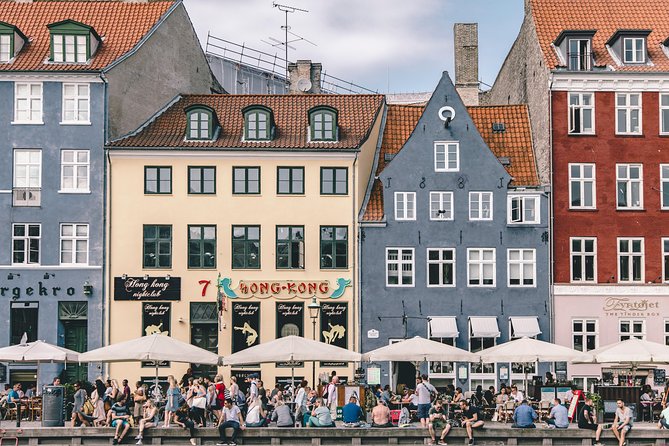
The final major sight is Nyhavn, Copenhagen’s famous old harbor. It was built between 1671 and 1673 by Swedish prisoners of war. The oldest house, Nyhavn 9, dates from 1681. The district was rougher in the 1970s, then underwent renovation in the 1980s and became the restaurant and cafe strip you see today.
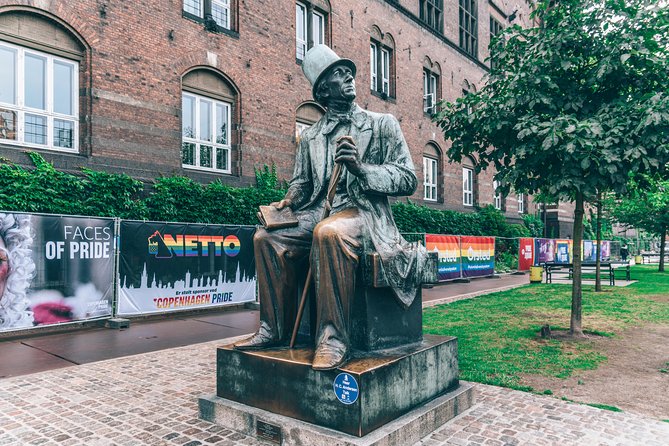
Hans Christian Andersen lived at several Nyhavn addresses, including numbers 18, 20, and 67. At the end of the harbor, a memorial anchor honors Danish merchant seamen who died during the Second World War.
Nyhavn is photogenic, but it can also be the most crowded and commercial part of the route. I would use the tour to get your bearings, then return on foot if you want to compare the colorful facades, read the memorial, or sit beside the canal.
Price, Group Size, and Practical Value
At $61.40 per person, this tour is priced for breadth. You are paying for transport, a host or driver, WiFi, an audio guide, and a long chain of Copenhagen sights. You are not paying for lunch or admission to the museums and palaces.
That makes the value strongest for three kinds of people: first-time visitors with limited time, cruise passengers, and anyone who would rather ride between districts than piece together a route by public transport. The tour can also help you decide which places deserve a longer visit.
The group may include up to 33 people. That is not a small private tour, so do not expect every question to receive a long answer or every stop to run at your own pace. The upside is a lower price than a private vehicle and a practical way to cover a lot of ground.
Pickup is offered, but the stated meeting point is Banegårdspladsen 2. If you are using this before a cruise, confirm the pickup and final transfer details in advance. Previous arrangements have included hotel pickup and drop-off toward the cruise terminal, but you should not treat that as automatic for every booking.
You receive confirmation when booking. Most people can participate, and the tour is near public transportation. Free cancellation is available up to 24 hours before the start time. A minimum number of participants is required, and if that number is not met, another date or experience, or a full refund, is offered.
Who Should Book This Tour?
I would choose this tour if you have only a morning in Copenhagen, want a broad first look, or need an efficient link between the city and a cruise departure. The route covers enough major sights to make later planning much easier.
It also suits people who prefer commentary while riding. The guides used on recent departures have included Christian and Peter, and the strongest praise has focused on clear explanations, a comfortable pace, and the ability to show a lot in a short time.
I would hesitate if your main goal is to visit Rosenborg, Christiansborg, the Resistance Museum, or the National Gallery inside. The schedule is too full for detailed museum time. In that case, take a walking tour or choose one palace and one neighborhood for a slower day.
Should You Book It?
Book it if you want a fast, well-rounded introduction to Copenhagen for $61.40, especially before a cruise or during a short stay. The changing guard at Amalienborg, the Little Mermaid, the old harbor, and the mix of royal and modern sights give you a strong first map of the city.
Skip it if you want a slow, intimate experience or full interior visits. For everyone else, this is a practical overview with a sensible route, useful transport, and enough historical detail to make the city easier to explore afterward.
FAQ
How long does the Grand Tour of Copenhagen last?
The tour lasts approximately two hours and 30 minutes. It can take up to three hours.
What time does the tour begin?
The stated start time is 9:30 am.
Where does the tour start and finish?
It starts at Banegårdspladsen 2, 1570 København, Denmark. The activity ends back at the meeting point.
Is hotel pickup available?
Pickup is offered, but the provided details do not specify that it is available for every hotel. Confirm the pickup arrangement when booking.
Does the tour include admission fees?
The listed inclusions cover the air-conditioned vehicle, WiFi, audio guide, and host or driver. Lunch is not included, and no general museum or palace admission is listed.
How large can the group be?
The tour can have a maximum of 33 travelers.
Is the Little Mermaid stop included?
Yes. The tour stops at the Little Mermaid for about five minutes, and admission is free.
Can I cancel for a refund?
Yes. You can cancel at least 24 hours before the local start time for a full refund. Changes or cancellations made less than 24 hours before the start time are not accepted for a refund.
Just added around Copenhagen
- walking tour – Copenhagen and Christiansborg 3 hours★ 4.0 · 7 reviews
- The Hunt For The Six Forgotten Giants★ 5.0 · 45 reviews
- Copenhagen Walking Tour with Food Testing (smorrebrod dish & snap)★ 4.5 · 10 reviews
- The Philosopher’s Last Walk: An audio tour on the life of Søren Kierkegaard★ 4.5 · 5 reviews
- Small Group Guided Food Tour and Street Art Visit to Norrebro★ 5.0 · 9 reviews
- The Six Forgotten Giants Trolls Hunt with Minibus★ 4.5 · 27 reviews
- The Foodie Tour of Copenhagen★ 5.0 · 14 reviews
- The Forgotten Giants Private Tour★ 5.0 · 3 reviews
Castle & Palace Tours, compared.
Kronborg, Frederiksborg Castle and Roskilde Tour
Read our review →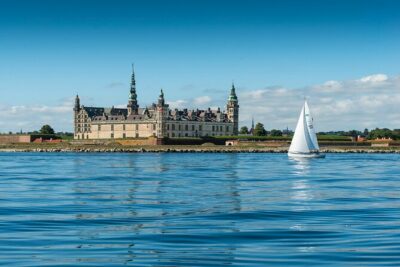
Full-Day; Castle, Palace, Cathedral & Viking ships Tour
Read our review →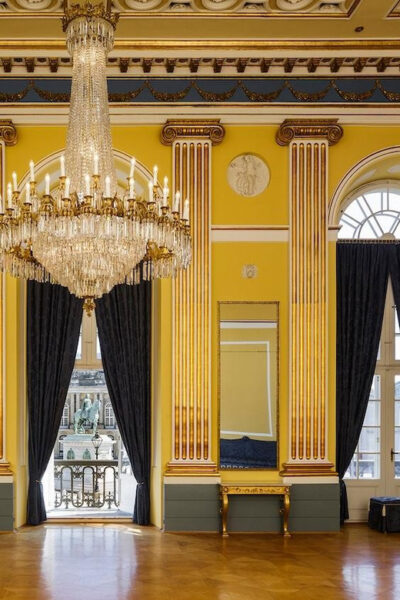
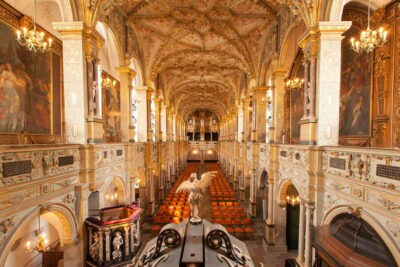
Kronborg (Hamlet Castle) & Frederiksborg Castles: PRIVATE TOUR
Read our review →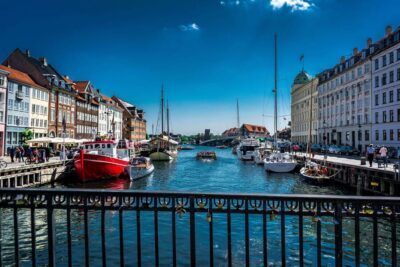
Copenhagen City & Christiansborg Palace Private Walking Tour
Read our review →Browse the lists this tour appears in