
Reviewed · CITY TOURS
Oslo City Walks – The City of Contrasts
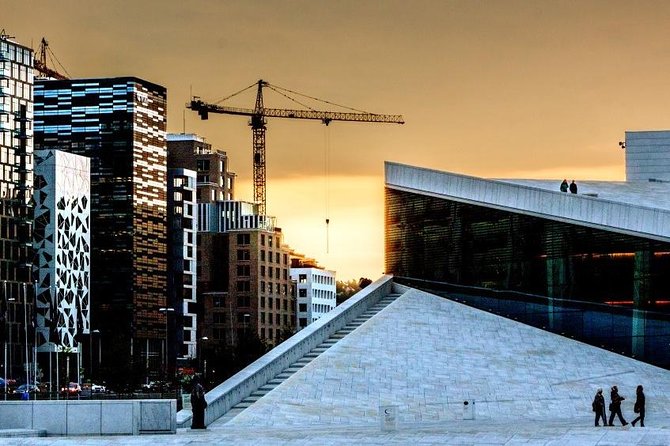
Oslo’s big story is easy to see on this walk: a working port area is becoming a cultural district, while old streets nearby still mark the city’s earlier shape. You move from the Opera House’s sloping white roof to the Munch museum, then across a modern bridge and into historic Kvadraturen.
I like the route for two clear reasons. First, it gives you a quick sense of how Oslo is changing without requiring a full-day commitment. Second, the mix of architecture, public spaces, and older city landmarks makes this more useful than a simple photo walk. The possible drawback is the pace: two hours is enough for an introduction, but not enough for long visits inside the museums or a detailed tour of every historic building.
Key points to know before booking
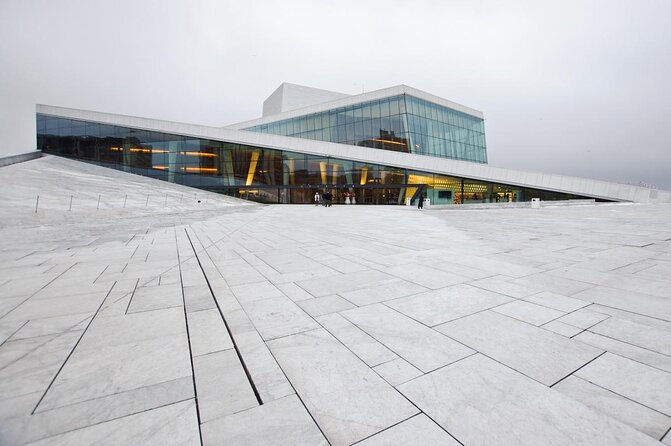
- The Opera House sets the tone: You may walk on its roof if time allows, with free admission.
- Bjørvika is the main focus: The tour explains how a former container port is turning into a cultural hub.
- The Munch museum is a major stop: You see the exterior and hear about the museum, but admission is not included.
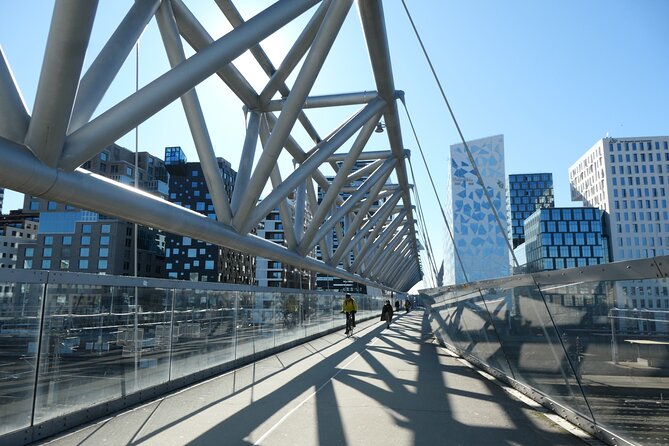
- Akrobaten Bridge links two districts: This short stop shows how new public design connects Grønland and Bjørvika.
- Kvadraturen adds older Oslo: The district includes the city’s oldest restaurant and what was once its original town hall.
- The group stays fairly small: A maximum of 20 people makes it easier to hear the local guide.
Oslo in two hours: what this walk is really about
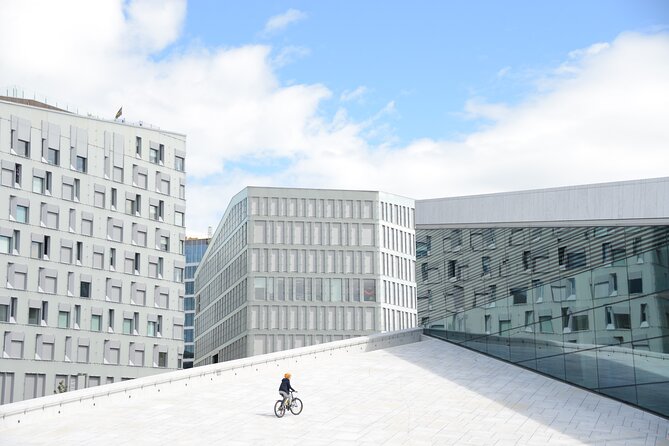
This is not a checklist tour of every famous sight in Oslo. It is a focused walk about contrast. You see new cultural buildings, altered waterfront space, transport links, and traces of the older city in one compact route.
That focus gives the experience a clear purpose. Instead of looking at each building as an isolated sight, you get a basic explanation of how Oslo’s center is being reshaped. The walk begins at Oslo Visitor Center beside Jernbanetorget and finishes at Deichman Bjørvika, so the route also works as a useful orientation for the central waterfront.
The 5:00 pm start is worth considering. It places the walk late in the day, which may suit you if you spend the morning exploring museums or arrive in Oslo that afternoon. The timing also gives the modern waterfront a different feel from a midday visit, though daylight conditions will vary by season.
The route is about two hours. That is long enough to cover several districts without making the walk an all-day project. You should still expect to be on your feet for most of that time, and the moderate fitness requirement matters if you dislike extended city walks.
More City Tours in Norway
- Oslo: City Sightseeing Hop-On Hop-Off Bus Tour
★ 3.6 · 724 reviews - Oslo: Grand City Sightseeing Tour by Bus with Fjord Cruise
★ 4.6 · 647 reviews - Oslo Combo Tour: Grand City Tour and Oslo Fjord Cruise
★ 4.5 · 555 reviews
The Opera House roof begins the modern Oslo story
The Norwegian National Opera and Ballet is the strongest opening point. Its design invites you to walk up and across the roof, turning the building into a public viewpoint rather than a structure you only admire from the street.
If time allows, the guide takes you onto the roof. The admission is free, but the roof walk depends on the schedule, so do not treat it as guaranteed. Even without a roof stroll, the building gives the guide a natural way to explain Oslo’s modern design ambitions.
I like this start because it gives you an immediate physical sense of the city. You do not simply look at an award-winning building. You move over it, see how its surfaces meet the public space, and begin to understand why the waterfront is central to Oslo’s current identity.
The stop lasts about 15 minutes. That is enough for an explanation and perhaps a few photographs, but not a performance or interior tour. If you want to attend a ballet, opera, or spend time inside the building, plan that separately.
Bjørvika shows a former port becoming a cultural center
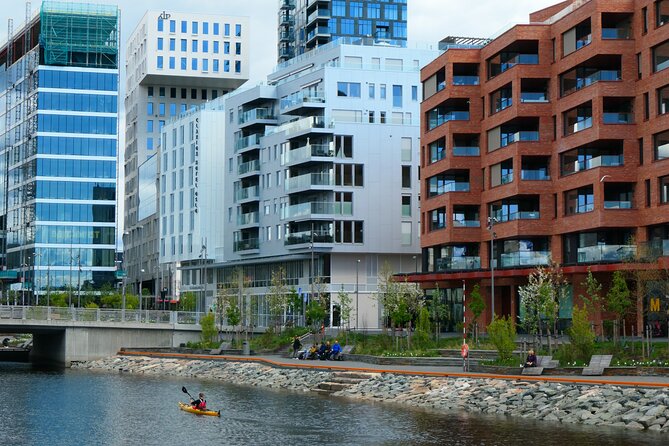
From the Opera House, the walk turns toward Bjørvika, one of Oslo’s fastest-changing areas. The key idea here is conversion: space once associated with containers and port activity is now being shaped around museums, libraries, public paths, and modern architecture.
This is where the tour earns its title. You are not only seeing polished new buildings. You are looking at a district in transition and hearing how older commercial uses are being replaced or joined by cultural ones.
The Munch museum is the main stop in this section. It opened in October 2021 and is now one of the most recognizable newer attractions in Bjørvika. The visit here lasts about 20 minutes, but museum admission is not included.
That distinction matters. The guide can help you understand the building and its place in the district, but this walk is not a substitute for visiting the collection. If Edvard Munch is a priority for you, allow separate time and budget for the museum. If you have already seen it, the exterior and city-planning context still give the stop value.
The museum stop may suit you especially well if you want a quick introduction before deciding how to spend more time in Bjørvika. It is less useful if you expect a full art experience during the walk.
Akrobaten Bridge connects Grønland and Bjørvika
The 10-minute stop at Akrobaten Pedestrian Bridge shifts the focus from buildings to connections. The bridge links Grønland and Bjørvika, two areas that feel different in character, and has become a well-known feature in its own right.
This is a short stop, but it serves an important purpose. A city changes not only when it builds museums and libraries, but also when it makes districts easier to reach on foot. The bridge shows how new infrastructure can join areas that were once separated by rail lines, roads, or industrial land.
You should expect a brief explanation and time to take in the structure. It is not a long architectural visit, and there is no admission charge. The stop works best as part of the larger story rather than as a destination you would visit for half an hour on its own.
If you enjoy city planning and modern public design, this may be one of the more useful moments of the walk. If you mainly want historic interiors, it will feel more like a transition between the newer waterfront sights and the older center.
More City Tours in Oslo
- City Sightseeing Oslo Hop-On Hop-Off Bus Tour
★ 3.0 · 455 reviews - Oslo: City Highlights Walking Tour
★ 4.8 · 197 reviews - Oslo City Highlights with Fjord Cruise
★ 4.5 · 128 reviews - Oslo Shore Excursion: City Sightseeing Oslo Hop-On Hop-Off Bus Tour
★ 3.0 · 121 reviews
Kvadraturen brings the older city into view
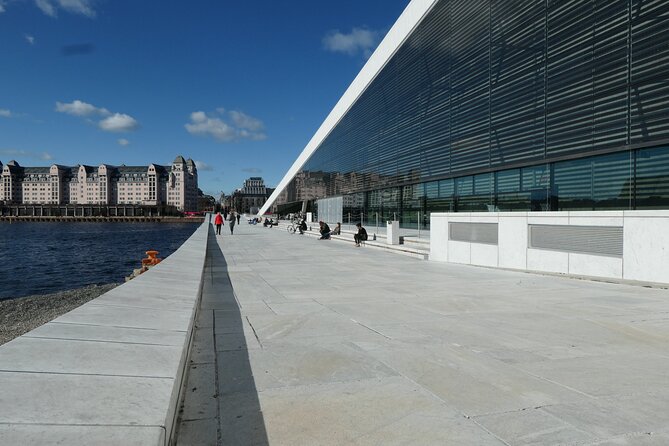
The tour also includes Kvadraturen, Oslo’s older city district. This adds needed balance after the modern waterfront and helps keep the walk from becoming only a showcase of recent construction.
Here you see the city’s oldest restaurant and what was once its original town hall. Those details give the guide a way to explain Oslo before the newer cultural district took shape. The contrast is not forced. It is built into the route.
Kvadraturen is particularly useful if you are new to Oslo and want more than a collection of contemporary buildings. The district gives you an older reference point, while Bjørvika shows the city’s newer direction.
The supplied details do not specify a separate admission stop or a long interior visit in Kvadraturen. Plan to experience it as part of the guided walk, not as a complete historic tour of the district. You can return later if one of the sites catches your interest.
What the price includes, and what it does not
The cost is $53.31 per person. For a two-hour guided walk, that is not the cheapest way to get an introduction to Oslo, but the price becomes easier to assess when you look at what is included.
You are paying for a local English-speaking guide, a planned route, and context that can tie the Opera House, Bjørvika, Akrobaten Bridge, and Kvadraturen together. The value is strongest if you want help reading the city rather than simply locating its main buildings.
The price does not include admission to the Munch museum. Hotel pickup and drop-off are also not included, so you need to reach Oslo Visitor Center at Jernbanetorget on your own and make your own way from the Deichman Bjørvika ending point.
For a first afternoon in Oslo, the tour can be a sensible orientation. You finish near the library in Bjørvika, giving you a convenient place to continue exploring. If you already know the center well, the fee may be harder to justify unless the city’s development and modern architecture are special interests.
Group size, weather, and practical planning
The maximum group size is 20 people. That is large enough to have a group feel, but small enough that the guide should be able to keep the route together and answer occasional questions. The strong 4.9 rating from 47 ratings, along with a 98 percent recommendation rate, suggests that the guide’s presentation is a major part of the experience.
One specific positive detail is the praise for the guide being enthusiastic and well informed. No guide name is provided, so you should book this for the route and subject rather than expecting a particular guide.
The walk operates in all weather. Oslo weather can change quickly, and the route includes open waterfront areas and a bridge. Wear shoes suited to city walking and bring clothing that works in rain or wind. The operator specifically advises dressing appropriately.
Service animals are allowed, and the starting point is near public transportation. The walk requires moderate physical fitness. There is no mention of special assistance for every mobility need, so if you have access concerns, confirm directly before booking.
Free cancellation is available if you cancel at least 24 hours before the local start time. Changes made inside that 24-hour window are not accepted, and the cost is not refunded for a late cancellation.
Who will get the most from this Oslo walk
I would choose this tour if you are visiting Oslo for the first time and want a useful framework for the center in a short period. It also suits anyone interested in architecture, public spaces, urban renewal, and the way a port district can be given a new role.
The route works well for:
- First-time visitors with only an afternoon or evening free
- People who want an English-speaking local guide
- Architecture and city-planning fans
- Museum visitors who want context before entering the Munch museum
- Walkers who prefer a small, fixed route instead of a large sightseeing vehicle
I would think twice if you want extensive time inside museums, a long historical tour, or a relaxed pace with frequent café breaks. The two-hour schedule covers several places, so the experience is about connections and contrasts rather than exhaustive sightseeing.
Should you book Oslo City Walks?
Book it if you want to understand why Oslo looks the way it does today. The Opera House, Munch museum, Akrobaten Bridge, Bjørvika, and Kvadraturen form a sensible route, and the guide supplies the thread that connects them.
The best value comes early in a visit, when you can use the walk to decide where to return. Go in expecting an active city introduction, not a museum admission package. With a manageable group size, a strong rating, free cancellation up to 24 hours ahead, and a route that combines old and new Oslo, it is a practical choice for a first look at the capital.
FAQ
Where does the tour begin?
It begins at Oslo Visitor Center, Jernbanetorget 1, 0154 Oslo, Norway.
Where does the tour end?
The tour ends at Deichman Bjørvika, Anne-Cath. Vestlys plass 1, 0150 Oslo, Norway.
What time does the walk start?
The scheduled start time is 5:00 pm.
How long does the tour last?
The walk lasts approximately two hours.
Is admission to the Munch museum included?
No. Admission to the Munch museum is not included.
Can I walk on the Opera House roof?
If time allows, the walk includes a stroll on the Opera House roof. Admission is free, but the roof visit is not guaranteed.
What happens if the weather is poor?
The tour operates in all weather conditions, so dress appropriately for Oslo’s weather.
More Walking Tours in Oslo
- Oslo: Historic Myths & Legends Evening Walking Tour
★ 4.8 · 408 reviews - Taste of Oslo Walking Tour
★ 4.5 · 282 reviews - Central Oslo Guided Walking Tour with Local Guide
★ 4.5 · 278 reviews - Oslo: Snowy Forest Torchlight Walk with Campfire
★ 4.6 · 254 reviews
More Walking Tours in Norway
- Oslo Nature Walks: Island Hopping Tour
★ 4.8 · 2,713 reviews - Oslo Nature Walks: Island hopping
★ 5.0 · 570 reviews - Oslo: Best of Oslo Walking Tour
★ 4.5 · 458 reviews - Oslo: Guided Walking Tour of Central Oslo
★ 4.7 · 438 reviews
Just added around Oslo
- Oslo Winter Highlights Bike Tour★ 5.0 · 36 reviews
- Unknown war. Oslo and Norway during 1940-45★ 5.0 · 74 reviews
- The Viking Planet Museum – Mini Group (4 adults)★ 4.0 · 16 reviews
- 4 hours Best View of the Oslofjord Winter Edition★ 4.0 · 15 reviews
- The Viking Planet Museum Ticket★ 4.0 · 197 reviews
- The Ultimate Norwegian Skiing Experience★ 5.0 · 16 reviews
- The Ultimate Study of the Human Form at Vigeland’s Sculpture Park with a Local★ 4.0 · 14 reviews
- The Oslo Beer Adventure★ 4.5 · 11 reviews
City Tours, compared.

City Archipelago Sightseeing Cruise with Guide
Read our review →

Group Walking Tour – City Highlights – 2 Hours
Read our review →
City Sightseeing Copenhagen Hop-On Hop-Off Bus Tour
Read our review →
Browse the lists this tour appears in