
Reviewed · CITY TOURS
Oslo City Walks: The City of Contrasts
Oslo’s most interesting story is written in its buildings. On this two-hour walk, you’ll cross the Acrobat pedestrian bridge, leave Oslo Central Station behind, and enter Bjørvika, where older industrial spaces meet bold new architecture. I like the clear focus on how Oslo changed, rather than a rushed checklist of famous sights. I also like that an authorized Oslo guide leads the walk and can answer questions as you go.
The main drawback is scope. This is not a full city highlights tour, and the route gives only a short look at Oslo’s wider historic center. A large group can also make the walk less personal, so you should book it for urban design and city development, not for a grand survey of every major sight.
Key points to know before you book
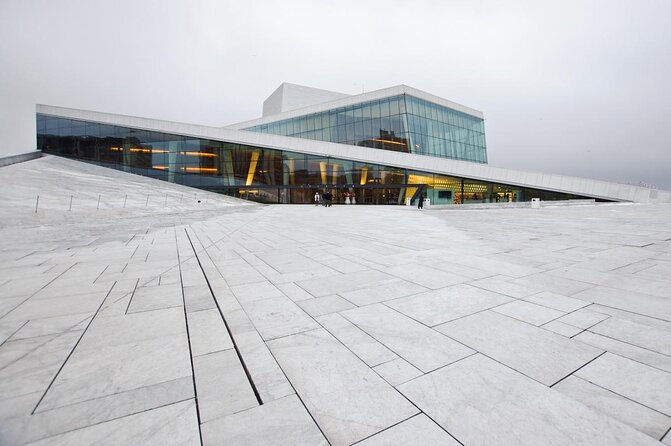
- The route crosses from Oslo Central Station into Bjørvika, using the Acrobat bridge as a striking first look at the city’s new side.
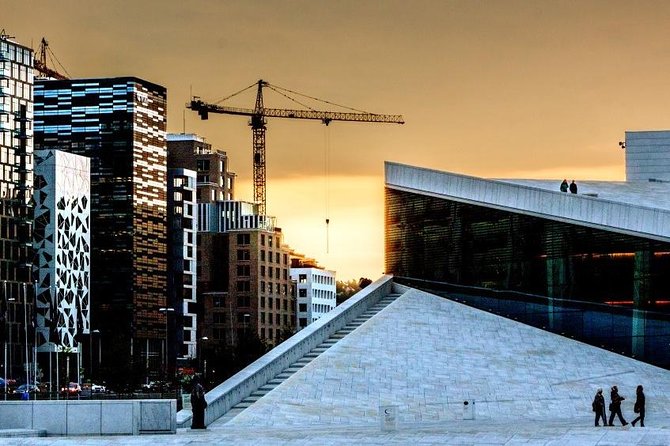
- The Munch Museum, Deichman Library, and Opera House area provide the tour’s strongest modern architecture stops.
- The focus is Oslo’s industrial and urban growth, not a standard old-town sightseeing circuit.
- An authorized guide leads the walk in English or Norwegian, with time for questions.
- The tour costs $52 per person and lasts about two hours, making the value depend on your interest in architecture and city planning.
- Good walking shoes and weather-ready clothing matter, since the experience takes place outdoors and continues in changing conditions.
Why Oslo’s old and new sides make a useful walking lesson
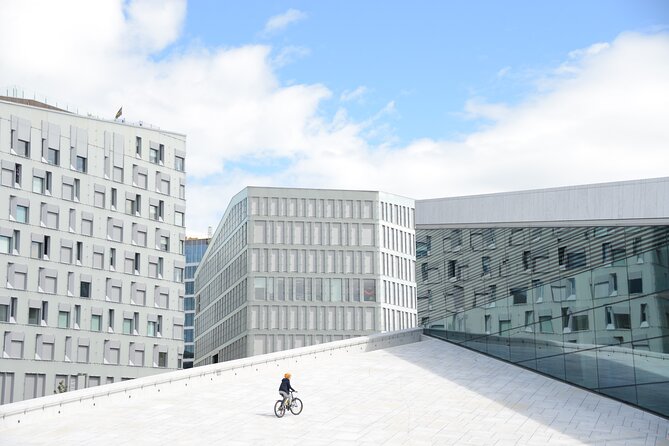
Oslo can look polished and new at first glance, with efficient transport, fresh public buildings, and major construction around the waterfront. This walk helps you connect those visible changes with the city’s industrial growth and expansion.
You are not simply moving from one attraction to another. The guide explains how Oslo developed into an industrial center and how newer buildings were placed beside older parts of the city. That context gives the walk a clear purpose, especially if you have already seen the main sights and want to understand why the city looks the way it does.
I like this approach because architecture becomes easier to read when someone points out the contrast. An older building can show one stage of Oslo’s growth, while a new library or museum shows another. You get a better sense of the city as a place still being reshaped, rather than a finished historic display.
The tour is described as taking place on a typical Monday evening. That timing may suit you if you arrive in Oslo during the day and want a guided activity later, though you should check the available departure time when booking. The walk lasts approximately two hours, so it fits neatly into an evening without taking over your whole day.
More City Tours in Norway
- Oslo: City Sightseeing Hop-On Hop-Off Bus Tour
★ 3.6 · 724 reviews - Oslo: Grand City Sightseeing Tour by Bus with Fjord Cruise
★ 4.6 · 647 reviews - Oslo Combo Tour: Grand City Tour and Oslo Fjord Cruise
★ 4.5 · 555 reviews
Starting at Østbanehallen and Oslo Central Station
You meet your guide in front of the Oslo Visitor Centre inside Østbanehallen at Jernbanetorget 1. This is a practical meeting point because it is located in Oslo Central Station, a major transport hub and an easy place to find if you are coming by train or public transport.
Arrive about 10 minutes early. Oslo Central Station can be busy, and the Visitor Centre is inside the hall rather than on a quiet street corner. Giving yourself a few extra minutes helps you locate the meeting point without beginning the tour in a rush.
The station also sets the tone for the experience. It is a useful symbol of Oslo as a connected, growing capital. From here, the walk moves toward the newer waterfront districts and shows how transport, industry, and city expansion fit together.
Do not expect a long introduction filled with every fact about Oslo. The strength of this activity is its focus on development and architecture. If you want a traditional opening talk about medieval Oslo, royal landmarks, or every major museum, you may find the subject narrower than expected.
Crossing the Acrobat bridge into Bjørvika
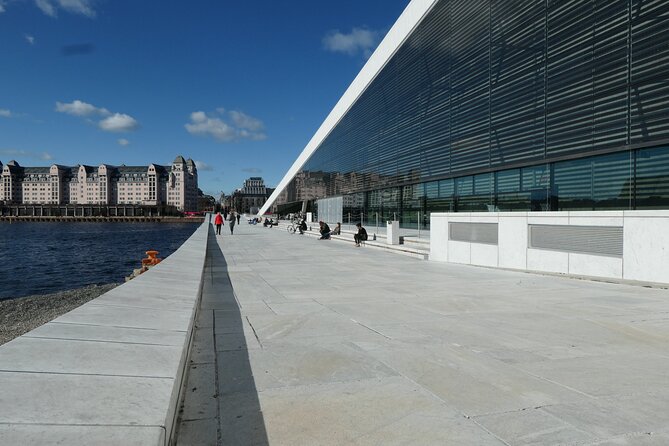
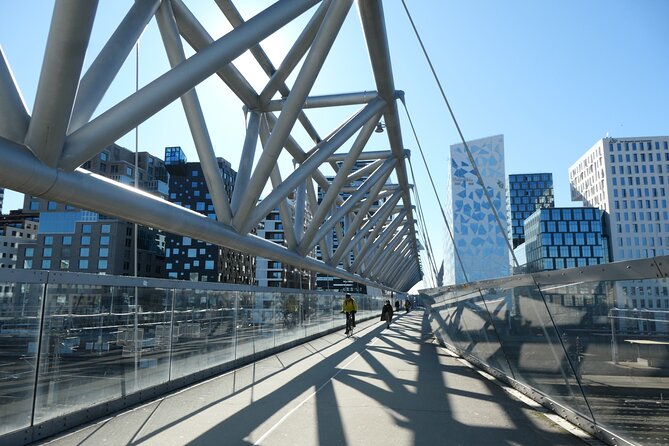
One of the walk’s clearest moments comes when you cross the Acrobat pedestrian bridge over the railway lines at Oslo Central Station. The bridge leads toward Bjørvika and gives you a direct visual change from the station area to the redeveloped waterfront.
This is a good place to pay attention to the city’s shape. From the bridge, you can see how rail infrastructure, pedestrian routes, modern buildings, and the waterfront connect. The crossing is more than a way to get from one stop to the next. It shows how Oslo has made room for new public spaces and building projects around an older transport network.
You will want comfortable shoes here and throughout the tour. The walk is only two hours, but it is a continuous outdoor route, and high-heeled shoes are not allowed. Drones are also prohibited, so plan to enjoy the views with a camera or phone rather than aerial equipment.
The bridge can be a useful photo stop, though the tour is not advertised as a dedicated photography walk. Your guide’s commentary is the main event. Take pictures, but keep enough attention on the explanation to understand why the bridge and surrounding buildings matter.
Reading Bjørvika’s modern architecture
Bjørvika is the heart of the tour. The district gives you a close look at Oslo’s newer architecture and the way contemporary buildings have changed the waterfront.
You pass through Bispevika and continue toward the new Munch Museum. This part of the route is likely to appeal most to anyone interested in urban design, public buildings, and the practical problems of expanding a capital. The guide’s job is to explain how the new structures fit into Oslo’s wider transformation.
The Munch Museum is an important visual landmark on the walk, but you should not assume that an interior museum visit is included. The experience is an outdoor sightseeing walk, and the included feature is the authorized guide. If you want to see the museum’s art collection, plan that as a separate activity.
The area also offers the strongest contrast between Oslo’s older building stock and its newer waterfront projects. You may find the newer architecture impressive, unusual, or simply different from what you expect in a Scandinavian capital. The tour gives you a chance to consider how a city balances preservation with growth, rather than presenting new construction as automatically good or bad.
That balance is useful. Modern buildings can create new public spaces and support cultural institutions, but they can also change the feel of an older district. A guide who explains the changes can help you see the choices behind the design.
More City Tours in Oslo
- City Sightseeing Oslo Hop-On Hop-Off Bus Tour
★ 3.0 · 455 reviews - Oslo: City Highlights Walking Tour
★ 4.8 · 197 reviews - Oslo City Highlights with Fjord Cruise
★ 4.5 · 128 reviews - Oslo Shore Excursion: City Sightseeing Oslo Hop-On Hop-Off Bus Tour
★ 3.0 · 121 reviews
Finishing beside the Opera House and Deichman Library
The walk concludes at Deichman Library, next to the Opera House. This gives the tour a strong finish because the area brings together culture, public architecture, and the waterfront in one compact setting.
The Opera House is one of the most recognizable modern buildings in Oslo, but this tour treats it as part of a larger city story. You see how cultural buildings help shape the waterfront and how public institutions can become part of daily urban life.
Deichman Library adds another useful piece to the route. A library is not only a place for books. In a growing city, it can serve as a public meeting place and a sign of investment in shared civic space. Seeing it beside the Opera House helps you compare different approaches to modern public architecture.
The finish is also convenient. You end near two major cultural buildings, giving you a clear point from which to continue exploring on your own. The information provided does not promise extra free time inside either building, so treat the ending as the conclusion of the guided walk rather than the start of an included visit.
What this tour covers, and what it skips
The walk covers Oslo’s newer urban areas, industrial background, central station district, bridge connections, Bispevika, the Munch Museum area, Deichman Library, and the Opera House surroundings. That is a focused route with a clear theme.
It does not try to cover the whole city. You should not book it expecting a complete introduction to Oslo’s royal, medieval, or historic attractions. One past participant felt the tour covered very few of Oslo’s main sights, which is a fair caution for anyone seeking a standard city orientation.
The route may also feel flat in the literal sense. Much of central Oslo and the waterfront walk is not a strenuous climb, which is helpful if you prefer an easy urban stroll. At the same time, you will not get the hilltop views or dramatic changes in elevation found on some other city walks.
The experience depends heavily on the guide. The most positive comments praised a fantastic guide, a comfortable pace, and the chance to ask as many questions as needed. Another participant simply described the guide as quick and effective. On the other hand, one person found the guide lacking in personality, and another objected to the group being too large.
That mixed response tells you what to expect. The route and subject are solid, but the tone may vary with the individual guide and group size. If you enjoy asking questions, you may get a lot from the walk. If you need a highly theatrical guide or a very intimate group, the experience may feel less satisfying.
Is $52 a fair price for two hours?
At $52 per person, this is not the cheapest way to take a walk through Oslo. The value rests on the explanation, not on the number of sights you can tick off.
You are paying for an authorized guide, a structured route, and a clear lesson about the city’s modernization. That can be worthwhile if you would otherwise pass through Bjørvika without understanding how its buildings and public spaces fit together.
The price is harder to justify if you mainly want photographs of the Opera House or Munch Museum. You can see the outside areas without booking a guided activity, and the tour does not include admission to a museum or other attraction.
I would compare it with your interests rather than with the number of stops. Two hours of focused commentary can be good value for an architecture-minded visitor, a student of city planning, or someone who wants more context than a self-guided stroll provides. It is weaker value for a first-time visitor who wants a broad introduction to Oslo’s historic landmarks.
The flexible booking terms help reduce the risk. You can reserve now and pay later, and cancellation is allowed up to 24 hours before the activity for a full refund. Still, check the exact start time and come prepared for the weather before committing your evening.
How to prepare for the Monday evening walk
Wear good walking shoes. The tour uses city streets, bridges, and waterfront paths, and high heels are specifically not allowed.
Dress for the weather rather than for the season alone. The route is outside, and conditions can change during an evening walk. A weatherproof layer is a sensible choice, especially if you plan to remain in Bjørvika after the tour.
Arrive 10 minutes early at the Oslo Visitor Centre inside Østbanehallen. If you are arriving by train, allow time to get off the platform and find the correct part of the station.
The tour is offered in English and Norwegian. If you have questions about Oslo’s architecture, industry, or recent growth, prepare a few before you arrive. The positive feedback about question time suggests that an engaged participant can make the walk more rewarding.
You should also plan your expectations carefully. This is an urban walking lesson, not an entertainment show. The guide may be warm and lively, or more reserved. The content is likely to matter more than performance.
Who will enjoy this Oslo walk most?
I would recommend this activity to you if you enjoy seeing how cities change. It suits visitors who like modern architecture, public buildings, transport systems, and the practical side of urban planning.
It also works well if you have already seen some of Oslo’s basic sights and want a different angle. The route introduces the station and waterfront districts in a way that can help you orient yourself for later independent exploring.
You may also like it if you prefer an easy pace. The walk lasts about two hours, and one positive account praised the comfortable speed and the freedom to ask questions. That makes it a reasonable choice for someone who wants guided context without spending half a day on a tour.
I would choose something else if your priority is old Oslo, a large number of famous landmarks, or a highly personal small-group experience. The limited focus and possible group size are the two main reasons to pause before booking.
Should you book Oslo City Walks: The City of Contrasts?
Book it if you want to understand Oslo’s newer districts rather than simply photograph them. The Acrobat bridge, Bjørvika, Bispevika, Munch Museum, Deichman Library, and Opera House create a compact route with a clear story about industrial growth and modern city building.
Skip it if you want a full survey of Oslo or expect a deeply personal guide every time. The rating of 3.4 from seven ratings reflects a mixed experience, with strong praise for the guide’s answers and pace alongside concerns about group size and limited sightseeing coverage.
For $52, I see this as a specialist walking tour. It is best for architecture fans and curious city observers, less so for first-time visitors who need a broad introduction. If that focus matches your interests, the tour can turn a short walk through Oslo’s waterfront into a more thoughtful look at how the capital is changing.
FAQ
Where does the Oslo City Walks tour begin?
Meet your guide in front of the Oslo Visitor Centre inside Østbanehallen at Jernbanetorget 1, 0154 Oslo.
How long does the walking tour last?
The tour lasts approximately two hours. You should arrive at the departure point 10 minutes early.
Which languages are available?
The live guide leads the tour in English or Norwegian.
What places does the route include?
The walk crosses the Acrobat pedestrian bridge at Oslo Central Station, continues into Bjørvika and Bispevika, passes the new Munch Museum, and finishes at Deichman Library beside the Opera House.
What should I wear?
Wear good walking shoes and dress according to the weather. High-heeled shoes are not allowed.
Can I cancel or pay later?
You can cancel up to 24 hours in advance for a full refund. Reserve now and pay later is also available.
More Walking Tours in Oslo
- Oslo: Historic Myths & Legends Evening Walking Tour
★ 4.8 · 408 reviews - Taste of Oslo Walking Tour
★ 4.5 · 282 reviews - Central Oslo Guided Walking Tour with Local Guide
★ 4.5 · 278 reviews - Oslo: Snowy Forest Torchlight Walk with Campfire
★ 4.6 · 254 reviews
More Walking Tours in Norway
- Oslo Nature Walks: Island Hopping Tour
★ 4.8 · 2,713 reviews - Oslo Nature Walks: Island hopping
★ 5.0 · 570 reviews - Oslo: Best of Oslo Walking Tour
★ 4.5 · 458 reviews - Oslo: Guided Walking Tour of Central Oslo
★ 4.7 · 438 reviews
Just added around Oslo
- Oslo Winter Highlights Bike Tour★ 5.0 · 36 reviews
- Unknown war. Oslo and Norway during 1940-45★ 5.0 · 74 reviews
- The Viking Planet Museum – Mini Group (4 adults)★ 4.0 · 16 reviews
- 4 hours Best View of the Oslofjord Winter Edition★ 4.0 · 15 reviews
- The Ultimate Norwegian Skiing Experience★ 5.0 · 16 reviews
- The Ultimate Study of the Human Form at Vigeland’s Sculpture Park with a Local★ 4.0 · 14 reviews
- The Viking Planet Museum Ticket★ 4.0 · 197 reviews
- The Oslo Beer Adventure★ 4.5 · 11 reviews
City Tours, compared.

City Archipelago Sightseeing Cruise with Guide
Read our review →

Group Walking Tour – City Highlights – 2 Hours
Read our review →
City Sightseeing Copenhagen Hop-On Hop-Off Bus Tour
Read our review →
Browse the lists this tour appears in