
Reviewed · HISTORICAL TOURS
Sights & Gems: Medieval Copenhagen & Nyhavn with a local host
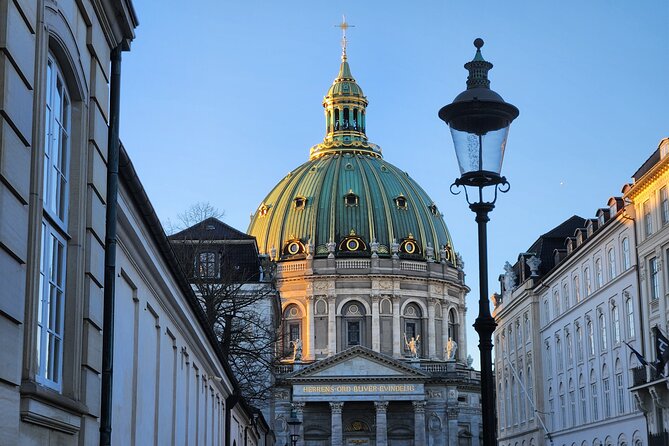
Copenhagen packs royal palaces, naval streets, old squares, and a famous canal into a very walkable center. This two-hour tour gives you a quick but thoughtful introduction, beginning at the Marble Church and ending beside the colorful houses of Nyhavn.
I especially like the small maximum of 12 people and the route’s mix of major sights with quieter corners such as Nyboder and Krusemyntegade. The main tradeoff is pace: most stops last only about five minutes, and entrance to the interiors is not included.
- A compact route from the Marble Church to Nyhavn: You cross much of central Copenhagen without spending time on transport.
- A small group capped at 12 people: That makes it easier to hear the guide and ask questions.
- Royal and naval Copenhagen together: Rosenborg Castle, Christiansborg Palace, and Nyboder show different sides of the city.
- Mostly exterior sightseeing: The focus is on stories, streets, façades, and views rather than paid museum visits.
- A useful finish at Nyhavn: You can continue with coffee, a pastry, lunch, or a canal-side walk.
A smart first look at central Copenhagen
At $28.43 per person, this is priced as an affordable introduction to Copenhagen rather than a full museum tour. You are paying for a live local guide, a planned route, and the context that turns a string of pretty buildings into a readable city.
The route begins at Frederiks Kirke, better known as the Marble Church, and ends at Nyhavn. In between, it covers royal Copenhagen, the old town, a former naval quarter, central squares, and several of the city’s best-known sights. For a first morning in town, that is a useful spread.
The timing is the key thing to understand. Two hours goes quickly, especially with ten listed stops. You will hear short explanations and pause for photographs, but you will not tour the interiors of Rosenborg Castle, Christiansborg Palace, the Round Tower, or Nikolaj Kunsthal. Think of this as an orientation walk with stories, not a museum day.
The small group helps. A maximum of 12 people is far more manageable than a large city walk. You should be able to stay close to the guide, hear the explanations, and ask about places to return to later.
Starting beneath the Marble Church
The meeting point is between the stairs leading down to the Marble Church Metro Station, beside a 7-Eleven. This is practical and easy to find, especially if you are still learning Copenhagen’s streets or arriving by metro.
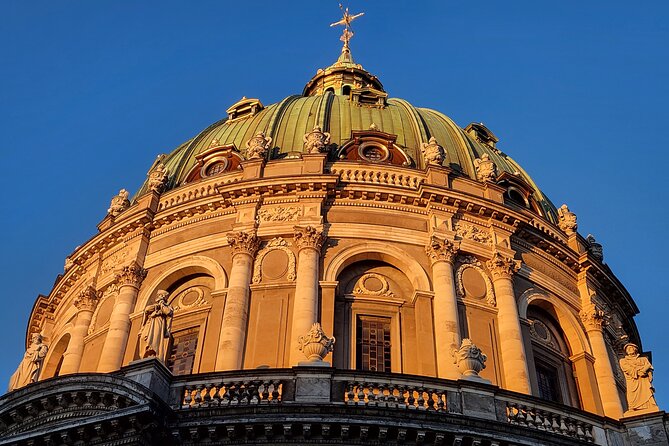
The church itself is a fine opening scene. Frederiks Kirke was built from Norwegian marble and has Scandinavia’s largest dome. Its design was inspired by St. Peter’s Basilica in Rome, and its completion took more than 150 years.
You will have about five minutes here, with free admission listed for the stop. That is enough to take in the dome and the surrounding Frederiksstaden district, but not enough for an extended architectural study. If the church interior matters to you, plan separate time for it.
I like this start because it places you in one of Copenhagen’s grand royal districts right away. The polished architecture gives the guide a natural way to explain Denmark’s monarchy, city planning, and the ambitions of King Christian IV.
More Hidden Gems Tours in Copenhagen
- Copenhagen: Old Canals and Hidden Gems Social Boat Tour
★ 4.7 · 342 reviews - Politically Incorrect Private Hidden Gems Walking Tour
★ 5.0 · 270 reviews - Copenhagen Private Tour: Highlights & Hidden Gems by Bike or Foot
★ 4.5 · 145 reviews
Nyboder and the quieter side of Copenhagen
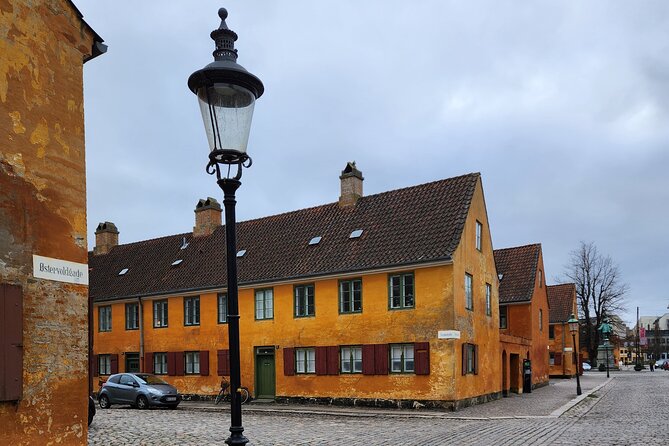
From the Marble Church, the route reaches Nyboder, a residential quarter founded in 1631 by King Christian IV for naval families. Its low historic houses offer a sharp change from the grand scale of the Marble Church and royal palaces.
The walk includes a look toward Nyboder’s Memorial Rooms. Original objects, uniforms, and maritime items help show how sailors and their families lived. Admission is not included, and the stop is described as a brief look through the windows, so you should not expect a full museum visit during the walk.
This is one of the most useful parts of the route for anyone who wants more than postcard Copenhagen. Nyboder connects the city to Denmark’s naval past, and it gives you a sense of ordinary working life alongside royal power.
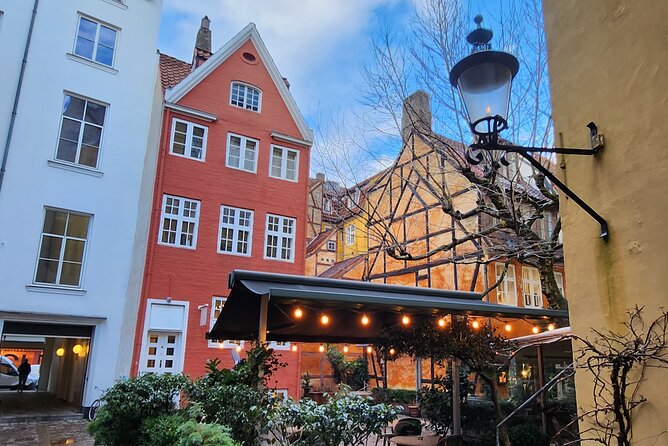
You also pass through Krusemyntegade, a peaceful street lined with colorful historic homes. It is a good place for photographs and a reminder that Copenhagen’s character is often found in small residential lanes, not only at its famous squares.
The possible drawback is that these short stops can feel compressed. The route gives you a taste of Nyboder, but you may want to return on your own if you enjoy old neighborhoods, architecture, or maritime history.
Rosenborg Castle and the King’s Garden
Rosenborg Castle is one of the most recognizable sights on the walk. Built by Christian IV in the early 1600s, it has the pointed towers and storybook appearance many people associate with Danish royal architecture.
The castle sits in Kongens Have, the King’s Garden, Denmark’s oldest royal park. Even if you only view Rosenborg from outside, the garden gives you a pleasant pause from city streets. The contrast is part of the appeal: one moment you are in the old center, and the next you are walking through a calm royal green space.
The tour allows about five minutes here, and admission is not included. That means you will see the building and hear about its royal setting, but you will not visit the rooms or crown jewels as part of this experience.
I would treat this stop as a planning aid. If Rosenborg catches your interest, you can return later with a separate admission ticket and more time. The guide’s introduction can help you decide if that is worth fitting into your schedule.
The Round Tower and Copenhagen’s old town
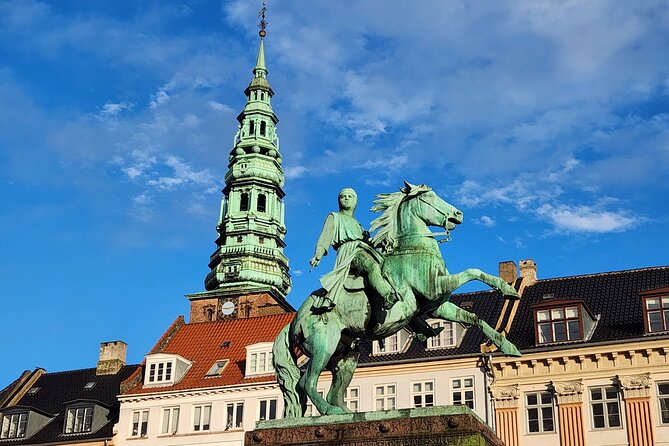
The Round Tower, or Rundetårn, dates from 1642 and was built during Christian IV’s reign. It was created as an observatory and remains one of Copenhagen’s most recognizable structures.
The exterior is the focus here. You will see the spiral form and copper roof, hear about its scientific purpose, and get a view of how the tower fits into the old town skyline. Entrance is not included, so the five-minute stop is not a climb.
That limitation matters if you were hoping for a city view. The tour introduces the tower, but it does not take you to the top. Still, it is a worthwhile stop because it adds science and curiosity to a route otherwise heavy on royal buildings.
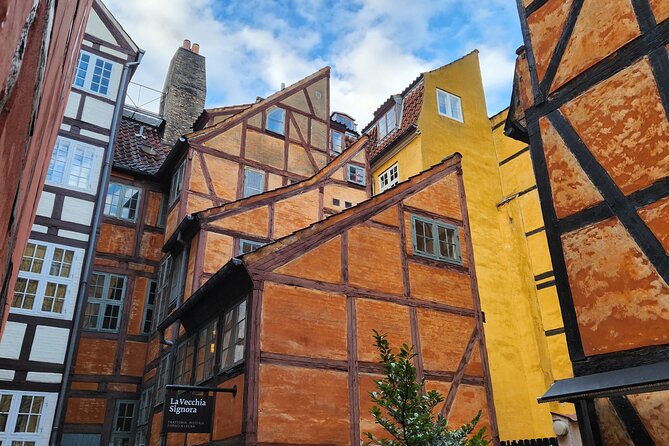
From here, the walk moves through Gråbrødretorv. This leafy square has colorful townhouses, cafés, and restaurants. It feels smaller and more relaxed than the grand open spaces elsewhere on the route, making it a good place to note for a later coffee break.
More Historical Tours in Copenhagen
- Copenhagen: Danish War Museum Entry Ticket
★ 4.7 · 106 reviews - Monstour: A Self-Guided Audio Tour of Danish Folk Legends
★ 4.5 · 19 reviews - Copenhagen: Danish-Jewish History Tour
★ 5.0 · 9 reviews - Afternoon Hamlet Castle Tour to a UNESCO World Heritage Site.
★ 4.5 · 7 reviews
Amagertorv and the old city center
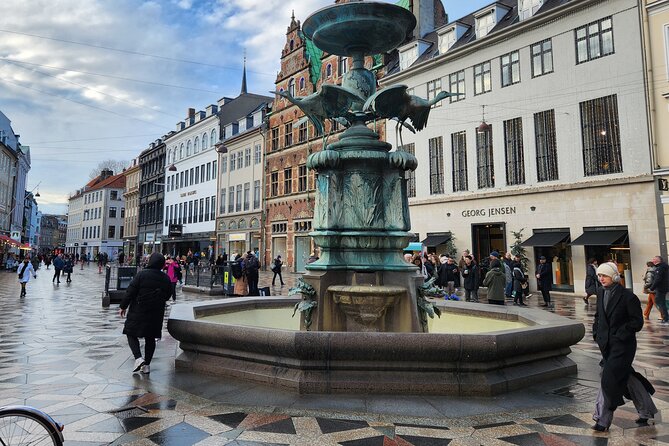
The Stork Fountain at Amagertorv brings you into the center of Strøget, Copenhagen’s major shopping street. The square combines old façades, mosaic pavement, shops, and the constant movement of the city center.
This is less about one building than about understanding how Copenhagen works. Amagertorv is a meeting point and a useful reference on a later walk through the old town. The fountain also gives you an easy photo stop.
The tour does not turn into a shopping excursion, which is a good thing if your priority is history. You will get a short explanation and continue toward Christiansborg. If you want time for shops, cafés, or people-watching, save that for after the tour.
Christiansborg, where palace and parliament meet
Christiansborg Palace is among the most meaningful stops because it links Denmark’s royal past with its current government. The complex houses Parliament, the Supreme Court, and the Royal Reception Rooms, bringing all three branches of government together in one building.
The palace sits on Slotsholmen and has been shaped by more than 800 years of royal foundations, fires, rebuilding, and political change. From outside, you will see the grand façade and copper spire while the guide explains the kings, queens, fires, and political stories tied to the site.
The stop lasts about five minutes, and interior admission is not included. That keeps the tour affordable, but it also means you will need a separate visit if you want the reception rooms, palace interiors, or a closer look at the complex.
For me, this is one of the route’s strongest history stops. It shows that Copenhagen is not just a pretty old town. The same place can represent monarchy, lawmaking, and national government, all within a short walk of shopping streets and canals.
Nikolaj Church and Kongens Nytorv
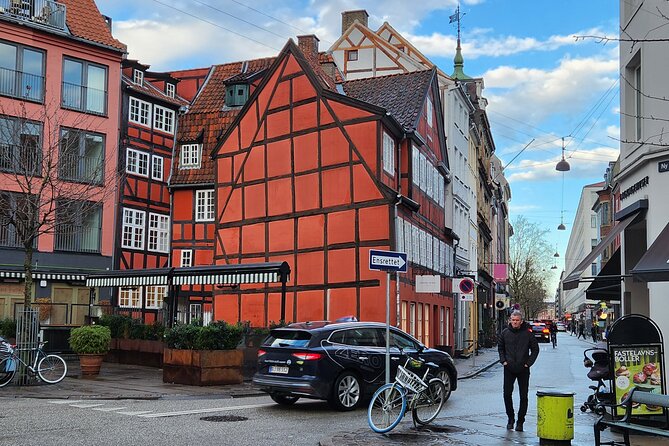
Nikolaj Church, now Nikolaj Kunsthal, began in the 1200s and is recognizable by its tall spire. The tour views it from outside, with no admission included.
This is another brief architectural pause rather than a full gallery visit. The building adds an older religious layer to the route and helps you notice how many different periods are packed into central Copenhagen.
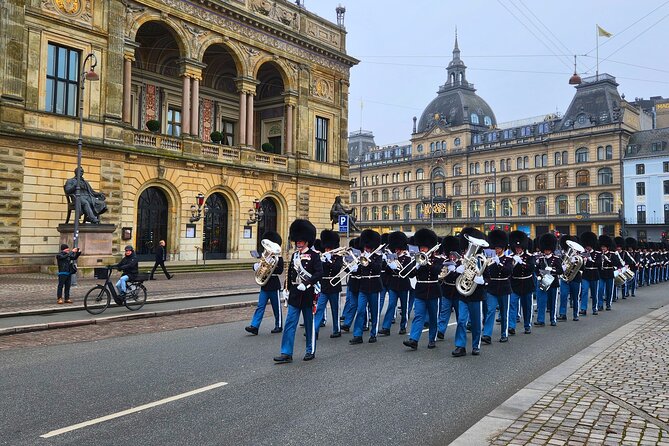
Next comes Kongens Nytorv, the city’s grand central square. The Royal Danish Theatre, Hotel d’Angleterre, and the equestrian statue of King Christian V frame the space. It also acts as a gateway to Nyhavn.
I find this transition useful because the square helps you see the city’s grand public face before the route shifts to the more relaxed waterfront. It is also a handy place to return after the tour, with several major sights close by.
Finishing beside the colored houses of Nyhavn
Nyhavn is the natural finale. Its canal is lined with colorful 17th-century townhouses, old wooden ships, restaurants, and cafés. Once a working trading harbor, it is now Copenhagen’s best-known waterfront setting.
The guide explains the harbor’s connection to sailors, trade, and Hans Christian Andersen, who lived here. You will also hear how the former port changed into one of the city’s most photographed areas.
The tour ends at Nyhavn 28. This is more than a convenient endpoint. You can stay for a coffee or pastry, choose a restaurant, continue along the water, or use Nyhavn as a starting point for your next activity.
Keep your expectations realistic. The walk does not include a canal cruise, and the stop is short. You will see the waterfront and hear its story, but you will need extra time afterward if you want to sit beside the canal and enjoy the atmosphere.
What the price and pace really mean
At $28.43, the tour offers good value if you want orientation and local explanation in a small group. It covers a wide area and gives you enough background to choose which sights deserve a later, longer visit.
The value is weaker if you already know central Copenhagen well or want interiors included. Paid entrances are not part of the experience, and five-minute stops leave little room for detailed photography or quiet exploration.
The pace also requires moderate physical fitness. You will be walking through central streets for roughly two hours, with stops rather than long seated breaks. Wear comfortable shoes, and check the weather before setting out. Copenhagen can be wet and windy, and one guide, Maybee, adapted a difficult day by moving part of the history discussion into a warm coffee lounge. That kind of flexibility can make a real difference in poor weather.
The walk is offered in English. Guide Maybritt has been specifically praised for clear, easy-to-follow English, while other guide feedback highlights the team’s enthusiasm for Copenhagen. Guide assignments can change, so you should not book expecting one particular person.
Who should book this Copenhagen walk?
I would choose this tour for a first visit, a short stay, a cruise stop, or a free morning before visiting museums. It is also a good fit if you like history explained through streets and buildings rather than a long lecture indoors.
Families and couples may appreciate the compact length and small group. The route also suits people who want to see famous sights while picking up a few less obvious places, especially Nyboder and Krusemyntegade.
I would choose something else if your main goal is to enter several attractions. Rosenborg, the Round Tower, Christiansborg, and the Marble Church all deserve more time than this walk can provide. In that case, use the tour as an introduction, then plan separate visits.
Free cancellation is available up to 24 hours before the start time. Changes or cancellations inside that window are not accepted for a refund.
Should you book it?
Book this walk if you want a friendly, efficient introduction to Copenhagen with a maximum of 12 people and a strong mix of royal, naval, religious, and waterfront sights. The route is especially useful at the start of a trip because it leaves you in Nyhavn with clear ideas about where to spend the rest of your day.
Skip it if you want substantial time inside museums or palaces. For most first-time visitors, though, the price, route, and local storytelling make this a sensible way to get your bearings fast without giving up the pleasure of wandering Copenhagen’s old streets.
FAQ
How long does the tour last?
The tour lasts approximately two hours.
What is the price?
The listed price is $28.43 per person.
Where does the tour begin?
It begins at the Marble Church Metro Station, between the stairs leading down to the station and next to a 7-Eleven.
Where does the tour end?
The tour ends at Nyhavn 28, in Copenhagen’s Indre By area.
Is the tour offered in English?
Yes. The tour is offered in English.
How many people can join the tour?
The group has a maximum of 12 people.
Are admission tickets included?
The live local guide is included. Admission is not included for stops such as Nyboder’s Memorial Rooms, Rosenborg Castle, the Round Tower, Christiansborg Palace, or Nikolaj Kunsthal.
Does the tour include a canal cruise?
No. The experience ends at Nyhavn and includes a walk along the waterfront, but a canal cruise is not listed as included.
What physical fitness level is needed?
A moderate level of physical fitness is recommended because this is a walking tour lasting about two hours.
Can I cancel for a full refund?
Yes. You can cancel at least 24 hours before the local start time for a full refund. Cancellations or changes made less than 24 hours before the start time are not accepted for a refund.
More Historical Tours in Denmark
- Copenhagen’s Royal History: A Self-Guided Walking Tour
★ 4.5 · 7 reviews - Private E-Biking Copenhagen History and Nature Adventures
★ 5.0 · 5 reviews - Historical Walking Tour in Aarhus
★ 4.5 · 35 reviews - Time travel in Aarhus
★ 4.5 · 18 reviews
Just added around Copenhagen
- walking tour – Copenhagen and Christiansborg 3 hours★ 4.0 · 7 reviews
- Copenhagen Walking Tour with Food Testing (smorrebrod dish & snap)★ 4.5 · 10 reviews
- The Hunt For The Six Forgotten Giants★ 5.0 · 45 reviews
- The Philosopher’s Last Walk: An audio tour on the life of Søren Kierkegaard★ 4.5 · 5 reviews
- Small Group Guided Food Tour and Street Art Visit to Norrebro★ 5.0 · 9 reviews
- The Six Forgotten Giants Trolls Hunt with Minibus★ 4.5 · 27 reviews
- The Foodie Tour of Copenhagen★ 5.0 · 14 reviews
- The Forgotten Giants Private Tour★ 5.0 · 3 reviews
Historical Tours, compared.

Reindeer Camp and Sami Cultural Tour with Lunch
Read our review →
The Original Stockholm Ghost Walk and Historical Tour – Gamla Stan
Read our review →

Viking History, Runes & Countryside 9h Tour to Sigtuna & Uppsala
Read our review →
Stockholm Viking History Full Day Tour to Sigtuna + Uppsala
Read our review →Browse the lists this tour appears in