
Reviewed · ESCAPE ROOM GAMES
Stavanger: Prison Island Adventure Game
Stavanger’s Prison Island turns a former prison-style setting into a fast-moving team contest, with 46 challenge rooms offering puzzles, obstacles, and timed tasks. You are not locked into one escape-room story. Instead, your team chooses rooms, gives each challenge a try, and builds a score as you go.
I like the freedom to try rooms again when your first attempt goes badly, and I like the wide mix of challenges. One room may reward clear communication, another quick thinking, and another careful movement. The main consideration is that some tasks can be hard to understand at first, especially since the game is played in English and there is no personal guide leading you from room to room.
Key points to know
- Forty-six challenge rooms: You can choose from a large range of tasks instead of following one fixed escape-room plot.
- Best with two to five people: Small teams make it easier for everyone to take part and communicate.
- Repeat attempts are allowed: Use spare time to improve weak scores or revisit a room you nearly solved.
- One hour may not feel like enough: The official duration is 1 to 2.5 hours, and some groups end up staying longer than planned.
- Physical but broadly accessible: Wear comfortable clothes and shoes, while noting that the individual tasks may vary.
- English is the game language: An English or Norwegian host is available, but the challenges themselves are played in English.
Inside Fangene på Fortet in Stavanger
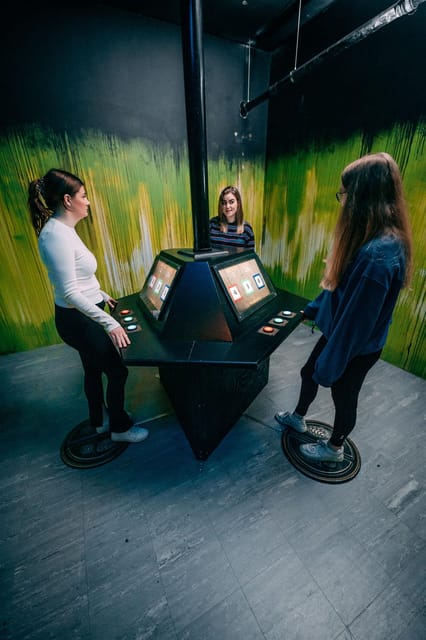
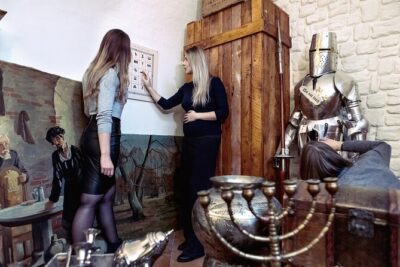
Fangene på Fortet means Prisoners at the Fort, and the attraction uses the idea of a challenge-filled prison rather than a traditional escape room. You and your teammates move between separate rooms, each with its own task and point value.
The format is closer to a television challenge show than a single puzzle box. You do not need to solve one room before moving to the next. That freedom helps keep the pace lively, especially if one task has your group stuck.
The venue provides entry to multiple challenge rooms and a team scorecard. You use the scorecard to track progress and points, giving the session a simple competitive edge without requiring a serious athletic or puzzle background.
You meet at the Fangene på Fortet reception. Plan to arrive 15 minutes before your booking so you have time for the briefing. The host or greeter speaks English or Norwegian, while the game itself is played in English.
More Escape Room Games in Stavanger:
- Da Vinci Escape Room
★ 5.0 · 344 reviews - Outbreak Escape Room
★ 5.0 · 122 reviews - Downfall Spy Mission (Premium Private Escape Room)
★ 5.0 · 79 reviews
How the challenge-room format works
Your team can include two to five people. That is a useful group size. Two people must share every idea and action, while five people can divide up observations and tasks. Larger groups may need to split into separate teams, so check your party size before booking.
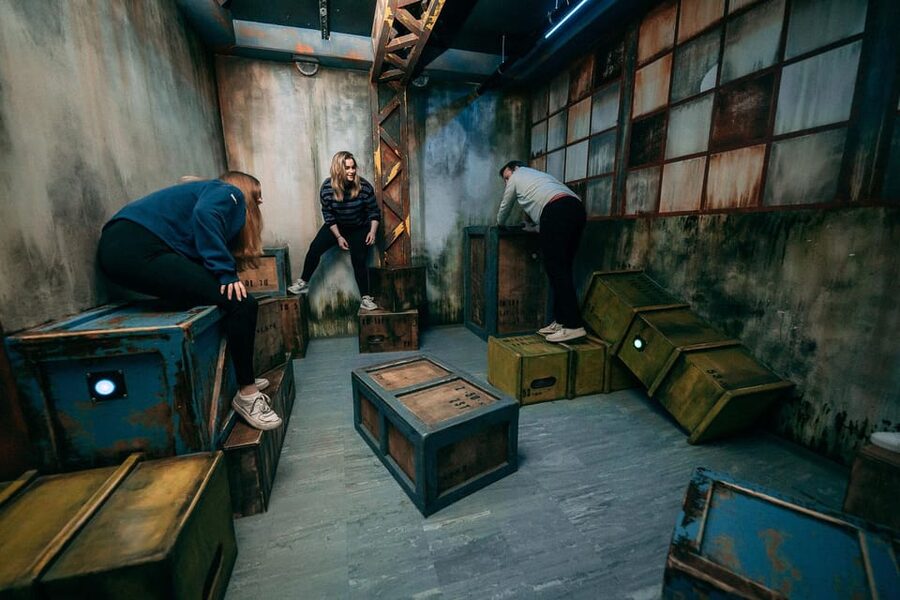
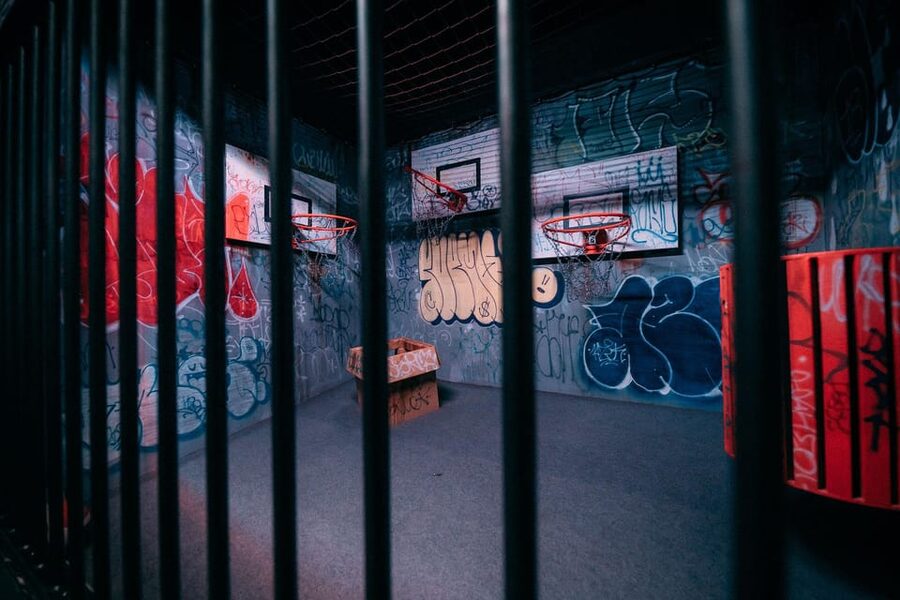
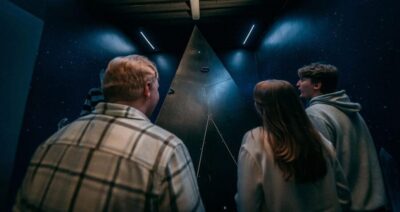
Each room presents a different assignment. The supplied information describes puzzles, obstacles, and tasks rather than specific room themes, so you should expect variety instead of a predictable sequence. Some challenges will likely favor logic, some teamwork, and some quick physical action.
The key point is that you are not simply racing through a hallway. You need to decide how to use your time. If your team cannot make progress in one room, moving on may be smarter than spending the whole session there. If you are close to solving a task, staying with it may produce a better score.
This makes the experience work well for groups with mixed strengths. The person who spots patterns may help with a puzzle, while the most vocal teammate may organize the plan. A quieter member may notice the detail everyone else missed.
The scorecard gives you a reason to keep going after the novelty wears off. Your first goal is to complete as many tasks as possible. After that, you can focus on improving your total or correcting mistakes.
Why repeat attempts change the experience
A strong feature here is the chance to try rooms again. That matters because a first attempt may be lost to confusion, poor communication, or a rushed decision rather than lack of ability.
Several groups have found that a session booked for one hour can stretch past two hours because the repeat option is so tempting. One group of four booked 90 minutes and paid about 103 euros in total, while another booked one hour but stayed for more than two. Your exact cost and available time depend on the booking, but the attraction clearly has enough rooms to keep a group occupied.
A second attempt also gives the activity more value for families with older children and teenagers. You can treat the first run as practice, then return to a task with a clearer plan. That is a better setup than an escape room where one missed clue ends the experience.
The repeat system also helps if your group has different confidence levels. Someone who struggles with the first puzzle may find a later task more approachable. Nobody has to be good at every type of challenge to contribute.
There is one catch. Repeating rooms can reduce the variety you experience, particularly during a short visit. If you have only an hour, you may prefer to sample more rooms rather than chase a higher score.
The right expectations for puzzles and physical tasks
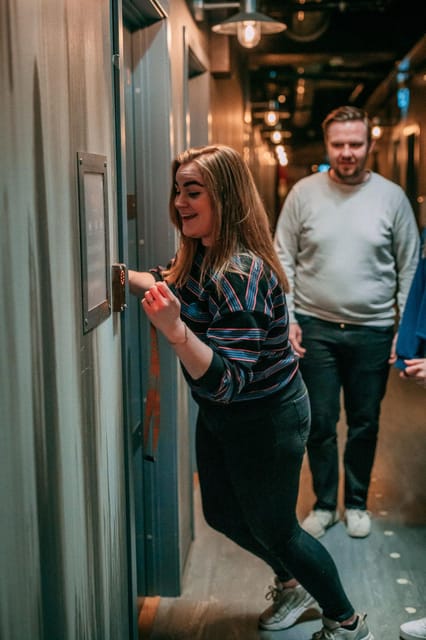
This is an active group activity, not a quiet museum visit. You should wear comfortable clothes and shoes suitable for physical activity. The available information does not specify the exact physical demands of each room, so the safest approach is to expect movement and be ready for tasks that require more than standing and thinking.
At the same time, the game is described as suitable for all ages and skill levels, and the venue is wheelchair accessible. Those points make it more broadly usable than many escape-style activities. Still, wheelchair accessibility does not necessarily mean every individual task will suit every mobility level, so contact the venue directly if your group needs details about particular rooms.
The puzzle difficulty varies. Some rooms may feel immediately clear, while others can take time to understand. One recorded experience found that several tasks were hard to follow and that some seemed not to work properly. I would treat this as a reason to listen carefully during the briefing and ask the host for help if a room seems genuinely unclear.
Because there is no personal guide assigned to your team, you will need to manage your own movement through the attraction. That gives you freedom, but it also means the experience depends on your group’s ability to read instructions, make decisions, and keep the session moving.
A few more Stavanger days worth weighing up
- Stavanger: Scenic Fjord Cruise to Lysefjord and Preikestolen
★ 4.6 · 5,791 reviews - Stavanger: Fjord Cruise to Lysefjord and Pulpit Rock
★ 4.8 · 1,357 reviews - From Stavanger: RIB Tour to Lysefjord
★ 4.9 · 1,288 reviews - From Stavanger: Lysefjord Sightseeing RIB Boat Tour
★ 4.9 · 821 reviews
Communication matters more than cleverness
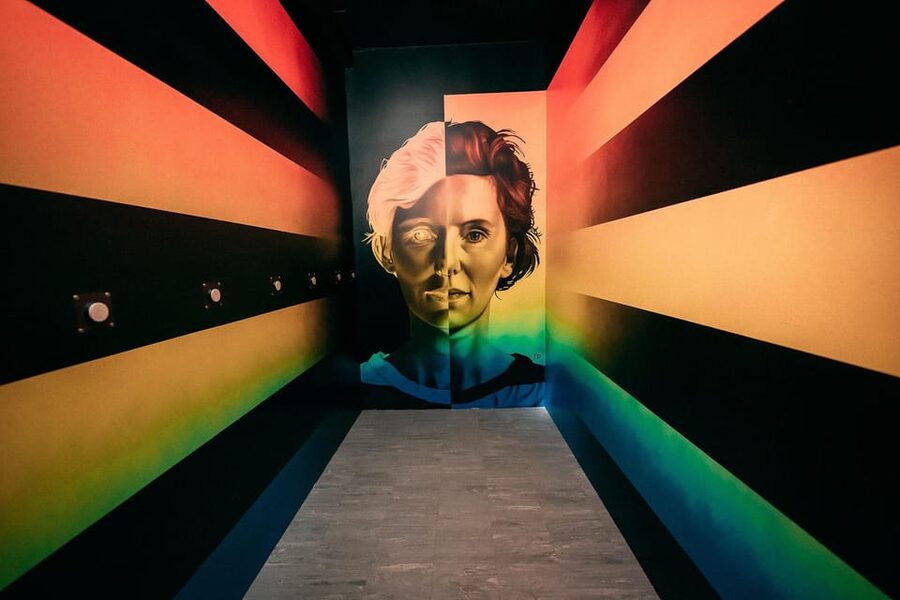
The best reason to book this activity is the way it makes a group work together. You cannot rely on one person to solve everything when several rooms reward different skills.
Before entering a room, agree on a simple plan. Decide who will read or inspect the task, who will test possible solutions, and who will keep track of time. Then change roles from room to room so one person does not dominate.
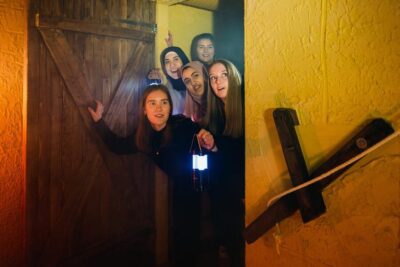
The experience is especially well suited to friends, families, school groups, and corporate teams. A work group can use it as an informal team-building activity without sitting through a lecture about communication. Friends can compete for points. Families can see how well they share decisions under pressure.
The activity may also reveal small group habits. One person may rush ahead, another may wait for instructions, and someone else may have the useful idea but not get heard. That can be amusing, but it can also make the session frustrating if your team does not pause and listen.
I would not book this expecting a calm, individual puzzle session. The value comes from solving problems together. If your group enjoys talking, testing ideas, and laughing at failed attempts, the format should suit you.
How long should you book?
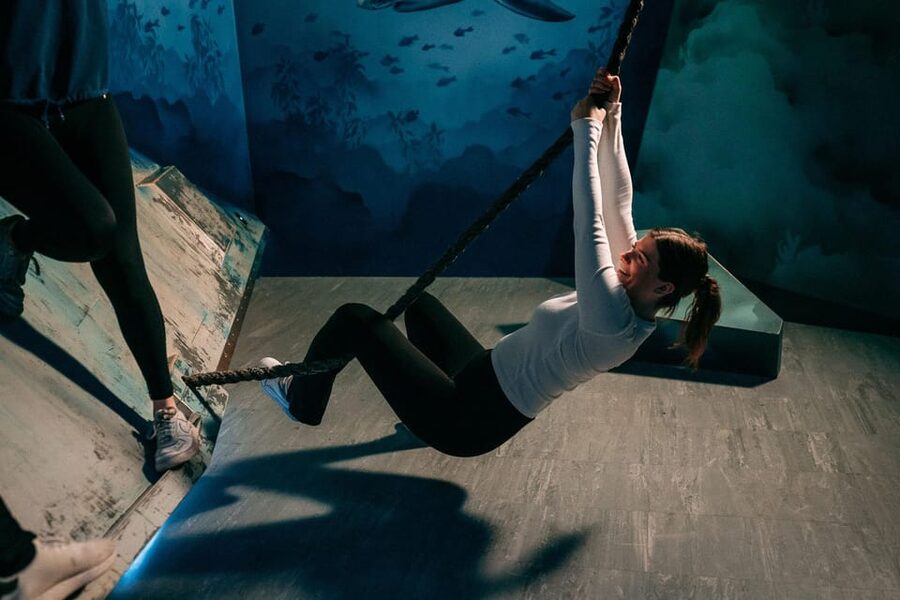
The stated duration is 1 to 2.5 hours, with start times based on availability. That range is important because the experience can work as a short activity or a larger part of your day.
One hour is enough for a taste of the format. You can sample several rooms and get a feel for your team’s strengths. It may feel brief if you want to retry rooms or improve your score.
Around 90 minutes gives you a better balance. You have time to try a range of tasks and return to one or two rooms. A longer session of up to 2.5 hours suits groups that enjoy competition and want to keep working after the first round.
I would choose the length based on your group, not just the advertised minimum. A family with younger children may be satisfied with a shorter session. A corporate team or a group of teenagers may want more time because the repeat attempts add another layer to the game.
The fact that one group booked an hour and stayed for more than two suggests that the attraction can hold attention well beyond a quick stop. Do not assume you will finish early simply because you expect to try only a few rooms.
Price and value at about $30 per person
At roughly $30 per person, this is not a bargain basement activity, but the value depends on how long you play. A one-hour visit costs more per hour than a 90-minute or two-hour session, especially if your team enjoys returning to rooms.
The large number of rooms helps justify the price. You are paying for access to a broad set of challenges rather than one short puzzle sequence. The scorecard and repeat attempts also give the activity some replay value, which is useful if you live nearby or return to Stavanger.
The cost makes the most sense for a group that plans to use its full booking. Arrive early, listen to the briefing, and avoid spending too long stuck on one task. If you leave after a single unsuccessful room, you will not get the best return.
For families, the price can add up quickly, so consider the ages and interests of everyone in your party. For a corporate group, the mix of teamwork and competition may make the cost easier to justify. For friends, it works best when you treat it as the main activity rather than a quick filler between sightseeing stops.
Who will enjoy this most?
I would recommend Prison Island to:
- Friends who enjoy friendly competition and trying to beat a group score
- Families with children or teenagers who like active puzzle games
- Corporate teams seeking a practical group activity
- School groups that can work in small teams
- Visitors who enjoy escape rooms but want more variety and freedom
- People who like physical tasks mixed with logic and communication
The activity is less suitable if you want a quiet, guided experience or a single polished story from beginning to end. You also may not enjoy it if your group dislikes time pressure or gets frustrated when instructions are not instantly clear.
The broad age and skill-level guidance is helpful, but the experience still depends on the people in your team. A patient group will probably get more from it than a group that argues over every decision.
Practical details before you go
Meet at the Fangene på Fortet reception and arrive 15 minutes before your booking. That early arrival matters because you need the briefing before starting, and lost time cuts into your chance to try more rooms.
Wear comfortable clothing and shoes suited to physical activity. Avoid treating this as an outfit-for-dinner stop. The venue is wheelchair accessible, but ask ahead if your group needs information about specific rooms or physical requirements.
The host or greeter can communicate in English or Norwegian. The actual game is played in English, so every member of your team should be comfortable enough with English instructions to understand the tasks.
Transportation to and from the venue is not included. You need to arrange your own way to Fangene på Fortet, and the meeting point is the reception.
You can cancel up to 24 hours in advance for a full refund. The reserve-now-and-pay-later option also lets you hold a place without paying immediately, which is useful when your Stavanger schedule is still changing.
A good choice for a rainy Stavanger day
The attraction offers a useful change from sightseeing. Stavanger has plenty of outdoor appeal, but weather can interfere with plans. A challenge-room activity gives you a structured indoor option that still gets your group moving and talking.
It also fits neatly into a flexible day because the session can run from one to 2.5 hours. You can choose a shorter visit between other plans or build a longer competitive session around it.
The variety keeps the experience from feeling like one repeated puzzle. With dozens of rooms and different difficulty levels, you can choose new tasks on a later visit or return to old ones to improve your score.
The main risk is that your group may not understand a few tasks right away. Do not let one confusing room define the whole visit. Move on, ask the host for clarification when needed, and use the scorecard to keep the mood light.
Should you book Stavanger Prison Island?
Book it if you want an active, social challenge rather than a guided sightseeing stop. The 46-room format, flexible timing, and repeat attempts give you more control than a standard escape room, while the mix of puzzles and physical tasks suits groups with different strengths.
I would especially choose it for friends, families with teenagers, school groups, and corporate teams. Give yourself at least 90 minutes if you want time to sample rooms and retry a few. A one-hour booking works for a quick introduction, but it may feel short once your team gets competitive.
Skip it if your group wants a quiet activity, a personal guide, or a carefully explained single storyline. For everyone else, the price is reasonable when you use the full session, and the chance to try again gives the experience more staying power than many one-shot puzzle attractions.
FAQ
Where does the Prison Island activity take place?
It takes place at Fangene på Fortet in Stavanger, Rogaland, with check-in at the reception.
How much does the activity cost?
The listed price is $30 per person.
How long does the experience last?
The duration is between 1 and 2.5 hours, depending on the selected booking and availability.
How many people can be on one team?
Teams can include between two and five people.
What is included in the price?
Entry to multiple challenge rooms and a team scorecard are included.
Is a personal guide included?
No. A personal guide is not included, although an English or Norwegian host or greeter is available.
What language is the game played in?
The game is played in English. Host or greeter support is available in English and Norwegian.
Is the activity wheelchair accessible?
Yes, the activity is listed as wheelchair accessible.
Can I cancel my booking?
Yes. You can cancel up to 24 hours in advance for a full refund. You can also reserve now and pay later.
Just added around Stavanger
- Stavanger Kjerag Hike with Guide and Transportation★ 5.0 · 9 reviews
- Discover Sensational Stavanger: Self-Guided Audio Tour★ 3.5 · 7 reviews
- The Pulpit Rock Air★ 4.5 · 8 reviews
- Stavanger Private Walking Tour with a Local★ 4.5 · 20 reviews
- Preikestolen | Pulpit Rock – Hike with a local guide★ 5.0 · 84 reviews
- Stavanger: Waterfalls, Caves and Rock Tour By Sea★ 4.0 · 145 reviews
- Guided sunrise hike to Pulpit Rock Preikestolen★ 5.0 · 20 reviews
- Scenic tour to Steinsfjellet, locals at Kringsjå & Rising Tide★ 5.0 · 48 reviews
Escape Room Games, compared.



Fangene på Fortet Bergen: Prison Island Adventure Escapegame
Read our review →Browse the lists this tour appears in