
Reviewed · STREET ART
Street Art and Rooftops of Aarhus, Denmark
Aarhus reveals itself in layers on this small-group street-art walk. You move from the waterfront into the old Latin Quarter, then on to creative spaces, public sculptures, murals, installations, City Hall, and a high viewpoint. The art is not just decoration here. It becomes a way to understand how the city works and how local artists respond to it.
I like two things right away. First, the route gives you a broad look at Aarhus instead of keeping you in one gallery or neighborhood. Second, guides such as Marina bring in stories about buildings, artists, odd local details, and city life, so you get more than a list of artworks. The maximum group size of 10 also leaves room for questions.
The main consideration is the pace and length. The advertised tour lasts about two hours, but some outings have run closer to three, and you will be walking through much of central Aarhus. Bring sensible shoes, and allow extra time if you have a firm schedule afterward.
Key points to know before you book
- A waterfront-to-city route: Start near Aarhus’s harbor, pass through the Latin Quarter, and finish back near the meeting point.
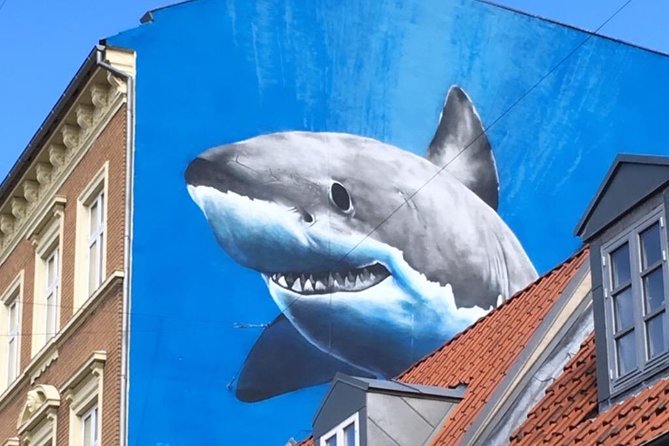
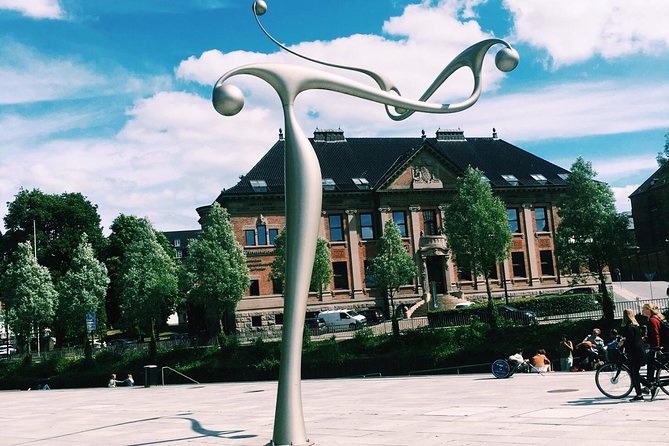
- Art in many forms: Expect murals, graffiti, sculptures, installations, architecture, and public art with local stories attached.
- A rooftop stop: The route includes a creative hangout where freelancers and artists gather for coffee and city views.
- An indoor art setting: An old industrial site has been converted into a modern art space, so this is not an entirely outdoor walk.
- A small group of up to 10: The format makes it easier to ask about techniques, artists, buildings, and Aarhus life.
- A high viewpoint near the end: The final view gives you a useful sense of the city’s layout and harbor setting.
Why street art is a smart way to see Aarhus
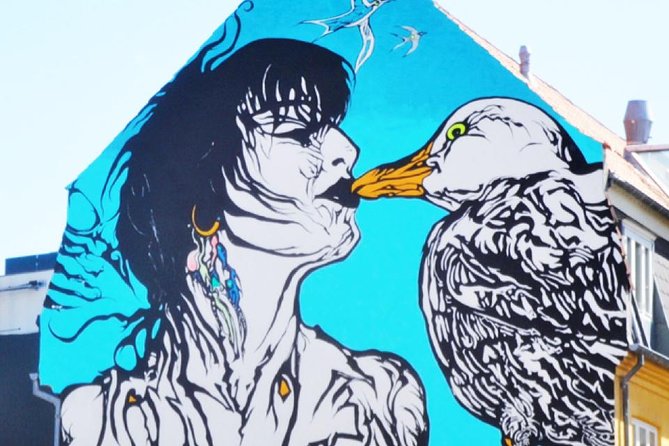
A traditional city tour often moves from monument to monument. This one takes a different route. It uses art in public places as the thread connecting Aarhus’s older streets, working waterfront, newer creative areas, and official center.
That approach suits Aarhus especially well. You are not only looking at a painted wall. You are also asking why it is there, who made it, how the community responded, and what it says about the neighborhood.
The guide’s commentary adds the missing layer. Marina, the guide named most often in the tour feedback, is described as especially passionate about art and Aarhus. Her style appears to combine formal details with amusing stories and small facts about buildings that you could easily miss alone.
You should still keep your expectations realistic. This is not a museum tour with a fixed collection, and public art can change. A mural may be newly finished, altered, or no longer present on a future visit. That changing quality is part of the appeal, but it also means the exact visual mix can vary.
More Street Art Tours in Aarhus:
- 3-Hours Street Art Tour in Aalborg
★ 5.0 · 49 reviews - MACA Museum ‘Banksy & Street Art: The Early Years’ Art Exhibition
★ 4.5 · 32 reviews - The Nørrebro Street Art & Food Tour
★ 4.5 · 11 reviews
From the waterfront into the Latin Quarter
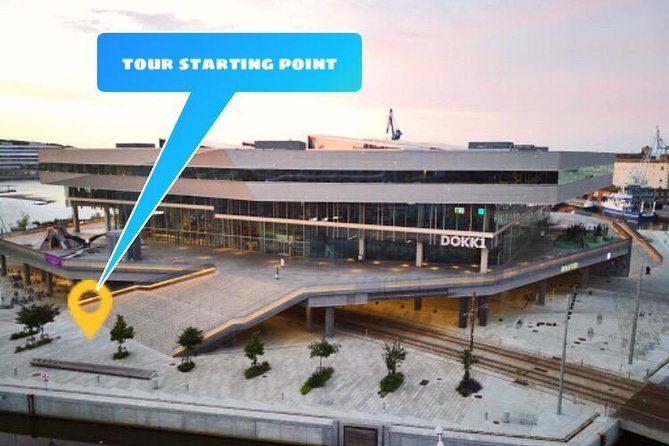
The walk begins around 10 a.m. near the waterfront, with the listed meeting point at Europaplads 3. The tour information also identifies Dokk 1, Aarhus’s city multimedia center at Hack Kampmanns Plads, as the starting area. Check the exact meeting instructions you receive when booking, since both locations are given in the tour details.
Starting by the water makes sense. It gives you an immediate view of Aarhus as a port city before you turn inland toward the older center. You get a sense of how the city has expanded and how newer public spaces sit beside older streets.
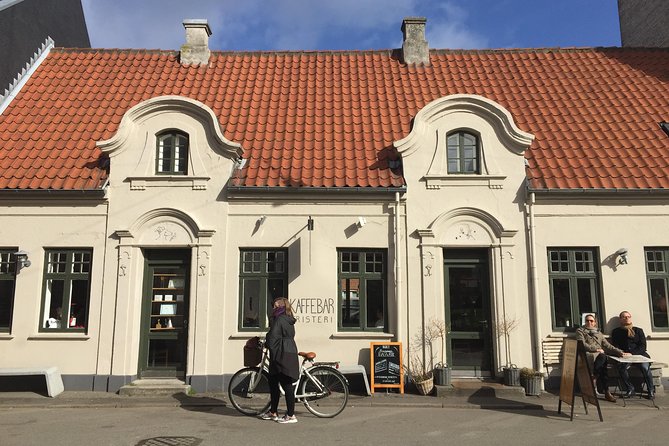
From there, the route continues toward the Latin Quarter. This is one of the most atmospheric parts of central Aarhus, with old houses and narrower streets that feel quite different from the open harbor.
The art here may be integrated into the neighborhood rather than displayed like a formal exhibit. Look up, look down, and check the edges of buildings. The guide may point out details you would otherwise pass without noticing, including the relationship between a work and the architecture around it.
This section is useful early in your trip. You get your bearings, see several central districts, and learn how to move between the waterfront and the old town. If you have just arrived in Aarhus, it can help you understand the city’s shape before exploring on your own.
Creative rooftops and the modern Aarhus scene
One of the tour’s more unusual stops is a rooftop hangout used by freelancers and other creative workers. It offers a different view of the city from the usual church tower or formal lookout.
The value here is not only the height. The stop gives you a glimpse of how Aarhus’s creative culture occupies everyday spaces. Coffee, work, design, public art, and city views all meet in one place.
You will want comfortable shoes and a bit of flexibility. The tour is described as a walking experience, but it does not take place entirely outdoors, and rooftop access can involve changes in surface or level. The information does not promise a specific type of accessibility, so anyone with mobility concerns should ask the provider before booking.
This stop also helps break up the walk. You move from historic streets into a more current part of Aarhus, then continue toward another major art setting. It makes the route feel like a story about the city’s changing identity, not simply a hunt for painted walls.
An old industrial site turned into an art space
The walk continues to a former industrial site that has been turned into a modern art space. This is a strong contrast to the old houses of the Latin Quarter.
Industrial buildings often give public art a different scale. Instead of looking at a small work tucked into a street corner, you may encounter larger installations or a setting where the building itself becomes part of the experience. The guide explains how the site changed and why it attracts people interested in contemporary art.
No entrance ticket is required for the attractions included in the tour. That matters because you can see the space without adding another admission charge to the cost of the outing.
Still, do not treat this as a full museum visit. The tour’s purpose is to connect the art space with the rest of the city, not to give you hours with a single collection. If you want a long, quiet museum session, plan that separately.
The stop is best for people who like context. You are not only viewing modern art. You are also seeing how an older working site can find a new purpose in a city that is changing.
A few more Aarhus days worth weighing up
- Aarhus Walking Tour: From Viking Village to Metropolis
★ 4.8 · 122 reviews - The Ancient Viking Stronghold of Aros: A Self-Guided Audio Tour in Aarhus
★ 4.0 · 36 reviews - Historical Walking Tour in Aarhus
★ 4.5 · 35 reviews - Aarhus Walking Tour: Explore Top Sights & Hidden Gems
★ 4.0 · 34 reviews
City Hall, monuments, and the official center
After the creative and industrial sections, the route reaches Aarhus’s formal city center. Here the focus shifts toward City Hall and the monuments nearby.
This part adds balance. A street-art tour can sometimes feel disconnected from the city’s civic life, but this one brings you back to major public buildings and central landmarks. The guide connects the art and architecture with the broader story of Aarhus.
You can expect a mix of visual styles by this point in the walk. The route includes graffiti, murals, sculptures, and installations, but it also includes buildings and monuments that were designed for official purposes. That contrast is one of the tour’s strengths.
I also like this section because it gives you practical orientation. After seeing the center with a guide, you may find it easier to return later for shopping, museums, cafes, or your own self-guided walk.
The guide’s role matters here. A monument can be easy to photograph and forget. A short story about its meaning, setting, or local connection gives it a reason to stay in your memory.
The final viewpoint and the walk back to the harbor
Near the end, the route climbs to one of Aarhus’s most attractive viewpoints. It opened in 2017 and has already drawn millions of visitors, according to the tour information.
The viewpoint works well as a finale because you can see the city from above after walking through its individual parts. The harbor, central streets, rooftops, and surrounding areas begin to make more sense when viewed together.
This is also the most photo-friendly portion of the tour, so keep your phone or camera ready. The exact weather will affect the view, of course, and a gray day may make the stop less dramatic. The viewpoint remains useful for orientation even when conditions are not perfect.
From there, the walk returns toward the harbor and ends back at the meeting point. Since the tour starts and ends in the same general area, it is convenient for a morning plan in central Aarhus.
Do not schedule a tight lunch reservation immediately afterward. The official duration is about two hours, but some tours have lasted around three hours, especially when the group has many questions or the guide spends extra time on the art.
The guide makes the difference
The experience depends heavily on the person leading it. Marina is the guide most clearly associated with the tour, and the comments about her point to several qualities that matter: strong interest in art, detailed knowledge of Aarhus, warmth, humor, and a willingness to answer questions.
You may also receive a multilingual guide, as the tour can be operated by a guide who speaks more than one language. English is the offered language, so confirm your booking details if language is important to you.
A good guide is especially valuable on a street-art tour because public works do not always explain themselves. You may see a mural but miss the artist’s intention, local references, or the community story behind it. The guide helps you read the work without turning the walk into an academic lecture.
The small group supports that style. With a maximum of 10 people, you can ask about an artist, a technique, a building, or a neighborhood without having to shout across a crowd. If you prefer an easygoing conversation to a large organized group, this format should suit you.
Price, timing, and practical value
The price is $63.20 per person. That is not the cheapest way to spend two hours in Aarhus, but the value depends on how you use the tour.
You are paying for a professional guide, a planned route, cultural interpretation, and access to several art-focused locations without separate entry tickets. You also get a city overview that would take time to assemble on your own.
For an art lover, the price is easier to justify because the tour focuses on more than general sightseeing. You are being shown styles, artists, public installations, and creative spaces that you might not locate by simply following a standard city map.
For a visitor who only wants a quick list of major monuments, the tour may feel less targeted. Its appeal comes from stories, connections, and less obvious corners of the city.
The tour is often booked about 34 days ahead, so reserve early if your dates are fixed. You receive confirmation at booking, and free cancellation is available when you cancel at least 24 hours before the start time. Changes or cancellations inside that window are not accepted for a refund.
Food and drinks are not included. Plan breakfast beforehand or carry water, especially if you expect the walk to run longer than two hours.
Cruise ship passengers should provide the ship name, docking time, disembarkation time, and re-boarding time when booking. That information helps the operator judge whether the schedule works, but you should still allow a comfortable margin for returning to the ship.
Who will enjoy this walk most
I would choose this tour if you like art but also want a useful introduction to Aarhus. It suits solo visitors, couples, and small groups who prefer conversation and local interpretation over a large set-piece tour.
It is also a good fit if you have already seen the obvious sights and want a different angle. The route includes architecture, city monuments, old streets, public art, and a high viewpoint, so you are not looking at one type of work for two hours.
Families with older children may enjoy it if they are comfortable walking and listening. The material appears to suit curious people who like stories and visual details, though the tour is not presented as a children’s program.
Art specialists may find the route rewarding for the chance to see public works in their original setting. At the same time, the tour is accessible to beginners because the guide explains what you are seeing and places it in a city context.
You should think twice if you dislike walking, need a fully indoor activity, or have only a narrow time slot. The route includes outdoor streets, a rooftop setting, and a viewpoint, and the actual duration may stretch beyond the advertised two hours.
Should you book Street Art and Rooftops of Aarhus?
Book it if you want Aarhus explained through its art, not just photographed from the outside. The combination of waterfront, Latin Quarter, rooftop creative space, industrial art venue, City Hall, and final viewpoint gives you a solid first look at the city.
The tour is particularly worth considering early in your stay. You can use the route to decide which neighborhoods, buildings, or art spaces deserve a second visit.
Skip it if your priority is a formal museum tour, a short monument checklist, or a guaranteed two-hour finish. But if you enjoy public art, local stories, and a guide who can connect small details to the larger city, this is a strong use of a morning in Aarhus.
With a 4.9 rating and 98 percent recommendation rate, it has a strong record. More important for your decision, the format is clear: small group, English-language commentary, no attraction tickets to buy, and a guide-led walk with plenty of room for questions.
FAQ
How long does the Street Art and Rooftops of Aarhus tour last?
The advertised duration is approximately two hours. Some outings have lasted closer to three hours, so allow extra time if you have plans afterward.
What time does the tour start?
The tour starts at 10:00 a.m.
Where does the tour meet?
The listed meeting point is Europaplads 3, 8000 Aarhus, Denmark. The tour information also identifies Dokk 1 at Hack Kampmanns Plads 2 as the starting area, so check the exact meeting instructions in your booking confirmation.
Where does the tour end?
The activity ends back at the meeting point.
Is the tour offered in English?
Yes. English is the listed tour language. The activity may also be operated by a multilingual guide.
How large is the group?
The group has a maximum of 10 people.
Are entrance tickets included?
No entry tickets are needed for the attractions visited on this tour. Food and drinks are not included.
Can I cancel for a full refund?
Yes, if you cancel at least 24 hours before the local start time. Cancellations or changes made less than 24 hours before the start are not refunded or accepted.
Just added around Aarhus
- Aarhus Self guided Mystery hunt Sabotage in Danish★ 4.5 · 3 reviews
- Surprise Walk of Aarhus with a Local★ 4.5 · 4 reviews
- Time travel in Aarhus★ 4.5 · 18 reviews
- Explore Aarhus in 60 minutes with a Local★ 4.0 · 14 reviews
- Aarhus: Surprise City Walking Tour with Local Guide★ 4.2 · 9 reviews
- Aarhus: Express Walk with a Local in 60 minutes★ 4.8 · 3 reviews
- Aarhus: Insta-Perfect Walk with a Local★ 4.9 · 4 reviews
- Aarhus Craft BeerWalk★ 4.7 · 19 reviews
Street Art, compared.


MACA Museum ‘Banksy & Street Art: The Early Years’ Art Exhibition
Read our review →

Small Group Guided Food Tour and Street Art Visit to Norrebro
Read our review →Browse the lists this tour appears in