
Reviewed · FOOD & DRINK
The Art of Baking Danish Pastry
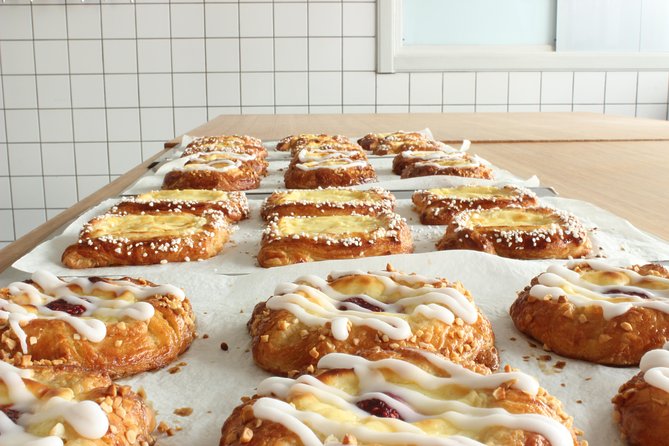
The best part of this Copenhagen experience is simple: you do not just eat a Danish pastry, you learn how to make one. Chef Frederik Terrible leads a small class through dough work, shaping, fillings, and baking, then sends the recipes so you can repeat the lesson at home.
I like the hands-on format and the generous amount of food. You make enough pastries to fill boxes, not just one sample each. I also like the early start, since you finish with most of the day free. The main caution is pace: Frederik explains things clearly, but he can talk quickly, so listen closely and ask questions as you work.
Key points to know
- Small class of up to 12 people: You get room to work and a real chance to ask the chef for help.
- Three and a half hours of active baking: This is a working class, not a short demonstration.
- Named pastries include cinnamon rolls, Spandauer, and poppy and sesame twists: You learn several Danish favorites in one morning.
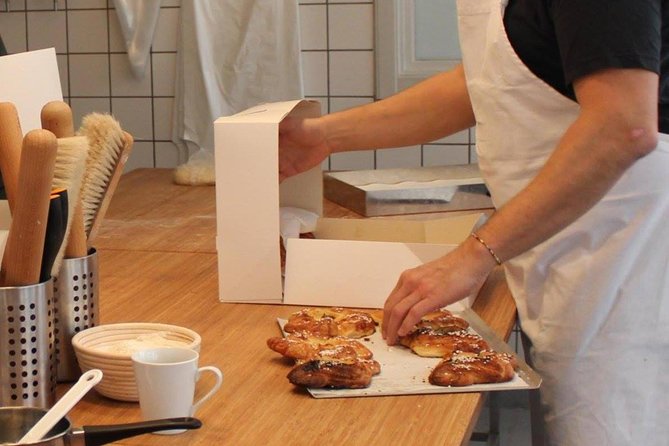
- Expect a very large haul: Many participants leave with around a dozen pastries each, and sometimes two full boxes.
- Recipes arrive by email: You can try the techniques again after returning home.
- Frederiksberg location: The class begins at Grundtvigsvej 10A at 9:00 a.m., near public transportation.
Why this pastry class is worth your Copenhagen morning
Copenhagen has no shortage of bakeries, but eating a pastry tells you only part of the story. This class shows you why Danish pastry has its particular texture, shape, and richness. You work with the dough instead of simply admiring it behind a glass counter.
That makes the experience a good match for food lovers who want a little more context with breakfast. You learn practical skills such as kneading, rolling, folding, filling, and shaping. The class is not aimed only at experienced bakers. Beginners can follow the process, and the chef checks on the work as you go.
The small-group limit of 12 matters here. Pastry dough needs attention at several points, and a large demonstration class would make it harder to see what is happening at your own station. With fewer people, you have a better chance of getting a correction before a small mistake becomes a crooked twist or a poorly sealed pastry.
Frederik’s teaching style appears to mix firm instruction with humor. That combination suits a practical baking lesson. You need clear directions, but three and a half hours of technical work can feel long if the room is too serious. Here, the pace keeps the morning moving.
More Food Tours in Copenhagen
- The Copenhagen Culinary Experience Food Tour
★ 5.0 · 959 reviews - Copenhagen Culinary Food Tour with 6+ Tastings of Danish Classics
★ 5.0 · 541 reviews - Politically Incorrect Beer Walk
★ 5.0 · 516 reviews
Starting at 9:00 a.m. in Frederiksberg
You meet at Grundtvigsvej 10A in Frederiksberg, west of Copenhagen’s city center. The class starts at 9:00 a.m., so plan your route before breakfast and leave time for a little uncertainty.
Public transportation serves the area. One participant used bus 31 and found the location manageable with some walking. The entrance can be confusing because map apps may point you toward the wrong side of the street. Check the address carefully and look around the building rather than assuming the first doorway you see is correct.
This is one place where arriving early pays off. The class moves through several stages, and arriving late means you may need to catch up while everyone else is already handling dough. One late arrival was able to join in without losing the lesson, but you should not count on that being easy.
Frederiksberg gives the activity a local neighborhood setting rather than a central tourist meeting point. You will need to make your own way there, but the tradeoff is a class away from the main sightseeing circuit. Since the activity ends back at the meeting point, you can return toward central Copenhagen afterward or continue exploring the area.
Learning the dough before shaping pastries
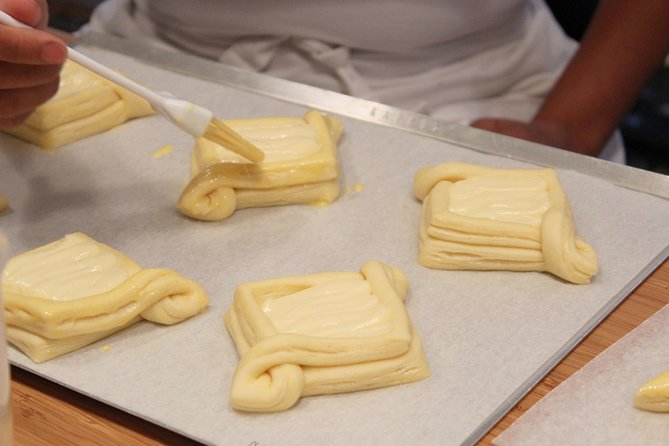
The morning begins with a demonstration of the core techniques. Kneading, rolling, and folding may sound basic, but they control the finished pastry. The dough must be handled in the right way so the pastries bake with the intended texture.
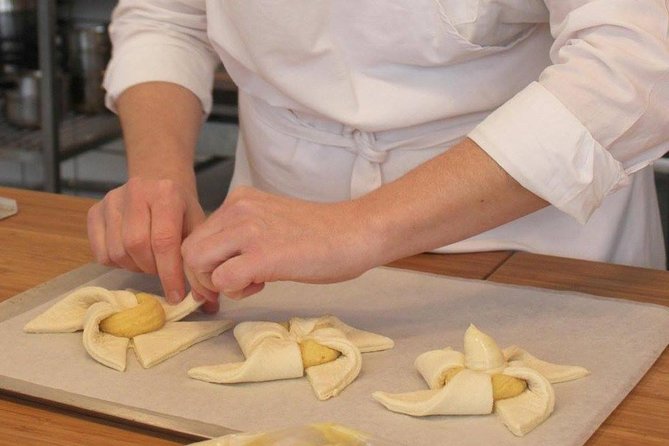
Frederik demonstrates first, then you work through the process yourself. The value is in the correction. A recipe can tell you what to do, but a pastry chef can point out when dough is too thick, when a fold is uneven, or when a shape needs a little more care.
You should expect to stay busy. This is not a class where you sit back for an hour and watch someone else do the work. The hands-on format is one of its strongest points, but it also means you need to pay attention while working. The chef may explain the next step while you are still finishing the current one.
If you are new to baking, do not be embarrassed about asking questions. Several parts of pastry making happen quickly, and the most useful moment to ask is while you are shaping the dough. If Frederik speaks faster than you can follow, stop and clarify before moving on.
Making cinnamon rolls, Spandauer, and twists

The named menu includes three familiar Danish pastry styles. First are cinnamon rolls, called kanelsnegle, a classic that needs no introduction once the scent reaches the room. You learn how the dough and cinnamon filling come together before forming the rolls for baking.
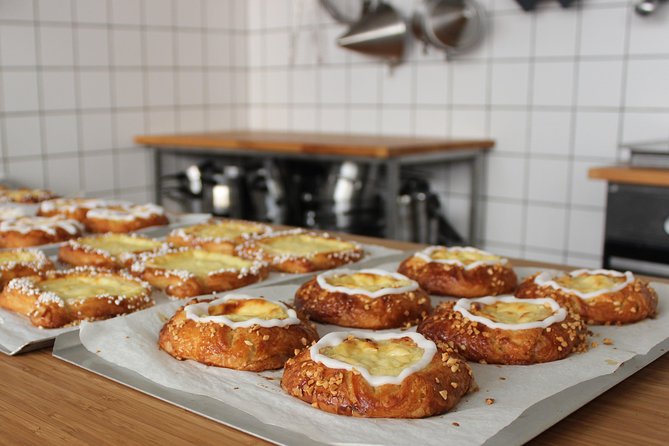
The class also makes Spandauer, a Danish pastry with a shaped center and filling. This is a useful contrast to the cinnamon roll because it asks you to pay attention to form as well as flavor. Small differences in folding and shaping change how the finished pastry looks.
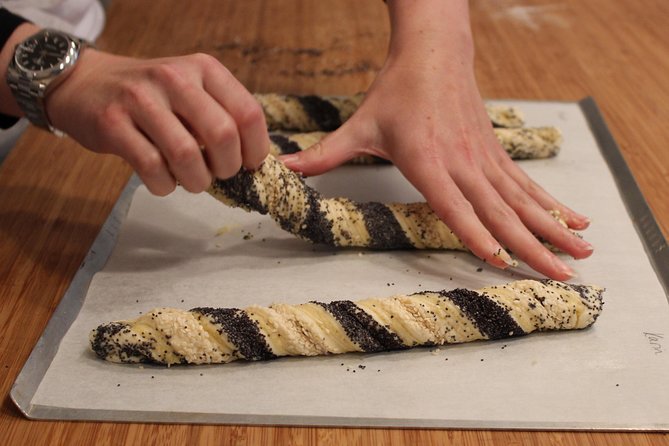
The third named item is the poppy seed and sesame seed twist, called frøsnapper. This was a favorite for some participants, especially because of its savory-sweet seed topping and marzipan filling. It gives you a pastry with a different profile from the cinnamon rolls and makes the final box more varied.
The class information describes several pastries, and individual accounts refer to making four types. The exact mix may shift during the year, so do not assume every session uses an identical menu. The three named pastries give you a clear idea of the style and range.
A useful detail is the volume. Some sessions produce about 12 pastries per person, while one group counted 36 pastries across three people. That is far more than you are likely to eat during the morning. Bring a plan for sharing, or be ready to carry the pastries around Copenhagen.
More Cooking Classes in Copenhagen:
- Bergen: Guided Fishing Tour with Outdoor Cooking
★ 4.8 · 96 reviews - Half Day Fishing and Outdoor Cooking in Bergen
★ 5.0 · 37 reviews - Traditional Persian Cooking Class in Stockholm with a Local
★ 5.0 · 20 reviews
Coffee, tea, and the reward at the end
Once the pastries are baked, you sit down with tea and coffee and taste what you made. This is a small but important part of the experience. You can compare the pastries while they are fresh and see how the techniques affected the final result.
Do not arrive expecting to eat a full breakfast before the class and then finish everything you bake. You will produce a large quantity, and the cooking itself takes time. A light breakfast may make more sense, especially if you want to taste the finished pastries without feeling overfull.
The baked goods are also part of the value. At $117.23 per person, the class costs more than buying breakfast at a bakery, but it offers three and a half hours of instruction, food, drinks, and recipes. If you value the lesson and plan to use the recipes again, the price is easier to justify.
The take-home quantity changes the calculation. You are not paying for a single pastry and a quick photo. You leave with boxes of food to share with family, friends, or fellow members of your group. One practical warning: doing the class on the day before your flight may leave you with more pastry than you can reasonably eat or transport.
A teacher who keeps the class moving
Frederik Terrible is central to the experience. His role is not limited to showing the finished product. He organizes the steps, explains the process, checks individual work, and helps when someone gets stuck.
The teaching style is described as patient, funny, and firm. That is a useful balance for a class with several stages. You want enough freedom to shape the pastry yourself, but you also need someone to stop you before a mistake ruins a batch.
The class is well prepared, with ingredients and stages arranged so beginners can keep up. That preparation reduces wasted time. You are likely to be working for most of the session rather than waiting for the chef to finish a long demonstration.
At the same time, the pace is not slow. The instructions can come quickly, particularly when the group is moving from one pastry to the next. I would keep your hands clear, watch the demonstration first, and ask for help as soon as you are unsure. This is more useful than trying to copy the last step from someone beside you.
What you take home after 3.5 hours
The recipes are emailed after the class, giving you a practical record of what you made. That follow-up adds real value because pastry techniques are easy to forget once you return to a normal kitchen.
The recipes also let you repeat the experience without guessing at quantities or steps. One participant who already works as a chef found the recipes useful enough to adapt at home. You do not need professional skills to benefit, but experienced home bakers may appreciate the chance to compare methods.
The food itself can fill two boxes. That sounds appealing until you remember that pastries take up space and have a limited fresh life. If you are staying in Copenhagen for several days, book earlier in your trip so you can enjoy them during the rest of your visit.
Booking this on the last morning can still work if you can carry the pastries or share them quickly. It is less convenient before a flight, especially if your luggage is already packed. The best timing depends on what you plan to do with the food afterward.
Who will enjoy this class most
I would choose this for:
- Couples looking for a shared morning activity
- Families with older children who can follow a hands-on lesson
- Home bakers who want Danish recipes and technique tips
- Food lovers who prefer making something to simply tasting it
- Visitors who want a social activity with a small international group
- Anyone with a free morning and room to carry pastries afterward
It is less suited to someone who wants a relaxed, passive breakfast or a short introduction lasting under an hour. The class is active and fairly fast. You should be ready to stand, handle dough, follow instructions, and keep working through the full session.
It also may not fit neatly into a tightly packed sightseeing day. The start is early, the activity lasts about three and a half hours, and the location is outside central Copenhagen. In return, you get a focused morning and still have the afternoon available.
Booking details and practical cautions
The cost is $117.23 per person, and the class is offered in English. Confirmation is sent within 48 hours, subject to availability. The experience requires a minimum number of participants, so a cancellation for that reason leads to a choice of another date or activity, or a full refund.
Your own cancellation policy is strict. The booking is non-refundable and cannot be changed for any reason, so confirm your Copenhagen dates before paying.
The activity is often reserved about 70 days ahead. That does not guarantee every date will sell out, but it is a useful sign that you should not leave this until the last minute if the schedule matters to you.
Should you book The Art of Baking Danish Pastry?
Yes, if you want an active food experience and you like the idea of leaving Copenhagen with both new skills and a box of pastries. The small group, clear instruction, large output, and emailed recipes make this more substantial than a standard tasting.
Book it early in your stay if possible. That gives you time to eat the pastries, share them, and still enjoy the recipes as a useful souvenir. Just check the Frederiksberg route, arrive before 9:00 a.m., and do not plan a heavy breakfast beforehand.
Skip it if you dislike structured classes, have no way to carry food, or need a flexible booking. For everyone else, this is a practical, memorable way to spend a Copenhagen morning, especially if cinnamon rolls and fresh pastry sound better than another rushed museum visit.
FAQ
Where does the Danish pastry class begin?
The meeting point is Grundtvigsvej 10A, 1864 Frederiksberg, Denmark. The class ends back at the same meeting point.
What time does the class start?
The class starts at 9:00 a.m.
How long does the experience last?
The class lasts approximately 3 hours and 30 minutes.
How many people can join the class?
The maximum group size is 12 participants.
Which pastries will I make?
The named pastries are cinnamon rolls, called kanelsnegle, Spandauer Danish pastry, and poppy seed and sesame seed twists, called frøsnapper. The selection may include additional pastries.
Are food and drinks included?
Tea and coffee are served after the pastries finish baking, and you can taste what you made.
Will I receive the recipes afterward?
Yes. The recipes used in the class are emailed to you after the experience.
Just added around Copenhagen
- walking tour – Copenhagen and Christiansborg 3 hours★ 4.0 · 7 reviews
- The Hunt For The Six Forgotten Giants★ 5.0 · 45 reviews
- Copenhagen Walking Tour with Food Testing (smorrebrod dish & snap)★ 4.5 · 10 reviews
- The Six Forgotten Giants Trolls Hunt with Minibus★ 4.5 · 27 reviews
- The Philosopher’s Last Walk: An audio tour on the life of Søren Kierkegaard★ 4.5 · 5 reviews
- Small Group Guided Food Tour and Street Art Visit to Norrebro★ 5.0 · 9 reviews
- The Foodie Tour of Copenhagen★ 5.0 · 14 reviews
- The Forgotten Giants Private Tour★ 5.0 · 3 reviews
Food & Drink, compared.
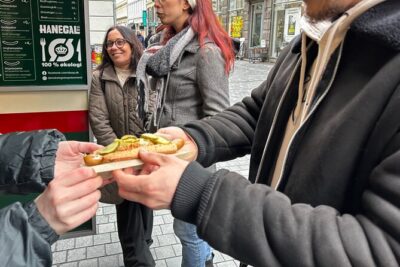
Copenhagen Culinary Food Tour with 6+ Tastings of Danish Classics
Read our review →
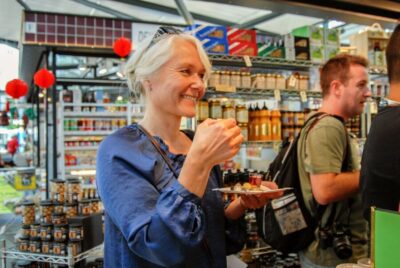
Copenhagen’s oldest and original food tour (Est. 2011).
Read our review →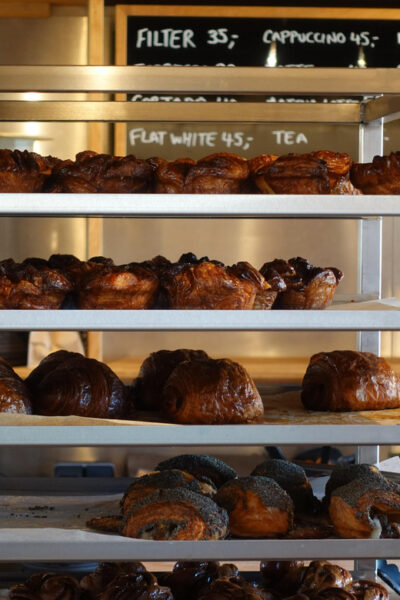

Skip the Line: Disgusting Food Museum Entrance Ticket
Read our review →Browse the lists this tour appears in