Reviewed · VIKING EXPERIENCES
Stockholm Old Town and the Viking Museum, a Small Group Walking Tour
Stockholm’s past comes into focus on this three-hour walk, which links Gamla Stan’s medieval lanes and royal landmarks with a ferry ride and the Viking Museum on Djurgården. It is not just a parade of pretty buildings. The guide connects Sweden’s rise, wars, religion, monarchy, parliament, and modern society in one clear route.
I like the small maximum of 10 people, which gives the walk a personal feel, and I like that the ferry to Djurgården and Viking Museum entry are included. Guide Bengt Nykvist is singled out for his warm manner, strong command of English, and ability to explain both Stockholm and the museum.
The main consideration is pace. You cover a lot of ground in about three hours, with much of the tour outdoors and on foot. At $118.96 per person, this is best value if you want a guide-led introduction rather than a quick photo walk.
Key points at a glance
- Start with Stockholm’s earliest story: Begin around Riddarholmen, where the guide explains the city’s origins and the first written mention of Stockholm in 1252.
- Follow the power of Gustav Vasa: Learn how one king helped make Sweden sovereign and changed the country from Catholicism to Lutheran Protestantism.
- See the Royal Palace with political context: The palace stop ties Karl XII, Russia, the age of enlightenment, and Gustav III to the city around you.
- Ride the Djurgårdsfärjan: The short ferry crossing is part of the tour, not an extra transport cost.
- Visit the Viking Museum without buying a separate ticket: Your guide introduces the museum and its theatrical, story-based presentation.
- Stay on Djurgården afterward: The Vasa Museum, ABBA Museum, Gröna Lund, and Skansen are nearby, but their admission is not included.
Why this walk is different from a standard Old Town tour
Many Stockholm walks stay within Gamla Stan and end after a few squares and palace views. This one uses the Old Town as the first chapter, then crosses the water to Djurgården for a museum visit. That change of setting gives the experience a useful shape: outdoor city history first, indoor Viking storytelling later.
The route also reaches beyond medieval Stockholm. You move from ice age geology and first settlements to Birger Jarl, Gustav Vasa, the Swedish parliament, royal power, war with Russia, industrial growth, and the creation of a welfare state. I like that broad reach because it helps you understand why Stockholm looks and functions as it does today.
The group limit is 10 people. That is small enough for questions and conversation without the formal feel of a large walking party. One booking even resulted in a private tour, though you should treat that as a possibility rather than a promise. The tour is offered in English.
More Museum Visits in Stockholm
- Stockholm: Skansen Open-Air Museum Admission Ticket
★ 4.5 · 3,427 reviews - Stockholm Pass: Save up to 50% – Includes Vasa Museum Ticket
★ 4.1 · 2,392 reviews - Stockholm: Nobel Prize Museum and Exhibition Entry Ticket
★ 4.3 · 994 reviews
Riddarholmen begins the story
Meet at Gamla Stan Metro station, inside or below ground, in front of the Pressbyrån kiosk. The supplied meeting address is Munkbrogatan 8, Stockholm, and the start time is 10:00 am, so allow enough time to find the correct spot beneath the station.
The first stop is a historical marker on Riddarholmen, the Knights Island. Here, the guide sets out the early story of Sweden, beginning with the ice age and moving toward the first settlements on the islands. This is a useful opening because Stockholm’s position on water is not just scenic. The city grew from its location between Lake Mälaren and the Baltic Sea.
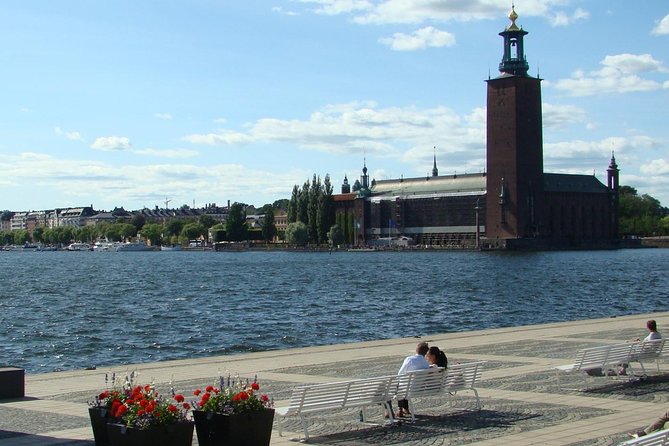
From Riddarholmen, you get a view toward Lake Mälaren and Stockholm City Hall. The stop lasts about 15 minutes and is free. You are outside, so bring clothing suited to the weather and shoes you can use comfortably on pavement.
A short walk brings you to Riddarholmen Church and a statue of Birger Jarl, the presumed founder of Stockholm. The guide explains that Stockholm first appeared in a surviving written record in 1252, when Birger Jarl signed the document. This five-minute stop is brief, but it gives the city a firm date and a human figure to attach to its beginnings.
Gustav Vasa, nobles, and the making of Sweden
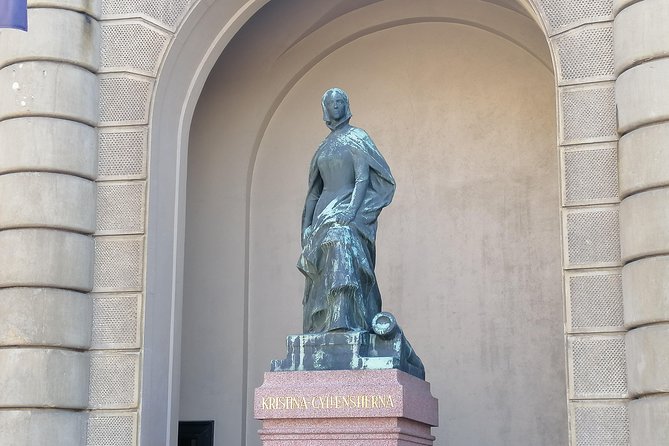
At Riddarhuset, the House of Nobility, the tour turns to Gustav Vasa. A statue of Gustav looks on as the guide explains his role in Swedish independence and political change.
The story includes the Stockholm Bloodbath, when Gustav’s father and many other noblemen were killed. Gustav then led an uprising against Denmark’s control of Sweden. In 1523 he entered Stockholm, and Sweden became a sovereign state. The guide also links Gustav to the country’s shift from Catholicism to Lutheran Protestantism.
This is one of the more useful parts of the walk because it explains how a statue, a building, and a national identity connect. You are not simply hearing that Gustav Vasa was important. You are hearing why his name appears so often in Swedish history.
At Vasabron, the focus moves to Gustav Vasa’s heirs and heiresses. The guide discusses Gustav II Adolf, one of Sweden’s great warrior kings, and the period when Swedish possessions reached around much of the Baltic Sea. The Vasa ship was built during his reign, a fact that will interest anyone planning to visit the Vasa Museum later in the day.
The tour does not enter Riddarhuset or Riddarholmen Church, based on the route provided. These are exterior explanations, so you are paying for interpretation and context rather than interior access at these stops.
Parliament and the Royal Palace
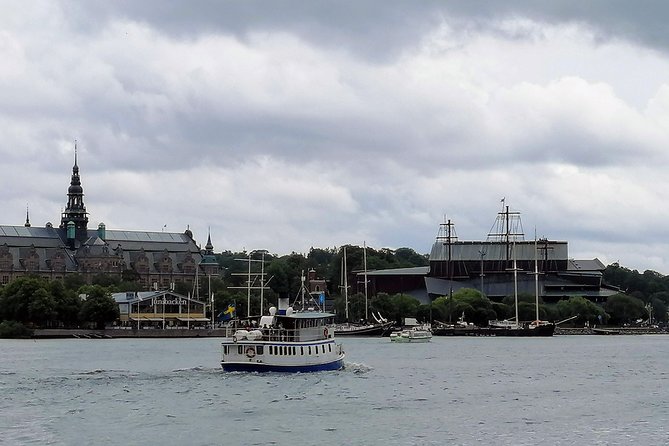
Outside the Parliament Building, or Riksdagshuset, you get a compact lesson in Swedish political development. The older Riksdag of the Estates brought together nobles, clergy, burghers, and peasants in separate groups before they met the king. That system ended in 1866, when a two-chamber parliament was introduced.
Equal voting rights did not arrive at once. The first elections with general suffrage took place in 1921, after a long political struggle led by liberals and socialists. I find this stop valuable because it keeps the tour from becoming only a royal story. Sweden’s institutions developed through conflict and negotiation, not just royal decisions.
At the Royal Palace, the route reaches Lejonbacken on the north side. The guide uses the statue of Karl XII, whose hand points east, to explain Sweden’s rivalry with Russia. Karl XII and the Carolean army won early battles but were defeated by Peter the Great at Poltava in 1709. That defeat ended Sweden’s dreams of dominating Northern Europe.
The palace stop also introduces the age of enlightenment and Gustav III. His interests in theatre, science, and the arts helped shape Sweden’s cultural life. You will not tour the palace interiors on this walk, so anyone wanting royal rooms, collections, or ceremony should plan a separate palace visit.
More Old Town Tours in Stockholm
- Walking Tour of Stockholm Old Town
★ 5.0 · 1,175 reviews - The Original Stockholm Ghost Walk and Historical Tour – Gamla Stan
★ 4.5 · 1,165 reviews - Stockholm: Old Town Walking Tour with Local Guide
★ 4.7 · 719 reviews - Walking Tour of Stockholm’s Old Town, Gamla Stan
★ 5.0 · 451 reviews
Tiny statues and the heart of Gamla Stan
One of the tour’s smallest stops is Järnpojken, described as Sweden’s smallest and nicest statue. The five-minute visit is a pleasant change of scale after kings, palaces, and national institutions. It is also the kind of detail that can be easy to miss if you explore Old Town without a guide.
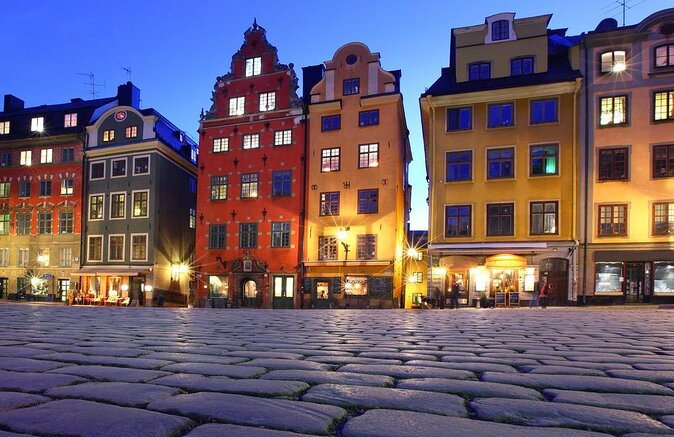
At Stortorget, the central square, the guide points out the Nobel Prize Museum. The Swedish Royal Academies designate winners in major fields of science and art. The square is one of Stockholm’s best-known spaces, but the explanation gives it more than a postcard role.
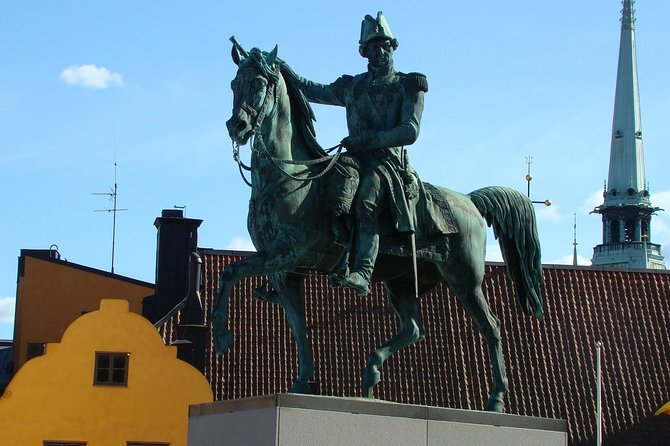
The tour continues beneath the statue of Carl XIV Johan. He was the first of the Bernadotte kings, brought from France to Sweden in the early 19th century with hopes of recovering territory lost to Russia. Instead, he focused on diplomacy, infrastructure, and education. Sweden later celebrated 200 years of peace in 2014.
That final Old Town section brings the story toward the present. Industrial growth, natural resources, Swedish inventions, and business leaders helped form the base of the modern welfare state. The walking route is therefore less about memorizing dates than seeing how military power gave way to diplomacy, education, industry, and social development.
The ferry to Djurgården adds real value
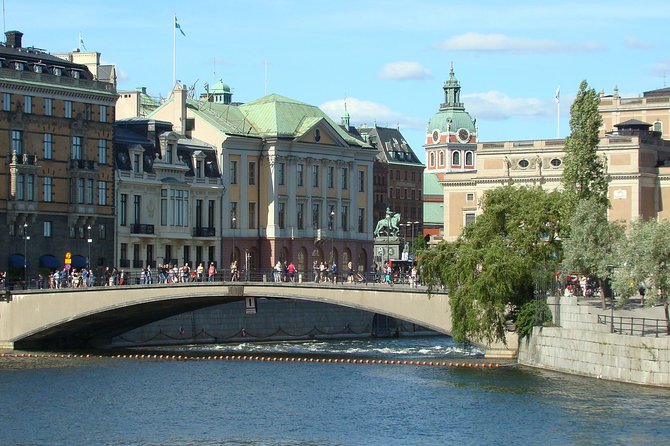
At Skeppsbron 26, you board the Djurgårdsfärjan for the crossing to Djurgården. The ferry ride takes about 10 minutes and is included in the tour. This is a practical benefit, but it is also a welcome break from walking.
The crossing changes your view of Stockholm. Instead of looking up at palace walls and old facades, you see the city from the water. Since the tour began by Lake Mälaren and Riddarholmen, the ferry also reinforces the central role of waterways in Stockholm’s layout.
The tour ends at the Viking Museum on Djurgårdsstrand 15. The ferry is a public form of transport, so conditions can vary, but the experience details identify the crossing as part of the planned route. From the museum, you can return to the city center by ferry or tram after the visit.
What to expect at the Viking Museum
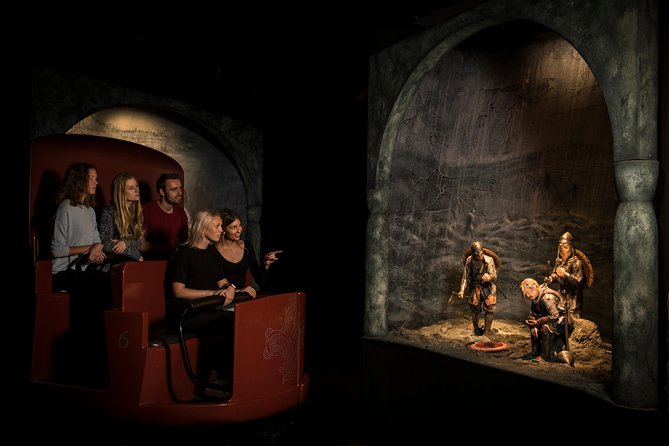
Admission to the Viking Museum is included, and the guide gives you an introduction before showing you some of its attractions. The museum is described as a small-scale experience that combines historical information with performing arts.
That format matters. You should not expect a large museum collection on the scale of the Vasa Museum. Instead, the Viking Museum uses theatrical elements alongside material from historical specialists. The result is intended to make the Viking period easier to follow through a mix of story and fact.
The museum portion is scheduled for about 30 minutes, and this is the end of the guided tour. You are welcome to stay inside afterward. That gives you some flexibility, although the tour information does not specify how much extra time the guide will spend with you once the formal visit ends.
If you are planning a full afternoon on Djurgården, this location is convenient. The ABBA Museum, Vasa Museum, Gröna Lund amusement park, and Skansen are all on the island. None is included, and each requires its own admission. The Viking Museum visit can therefore act as either your final stop or the first part of a longer museum day.
Is $118.96 a fair price?
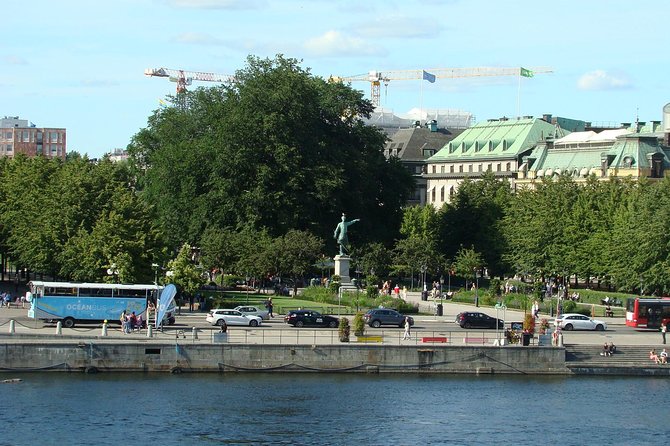
At $118.96 per person, this is not a budget walking tour. The value depends on how much structure and interpretation you want.
You receive about three hours with an English-speaking guide, a small group capped at 10, the ferry crossing, and Viking Museum admission. You also avoid arranging the Old Town route, researching the monuments, buying the museum ticket separately, and working out how to connect Gamla Stan with Djurgården.
The strongest value is the guide’s historical explanation. Bengt Nykvist is specifically identified as a guide who shares information in clear English and creates a friendly atmosphere. If you want to understand Sweden rather than simply photograph its landmarks, that personal explanation is the main reason to pay more.
The price is harder to justify if you prefer to walk at your own pace, spend long periods inside museums, or visit the Royal Palace and other attractions on your own schedule. You also need to remember that the tour does not include the other Djurgården attractions.
Who will enjoy this tour most?
I would choose this experience for a first visit to Stockholm, especially if you want a quick but serious orientation. It suits you if you enjoy national history, royal stories, politics, and city views, and if you prefer hearing the connections from a local guide instead of reading plaques as you go.
It also works well for anyone with only part of a day available. The start is in Gamla Stan and the finish is on Djurgården, where you can continue sightseeing. The route gives you a useful first look at both areas without requiring a separate transfer between them.
The tour is less suitable if you have limited walking ability or dislike outdoor sightseeing. A moderate level of physical fitness is recommended, and the experience includes a substantial walking route followed by a ferry transfer. The information does not give an exact walking distance or specify accessibility arrangements, so ask the provider if those details matter to you.
The group size should appeal to solo visitors and couples who want conversation with a guide. Since one reported booking was a one-person group, a private-feeling experience is possible, but the tour can also run with up to 10 people.
Practical details before you book
The tour starts at 10:00 am and lasts approximately three hours. Confirmation is provided at booking, and the activity is near public transportation.
Wear shoes suitable for walking and bring a layer for the ferry and outdoor stops. You will spend much of the time outside, and several explanations take place beside streets, squares, bridges, and palace grounds.
The tour accepts mobile tickets. It is free to cancel up to 24 hours before the start time for a full refund. Cancellations or changes made less than 24 hours before the start are not refunded or accepted, and the cut-off uses Stockholm local time.
Should you book Stockholm Old Town and the Viking Museum?
Book it if you want a guided story of Sweden, not just a checklist of Old Town sights. The route has a strong arc, from Riddarholmen and Birger Jarl to Gustav Vasa, the parliament, Karl XII, modern Sweden, and the Viking Museum.
I would especially recommend it to first-time visitors who value a small group, a friendly English-speaking guide, and a simple connection between Gamla Stan and Djurgården. Bengt Nykvist’s personal style is a reason to feel confident about the guiding side of the experience.
Skip it if your priority is maximum free time, indoor museum hours, or a low-cost self-guided walk. At nearly $119, it needs to replace several separate plans to feel worthwhile. For the right visitor, though, the included ferry and Viking Museum make the route practical, while the historical storytelling gives Stockholm a clearer shape.
FAQ
How long does the Stockholm Old Town and Viking Museum tour last?
The tour lasts approximately three hours, including the Old Town walk, ferry crossing, and Viking Museum visit.
Where does the tour start?
The tour starts at Gamla Stan Metro station, inside or below ground, in front of the Pressbyrån kiosk. The supplied meeting address is Munkbrogatan 8, 111 27 Stockholm.
What time does the tour start?
The scheduled start time is 10:00 am.
How large is the tour group?
The tour has a maximum of 10 travelers.
Is the ferry to Djurgården included?
Yes. The Djurgårdsfärjan crossing from Skeppsbron 26 to Djurgården is included.
Is Viking Museum admission included?
Yes. Entry to the Viking Museum is included, and the guide introduces the museum and some of its attractions.
Can I stay at the Viking Museum after the guided tour?
Yes. The guided portion ends at the museum, but you are welcome to remain there afterward.
Can I cancel for a full refund?
Yes, if you cancel at least 24 hours before the experience begins. Cancellations or changes made less than 24 hours before the start time are not refunded or accepted.
More Viking Experiences in Sweden
- From Stockholm: Viking Culture Guided Tour with Transfer
★ 4.5 · 81 reviews - 3-4h Viking History Short Day Tour from Stockholm
★ 5.0 · 41 reviews - Stockholm: Sigtuna and Uppsala Viking History Day Tour
★ 4.7 · 41 reviews - From Stockholm: Viking Culture and Heritage Small Group Tour
★ 4.7 · 29 reviews
More Viking Experiences in Stockholm
- Stockholm: The Viking Museum Exhibition and Viking Ride
★ 4.5 · 667 reviews - Entrance ticket to The Viking Museum
★ 4.0 · 301 reviews - From Stockholm: Uppsala and Sigtuna Viking Sites Tour
★ 4.7 · 157 reviews - Full Day Viking Tour with Fika Swedish Coffee Break
★ 4.5 · 81 reviews
Just added around Stockholm
- Traditional Persian Cooking Class in Stockholm with a Local★ 5.0 · 20 reviews
- Stockholm Top attractions all-inclusive Gran Tour Winter Edition★ 5.0 · 6 reviews
- Airport Limousine Transfer: Arlanda Airport to Stockholm City 1-7 Passengers★ 4.0 · 5 reviews
- Scandinavian Art, Architecture and Design Tour in Stockholm★ 4.5 · 11 reviews
- Wolf and Wildlife Tracking in Sweden★ 5.0 · 9 reviews
- Walking Tour of Stockholm’s City Center★ 4.5 · 26 reviews
- Stockholm: Sunset Hike in Tyresta National Park with Meal★ 5.0 · 79 reviews
- Private Tour: Swedish History Day Trip to World Heritage Candidate Markim-Orkesta from Stockholm★ 5.0 · 8 reviews
Viking Experiences, compared.

Viking Village, Nærøyfjord Cruise & Flåm Railway
Read our review →


Guided tour – Viking Village, Nærøyfjord Cruise and Flåm Railway
Read our review →
Full-Day; Castle, Palace, Cathedral & Viking ships Tour
Read our review →
Viking History, Runes & Countryside 9h Tour to Sigtuna & Uppsala
Read our review →