
Reviewed · OLD TOWN WALKING TOURS
Gothenburg: Haga Old Town Walking Tour
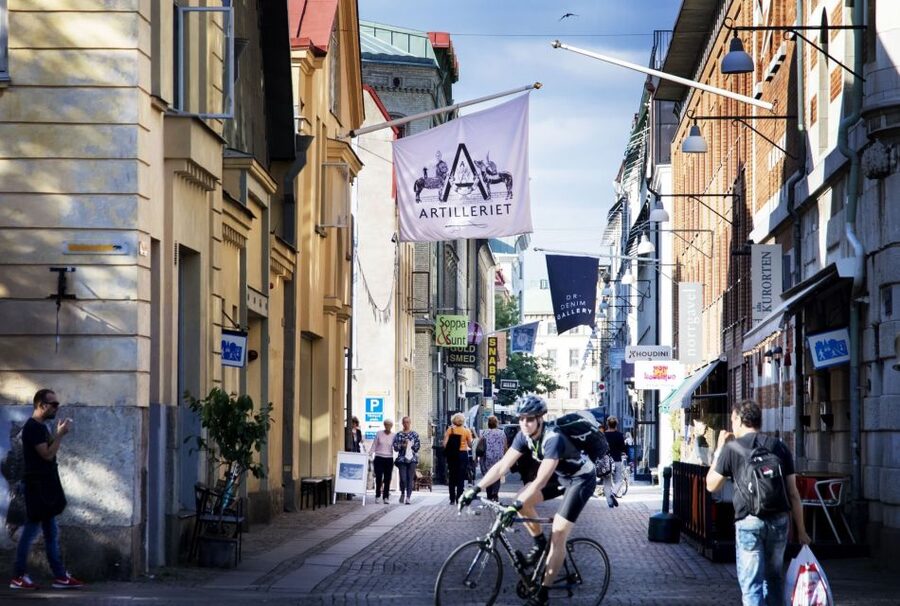
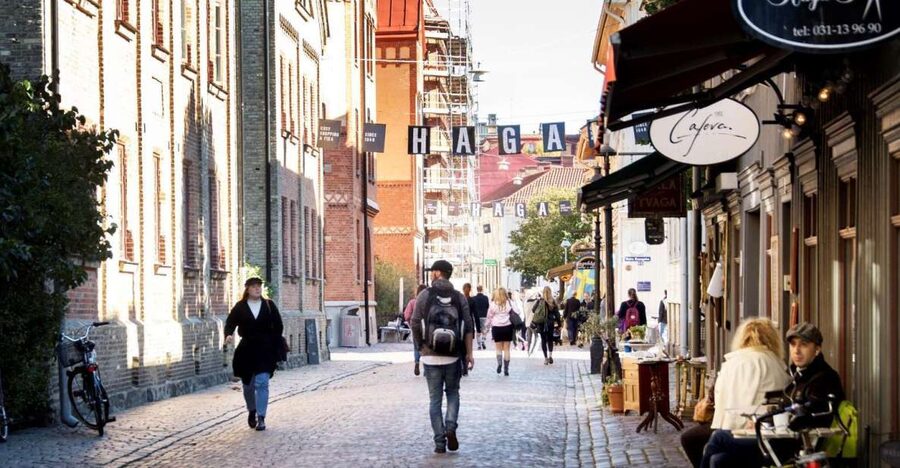
Haga is Gothenburg’s most atmospheric old neighborhood, where 19th-century wooden houses line the pedestrian street Haga Nygata and cafés tempt you with coffee and cake. The district once had a rough reputation, but today it is one of the city’s most pleasant places to stroll.
I like the way this walk connects Haga’s buildings with Gothenburg’s wider story. I also like the local angle: guides such as Sarah, Sara, Kalina, and Luka add tips about food, Swedish life, and what to see next. The main consideration is the steep climb to Skansen Kronan, which can be difficult for anyone with limited mobility.
Key points to know before you book
- Haga’s wooden houses: See the distinctive landshövdingehus style, with a brick ground floor and wooden upper floors.
- A small-group feel: Departures may be intimate, and some have operated as one-to-one walks.
- More than architecture: Expect local folklore, Gothenburg history, Swedish customs, and personal stories.
- Skansen Kronan viewpoint: The route includes a steep hill to the old fort and broad views over Gothenburg.
- Useful food tips: Guides often point out cafés, restaurants, delicatessens, and places for coffee and cake.
- Flexible booking: The tour is in English, wheelchair accessible in principle, and cancellable up to 24 hours before departure.
Haga Nygata and Gothenburg’s wooden face
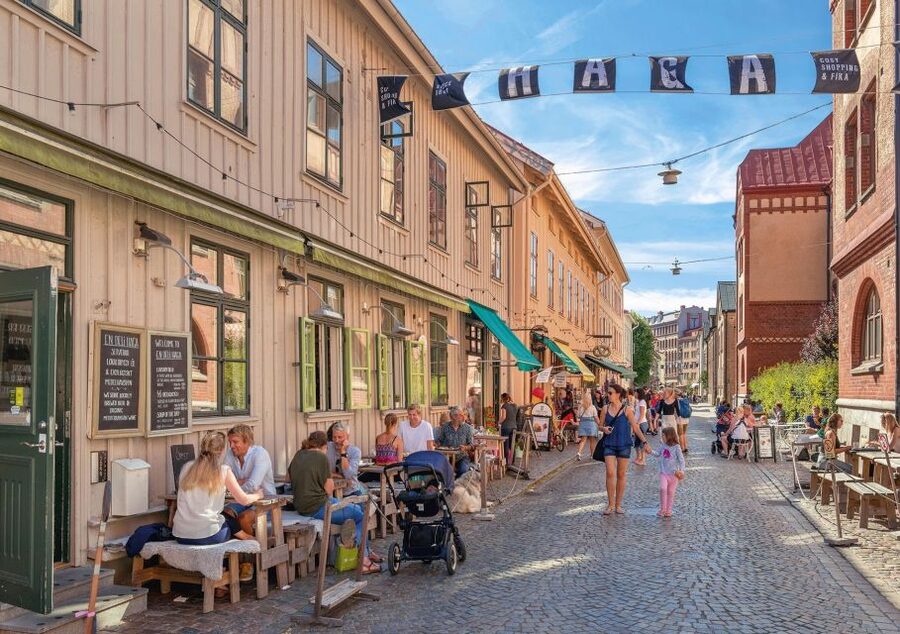
Haga is one of Gothenburg’s oldest neighborhoods, dating from the mid-17th century. Its main pedestrian street, Haga Nygata, gives you the quick visual introduction: old wooden façades, small shops, cafés, and a relaxed street made for walking rather than rushing.
The architecture is especially worth your attention. Many buildings use the Gothenburg style called landshövdingehus, with a ground floor built in brick and upper floors made from wood. This combination was practical as well as attractive. The brick helped reduce fire risk, while the wooden upper levels kept construction costs down.
Your guide points out individual houses and explains why they matter. That is more useful than simply walking past a row of pretty façades. You begin to see Haga as a working neighborhood shaped by housing needs, fire concerns, social class, and changing city policies.
The street is now lined with cafés, delicatessens, and independent shops. It can feel polished and fashionable, but the guide helps you look beyond the current café culture. Haga was once considered a poor and somewhat seedy part of Gothenburg. Its present-day charm comes from the survival and restoration of older buildings, along with the neighborhood’s shift into one of the city’s most popular areas.
I like this contrast. The walk does not treat Haga as a frozen old-town display. It presents a district that changed, declined, and found a new role.
More Walking Tours in Gothenburg
- Gothenburg Private Walking Tour with a Local
★ 4.0 · 36 reviews - Make Your Own Tour – Guided Walking Tour
★ 4.5 · 32 reviews - Best of Gothenburg: Private Walking Tour with a Local
★ 4.6 · 24 reviews
From slum district to popular café quarter
The most useful part of the tour is the explanation of Haga’s changing character. A quick visit can leave you with the idea that this has always been a charming shopping street. It has not.
In the 19th century, Haga had a rough reputation and was associated with poverty. The old houses were connected to ordinary working life, not just postcard views. Hearing that background gives the neighborhood more weight. You can appreciate the wooden buildings without pretending the past was picturesque.
The guides also connect Haga with Gothenburg as a whole. Several tours have included broader stories about the city’s development, not just information about one street. This makes the walk a useful first activity in Gothenburg, especially if you have only a short stay and want help deciding what to see afterward.
The strongest guides bring in modern Swedish life as well. Conversations may touch on education, parental leave, everyday customs, and what it is like to live in Sweden. These subjects are not a formal lecture, but they add a human layer to the history.
That personal exchange is one reason the tour can feel different from a large city walk. Guides such as Kalina and Sarah have been praised for answering questions at length, giving recommendations based on your interests, and adjusting the pace when the group is small. If you enjoy asking about local life, you should make use of that chance.
The church meeting point and the walk’s pace

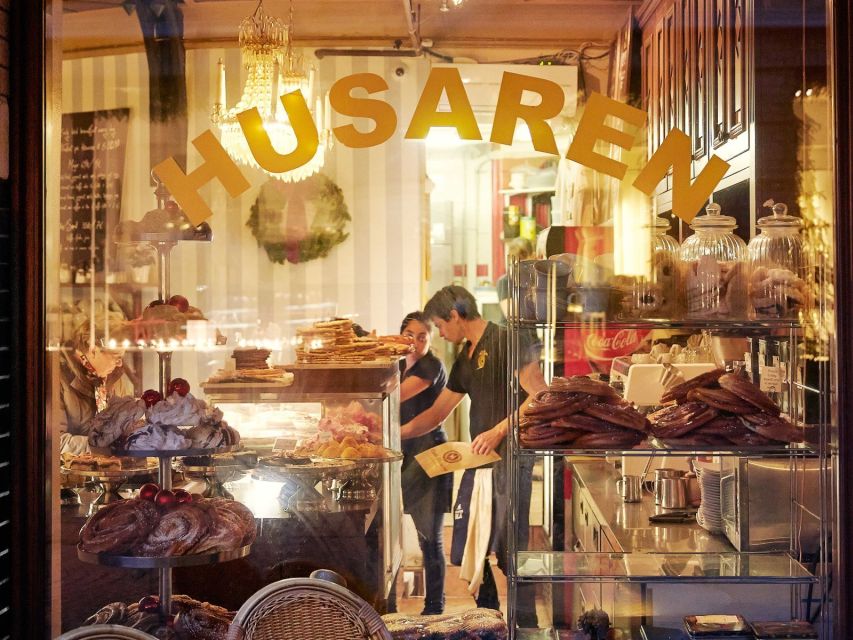
The meeting point is outside the main entrance to Haga Church. Check your confirmation carefully, since an older set of directions has sent some people to Café Husaren on Haga Nygata instead. The guide has waited when this caused confusion, but it is better to arrive at the church entrance and avoid losing the first part of the walk.
The advertised duration is not perfectly consistent. The activity is listed as 1.5 hours, while the main description calls it a two-hour walk. One participant recorded a tour lasting exactly two hours, and several guides have spent extra time with a solo guest or a small group.
For planning purposes, allow two hours. That gives you a sensible buffer and prevents you from booking a tight connection immediately afterward. It also reflects the way these walks sometimes expand when you ask questions or receive recommendations for the rest of your day.
The walk is in English and includes a professional local guide. Group size can vary, but the experience has often been intimate. Some departures have had only one guest, while others had a few people. A small group gives you more room to ask about Swedish culture, food, or the parts of Gothenburg that interest you most.
Stories, folklore, and the value of a local guide
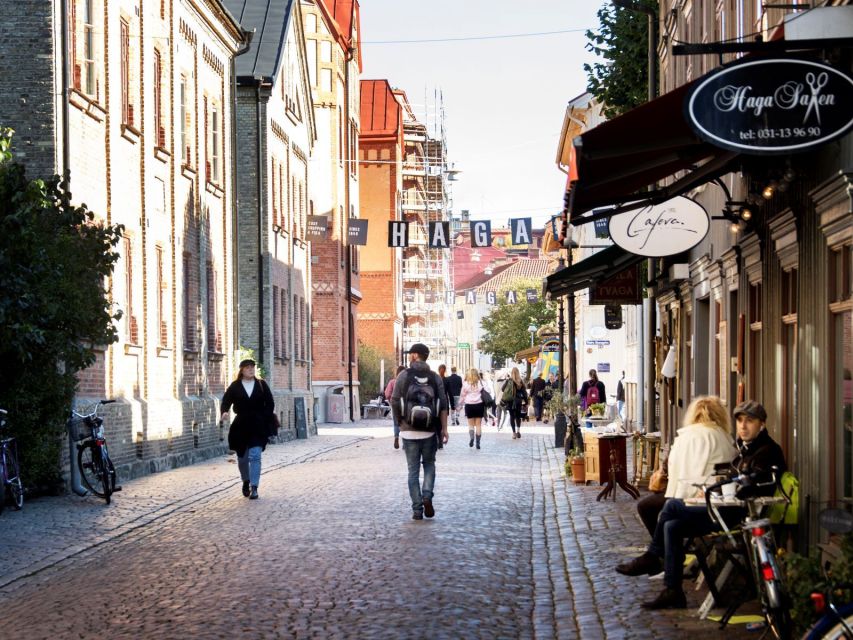
The guide is the main reason to book this rather than simply wander through Haga on your own. You can see the street without help, but you will miss much of the context behind the houses and the neighborhood’s changing reputation.
The strongest guides use stories rather than a string of dates. Sarah and Sara have been praised for clear storytelling and a warm, conversational style. Kalina has offered personal observations about Haga and Swedish society. Luka has used old pictures to help explain how places looked before the modern neighborhood took shape.
Guide quality can vary from one departure to another, but the names that appear most often include Sarah, Sara, Kalina, and Luka. Other guides, including Helena and Karen, have also led well-received walks. The common thread is an ability to explain the area clearly and respond to questions rather than simply recite a prepared speech.
You may hear local folklore and smaller stories that do not appear on a standard city map. You also get practical advice: where to have coffee and cake, which restaurant might suit your evening, what to visit after Haga, and where to look for authentic souvenirs.
That advice adds real value to the $55 price. If you use only the walk itself, the cost is fairly high for a short neighborhood stroll. If the guide helps shape the rest of your day, the price becomes easier to justify.
More Walking Tours in Sweden
- Gothenburg : Private Walking Tour with A Guide (Private tour)
★ 4.0 · 19 reviews - Historical Walking Tour in Restaurant and Bars in Central City
★ 5.0 · 9 reviews - Gothenburg: Express Walk with a Local in 60 minutes
★ 4.8 · 6 reviews - Gothenburg: Private Walking Tour with a Guide
★ 3.6 · 3 reviews
The climb to Skansen Kronan
The route includes Skansen Kronan, a former fort on a hill above Haga. The climb gives the tour a stronger finish than a flat walk along the shopping street, and the views over Gothenburg are a clear payoff.
The important warning is the slope. The walk up and down can be challenging, especially for anyone with mobility limitations or anyone who expected an entirely level route. One person in a group could not complete the climb, and the guide adjusted the route so the party could reunite.
Ask about the fort and the hill at the start if you have concerns. The activity is described as wheelchair accessible, but the reported route to Skansen Kronan includes a steep section. That means the tour may be accessible in a general sense while this particular viewpoint remains difficult.
Wear shoes with a secure sole. Even in good weather, a hill changes the feel of a short walking tour. In rain or wind, the climb may take more effort, though guides have adjusted timing and pace when conditions were poor.
The viewpoint is worth including if you can manage it. It gives you a wider sense of Gothenburg and helps place Haga within the city rather than treating it as an isolated old quarter.
Cafés, fika, and what to do afterward
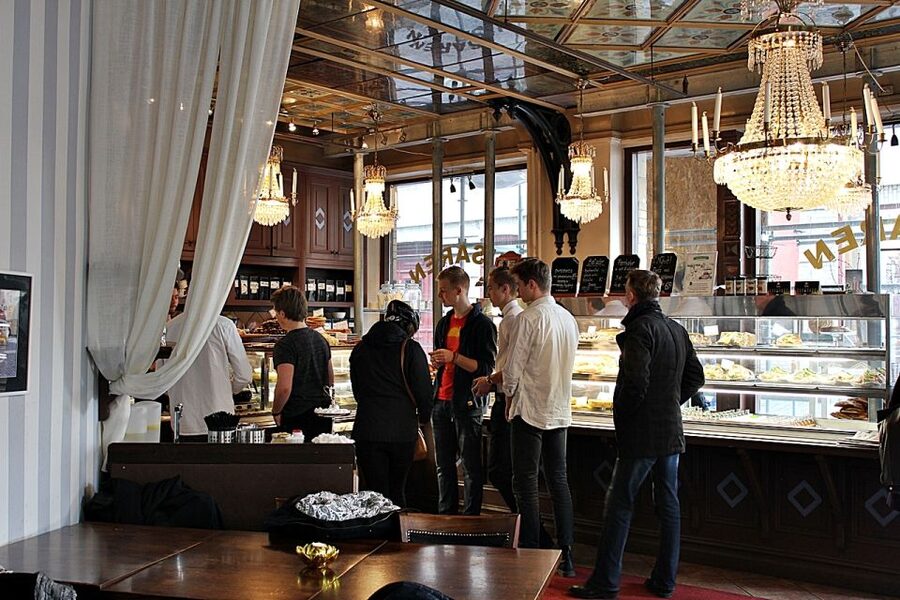
Haga is closely tied to Swedish café culture, and the walk gives you a good setting for fika, the Swedish habit of taking time for coffee and something sweet. The tour does not include food or drinks, but guides regularly suggest places for coffee and cake.
One useful tip is to treat the walk as an introduction rather than a complete food tour. You will learn where to continue after the guide leaves, but you pay for your own café stop. That is a good arrangement if you want to choose your own pace and budget.
The recommendations can also stretch beyond Haga. Guides have suggested bars with a view, churches, restaurants, sightseeing stops, and places to buy Swedish souvenirs. If you have only a few hours in Gothenburg, ask for a plan that fits your interests rather than accepting a general list.
I would schedule the tour early in your stay. You can then return to a café that caught your attention, follow a restaurant tip that evening, or use the guide’s suggestions to fill the rest of your visit.
Is $55 a fair price?
At $55 per person, this is not the cheapest way to see Haga. The public street is free, and you can admire the wooden houses without joining a tour. The price makes sense if you want context, conversation, and help interpreting what you see.
The value improves when the group is small. A private-feeling departure gives you more time to ask questions and receive tailored suggestions. Several people have had one-to-one walks, while small groups of three or four have also been common. You cannot assume every departure will be private, but the format can be more personal than a large coach excursion.
The price also covers a local guide rather than an attraction ticket. There is no entrance fee included, and gratuity is not included. You are paying for the guide’s time, stories, route planning, and local advice.
I would consider it good value for a first visit, a short stay, or anyone who enjoys history presented through conversation. If you are happy reading about Gothenburg on your own and only want photographs of the buildings, spend the money on coffee and explore independently.
Who will enjoy this Haga walk?
This tour suits you if you want a gentle introduction to Gothenburg with plenty of chances to ask questions. It is particularly useful for first-time visitors, solo visitors, couples, and small groups who like a local perspective.
It also works well for people with limited time. A walk of roughly 1.5 to two hours gives you a clear sense of Haga without taking an entire day. The guide can then point you toward the next stop.
History fans will appreciate the neighborhood’s shift from poor district to fashionable quarter. Architecture lovers will enjoy the landshövdingehus. Food-focused visitors will value the café and restaurant suggestions. People interested in Swedish society can ask about education, family policy, and daily life.
You may want to skip it if steep hills are a serious problem, unless you confirm that the route can be adjusted. You may also prefer an independent visit if your main goal is shopping or café-hopping without a fixed schedule.
What to bring and how to plan the day
Wear comfortable walking shoes and leave room in your schedule for the hill to Skansen Kronan. Bring rain protection in unsettled weather, since the experience takes place outdoors and guides have led walks in wet and windy conditions.
Arrive at the main entrance of Haga Church, not just somewhere on Haga Nygata. Because the meeting-point directions have caused confusion in the past, double-check the latest instructions before leaving your hotel.
Do not plan a meal or timed attraction immediately after the walk. The official duration varies between 1.5 and two hours, and a good conversation can add time. You may also want to stop for fika afterward.
The tour offers free cancellation up to 24 hours before departure and a reserve-now, pay-later option. Those terms are useful if the weather forecast is uncertain or your Gothenburg plans may change.
My verdict on the Haga Old Town Walking Tour
I recommend this walk if you want Haga to mean more than attractive wooden façades. The guide connects architecture, poverty, urban change, Swedish culture, and modern café life in a compact route.
Book it early in your Gothenburg visit, arrive at Haga Church, and ask for recommendations suited to your interests. Be ready for the climb to Skansen Kronan, and budget close to two hours rather than relying on the shorter time shown in some details.
The tour is best for curious visitors who value a good local conversation. If that sounds like you, the $55 cost is reasonable. If you only need a quick look at Haga Nygata, explore independently and save the money for coffee and cake.
FAQ
How long does the Haga Old Town Walking Tour last?
The activity is listed as 1.5 hours, but the main description gives two hours. Some departures have lasted exactly two hours, so allow roughly two hours when planning your day.
What language is the tour conducted in?
The tour is conducted in English with a live local guide.
Where does the tour meet?
You meet the guide outside the main entrance to Haga Church.
Is the tour wheelchair accessible?
The activity is described as wheelchair accessible. However, the route includes a steep climb toward Skansen Kronan, which may be difficult for some people with mobility issues.
Does the tour include Skansen Kronan?
Yes. The route includes the former fort of Skansen Kronan and its views over Gothenburg.
Are food and drinks included?
No. Food, drinks, and gratuity are not included. Guides can suggest cafés, restaurants, and places for Swedish coffee and cake.
What is the landshövdingehus style?
Landshövdingehus are characteristic Gothenburg houses with a brick ground floor and wooden upper floors. You will see examples along Haga Nygata.
How much does the tour cost?
The listed price is $55 per person.
Can I cancel the booking?
You can cancel up to 24 hours in advance for a full refund.
Can I reserve now and pay later?
Yes. The activity offers a reserve-now, pay-later option.
More Old Town Tours in Gothenburg
- Walking Tour of Stockholm Old Town
★ 5.0 · 1,175 reviews - The Original Stockholm Ghost Walk and Historical Tour – Gamla Stan
★ 4.5 · 1,165 reviews - Stockholm: Old Town Walking Tour with Local Guide
★ 4.7 · 719 reviews - Walking Tour of Stockholm’s Old Town, Gamla Stan
★ 5.0 · 451 reviews
Just added around Gothenburg
- Gothenburg : Private Walking Tour with A Guide (Private tour)★ 4.0 · 19 reviews
- Explore the Instaworthy Spots of Gothenburg with a Local★ 5.0 · 3 reviews
- Discover Gothenburg’s most Photogenic Spots with a Local★ 4.5 · 7 reviews
- Private Boat Ride in Gothenburg with pickup★ 4.0 · 9 reviews
- Make Your Own Tour – Guided Walking Tour★ 4.5 · 32 reviews
- Guided boat tour to Vinga in Gothenburg★ 3.5 · 8 reviews
- Historical Walking Tour in Restaurant and Bars in Central City★ 5.0 · 9 reviews
- 24h Gothenburg Hop-On Hop-Off Boat Tour★ 4.5 · 18 reviews
Old Town Walking Tours, compared.
The Original Stockholm Ghost Walk and Historical Tour – Gamla Stan
Read our review →
Walking Tour of Stockholm’s Old Town, Gamla Stan
Read our review →

Old Town Guided Walking Tour (English / Deutsch)
Read our review →
Secrets of Gamla Stan Guided Tour w/ Fika Option
Read our review →Browse the lists this tour appears in