
Reviewed · HISTORICAL TOURS
Myth and Legends Oslo Walking Tour
Oslo’s old center comes with more than handsome buildings. On this walk, Norse gods, ghost horses, trolls, royal power, and bloody battles all become part of the city story. The route connects Oslo City Hall, Akershus Fortress, the 17th-century district of Kvadraturen, and the grand institutions along Karl Johan.
I like the compact route and the way it combines myth with real places instead of treating folklore as a separate show. I also like that it is a private tour for up to 16 people, with English-speaking guides such as Maria and Marija who are praised for clear, personable storytelling.
The main drawback is the price: $304 per group is good value for a reasonably full private group, but costly for one or two people. The tour also has a dark tone and is not suitable for children under 12.
Key Points at a Glance
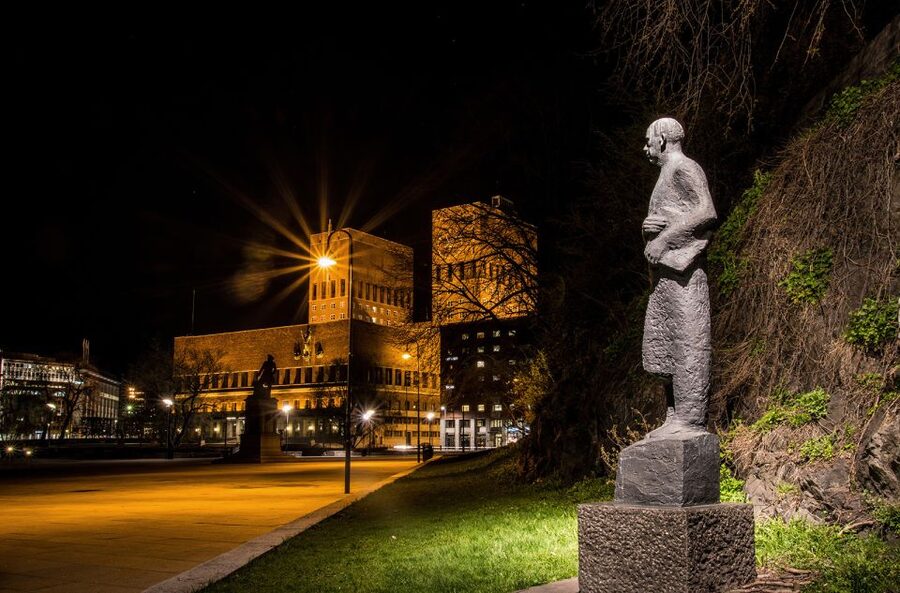
- Akershus Fortress after dark in spirit: Hear about the old royal stronghold through stories of warfare, power, fear, and ghosts.
- A full central Oslo route: Start at City Hall and finish on Karl Johan, passing the Parliament, National Theater, University, Royal Palace, and Grand Café.
- Norse mythology in the streets: Learn how gods and goddesses helped shape the ideas behind Oslo’s buildings and public spaces.
- Private value for larger groups: The $304 rate covers up to 16 people, making the cost per person much more reasonable when shared.
- Story-led rather than ghost-chasing: Expect myths, legends, and a spooky mood, not a paranormal investigation.
- A straightforward two-hour walk: Wear comfortable shoes, and remember that meals and transport are not included.
Starting Beside Oslo City Hall
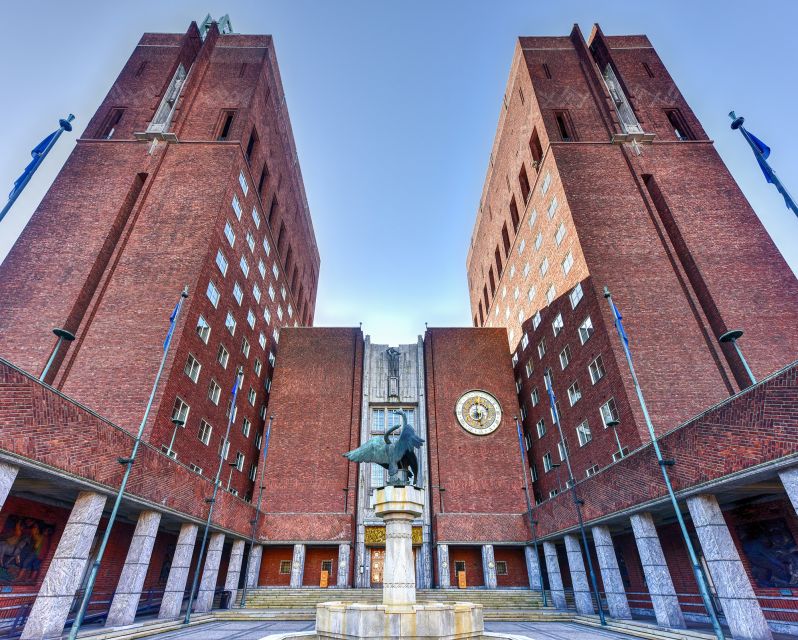
The tour begins at the Swan fountain by the entrance to Oslo City Hall. This is a useful meeting point because City Hall is one of the easiest central landmarks to find, and the route then moves directly into Oslo’s older quarters.
You can also request pickup from a downtown hotel, which helps if you are staying close to the center and prefer not to navigate to the fountain. The meeting-point instructions still matter, so check the exact arrangement when booking.
Your guide introduces Oslo through the city’s long past, which reaches back more than 1,000 years. The tone is not a standard architecture lecture. You get the facts, but the facts are tied to unsettling stories, Norse mythology, royal history, and conflicts between neighboring countries.
I would choose this tour early in a visit if you like to get your bearings through stories. The route covers many major central sights, so you can return later with a clearer sense of what you are seeing.
More Historical Tours in Norway
- Oslo: Historic Myths & Legends Evening Walking Tour
★ 4.8 · 408 reviews - Unknown war. Oslo and Norway during 1940-45
★ 5.0 · 74 reviews - Oslo: History, Art and Secrets Tour
★ 4.7 · 62 reviews
Akershus Fortress and Oslo’s Darker Side
Akershus Fortress is the emotional center of the walk. The old fortress and royal complex brings together defense, politics, royal authority, and the fear that surrounded medieval and early modern power.
The tour promises access to a different side of the fortress, with attention to the darker stories connected to its buildings and surroundings. You might hear about battles, executions, strange sightings, or stories passed down through the city. The exact balance depends on your guide, but the point is clear: this is not simply a walk past stone walls for a photograph.
The fortress also gives the guide a natural setting for explaining Oslo’s past. Here, the stories of neighboring countries, royal control, and military danger feel connected to the place beneath your feet. You are not just hearing a legend in the abstract. You are hearing it beside one of the city’s strongest reminders of conflict.
I like this part for visitors who find ordinary sightseeing a bit flat. A fortress can be impressive, but a well-told story gives its walls a human edge. The tradeoff is that some of the material may be grim, so this is not the right outing for younger children or anyone looking for a light, purely scenic walk.
Through Kvadraturen’s 17th-Century Streets
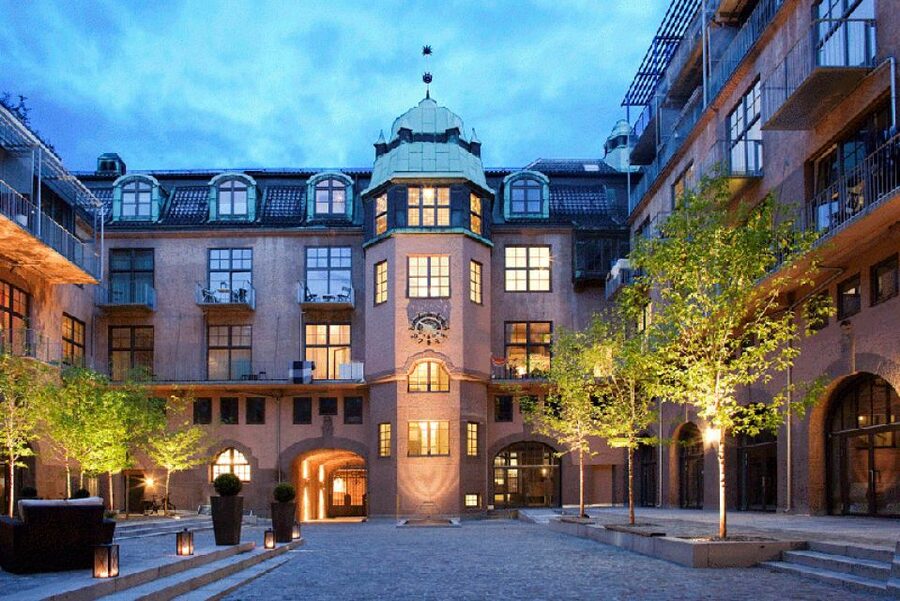
From the fortress, the route continues into Kvadraturen, Oslo’s oldest planned city district from the 17th century. The name refers to the area’s grid pattern, which gives this part of central Oslo a different feel from the more open spaces near City Hall and the palace.
This is where the tour’s city-building theme becomes especially useful. Instead of seeing streets as a collection of unrelated buildings, you learn how the city developed after earlier destruction and how architecture reflected authority, faith, and civic ambition.
The guide links Norse gods and goddesses to the way architects and city planners thought about Oslo. That does not mean every building is a shrine to a Norse figure. Rather, the mythology helps explain the symbols, names, and ideas that appear in the capital’s public design.
I appreciate this approach because it gives you something to look for after the walk. The buildings may not change, but your attention does. You begin noticing how Norway’s pre-Christian stories continue to influence the way the country presents its past.
Kvadraturen is also a practical section of the route. It sits close to several major sights, so you can easily return for your own exploration, shopping, or a meal after the tour. No meal is included, and the two-hour format leaves you free to make your own plans afterward.
Karl Johan’s Royal and Civic Landmarks
The final stretch follows Karl Johan, Oslo’s main street. This gives the walk a broad finish, moving from fortress walls and old streets toward the institutions that define modern Norway.
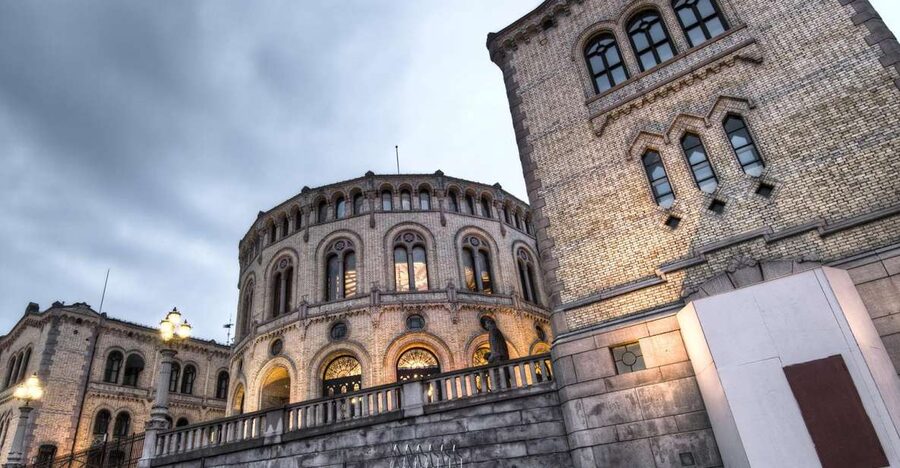
Along the way, you see the Parliament, the National Theater, the University, the Royal Palace, and the Grand Café. These sights are well known, but the guide’s stories give them a common thread. Royal rule, representative government, cultural life, education, and public ceremony all sit along the same route.
The Parliament is a useful stop for understanding Norway’s political center. The National Theater and University show how the capital expressed national culture and learning. The Royal Palace brings the route back to monarchy, while the Grand Café adds a more social and literary note to the street.
You should not expect long interior visits at each landmark. This is a walking tour through the central city, not a ticketed museum tour. Its value comes from seeing the buildings in sequence and hearing how they fit into Oslo’s larger story.
The Royal Palace also works as a strong ending because it recalls the old power first encountered at Akershus Fortress. The route gives you two different images of authority: the defensive fortress and the formal palace. That contrast is one of the walk’s more thoughtful features.
More Historical Tours in Oslo
- Oslo City Walks – Historic River Walk
★ 5.0 · 31 reviews - A Well Balanced History and Food Tour with Focus on the Scandinavian Kitchen
★ 4.5 · 29 reviews - Myths and Legends: An Oslo Walking Discovery
★ 5.0 · 21 reviews - Jewish Heritage Tour in Oslo
★ 5.0 · 16 reviews
Myths, Ghosts, and Norse Gods
The mythology is the feature that separates this experience from a basic Oslo orientation walk. You hear about trolls, ghost horses, and Norse gods and goddesses, with the stories tied to actual streets, squares, and buildings.
The tour does not promise to chase ghosts. That is worth taking seriously. You are booking folklore and atmosphere, not a séance or proof of the supernatural. The guide may give you a spooky feeling, but the main goal is to make Oslo’s past memorable.
I find this style works best when you enjoy a little theatricality in your sightseeing. The stories can help you remember dates and places that might otherwise blur together. They can also make a familiar square feel less ordinary.
The quality of the experience depends heavily on delivery. Maria has been praised for making the stories captivating, while Marija has been described as personable and well informed about history, myths, and present-day cultural details. Those comments suggest that the guide matters as much as the route.
The mythology may not suit you if you want only documented history. Legends are not the same as verified events, and a good guide should help you understand the difference. If you enjoy the space where local belief, storytelling, and history meet, the blend is likely to work well.
How the Two-Hour Pace Feels
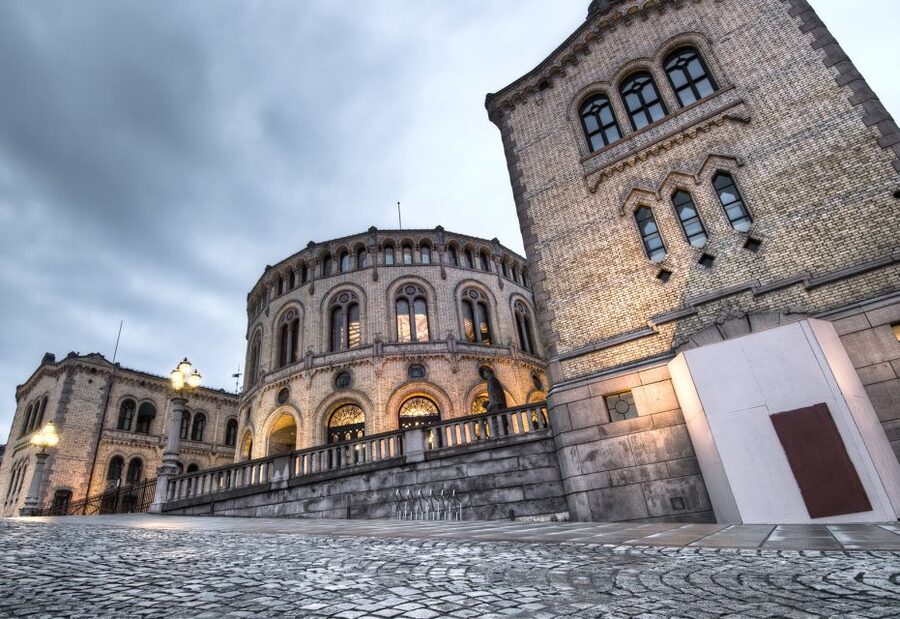
Two hours is enough time to cover the central route without turning the walk into an all-day commitment. You move from City Hall to Akershus Fortress, through Kvadraturen, and along Karl Johan to the Royal Palace area.
That compact timing is useful in Oslo, especially if you are fitting the tour between a museum visit, a fjord outing, or dinner. You get a strong introduction without giving up most of your day.
The pace may feel brisk if you stop often for photographs or want long explanations at every landmark. The route includes many major sights, so the guide has to keep the group moving. If you prefer a slow, detailed examination of only one building, a focused museum visit may suit you better.
Wear comfortable shoes. The activity is described as wheelchair accessible, but a private booking gives you a useful chance to discuss your needs in advance. The route includes historic areas and a fortress, so a clear conversation about access can help you know what to expect.
What the Private Group Price Buys You
The listed price is $304 per group of up to 16 people. For a full group, that works out to about $19 per person, which is fair for a private two-hour tour with an English-speaking expert guide and downtown hotel pickup available.
For two people, the calculation changes sharply. You would pay about $152 each, so the value depends on how much you care about having a private guide and a flexible group setting.
A private tour can be especially useful for families with older children, friends traveling together, or groups with a shared interest in myths and darker history. You avoid being placed with strangers and can generally make the experience feel more personal, although the supplied details do not promise custom route changes or extra time.
Taxes are included. Transport and meals are not, but this is mainly a central walking route, so you should not need paid transport during the activity. Plan your own meal before or after, perhaps near Karl Johan when the walk ends.
The reserve-now-and-pay-later option is helpful if your schedule is still shifting. Free cancellation is available up to 24 hours before the tour for a full refund. Those terms reduce the risk of booking, though you should still check the exact conditions at the time of purchase.
The Guide Makes the Difference
This is a story-based tour, so the guide’s voice matters. The strongest feedback centers on Maria and Marija, with praise for personable delivery, clear explanations, and entertaining accounts of history, myths, and current cultural points.
That is important because the route itself is easy to walk independently. You can see Karl Johan, the Royal Palace, and parts of the fortress without a guide. What you are paying for is the interpretation: why a place matters, how stories connect, and what details you might otherwise miss.
There is one practical warning. One booking resulted in the guide not appearing, although the customer received help with a refund and praised the support response. A single failure does not define the normal experience, but it is sensible to keep your booking confirmation and contact details handy on the day.
The overall score is 4.7 from 20 ratings, and the repeated strengths are the guides’ storytelling, the amount of information, and the entertaining format. I would give those strengths more weight than the isolated service problem, while still remembering that a walking tour depends on reliable coordination.
Who Should Book This Oslo Walk
I would recommend it to adults and older teenagers who like city history with a spooky twist. It suits you if you want the main central sights explained in one compact outing, rather than visiting each attraction separately.
It is also a good choice for a first day in Oslo. The route gives you landmarks, orientation, history, and ideas for later exploring. You can finish near the Royal Palace and continue along Karl Johan on your own.
You should think twice if your group includes children under 12, since the activity is specifically not suitable for them. You may also prefer another tour if you dislike ghost stories, legends, or accounts of violence.
For a couple or small group, the price is the biggest concern. For a larger private party, the cost becomes much more attractive. I would book it when you can share the fee across several people and want a guide focused on your group.
Should You Book the Myth and Legends Oslo Walking Tour?
Book this tour if you want Oslo’s center presented through stories rather than a plain list of dates and buildings. The combination of Akershus Fortress, Kvadraturen, Norse mythology, and Karl Johan gives you a clear two-hour introduction with plenty of atmosphere.
I especially like it for a first visit, a private group, or anyone who remembers places better when history comes with a memorable tale. Just keep your expectations realistic: this is not a paranormal investigation, not a meal tour, and not a substitute for spending serious time inside Oslo’s museums.
If $304 feels steep for a small group, compare the cost per person before booking. If you can fill much of the 16-person capacity, the private format offers good value. Bring comfortable shoes, meet at the Swan fountain unless hotel pickup is arranged, and expect Oslo to feel a little stranger by the time you reach the Royal Palace.
FAQ
Where does the Myth and Legends Oslo Walking Tour start?
The tour starts at the Swan fountain at the entrance to Oslo City Hall.
Can I arrange pickup from my hotel?
Pickup is available from any downtown hotel. Transport during the walking tour is not included.
How long does the tour last?
The walking tour lasts two hours.
What language is the tour conducted in?
The live tour guide speaks English.
Is the tour private?
Yes. It is a private group tour for up to 16 people.
Is the tour wheelchair accessible?
Yes. The activity is described as wheelchair accessible.
Are children allowed on the tour?
The tour is not suitable for children under 12.
What is included in the price?
The price includes an English-speaking expert guide, pickup from any downtown hotel, and all taxes. Meals and transport are not included.
More Walking Tours in Oslo
- Taste of Oslo Walking Tour
★ 4.5 · 282 reviews - Central Oslo Guided Walking Tour with Local Guide
★ 4.5 · 278 reviews - Oslo: Snowy Forest Torchlight Walk with Campfire
★ 4.6 · 254 reviews - Oslo: City Highlights Walking Tour
★ 4.8 · 197 reviews
More Walking Tours in Norway
- Oslo Nature Walks: Island Hopping Tour
★ 4.8 · 2,713 reviews - Oslo Nature Walks: Island hopping
★ 5.0 · 570 reviews - Oslo: Best of Oslo Walking Tour
★ 4.5 · 458 reviews - Oslo: Guided Walking Tour of Central Oslo
★ 4.7 · 438 reviews
Just added around Oslo
- Oslo Winter Highlights Bike Tour★ 5.0 · 36 reviews
- Unknown war. Oslo and Norway during 1940-45★ 5.0 · 74 reviews
- 4 hours Best View of the Oslofjord Winter Edition★ 4.0 · 15 reviews
- The Viking Planet Museum – Mini Group (4 adults)★ 4.0 · 16 reviews
- The Ultimate Norwegian Skiing Experience★ 5.0 · 16 reviews
- The Ultimate Study of the Human Form at Vigeland’s Sculpture Park with a Local★ 4.0 · 14 reviews
- The Viking Planet Museum Ticket★ 4.0 · 197 reviews
- The Oslo Beer Adventure★ 4.5 · 11 reviews
Historical Tours, compared.

Reindeer Camp and Sami Cultural Tour with Lunch
Read our review →
The Original Stockholm Ghost Walk and Historical Tour – Gamla Stan
Read our review →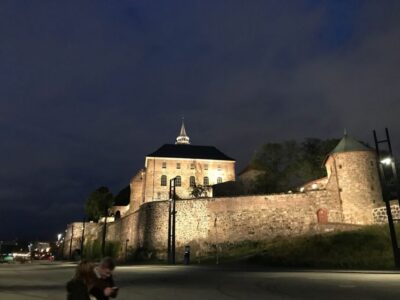

Viking History, Runes & Countryside 9h Tour to Sigtuna & Uppsala
Read our review →
Stockholm Viking History Full Day Tour to Sigtuna + Uppsala
Read our review →Browse the lists this tour appears in