Reviewed · HISTORICAL TOURS
Oslo City Walks – Historic River Walk
Oslo’s story is easy to read along the Akerselva River. Water powered the factories that helped build modern Oslo, and today the same route leads past cafés, galleries, old industrial buildings, and a dramatic waterfall. This walk gives you a useful city overview without locking you inside a museum.
I like two things here. First, the route shows both sides of Oslo’s past and present: factory buildings and outdoor spaces, working river and leisure path. Second, the stop at Mathallen adds a practical food break, with Norwegian and international choices under one roof.
The main consideration is that this is a walking tour, not a sightseeing bus. You need moderate fitness, sensible clothing, and a willingness to continue in rain or other poor weather. The two-hour route also ends away from the city center, near Beierbrua.
Key points at a glance
- Follow Oslo’s former industrial engine: Akerselva once powered the city’s factories and now forms a popular riverside route.
- See the city’s east-west divide: The river is presented as a natural line between different parts of Oslo.
- Visit Mathallen for food and a break: This old industrial building now holds a gourmet food court with Norwegian and international choices.
- Finish at a waterfall: Beierbrua marks the end of the walk, beside one of the route’s most striking sights.
- Small group, English guide: The tour accepts no more than 20 people and includes a guide.
- Plan for weather and walking: The tour operates in all weather, and hotel transportation is not included.
Why Akerselva is a smart way to see Oslo
Many city walks concentrate on grand buildings, royal landmarks, and central streets. This one follows water instead. That choice gives you a different way to understand Oslo, because the river connects the city’s industrial past with its current café and arts scene.
Akerselva is known as Oslo’s green lung, a useful phrase for a river corridor that brings open space into the city. The route lets you see how an area once shaped by mills and factories has become a place for walking, eating, and spending time outdoors.
I like this kind of tour for a first or second day in Oslo. You get a sense of how the city developed, but the walk does not feel like a classroom. The setting changes as you go, and the guide can explain why the buildings and river mattered.
The route also offers a little more local texture than a quick central-city circuit. You are not simply moving between famous façades. You are following a working feature of the city and seeing how its role has changed.
More City Tours in Norway
- Oslo: City Sightseeing Hop-On Hop-Off Bus Tour
★ 3.6 · 724 reviews - Oslo: Grand City Sightseeing Tour by Bus with Fjord Cruise
★ 4.6 · 647 reviews - Oslo Combo Tour: Grand City Tour and Oslo Fjord Cruise
★ 4.5 · 555 reviews
Starting at Oslo Visitor Center at 2 pm
The tour begins at Oslo Visitor Center, at Jernbanetorget 1, near the main city transport area. The 2 pm start is convenient if you want a slower morning, need time for breakfast, or are arriving in Oslo earlier that day.
There is no hotel pickup, so you need to make your own way to the meeting point. That is simple enough for most city-center visitors, but build in a few minutes to find the correct spot and meet the guide before departure.
The group can include up to 20 people. That is not a private walk, but it is still small enough to keep the guide within earshot and ask questions without shouting across a crowd. The experience is offered in English.
You receive confirmation when booking, and the activity uses a mobile ticket. Keep the booking available on your phone, particularly if you are moving around Oslo without a printed schedule.
One hour beside the river
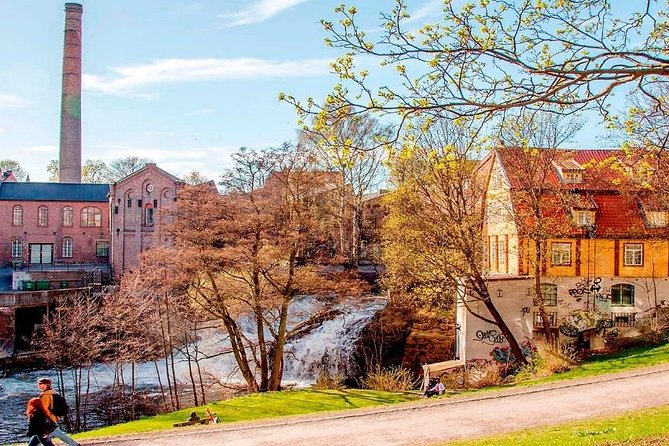
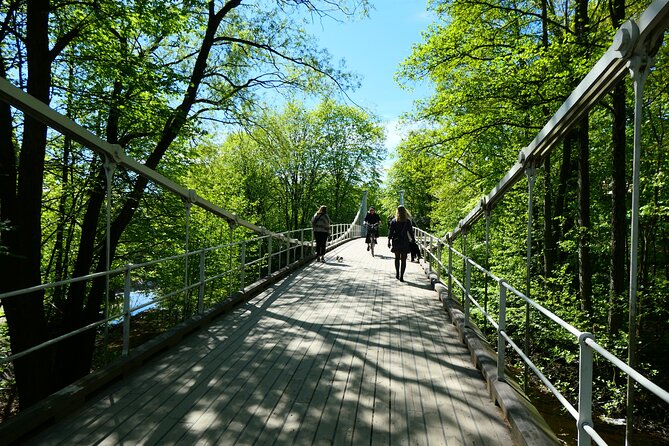
The main part of the walk lasts about an hour at Akerselva Miljøpark. Here, the guide introduces the river and explains its part in Oslo’s industrial development.
The important point is not just that the river is pretty. Its water helped drive the machinery and production that made this corridor a center of industry. As you walk, the guide connects the old factories and buildings with the newer uses that have appeared around them.
That change is one of the strongest reasons to book this tour. You get more than a history lesson about machines and production. You see how former industrial spaces can be used again, this time for cafés, art galleries, offices, and public recreation.
The river also helps explain Oslo geographically. Akerselva divides the city between east and west, so the walk gives you a physical marker for a social and urban distinction that can be hard to understand from a map alone.
Expect a guided riverside walk rather than a long list of formal stops. The value comes from seeing the surroundings while the guide explains what you are looking at. If you enjoy context, this format works well. If you want a tour built around major monuments and indoor exhibits, it may feel less focused.
The route is also a good match for visitors who like to keep moving. You are outside for much of the experience, with the river and changing buildings providing the main scenery. Wear shoes you can walk in comfortably, and do not assume Oslo’s weather will cooperate just because the forecast looks pleasant at breakfast.
Mathallen, 15 minutes for food and a practical pause
The next listed stop is Mathallen Oslo, a gourmet food court in an old industrial building. The visit lasts about 15 minutes and also serves as the toilet stop.
That short pause is useful, but you should set your expectations correctly. This is not a full meal built into the tour. You have a chance to look around, use the facilities, and perhaps taste something Norwegian or international if time and appetite allow.
Mathallen adds another layer to the industrial story. Instead of seeing an old factory building only as a relic, you see a place adapted for modern food culture. The setting reinforces the walk’s central idea: Oslo’s old working spaces have found new purposes.
If you want to eat properly at Mathallen, plan to return after the tour or visit separately. Fifteen minutes is enough for a quick look and perhaps a small bite, but it is not enough time to browse every food counter at a relaxed pace.
I would also avoid arriving hungry and assuming this stop will replace lunch. The tour price includes the guide, not food. Any purchase at Mathallen is your responsibility.
More City Tours in Oslo
- City Sightseeing Oslo Hop-On Hop-Off Bus Tour
★ 3.0 · 455 reviews - Oslo: City Highlights Walking Tour
★ 4.8 · 197 reviews - Oslo City Highlights with Fjord Cruise
★ 4.5 · 128 reviews - Oslo Shore Excursion: City Sightseeing Oslo Hop-On Hop-Off Bus Tour
★ 3.0 · 121 reviews
Ending at Beierbrua and its waterfall
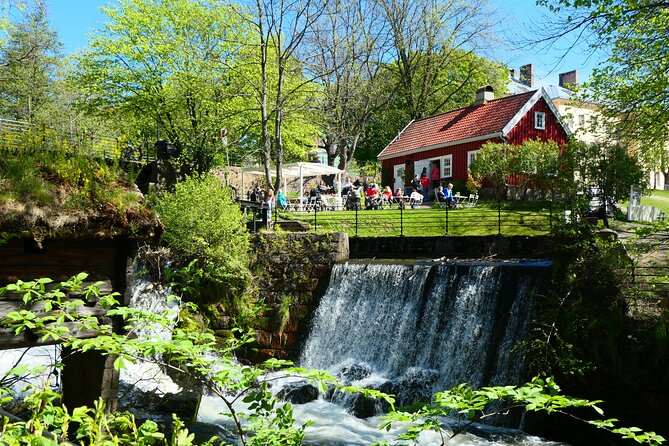
The walk ends at Beierbrua, near the spectacular waterfall. This gives the tour a clear finish rather than sending you back to the starting point.
The waterfall is a strong final sight because it brings the river’s industrial story into focus. Water that once helped power production now provides one of the route’s most memorable outdoor views. It is a fitting endpoint for a walk built around change.
You should plan your onward route before the tour begins. The end point is at Beierbrua, 0459 Oslo, not at Oslo Visitor Center. Hotel drop-off is not included, and the information provided does not promise return transportation.
That one-way design is worth considering. Some people will like ending in a different part of the city and continuing their Oslo day from there. Others may prefer a round trip or a tour that finishes near their hotel. If you dislike finding your way after a guided activity, check your map before setting out.
What the $53.28 price means
At $53.28 per person, this is not the cheapest way to walk beside Akerselva. You can follow a public riverside path without paying for admission. The price pays for the guide, the explanations, the planned route, and the ease of seeing the key sections in a limited amount of time.
That value depends on how much context you want. If you are content to walk independently and read about Oslo’s industrial past later, the cost may seem high. If you prefer someone to explain what you are seeing and keep the route moving, the fee is more reasonable.
The price also includes an English-speaking guide, but not food, hotel transport, or other personal expenses. Since the group is capped at 20, you are paying for a small-group experience rather than a large city sightseeing procession.
For me, the strongest value is the combination of three elements: the industrial story, the river walk, and the changing use of the buildings. Mathallen and the waterfall add variety, so the two hours do not rely on one type of sight.
Who will enjoy this two-hour walk
This tour suits you if you want to understand Oslo beyond the central landmarks. It is especially useful for first-time visitors who would like a guided introduction to the city’s industrial past and a look at a less formal outdoor area.
It also works well for people who enjoy food stops but do not want a dedicated food tour. Mathallen gives you a chance to sample Norwegian specialties or international food, while the main focus remains the river and its history.
Families can book, but children must be accompanied by an adult. The walk requires a moderate level of physical fitness, so think carefully if walking for roughly two hours would be difficult.
The experience may not suit you if you want a long, leisurely meal, extensive time inside galleries, or hotel-to-hotel transportation. It is also not ideal for anyone hoping to avoid bad weather. The tour runs in all weather, so a waterproof layer and suitable footwear are practical choices.
Service animals are allowed, and the route is near public transportation. Still, the supplied details do not promise that every section is suitable for every mobility need, so contact the provider if you have specific access concerns.
How to prepare for the route
Dress for Oslo rather than for your hotel room. The experience operates in all weather, and much of it takes place outdoors beside the river. A waterproof jacket, comfortable shoes, and an extra layer are sensible even on a mild day.
Bring a little money or a payment method for Mathallen if you want food. The guide is included, but food is not. Since the stop is only 15 minutes, decide before the tour whether you want a quick taste or simply a short break.
Allow time to reach Oslo Visitor Center at Jernbanetorget 1 for the 2 pm departure. A mobile ticket is accepted, and booking confirmation arrives at the time of reservation.
The tour is often booked well ahead, with an average booking lead time of 39 days. That does not mean every departure will sell out, but it suggests you should reserve early if your Oslo dates are fixed.
Free cancellation is available until 24 hours before the start time. If you cancel less than 24 hours before departure, you do not receive a refund, and changes within that period are not accepted. The cut-off follows local Oslo time.
Is the Akerselva walk worth booking?
Book it if you want a guided, two-hour look at how Oslo changed from an industrial city into a place of riverside paths, food halls, cafés, and art spaces. The best parts are the clear industrial story, the green river route, and the finish at the waterfall near Beierbrua.
Think twice if you want a central loop, a substantial meal, or a fully indoor activity. You also need to accept the one-way route, the 2 pm start, and the possibility of poor weather.
At $53.28, the tour makes the most sense for you if a guide’s explanation is worth more than simply walking the river on your own. For a visitor who wants authentic city context in a manageable two-hour format, it is a practical choice.
FAQ
Where does the Historic River Walk begin?
It begins at Oslo Visitor Center, Jernbanetorget 1, 0154 Oslo, Norway.
What time does the tour start?
The tour starts at 2 pm.
Where does the tour end?
It ends at Beierbrua, 0459 Oslo, near the waterfall.
How long does the walk last?
The experience lasts approximately two hours.
Is food included in the tour price?
No. The tour includes a guide, but food at Mathallen is not included. Mathallen is a short stop where you can buy Norwegian or international food if you wish.
What happens if the weather is poor?
The tour operates in all weather conditions, so you should dress appropriately.
More Historical Tours in Oslo
- Myths and Legends: An Oslo Walking Discovery
★ 5.0 · 21 reviews - Myth and Legends Oslo Walking Tour
★ 4.7 · 20 reviews - Jewish Heritage Tour in Oslo
★ 5.0 · 16 reviews - Downtown Oslo: Self-Guided Highlights and History Audio Tour
★ 4.0 · 10 reviews
More Historical Tours in Norway
- Oslo: Historic Myths & Legends Evening Walking Tour
★ 4.8 · 408 reviews - Unknown war. Oslo and Norway during 1940-45
★ 5.0 · 74 reviews - Oslo: History, Art and Secrets Tour
★ 4.7 · 62 reviews - A Well Balanced History and Food Tour with Focus on the Scandinavian Kitchen
★ 4.5 · 29 reviews
Just added around Oslo
- Oslo Winter Highlights Bike Tour★ 5.0 · 36 reviews
- Unknown war. Oslo and Norway during 1940-45★ 5.0 · 74 reviews
- The Viking Planet Museum – Mini Group (4 adults)★ 4.0 · 16 reviews
- 4 hours Best View of the Oslofjord Winter Edition★ 4.0 · 15 reviews
- The Ultimate Norwegian Skiing Experience★ 5.0 · 16 reviews
- The Ultimate Study of the Human Form at Vigeland’s Sculpture Park with a Local★ 4.0 · 14 reviews
- The Viking Planet Museum Ticket★ 4.0 · 197 reviews
- The Oslo Beer Adventure★ 4.5 · 11 reviews
Historical Tours, compared.

Reindeer Camp and Sami Cultural Tour with Lunch
Read our review →
The Original Stockholm Ghost Walk and Historical Tour – Gamla Stan
Read our review →

Viking History, Runes & Countryside 9h Tour to Sigtuna & Uppsala
Read our review →