
Reviewed · MUSEUMS
Oslo: Paradox Museum Entry Ticket
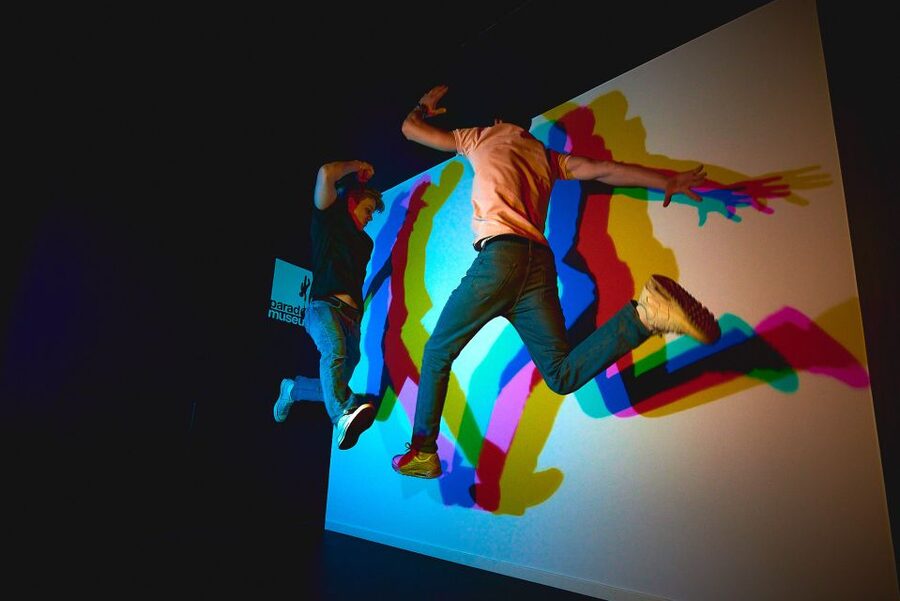
A room can make you look tiny, turn the floor into a wall, or leave you wondering which way is up. That is the appeal of Paradox Museum Oslo: it turns perception, physics, and perspective into hands-on play rather than a lesson behind glass.
I like the clearly marked photo points, which take some guesswork out of getting the right angle. I also like the short explanations and QR codes, since they show how the tricks work instead of leaving you with a pile of strange pictures. The main drawback is value: at about $29 per person, the museum can feel pricey if you move quickly or visit alone.
Key points to know before you go
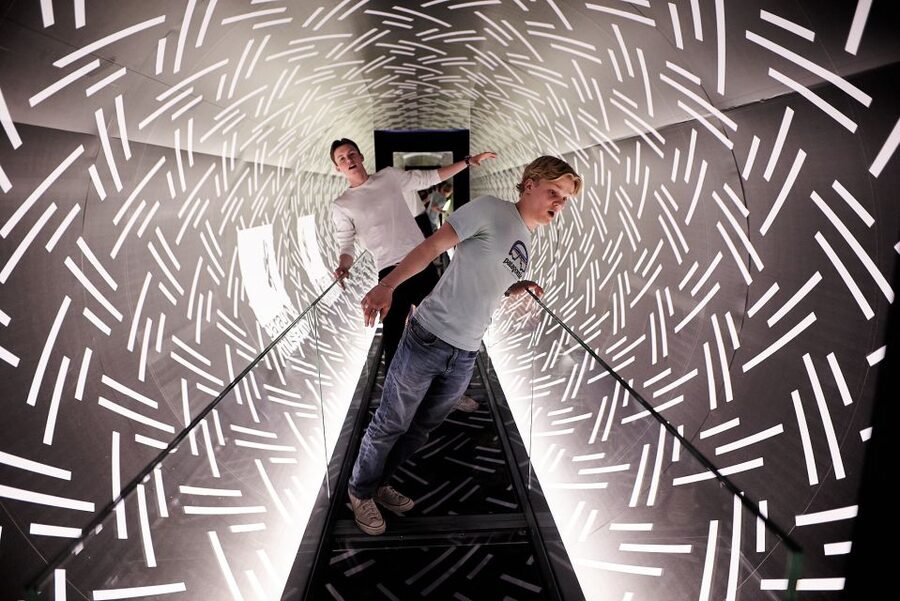
- More than 70 interactive exhibits: Expect optical illusions, perspective tricks, and hands-on installations rather than traditional museum displays.
- Plan on about one hour: You can spend longer if you stop for photos, but solo visitors may finish faster.
- Photo points guide your camera: Marked spots help you find the intended angle for each illusion.
- The route is one-way: Follow the signs from exhibit to exhibit, with no need to decide which room comes next.
- Central Oslo location: Nationaltheatret and Stortinget stops are only a couple of minutes away.
- Best for playful groups: Families, couples, friends, students, and curious adults will get the most from it.
What happens inside Oslo’s Paradox Museum
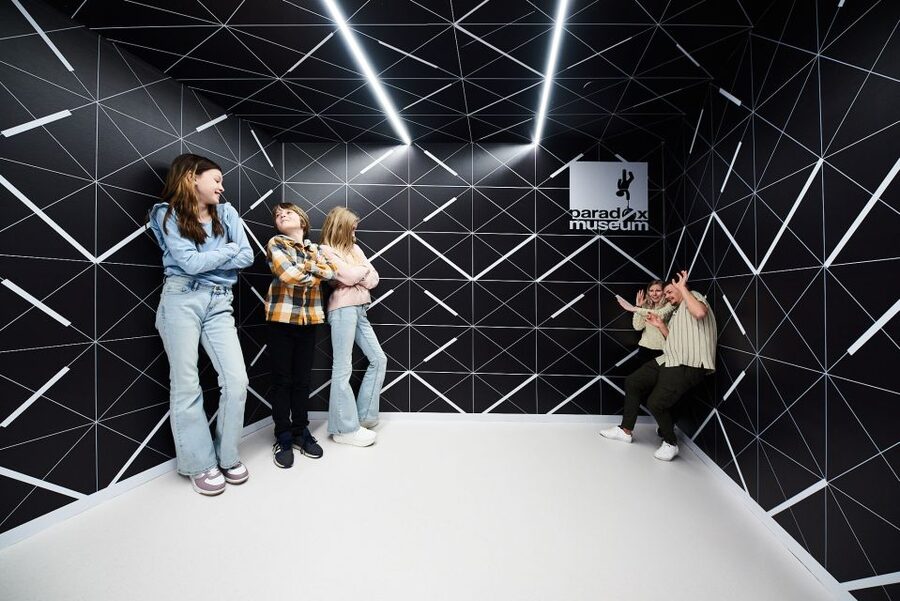
This is not a quiet museum where you read labels and move on. You enter a playful sequence of rooms and installations built to make your eyes and brain disagree.
The collection contains more than 70 interactive exhibits. The exact experience depends on how long you spend at each one, but the basic pattern is simple: look, step into the marked position, test the effect, take a picture, and read the explanation.
The museum uses a one-way flow. Signs direct you from one display to the next, so you do not need to plan a route or worry about missing the main rooms. That system keeps the visit tidy, although it also means you should be ready to follow the prescribed order.
At some exhibits, the trick is obvious as soon as you enter. Others need a little testing. You may need to stand on a particular mark, look through a certain opening, or place a friend in the right spot. The marked photo points are useful here. They show where the camera should go and help you frame the intended effect.
More Museum Visits in Norway
- Kon-Tiki Museum Entrance Ticket
★ 4.5 · 1,096 reviews - The Fram Museum Admission Ticket
★ 4.5 · 490 reviews - Oslo: Oslo Discovery Tour with 2 Museums Included
★ 4.6 · 334 reviews
The first rooms help you get your bearings
The opening displays may feel familiar if you have visited an optical illusion attraction before. Some effects are based on well-known visual tricks, and a few early exhibits can be understood quickly.
That is not necessarily a problem. The first rooms give you a chance to understand how the museum works. You learn that the best result often depends on following the floor marks and placing your camera at the suggested point.
A little extra guidance would help. Some visitors have found the first few installations confusing, especially when no staff member is nearby to explain what to do. If you arrive with children, take a moment to read each instruction before rushing to the next setup.
Once you understand the format, the visit becomes easier. You stop asking whether an object is physically impossible and start looking for the angle, scale, lighting, or perspective trick that creates the effect.
The main collection turns perception into a game
The strongest part of the museum is the middle stretch, where the exhibits become more useful as group activities. You are not simply looking at an illusion. You are often part of it.
This works best with two or more people. A friend can pose in the scene, hold the camera, or help you find the right position. Couples can create playful images together, while families can take turns testing the same installation.
The museum is also a good choice for mixed-age groups. Children can enjoy the visual surprises without needing much explanation, while adults can read about the science behind them. Older children and students may get more from the material because they can connect the displays with perception, physics, and perspective.
The collection is mainly visual. If you are hoping for a long historical account of optical science, this is not that kind of museum. The educational value comes in short bursts, attached to the exhibits themselves.
Each display includes information about how the paradox is achieved, with descriptions and QR codes available. I recommend reading at least some of them. The explanations give the visit more substance and help you notice why your brain accepts an image that your logic rejects.
Photo points are helpful, but bring your own camera plan
Photography is a major part of the experience. The marked points tell you where to stand or place the phone, which makes it much easier to reproduce the intended illusion.
Still, do not expect a staff member at every installation. Help with photos has been available in some areas, and staff members have sometimes offered to take pictures, especially when someone is visiting alone. But this is not guaranteed at every room.
That matters if you are traveling solo. You can still enjoy the displays, but some effects are more satisfying when you appear in the image. A staff member once helped a solo visitor get better pictures, and the museum has also received praise for friendly assistance from staff, including a team member named Kseniia.
I would visit with a partner, friend, or family member if the photos are a central reason for booking. You will have someone ready to press the shutter and can spend more time experimenting with poses.
Some setups may also be less productive as photo locations than others. The collection contains many exhibits, but not every one will create a picture you want to keep. A few displays may feel average, while the larger or more striking installations tend to provide the biggest payoff.
More Museum Visits in Oslo
- The Viking Planet Museum Ticket
★ 4.0 · 197 reviews - Oslo: Munch Museum Admission Ticket
★ 4.5 · 193 reviews - Private sightseeing in a Volvo XC 90 All inclusive museum/guiding
★ 5.0 · 35 reviews - Oslo Munch Museum Admission Ticket
★ 4.0 · 29 reviews
How long should you allow?
The stated duration is one hour, and that is a sensible planning figure. If you move steadily and take only a few photos, you may finish in less than an hour. One solo visitor completed the route quickly, while another group spent two hours because they paused at more installations and took plenty of pictures.
For most people, I would allow between one hour and two hours. The first hour covers the main collection at a comfortable pace. Add extra time if you are visiting with children, taking group photographs, or reading the explanations carefully.
The museum can also work well as a short activity between other Oslo plans. It is close to central public transport and does not require a half-day commitment. If you have a spare hour before a departure or an appointment, the compact format can be useful.
The one-way route helps you keep moving, but it can also make the experience feel short if you do not stop to test each illusion. Take your time at the larger installations. Try different positions, check the marked photo point, and read the explanation before deciding that a display is finished.
Is $29 a fair price?
The entry price is about $29 per person. For Oslo, where many activities carry a high cost, that may not seem shocking. But value depends heavily on how you use the hour.
I think the ticket makes more sense for a family or small group that will take photos, laugh together, and spend time testing the displays. A child who wants to try every installation can easily help fill the allotted hour. A couple looking for an informal indoor activity may also find it worthwhile.
The price is harder to justify if you expect a large traditional museum or a long educational program. The visit is compact and primarily visual. Some illusions may feel familiar, and a quick solo visit can leave you feeling that you paid a lot for a short stop.
To get better value, slow down. Read the explanations. Try each exhibit from the marked point. Take several photos instead of one rushed shot. If you simply walk through and glance at the displays, the ticket will feel expensive.
The museum includes access to the Paradox Boutique, but food and drinks are not included and are not allowed inside. The boutique sells games, souvenirs, and keepsakes. Treat it as an optional final stop, not part of the ticket’s main value.
Staff help can change the experience
The museum is designed for self-guided exploration. There is no guide leading the group from room to room, and English and Norwegian are the stated languages.
That format gives you freedom, but it also places more responsibility on you. You need to read the instructions and follow the signs. If a display does not make sense, look for the explanation or ask a staff member when one is available.
Staff have received strong praise for being friendly, welcoming, and willing to help. They have shown people how the museum works and offered to take photos. At the same time, assistance may not be available at every exhibit.
That uneven support is worth keeping in mind. If you enjoy figuring things out alone, it will not be an issue. If you want a detailed explanation for every paradox, you may find the museum too lightly staffed.
Location and arrival in central Oslo
Paradox Museum Oslo is in the heart of Oslo Municipality. The nearest public transport stops are Nationaltheatret and Stortinget, both a couple of minutes from the museum.
That central position makes this easy to combine with other city plans. You do not need to arrange special transportation, and the activity can fit into a day of sightseeing without taking you far from the center.
At the entrance, show your ticket and check in about 10 minutes before your booked time. Timed entry helps control the number of people moving through the rooms, although the experience itself remains self-guided.
Food and drinks are not permitted inside. Plan to eat before or after your visit rather than expecting a café stop along the route.
The museum is wheelchair accessible. If accessibility is important to your planning, the available information confirms access to the experience, but it does not provide detailed room-by-room measurements or descriptions.
Who will enjoy this most?
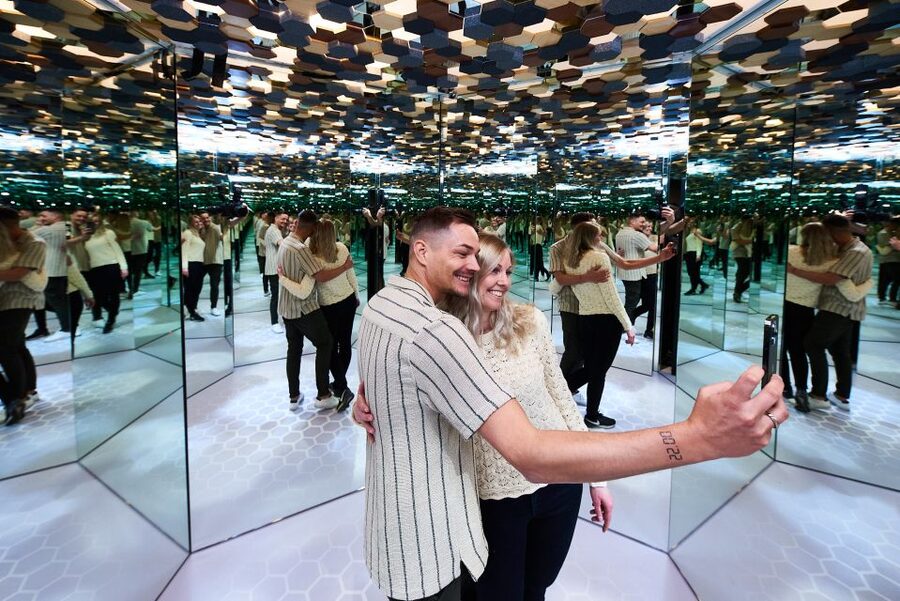
Families are a natural match. The displays are active, visual, and easy to understand at a basic level. Children can take part without needing a long attention span, and adults can add the science explanation.
Couples and friends will also get good use from the photo setups. Many installations work better when one person poses and another takes the picture.
Students and curious adults may appreciate the short lessons about perception, physics, and perspective. The museum gives you an immediate example of how easily the brain can misread scale, space, and position.
Solo visitors can still have a good time, especially if they are more interested in the illusions than the photographs. If you want a complete set of pictures, ask staff for help when possible, but do not count on assistance at every room.
This is less suitable for someone seeking a quiet art museum, a long guided tour, or a detailed scientific exhibition. It is built around play, surprise, and quick explanations.
Practical ways to enjoy the visit
Use these simple habits to get more from the ticket:
- Arrive about 10 minutes before your booked time so check-in does not cut into your visit.
- Follow the one-way signs instead of trying to move back and forth.
- Look for the marked photo point before taking a picture.
- Ask for help if an exhibit is unclear, but expect to solve some displays yourself.
- Visit with another person if group photos are important.
- Read the explanations and scan the QR codes to understand the science.
- Allow extra time if children want to repeat the installations.
- Save the boutique for the end, especially if you want a game or souvenir.
These small choices address the main weaknesses of the experience: a quick visit can feel short, and a few exhibits may seem unclear without guidance.
Should you book Paradox Museum Oslo?
Book it if you want a short, playful indoor activity with strong photo potential and enough explanation to make the tricks more than random visual stunts. It is especially well suited to families, couples, friends, and anyone with an hour to fill in central Oslo.
Think twice if you are paying $29 for a major museum experience or expecting every exhibit to feel new. Some effects are familiar, some displays may be less impressive than others, and staff help is not always available at each photo point.
My practical call is this: book when you can visit with someone else, take your time, and enjoy the process of testing each illusion. It is a fun addition to an Oslo day, but its value comes from participation. Walk through quickly, and it will feel small. Play along, and the hour can pass very easily.
FAQ
Where is Paradox Museum Oslo located?
It is in Oslo Municipality, in the heart of Oslo. The closest public transport stops are Nationaltheatret and Stortinget, both a couple of minutes away.
How long does the museum visit last?
The stated duration is one hour. You may finish faster if you visit alone and move quickly, or spend longer if you take photos, read the explanations, and repeat the exhibits.
How many exhibits are inside?
The museum has more than 70 interactive exhibits.
Is the experience guided?
It is a self-guided experience with signs directing you through a one-way route. English and Norwegian are available, and staff can help when available.
Are photo opportunities included?
Yes. The museum has marked photo points that show you the best angle for each shot.
Can staff take photographs for me?
Staff may help with photographs when available, but there is not necessarily a staff member at every exhibit.
Is Paradox Museum Oslo suitable for children?
Yes. The experience is described as suitable for families and children of all ages, with interactive displays that combine fun and learning.
Is the museum wheelchair accessible?
Yes, the activity is listed as wheelchair accessible.
Can I bring food or drinks inside?
No. Food and drinks are not allowed inside the museum.
Is transportation included in the ticket?
No. The ticket includes admission to the museum, access to all exhibition areas, and access to the Paradox Boutique. Transportation, food, and drinks are not included.
Just added around Oslo
- Oslo Winter Highlights Bike Tour★ 5.0 · 36 reviews
- Unknown war. Oslo and Norway during 1940-45★ 5.0 · 74 reviews
- The Viking Planet Museum – Mini Group (4 adults)★ 4.0 · 16 reviews
- 4 hours Best View of the Oslofjord Winter Edition★ 4.0 · 15 reviews
- The Ultimate Norwegian Skiing Experience★ 5.0 · 16 reviews
- The Ultimate Study of the Human Form at Vigeland’s Sculpture Park with a Local★ 4.0 · 14 reviews
- The Viking Planet Museum Ticket★ 4.0 · 197 reviews
- The Oslo Beer Adventure★ 4.5 · 11 reviews
Museums, compared.
Stockholm Pass: Save up to 50% – Includes Vasa Museum Ticket
Read our review →


Browse the lists this tour appears in