
Reviewed · TRAIN EXPERIENCES
Romsdalen: Rauma Railway Golden Train with Guide
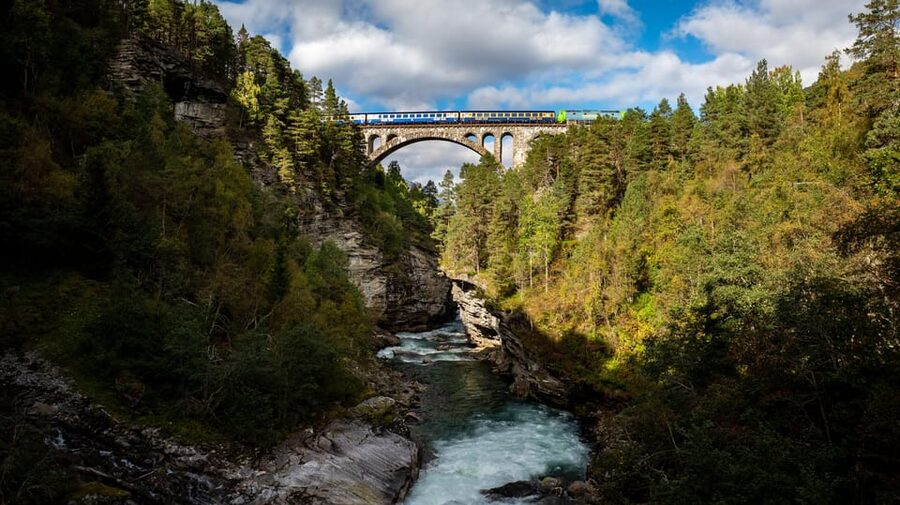
The Rauma Railway is a slow-moving front-row seat to some of Norway’s wildest scenery. From Åndalsnes, the train follows emerald rivers beneath sharp mountain walls, crosses 32 bridges, and pauses near Bjorli before returning. Troll Wall and Kylling Bridge are the big visual prizes.
I like the unhurried pace, which gives you time to take pictures without chasing a view through the window. I also like the live English commentary, which adds local stories, railway history, and Second World War background instead of leaving you with scenery alone. The main drawback is seat allocation: arrive early, and be prepared to move around the carriage for the best views.
Key points at a glance
- The best scenery comes by train: You pass Troll Wall, Verma Waterfall, high peaks, and jagged rock faces from a comfortable seat.
- Kylling Bridge is the photo star: The train slows for views of Norway’s most photographed railway bridge.
- The return trip matters: You get another look at the route, but the best window position may change.
- Bjorli is a short pause, not a destination day: You have about 30 minutes there, and the train ride is the main attraction.
- Live commentary adds substance: Expect stories about mountain communities, the Second World War, and the Golden Train.
- The price can be strong value: At $64, it has been reported as roughly half the price of an equivalent cruise ship excursion.
Why the Rauma Railway is worth your time
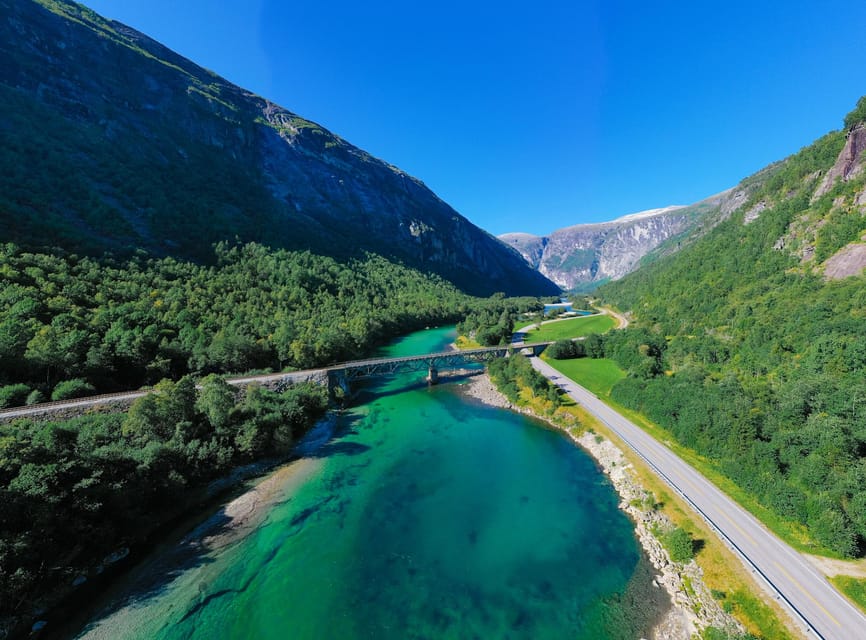
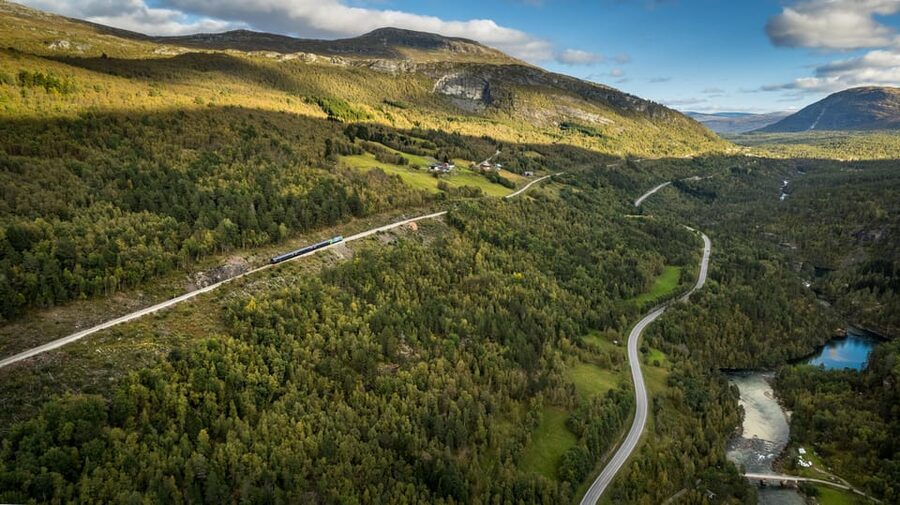
The Rauma Railway runs inland from Åndalsnes through the Romsdalen valley. This is not a train ride across broad, open country. The route is hemmed in by steep slopes, exposed rock, waterfalls, and a bright green river that gives the journey much of its color.
I like this trip because the railway does not rush the scenery. The train moves slowly enough for you to spot bridges, farms, water rushing down the cliffs, and changing views of the mountains. You can photograph from your seat, though you will get better results by moving to one of the extra viewing windows when the train is between the main stops.
The route has a strong story behind it, too. The commentary covers the people who lived among these peaks, relied on the river, and worked around difficult mountain terrain. It also explains the Second World War events connected with the railway and the origin of the Golden Train name. This turns a pretty ride into a more complete picture of the valley.
The experience lasts about 2.5 hours. That makes it easy to fit into a day in Åndalsnes, including a cruise stop, but it also means the schedule is fairly tight. Delays caused by freight trains can reduce the time at Bjorli. One reported trip had only about 10 minutes there instead of the advertised 30.
More Train Journeys in Norway:
- Bergen: Viking Village, Nærøyfjord Cruise & Flåm Railway
★ 4.8 · 1,047 reviews - From Narvik: Roundtrip Arctic Train Ride on Ofoten Railway
★ 4.4 · 407 reviews - Guided tour – Viking Village, Nærøyfjord Cruise and Flåm Railway
★ 4.5 · 371 reviews
Starting at Åndalsnes station
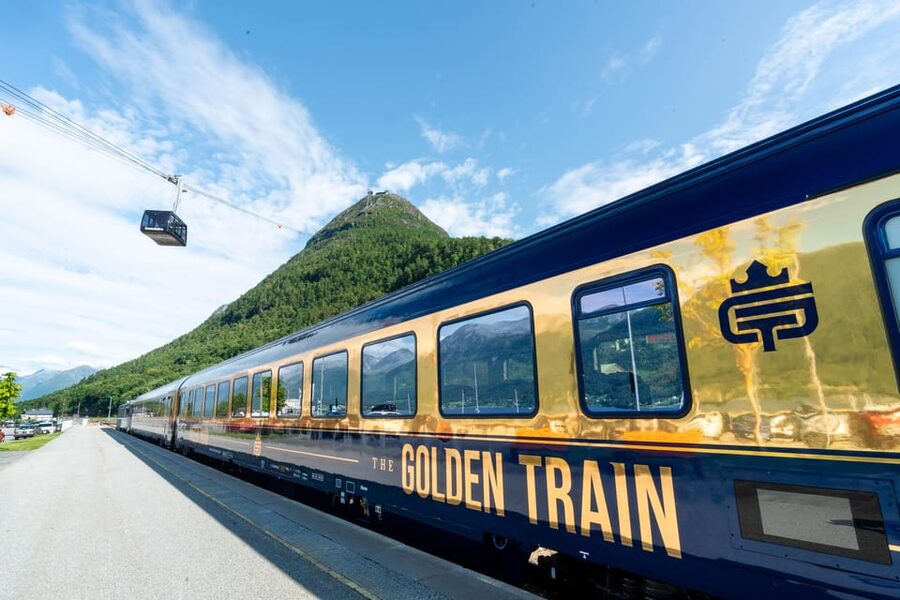
The train begins at Åndalsnes station, which is close to the cruise quay. That short distance matters if you are visiting by ship. You do not need a long transfer across town, and the railway is a practical option for a port day.
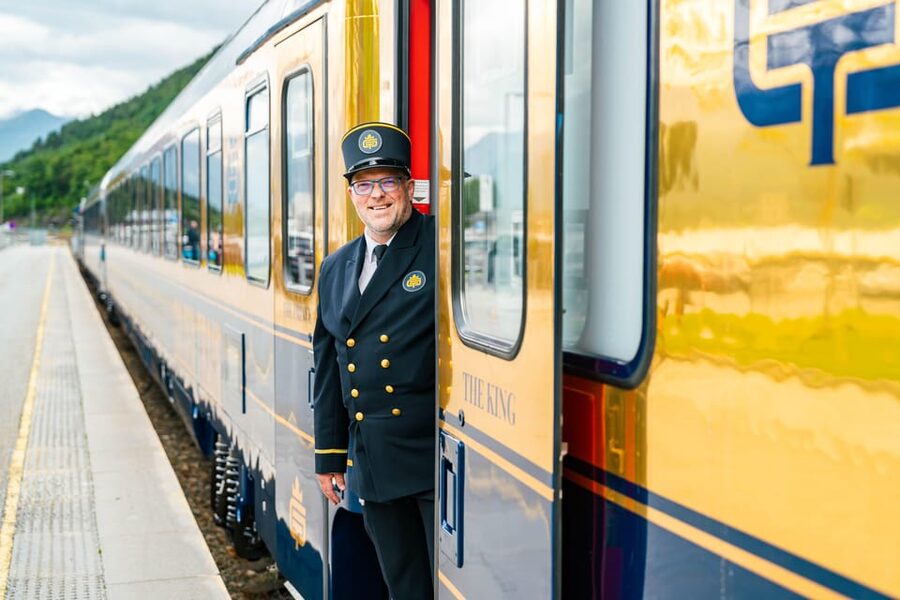
Train hosts welcome you aboard, and you settle in for the first hour toward Bjorli. The onboard toilet is useful because the train spends much of the trip away from town facilities. Drinks and snacks may also be available on the train, according to the supplied trip details, but you should not treat this as a full meal service.
For the best seat choice, arrive early. A window seat without a pillar blocking the view is worth the effort. The right side of the train is often suggested for stronger views on the outward journey, although the left side still has plenty to see. On the return, the viewing advantage can change, so do not assume one side will remain best all day.
Some carriages have compartments seating six people. These can be useful because you can look toward both sides of the train, rather than committing to one window. They may not suit every party, and seats are not always clearly allocated, so listen carefully to the instructions when you board.
The first hour through Romsdalen
The first section is the heart of the ride. The train leaves Åndalsnes and follows the valley through dramatic mountain country. The scenery shifts between steep rock walls, waterfalls, river views, and small signs of life in a place that can otherwise feel almost untouched.
The green river is one of the route’s most memorable features. It adds a calm, bright line beneath the darker cliffs and gives you a useful reference point as the train winds inland. On a clear day, the contrast between the water, gray rock, and high peaks is especially striking.
Your English-speaking guide provides commentary during the ride. The presentation is not just a list of names. It includes stories about people who lived and worked in the valley, along with facts about the railway and wartime history. The best commentary adds meaning to what you are seeing, and this is one reason I would choose the guided version over a simple train ticket.
The commentary is generally provided aloud on board, while the activity also includes an audio guide on your smartphone. Bring a charged phone and headphones. Even if the live narration is operating during your ride, the phone requirement is part of the practical setup.
Troll Wall and the high mountain views
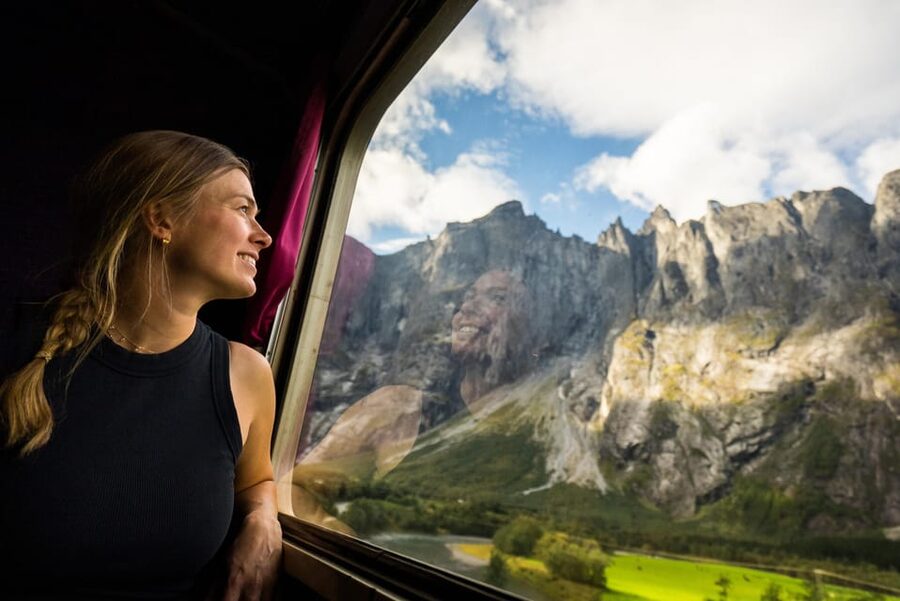
Troll Wall, or Trollveggen, is one of the major sights along the route. The wall rises dramatically above the valley, with jagged rock faces that show why this part of Norway has such a strong reputation among climbers and mountain fans.
You will see it from the moving train, not from a long walking path or a viewing platform. That distinction matters. The ride gives you a broad moving view, but your photo window is brief, and reflections can spoil pictures if you do not prepare.
Keep your camera ready before the train reaches the main sight. Clean the window if needed, avoid pressing your lens against the glass, and use the viewing areas when they are available. The train’s slow speed helps, but you still need to react quickly when a cliff or waterfall opens into view.
The mountain scenery is the main reason to book this activity. If the weather is clear, the combination of high peaks, sharp rock, and river is powerful. In poor weather, the experience still works, but clouds can cover the upper slopes and soften the views. The train and commentary remain worthwhile, though you should keep your expectations realistic.
A few more Norway days worth weighing up
- Andalsnes Shore Excursion: the Troll Road and Troll Wall
★ 4.5 · 144 reviews - Sightseeing Tour in Trollstigen – Land of Trolls
★ 4.0 · 128 reviews - Via Ferrata Åndalsnes Intro Wall
★ 5.0 · 84 reviews - Åndalsnes – Trollstigen & Trollwall Audio Guid Bus Tour
★ 4.3 · 84 reviews
Kylling Bridge, the railway’s great photo stop
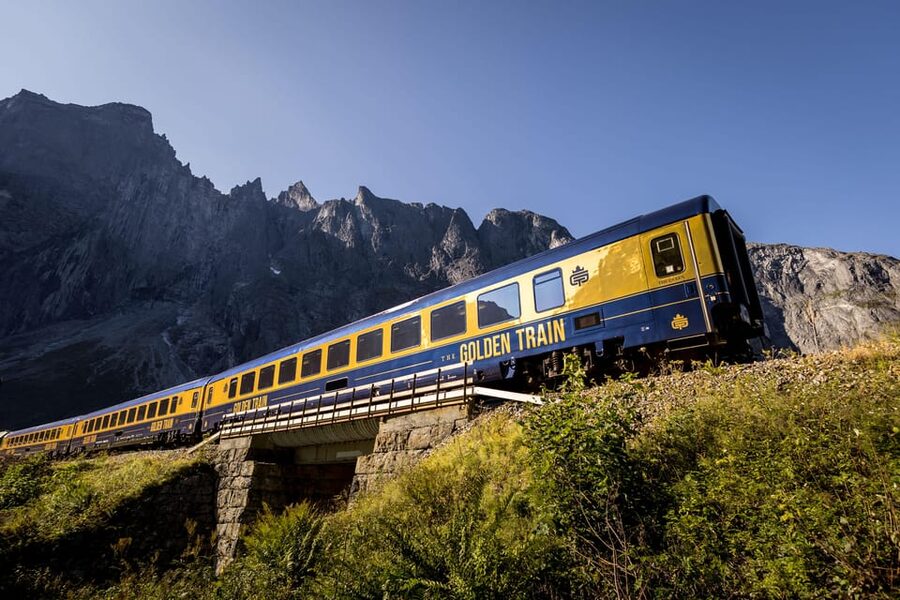
Kylling Bridge is the engineering highlight. The bridge crosses a deep section of the valley and is widely regarded as the most photographed railway bridge in Norway. The train passes slowly enough for you to take pictures, and the surrounding rock and water make the structure look especially impressive.
This is the point where a seat by the window becomes less important than access to a clear viewing area. If you have spent the outward journey on one side, use the return trip to see the bridge from another angle. Moving through the carriage, when permitted, gives you a better chance of catching both the structure and the scenery around it.
The bridge is valuable for more than its appearance. It shows how the railway was built through difficult country. The route is not simply a scenic line laid across an easy valley floor. It crosses rivers, cuts past steep slopes, and uses major engineering works to connect Åndalsnes with the inland communities.
You should not expect a long stop beside Kylling Bridge. The sight is viewed from the train, so the moment depends on good timing, clean windows, and an open camera position. That is part of the fun, but it can frustrate anyone hoping for a leisurely ground-level photo.
Verma Waterfall and 32 bridges
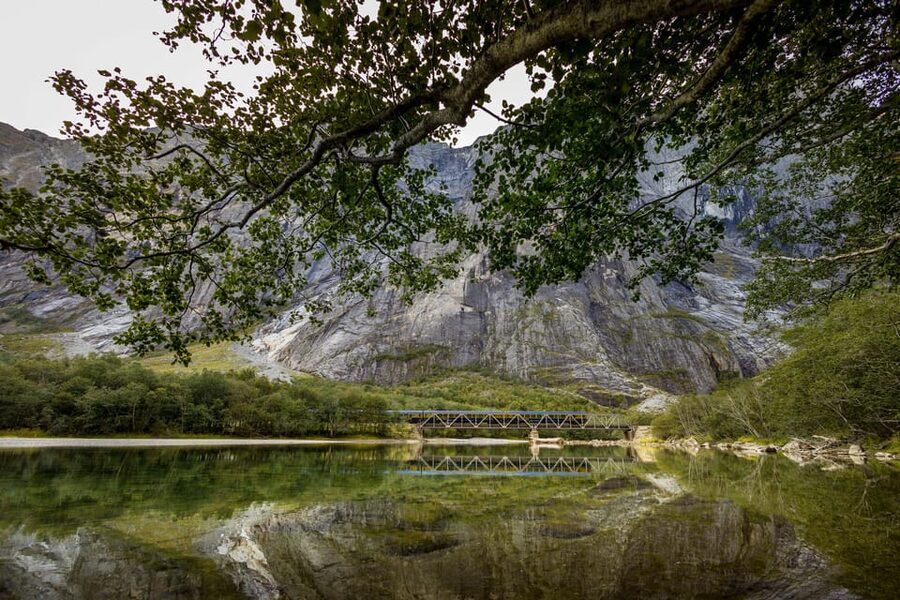
Verma Waterfall is another major sight on the journey. Water drops through the mountain country, adding movement to an already dramatic setting. Its appearance depends on weather and seasonal water levels, so the exact impact can vary, but it is one of the route’s key natural features.
The railway crosses 32 bridges in all. You will not study each one as a separate attraction, but the crossings help shape the ride. Each bridge opens a different angle on the valley, the river, or the mountain walls. The train’s slow pace gives you a chance to notice how the route changes rather than blurring past in a few seconds.
I find this kind of journey more rewarding than a quick roadside viewpoint. A single lookout gives you one composition. The train keeps changing the frame. You see the river from above, then beside it, then farther away, while the cliffs shift from one side of the carriage to the other.
That changing view is also why I would not spend the full ride glued to one seat. Take pictures from your window, listen to the commentary, and use the extra viewing facilities if space allows. You may need to share them with other passengers, so patience helps.
What happens during the Bjorli stop
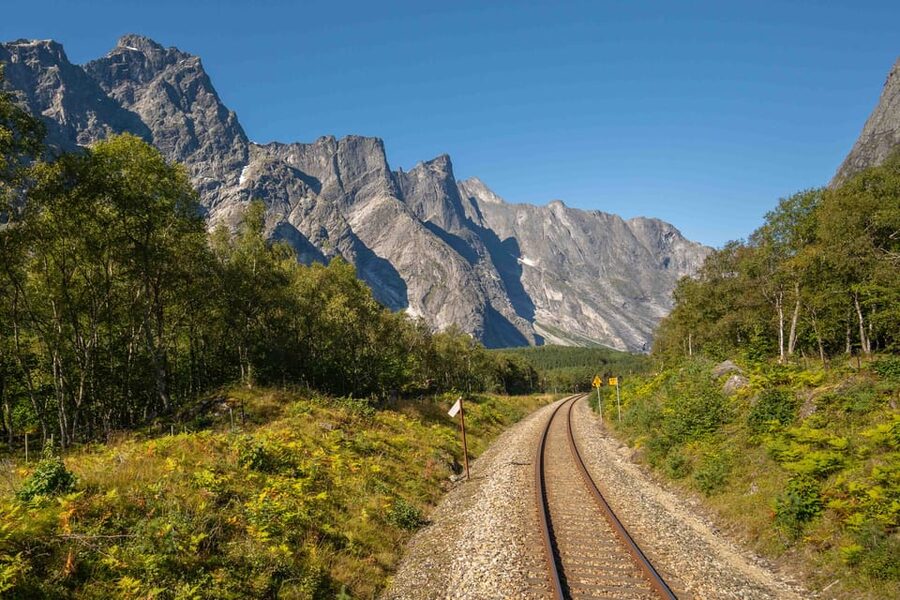
After about an hour, the train reaches Bjorli. The planned stop lasts around 30 minutes, giving you a chance to step off, stretch your legs, and take pictures outside the carriage.
Bjorli is a quiet pause rather than a packed sightseeing stop. The main attraction remains the railway journey, and there is not a large town-center program built into this excursion. A small station-house collection includes memorabilia connected with the Norwegian gold run during the Second World War. It does not take long to see, but it adds useful context to the Golden Train story.
The stop can feel short if the train has been held for freight traffic. In that case, you may have only a few minutes to look around before boarding again. I would use the time for a quick photograph, the station-house display, and fresh air rather than expecting a full visit to Bjorli.
If you are hoping to hike, shop, or explore a larger town, this is not the right excursion. The stop is designed to break up the ride and provide a brief look at the end of the line. The scenery from the train is the real event.
The return ride to Åndalsnes
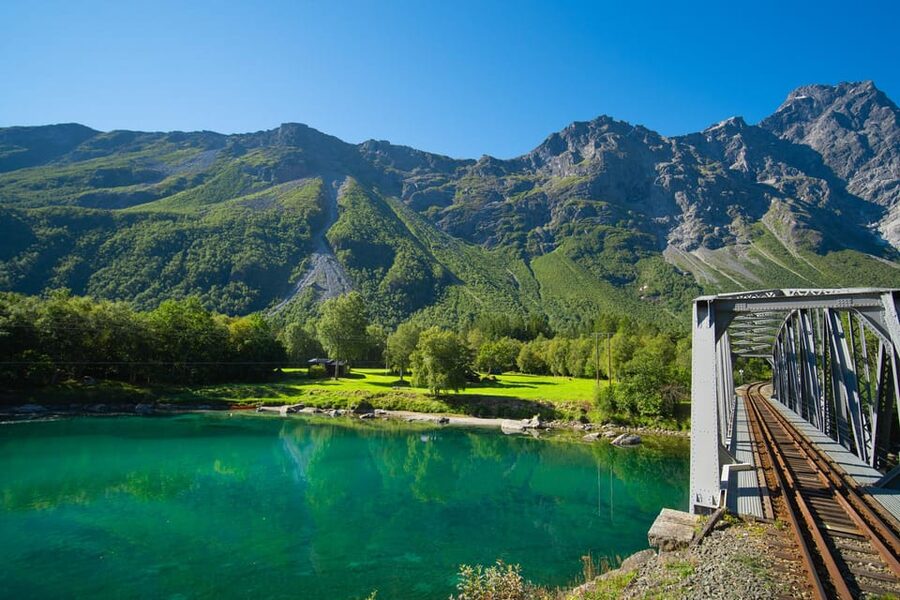
The train then heads back to Åndalsnes for about another hour. You get a second chance at the sights, often from a different angle. The return leg is useful for photographs you missed on the way out, especially if weather or fellow passengers blocked your view earlier.
A common mistake is to treat the return as dead time. I would not. The mountains can look different with the train moving in the opposite direction, and you now know where the best scenes appear. Use the first trip to listen and get your bearings, then use the return for more deliberate photography.
Seat confusion is the one practical issue to watch. Some passengers may change places, while others may assume their original seat is still reserved. The experience has no clearly described seat-allocation system in the supplied information, so arrive early, pay attention to where you sit, and be polite if the carriage becomes busy.
The train itself is reported to be clean, with clear windows. That makes a real difference on a photo-focused journey. Reflections and dirty glass can ruin mountain pictures, so the condition of the carriage is not a minor detail here.
Commentary, phones, and what to bring
The English commentary is one of the strongest parts of the experience. A live speaker shares facts and stories through much of the trip, with a style described as both informative and funny. That helps during quieter stretches, when the view is still pleasant but less dramatic.
You should bring:
- A charged smartphone
- Headphones
- A camera or phone with plenty of storage
- A light layer for the Bjorli stop
The first two items are specifically required for the audio guide. The train has a toilet, so you do not need to plan the entire journey around finding facilities. Drinks and snacks are available on board according to the supplied information, but bringing your own small snack may still be sensible if you have dietary needs.
Weather is the great unknown. Clear skies give you the full effect of the high peaks and rock faces. Cloud, rain, or mist can hide parts of Troll Wall and the upper mountains. The route still has value in poor conditions because the railway, bridges, waterfalls, and commentary remain, but this is an outdoor-viewing trip at heart.
Is $64 a fair price?
At $64 per person, the tour is not a bargain train commute, but it offers more than transport. You get a round-trip ticket, guided commentary, a Bjorli break, and a route that would be difficult to experience as easily by car during a short visit.
The value looks particularly good for cruise passengers. Several supplied comments describe the same trip as costing about half as much as the cruise company’s excursion. That difference can be substantial for two people or a family. You should compare the exact inclusions before booking, but the price is competitive if the cruise excursion uses the same railway experience.
The 2.5-hour duration also helps. You get a major scenic outing without giving up an entire day in Åndalsnes. The tradeoff is that the schedule leaves little room for delays. If freight traffic holds the train, the Bjorli stop may shrink, but the total excursion still centers on the railway ride.
Free cancellation up to 24 hours before departure and the option to reserve now and pay later add flexibility. Check the available starting times carefully, especially if you are coordinating this with a ship departure or another activity.
Who should book the Golden Train?
I would recommend this ride to you if you want dramatic Norwegian scenery without a strenuous walk. It suits photographers, rail fans, families, cruise passengers, and anyone who prefers a guided outing with a clear start and finish.
It is also a good choice if you want context. The stories about mountain life and the Second World War give the route more meaning than a silent train ride. The live guide is especially useful when cloud blocks some of the views, since the historical material still gives you something to focus on.
I would think twice if you want a long stop at Bjorli, a hiking day, or complete control over your seat. This is a set railway excursion, and the best views depend partly on weather, window position, and how busy the carriage is.
Should you book this train ride?
Book it if your priority is the journey itself. Troll Wall, Kylling Bridge, Verma Waterfall, the green river, and the 32 bridge crossings make this one of the strongest short excursions from Åndalsnes.
Arrive early, aim for a clear window, bring your headphones and a charged phone, and keep your camera ready before the big sights appear. If you are visiting by cruise ship, the station’s location near the quay and the price compared with ship excursions make the choice even easier. Just remember that Bjorli is a brief pause, not the main destination. The train ride is the reason to go.
FAQ
How long does the Golden Train experience last?
The full round trip lasts about 2.5 hours. The train ride takes about one hour each way, with a planned 30-minute stop at Bjorli.
Where does the train depart?
The experience starts and ends at Åndalsnes station in Møre og Romsdal County, Norway.
What sights can I see from the train?
You can see Troll Wall, Verma Waterfall, Kylling Bridge, high mountain peaks, jagged rock faces, emerald green river scenery, and 32 railway bridges.
Is there a guide on the train?
Yes. The activity includes an English-speaking guide, and live commentary is provided on board. An audio guide on your own phone is also included.
What should I bring?
Bring headphones and a charged smartphone. You should also bring a camera or phone for pictures of the scenery and bridges.
Is there a toilet on the train?
Yes. The train has a toilet on board.
How much does the experience cost?
The listed price is $64 per person.
Can I cancel the booking?
You can cancel up to 24 hours before the experience for a full refund. You can also reserve your place and pay later.
Just added around Norway
- Lofoten Winter Panoramic Tour★ 5.0 · 31 reviews
- Lofoten Highlights Photo Tour – Henningsvær & Haukland★ 5.0 · 14 reviews
- Lofoten VIP PRIVATE tour from Svolvaer★ 5.0 · 13 reviews
- Small Group Luxury Cruise to Trollfjord on a 33m Classic Yacht★ 5.0 · 29 reviews
- Private Full Day Sightseeing Tour from Svolvær to Å★ 5.0 · 12 reviews
- Sea Eagle Safari from Svolvær to Trollfjorden★ 5.0 · 124 reviews
- Lofoten RIB Sea Eagle Safari and Trollfjord Cruise★ 5.0 · 69 reviews
- North Lofoten Highlights Photo Tour (Summer)★ 5.0 · 6 reviews
Train Experiences, compared.
Viking Village, Nærøyfjord Cruise & Flåm Railway
Read our review →
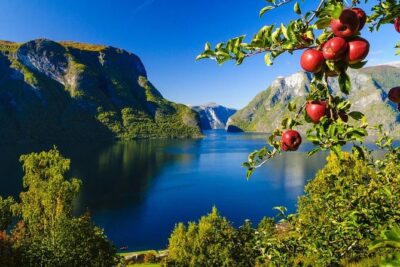
Guided tour – Viking Village, Nærøyfjord Cruise and Flåm Railway
Read our review →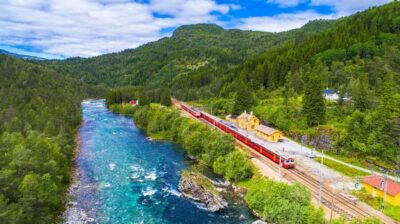
Viking Village, Nærøyfjorden Cruise and Flåm Railway
Read our review →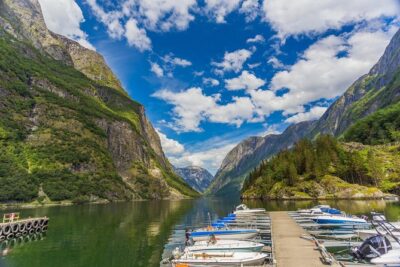
Oslo To Sognefjord Private Full Day Roundtrip Including Flam Railway
Read our review →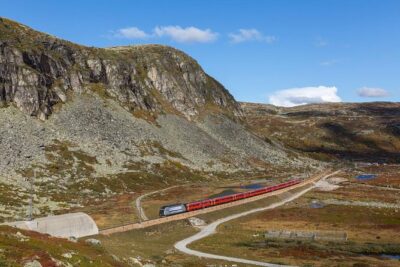
Oslo To Bergen Self-Guided Full Day Trip with Flåm Railway And Fjord Cruise
Read our review →
Private Full-Day Round Trip from Oslo to Sognefjord via Flåm Railway
Read our review →
Browse the lists this tour appears in