Reviewed · OLD TOWN WALKING TOURS
Stockholm Old Town and the Vasa Museum, a Small Group Walking Tour.
Stockholm’s most useful history lesson ends with its most astonishing sight: the nearly intact Vasa warship, recovered after sinking on its maiden voyage. Before you reach the museum, you’ll walk through Gamla Stan, hear how Stockholm grew from a handful of islands, and cross to Djurgården by public ferry.
I like the small group of no more than 10 because it gives you room to ask questions and makes it easier for the guide to adjust the pace. I also like the mix of walking and water transport: the ferry provides a welcome rest and gives you a fresh view of Stockholm’s harbor.
The main drawback is the pace. About 1.5 miles of walking takes place on old cobblestones, and the guided portion inside the Vasa Museum lasts only about 30 minutes. If you want to study every deck, display, and ship model, plan to stay on your own afterward.
Key points at a glance
- A strong first-day orientation: You cover Stockholm’s origins, monarchy, religion, politics, architecture, and modern identity in one route.
- The ferry is part of the experience: The short ride from Skeppsbron to Djurgården breaks up the walking and adds harbor views.
- The Vasa Museum admission is included: You avoid arranging a separate ticket and receive an introduction to the ship from your guide.
- Small groups matter here: With a maximum of 10 people, questions and photo stops are easier to manage.
- Guides add practical help: Natalie and Bengt provide historical visuals, restaurant suggestions, maps, and ideas for the rest of your stay.
- Good shoes are essential: The route is not long by city-walking standards, but cobblestones and a steady three-hour outing can tire your legs.
This tour works best as an introduction rather than a full study of Stockholm. In three hours, you move from the city’s medieval beginnings to its royal past, then across the water to one of Sweden’s most remarkable museums.
You are not simply ticking off sights. The route gives you a basic framework for understanding Stockholm. You learn why the city was built where it was, how Sweden broke from Denmark, why Gustav Vasa matters, and how the country moved from monarchy and war toward diplomacy, industry, and social welfare.
The price is $125.77 per person. That is not cheap for a three-hour outing, but it includes a guide, the ferry ride, museum entry, and a small group. If you would otherwise pay separately for a museum ticket and a private guide, the cost can make sense. The value is strongest for a first visit, a short stay, or anyone who wants help connecting the city’s sights instead of seeing them as isolated photo stops.
Meeting at Gamla Stan Metro Station
The tour begins at 10 a.m. at Munkbrogatan 8, inside the Gamla Stan Metro station, in front of the Pressbyrån kiosk. This detail matters. You are meeting underground, not simply somewhere near the station entrance, so read the meeting instructions carefully before setting out.
The starting point puts you right beside Stockholm’s oldest district. From here, the guide begins with a broad account of Sweden’s past, starting with the Ice Age and the first settlements on the islands. That may sound like a lot to cover, but it gives the rest of the walk a useful frame.
Natalie and Bengt are the guides most often associated with this experience. Natalie is especially good at using pictures, maps, and prepared visual material to make buildings and royal stories easier to follow. Bengt adds a dry sense of humor, historical images, and practical help with restaurants and further sightseeing.
More Museum Visits in Stockholm
- Stockholm: Skansen Open-Air Museum Admission Ticket
★ 4.5 · 3,427 reviews - Stockholm Pass: Save up to 50% – Includes Vasa Museum Ticket
★ 4.1 · 2,392 reviews - Stockholm: Nobel Prize Museum and Exhibition Entry Ticket
★ 4.3 · 994 reviews
Riddarholmen and Stockholm’s earliest story
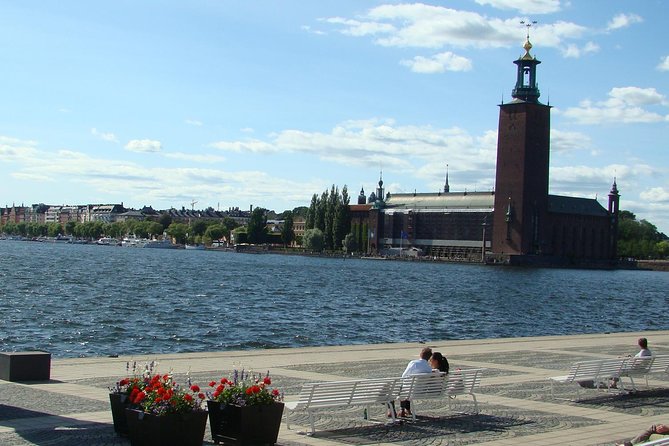
The first stop is Riddarholmen, or Knights Island. From here, you get an open view across Lake Mälaren toward Stockholm City Hall, one of the city’s best-known landmarks.
This is a smart place to begin because it lets you see Stockholm as a city of water. The capital is spread across islands, and the waterways are not just decoration. They shaped trade, defense, transport, and the city’s growth.
The guide then points out the statue of Birger Jarl near Riddarholmen Church. He is traditionally regarded as the founder of Stockholm, and the year 1252 is the first recorded written mention of the city. You get only a short stop here, but the story helps explain why Stockholm developed as a strategic point between the lake and the Baltic Sea.
Riddarholmen Church itself is an important landmark, though this tour focuses on the exterior. If you are eager to see the inside of every church or palace, keep in mind that this is an overview route, not an interiors tour.
Gustav Vasa and the making of modern Sweden
Outside Riddarhuset, the House of Nobility, the focus shifts to Gustav Vasa. His statue provides an opening to discuss the Stockholm Bloodbath, Sweden’s revolt against Danish control, and the country’s break with the Catholic Church.
Gustav Vasa became king in 1523, the year often used to mark Sweden’s emergence as a sovereign state. His story is not a simple tale of a heroic founder. It also involves rebellion, executions, political power, and the shift to Lutheran Protestantism. A good guide can keep those parts connected without turning the walk into a lecture.
This is one place where Natalie’s visual aids and Bengt’s historical images can help. Seeing how buildings and streets looked in earlier periods makes the past easier to picture, especially if Swedish history is new to you.
The route does not spend long at each stop. You may get 10 minutes here, then move on. That keeps the tour moving, but it also means you should ask questions as you go rather than saving everything for the end.
The Royal Palace and Stockholm’s inner harbor
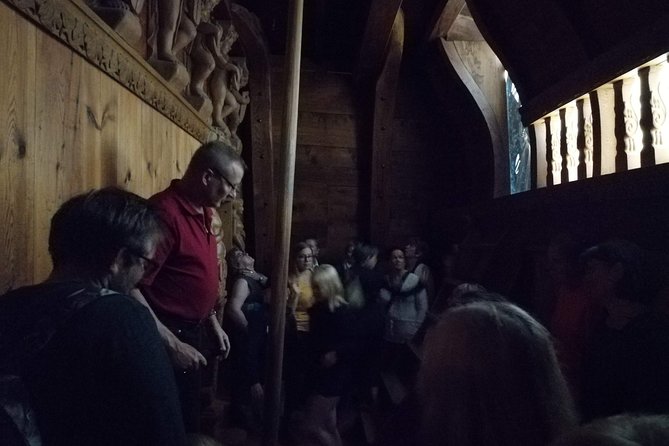
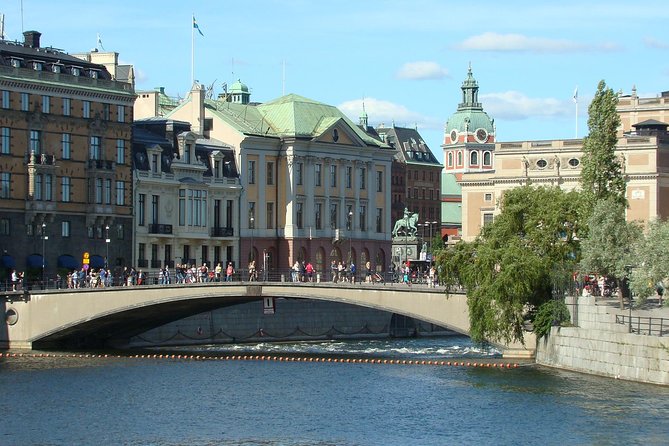
At the Royal Palace, you enter the outer courtyard and see the guards, often in formal uniforms. The stop also includes Slottsbacken, where the view opens toward Stockholm’s inner harbor.
The palace is still a working royal residence, so this exterior visit gives you a sense of its scale and setting without turning the tour into a palace museum visit. If you want the royal apartments, treasury, or other interior rooms, those require more time beyond this tour.
The harbor view is one of the route’s practical pleasures. It gives you another look at Stockholm’s waterborne layout before you later board the ferry to Djurgården.
This is also a good moment to ask your guide about other places to visit. Both Natalie and Bengt have been praised for giving useful suggestions for museums, dining, and the rest of a Stockholm stay. Their advice can help you decide what deserves a longer visit after the tour.
More Old Town Tours in Stockholm
- Walking Tour of Stockholm Old Town
★ 5.0 · 1,175 reviews - The Original Stockholm Ghost Walk and Historical Tour – Gamla Stan
★ 4.5 · 1,165 reviews - Stockholm: Old Town Walking Tour with Local Guide
★ 4.7 · 719 reviews - Walking Tour of Stockholm’s Old Town, Gamla Stan
★ 5.0 · 451 reviews
Jarnpojken and Stortorget
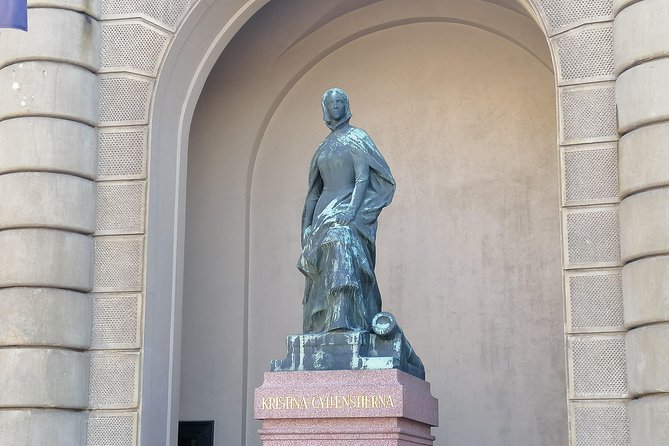
The next stop is Jarnpojken, a very small statue tucked into the Old Town. It is known as the smallest statue in Sweden, and its size makes it an amusing contrast to the palace and churches around it.
This brief stop shows one of the pleasures of walking Gamla Stan. The major sights matter, but small details give the district its character. Your guide may also help with photos here, something that has been a repeated strength of both Natalie and Bengt.
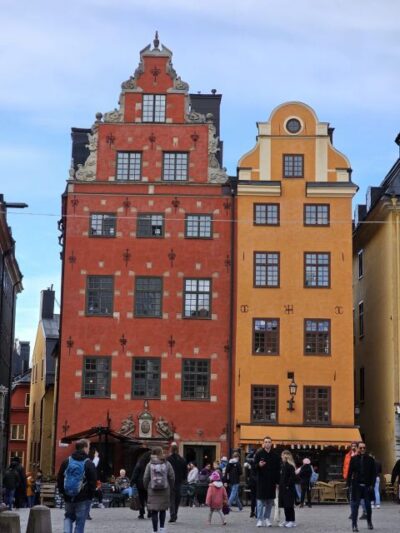
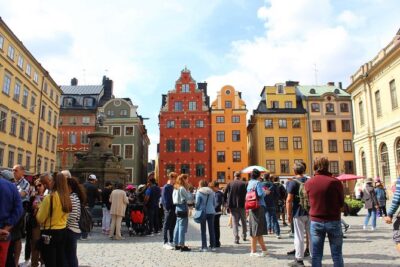
At Stortorget, the main square, you hear about the Nobel Prize Museum and the Swedish Royal Academies. The square is one of the most recognizable places in Gamla Stan, with colorful historic buildings and a long connection to the political life of Stockholm.
The history here includes the Stockholm Bloodbath, so the square is not only a pretty backdrop. It connects Sweden’s public image today with a violent episode that helped shape Gustav Vasa’s rise.
You receive roughly 10 minutes at this stop. That is enough for orientation and photographs, but not enough for a museum visit. If the Nobel Prize Museum interests you, put it on your own list for another time.
Carl XIV Johan and Sweden after the old wars
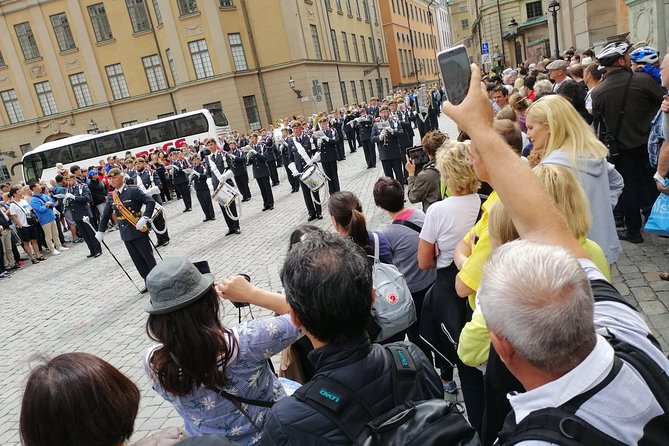
The walk continues below the statue of Carl XIV Johan, the first Bernadotte king of Sweden. His background is unusual: he came from France and was brought to Sweden in the early 19th century.
The guide uses his story to explain a major turn in Swedish history. Sweden had lost territory to Russia, but Carl XIV Johan pursued diplomacy, infrastructure, and education instead of trying to regain everything through war. Sweden later marked 200 years of peace in 2014.
This part of the tour is useful because it moves beyond medieval streets and royal drama. You hear about the industrial revolution, natural resources, Swedish inventions, and the development of the welfare state. The result is a quick explanation of how Sweden changed from a country shaped by conflict into the modern nation you see today.
The historical coverage is broad. Some people will love getting the full story in one sweep. Others may find the amount of information demanding, especially while walking. The guide can slow down for questions, but this remains a brisk overview.
The ferry from Skeppsbron to Djurgården
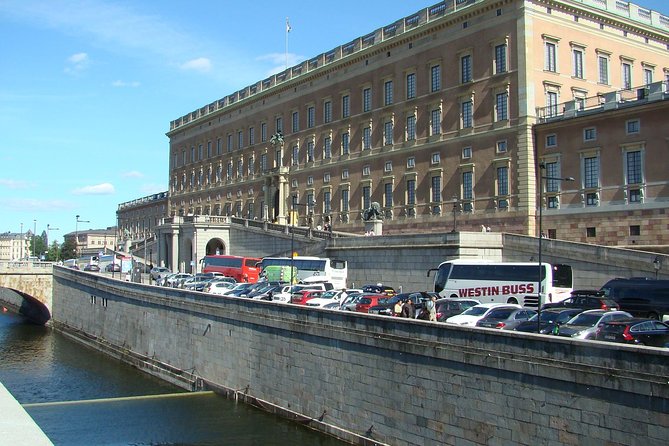
At Skeppsbron 26, you board the Djurgårdsfärjan, the ferry to Djurgården. This short boat ride is one of the best design choices in the experience.
After walking through Gamla Stan, the ferry gives your feet a break and changes the view completely. Instead of looking up at narrow streets and old facades, you see Stockholm from the water. It also makes the transfer to the Vasa Museum part of the tour rather than a separate transportation chore.
The ferry is public transport, not a private sightseeing cruise. That means the ride is practical as well as scenic. You should not expect a long narrated harbor excursion, but you do get a pleasant pause and a useful sense of how the islands connect.
After arriving on Djurgården, you walk about another half mile to the museum. The total route is approximately 2.4 kilometers, or 1.5 miles. The distance is manageable for most people with moderate fitness, but the cobblestones and repeated stops can make it feel longer than the number suggests.
Seeing the Vasa Museum with a guide
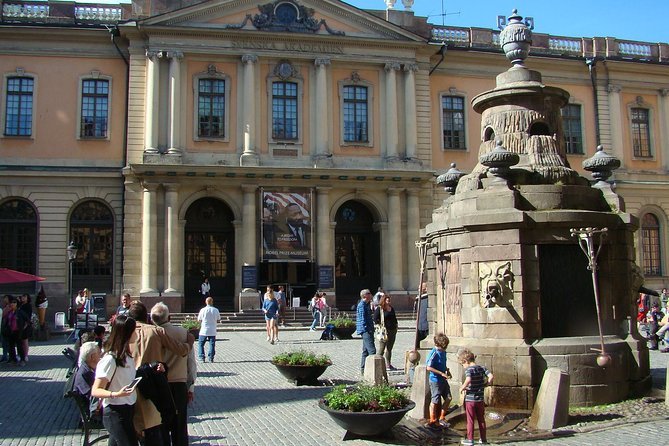
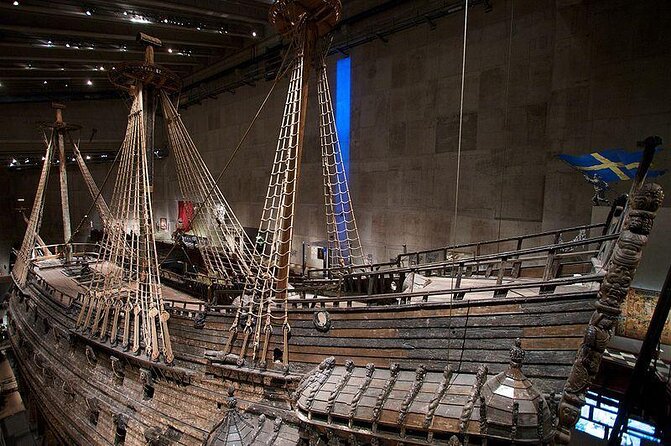
The Vasa Museum is the tour’s big finish. Admission is included, and the guide gives you an introduction to the ship and its dramatic fate.
The Vasa sank less than a mile into its maiden voyage in 1628. More than 300 years later, it was salvaged in remarkably complete condition. That story alone is gripping, but the ship becomes more impressive when you understand the scale of the project, the decoration, and the reasons it failed so quickly.
The guided museum portion lasts about 30 minutes. Your guide points out the ship and explains the main story, giving you the context needed to make sense of the displays. Bengt has used historical pictures of buildings and other visual material during the walking portion, while Natalie is known for careful explanations and well-organized information.
Do not mistake the 30-minute guided visit for the total museum experience. You are welcome to remain inside after the tour ends, and you should if your schedule allows. Many people will want another 1.5 to 2 hours to examine the ship, models, exhibits, and displays at a slower pace.
The museum has a café and restaurant, so you can also use it as a natural lunch stop. If you rush off immediately, you may miss the strongest part of the day.
What else you can do on Djurgården
The tour ends at the Vasa Museum, but Djurgården gives you several ways to continue. The Abba Museum, Viking Museum, Gröna Lund amusement park, and Skansen are all on the island, though none is included in the tour price.
This makes the route especially useful if you plan ahead. You can take the morning tour, stay on Djurgården for lunch, and choose one more attraction afterward. Do not try to fit all of them into the same day. The Vasa Museum alone deserves proper time, and the tour itself has already filled your morning.
Pace, group size, and physical demands
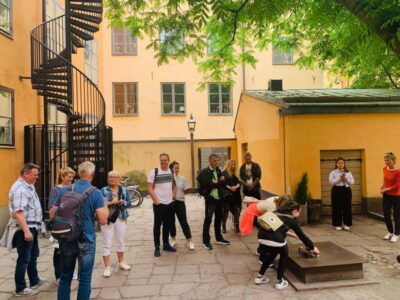
The maximum group size is 10. That is small enough for a personal feel, especially at busy Old Town stops where a large group can block doorways and lose track of the guide.
The guides are also willing to adjust the pace. Natalie has been praised for looking after a late-arriving participant and helping everyone with photographs. Bengt is known for patience, humor, and practical directions after the tour ends.
Still, do not expect a slow, leisurely stroll. You cover many subjects and several parts of the city in about three hours. The route includes cobblestones, and one participant found the walking tiring and the museum portion too short. That is fair criticism.
Wear shoes with solid support. If you need frequent rest stops, tell the guide at the start. The tour includes pauses for photographs and explanations, but it is not designed for someone who wants to sit often.
Who should book this Stockholm tour?
I would choose this tour for a first morning in Stockholm, especially if you have only a day or two in the city. It gives you enough history to understand what you are seeing and ends at a museum that deserves far more time than the guided visit provides.
It also suits people who enjoy stories more than silent sightseeing. The guides explain royal families, Swedish politics, architecture, old photographs, and local life. Their restaurant suggestions and maps can help you plan the rest of your stay.
Families with older children may like the ferry and the Vasa ship, though the amount of history requires attention. It is also a good fit for cruise passengers who want something more personal than a large ship-organized bus tour.
I would think twice if your priority is a long museum visit or a very slow pace. You can stay at the Vasa Museum afterward, but the walking section remains active and information-heavy. Anyone with leg or balance concerns should take the cobblestones seriously.
Cancellation is free up to 24 hours before the 10 a.m. start time. A minimum number of participants is required, and if the tour cannot run, you are offered another option or a full refund.
Should you book it?
Book it if you want a guided introduction to Stockholm that joins Gamla Stan, the harbor, and the Vasa Museum in one efficient morning. The included ferry and museum admission add real value, while the 10-person limit keeps the experience personal.
Skip it if you already know Stockholm well, dislike brisk walking, or want several uninterrupted hours inside the Vasa Museum. For most first-time visitors, though, this is a well-planned way to get your bearings, learn the larger Swedish story, and finish beside one of Europe’s most remarkable historic ships.
FAQ
How long is the Stockholm Old Town and Vasa Museum tour?
The tour lasts approximately three hours. The route covers about 1.5 miles, or 2.4 kilometers, including the walk through Old Town and the walk from the ferry to the Vasa Museum.
Where does the tour start?
It starts at Munkbrogatan 8 in Stockholm. The guide meets you inside the Gamla Stan Metro station, in front of the Pressbyrån kiosk.
What time does the tour begin?
The scheduled start time is 10 a.m.
Where does the tour end?
The tour ends at the Vasa Museum, at Galärvarvsvägen 14 on Djurgården.
Is entry to the Vasa Museum included?
Yes. Admission to the Vasa Museum is included in the tour price.
Is the ferry ride included?
Yes. The tour includes a ride on the Djurgårdsfärjan from Skeppsbron to Djurgården.
How large is the group?
The group has a maximum of 10 participants.
What should I wear for the walking tour?
Good walking shoes are recommended. Much of the Old Town route is on cobblestone streets, and the tour requires a moderate level of physical fitness.
More Walking Tours in Sweden
- Stockholm: Old Town Guided Walking Tour (English / Deutsch)
★ 4.7 · 284 reviews - Stockholm: Old Town Walking Tour, stories and secrets
★ 4.8 · 275 reviews - Classic Stockholm Small Group Walking Tour | 3 Hours
★ 5.0 · 96 reviews - Unique walking tour Stockholm
★ 5.0 · 68 reviews
More Walking Tours in Stockholm
- Stockholm: Ghost Walk and Historical Tour
★ 4.7 · 2,206 reviews - Best of Stockholm Walking Tour-3 Hours, Small Group max 10 people
★ 5.0 · 645 reviews - The Nordic Food Walk Stockholm
★ 4.5 · 642 reviews - Stockholm: Old Town Historical Walking Tour
★ 4.9 · 344 reviews
Just added around Stockholm
- Traditional Persian Cooking Class in Stockholm with a Local★ 5.0 · 20 reviews
- Stockholm Top attractions all-inclusive Gran Tour Winter Edition★ 5.0 · 6 reviews
- Airport Limousine Transfer: Arlanda Airport to Stockholm City 1-7 Passengers★ 4.0 · 5 reviews
- Scandinavian Art, Architecture and Design Tour in Stockholm★ 4.5 · 11 reviews
- Wolf and Wildlife Tracking in Sweden★ 5.0 · 9 reviews
- Stockholm: Sunset Hike in Tyresta National Park with Meal★ 5.0 · 79 reviews
- Walking Tour of Stockholm’s City Center★ 4.5 · 26 reviews
- Private Tour: Swedish History Day Trip to World Heritage Candidate Markim-Orkesta from Stockholm★ 5.0 · 8 reviews
Old Town Walking Tours, compared.
The Original Stockholm Ghost Walk and Historical Tour – Gamla Stan
Read our review →

Walking Tour of Stockholm’s Old Town, Gamla Stan
Read our review →

Old Town Guided Walking Tour (English / Deutsch)
Read our review →