

Reviewed · MUSEUMS
Oslo: Munch Museum Admission Ticket
The most memorable part of this Oslo museum visit is the chance to see The Scream, with different versions shown on a rotating schedule. The museum also gives you much more than one famous image: you can follow Edvard Munch’s thoughts on love, fear, death, and the human condition through paintings, prints, and sketches.
I like the freedom of a self-guided visit, since you can give The Scream a quick look or spend two hours tracing Munch’s artistic changes. I also like the chance to see Madonna and lesser-known works alongside the famous pieces. The main drawback is timing: The Scream is not necessarily on view every minute, so you need to pay attention to the museum schedule during your visit.
Key points to know before you go
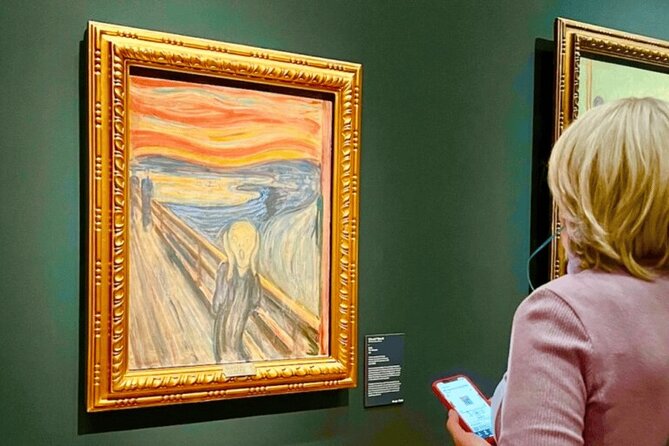
- Three versions of The Scream rotate: Different versions are shown on a schedule, with one reported rotation taking place every 30 minutes.
- Madonna is part of the collection: The visit goes beyond Munch’s best-known painting and introduces his wider artistic world.
- Plan for about two hours: That gives you time to look closely without turning the museum into an all-day commitment.
- Your valid ticket arrives by email: The booking confirmation from GetYourGuide is not the admission ticket.
- Large bags are not allowed: Bring only what you need, along with a passport or ID card.
- The ticket costs $39 per person: Its value depends on how much time you give to the full collection, not just The Scream.
Why The Scream is only part of the story
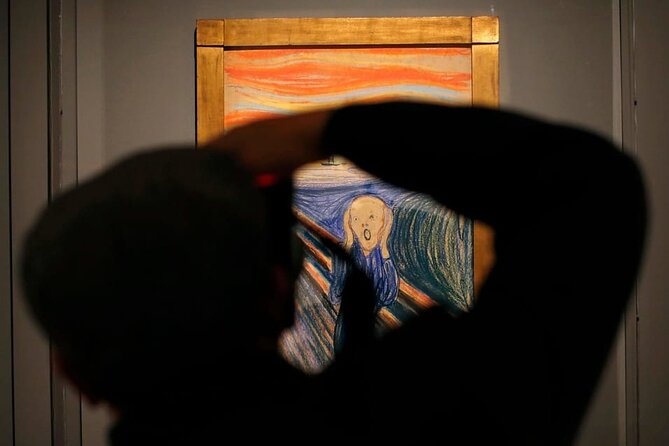
Many people come to this museum for The Scream. That makes sense. It is one of the most recognizable images in modern art, and seeing it in person gives the work a different weight than a small reproduction on a screen.
Still, I would not treat the museum as a one-painting stop. Munch created paintings, prints, and sketches that return again and again to fear, loneliness, love, illness, death, and uncertainty. These subjects can sound heavy, but they give the collection a clear thread. You are not simply looking at isolated pictures. You are following an artist who kept testing how color, line, and repeated images could express inner life.
The museum is devoted to Munch’s life and work, so the visit helps place his art within the cultural world of late 19th and early 20th-century Europe. You can see how his style changed and how his experiments challenged familiar ideas about what art should show.
That context matters. The Scream can seem like a single dramatic image when you see it reproduced on posters and souvenirs. At the museum, it becomes part of a larger creative process. You can compare it with other works and notice how Munch used distortion, mood, and strong visual choices to communicate feelings that a realistic scene might not capture.
More Museum Visits in Norway
- Kon-Tiki Museum Entrance Ticket
★ 4.5 · 1,096 reviews - Oslo: Paradox Museum Entry Ticket
★ 4.3 · 799 reviews - The Fram Museum Admission Ticket
★ 4.5 · 490 reviews
Seeing The Scream on a rotating schedule
The most useful practical detail is also the easiest to miss: The Scream is shown at set times, not necessarily as a permanent display that you can view whenever you happen to walk past.
Different versions are placed on rotation, with one schedule described as a change every 30 minutes. That means you should not rush through the first gallery and assume you have missed your chance. Check the timing once you enter, then plan your route around it.
I would make The Scream the first major priority, especially if seeing it is the main reason you booked the ticket. Once you know when it will appear, you can use the rest of your two hours more calmly. Look at the other galleries, return for the scheduled viewing, and then continue with the collection.
The rotation also gives the painting an unusual sense of occasion. You are not simply checking a famous object off a list. You need to be present at the right moment, and you may see a different version from the one displayed earlier or later in the day.
Do not assume that every version is on display at once. The available information specifically points to three versions rotating, so the exact work you see can depend on the museum’s schedule. For anyone especially interested in Munch’s methods, this is a useful reminder that his art exists in more than one form.
Madonna and Munch’s recurring subjects
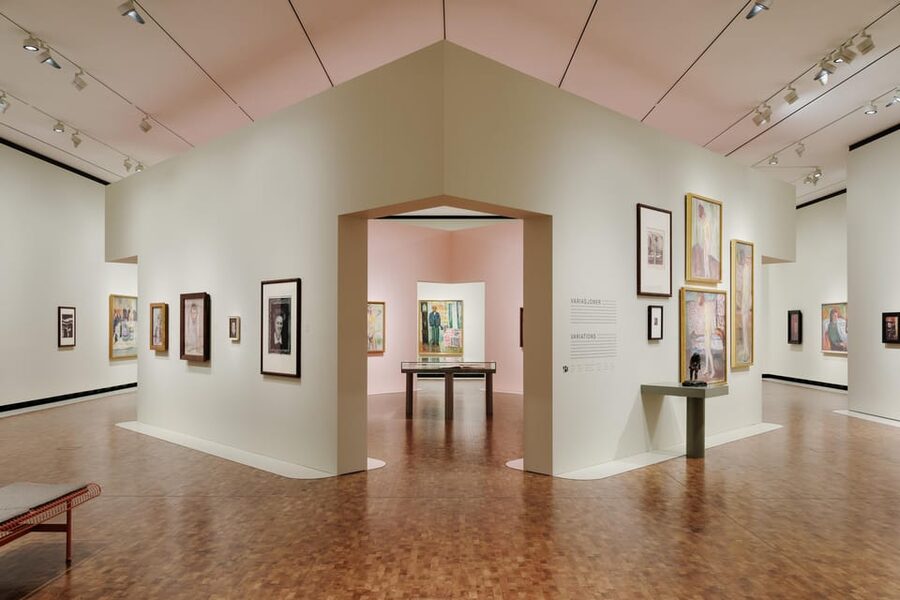
Madonna is another major work included in the visit. It gives you a chance to move beyond the anxious energy of The Scream and consider Munch’s treatment of love, desire, the body, and emotional tension.
I like the contrast between these famous works. One is widely associated with fear and existential anxiety, while the other carries a more intimate and sensual mood. Together, they show why Munch is better understood through a group of works rather than a single masterpiece.
As you move through the museum, look for repeated concerns instead of trying to memorize every title. Munch returned to personal relationships, isolation, death, and the difficulty of connecting with other people. His art can feel emotionally direct, even when the image is not realistic in a traditional sense.
The paintings are only one part of the experience. Prints and sketches give you a closer look at his working process. They can help you see how Munch tested ideas, repeated motifs, and changed his approach. If you enjoy learning how an artist thinks, these works may hold your attention longer than the headline pieces.
Following an artist who kept experimenting
Munch’s importance comes partly from his willingness to experiment. His work does not stay within one neat style, and the museum gives you a way to see that movement over time.
You might begin with a painting that feels immediately familiar, then encounter a print or sketch that is less polished but more revealing. That contrast can show how an idea developed before reaching a final form. It also reminds you that famous art often grows from trial, repetition, and revision.
I would give yourself permission to pause in front of works that are not already known to you. The museum’s value is strongest when you use it to discover how Munch handled color, line, and simplified forms across different types of work.
This is also where the visit connects to modern art. Munch’s images are not concerned only with recording what a person or place looks like. They ask how an experience feels. That approach helped change the direction of European art, and you can see the roots of that change in his experiments.
The late 19th and early 20th centuries were a period of major artistic change. Munch’s work belongs to that wider shift, but the collection remains personal rather than purely historical. His art keeps returning to private emotion, which is why it can still feel immediate.
More Museum Visits in Oslo
- Oslo: Oslo Discovery Tour with 2 Museums Included
★ 4.6 · 334 reviews - The Viking Planet Museum Ticket
★ 4.0 · 197 reviews - Private sightseeing in a Volvo XC 90 All inclusive museum/guiding
★ 5.0 · 35 reviews - Oslo Munch Museum Admission Ticket
★ 4.0 · 29 reviews
A sensible two-hour route through the museum
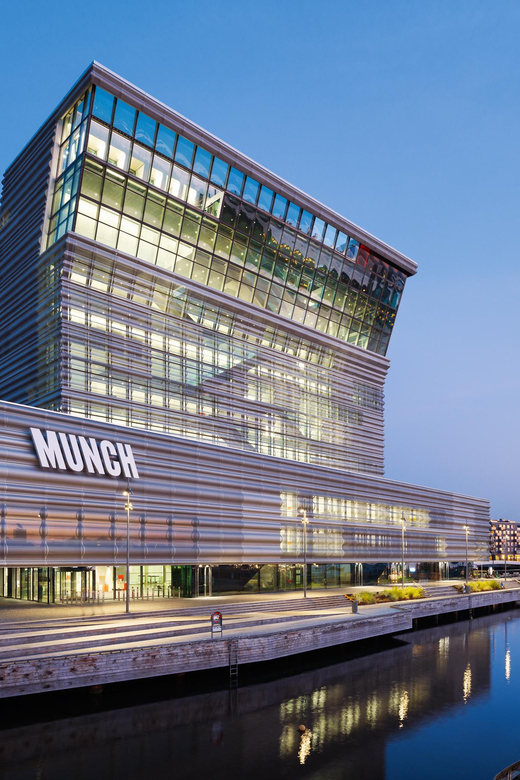
The stated duration is about two hours. That is enough for a focused visit, especially if you arrive with a simple plan.
Start by checking the schedule for The Scream. Since the display rotates, this small step can prevent disappointment. Then spend time with the main works, including Madonna, before moving into paintings, prints, and sketches that show Munch’s broader range.
After that, return to The Scream at the appropriate time if needed. You can then use any remaining time to revisit works that caught your attention. A museum visit often becomes more rewarding on the second look, when you are no longer trying to see everything at once.
Two hours is a good length for most people who want a clear introduction to Munch. If you read every label slowly or already have a strong interest in his life, you may wish you had longer. The ticket does not promise a private tour or a guide, so your pace is your own.
That independence can be a strength. You are free to linger over a haunting print, move quickly through a room that does not interest you, or return to a favorite painting. If you prefer a structured explanation from a guide, keep in mind that the ticket includes admission only.
Is $39 a fair price?
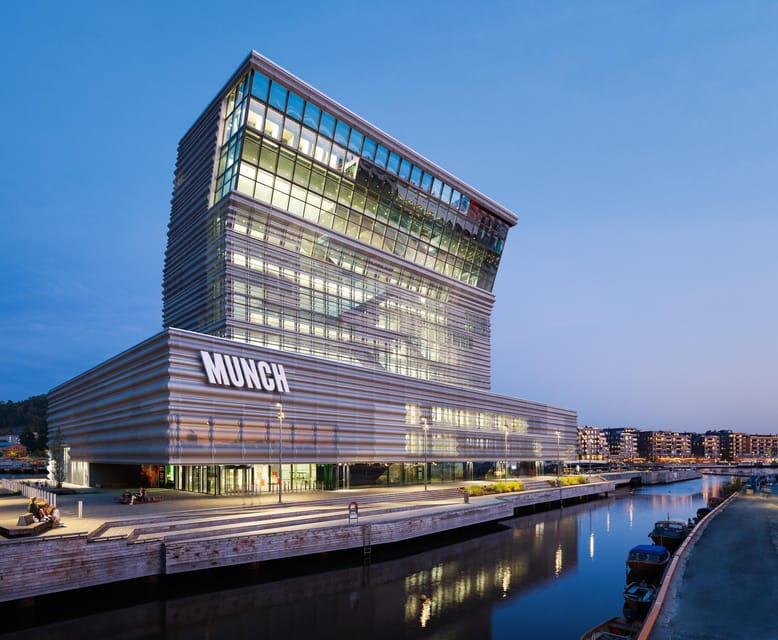
At $39 per person, this is not a cheap museum stop. The value comes from the scale of the collection and the chance to see key works connected to Munch’s artistic development, not simply from the opportunity to photograph The Scream.
I think the price is easier to justify if you plan to stay close to two hours and pay attention to the paintings, prints, and sketches beyond the famous names. It is harder to justify if you intend to enter, find The Scream, and leave quickly.
The rotating display adds value for people who care about Munch’s different versions and working methods. It also means the ticket offers an experience that cannot be reduced to seeing one fixed object in one fixed place.
For a first visit to Oslo, the museum can be a strong choice if you want art that feels personal and emotionally direct. If your interests lie mainly in Norwegian scenery, architecture, or outdoor activities, you may prefer to spend your limited time elsewhere. This ticket makes the most sense for someone who wants a serious look at one artist.
Ticket details that can affect your visit
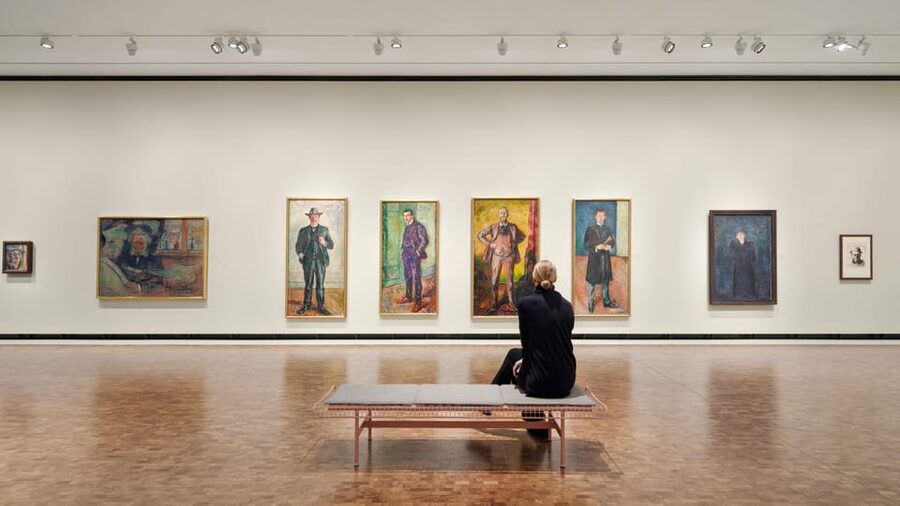
The admission process is simple, but the email detail matters. You should receive the valid ticket by email the day before your activity date. The GetYourGuide booking voucher confirms your reservation, but it is not valid for entry by itself.
When you reach the museum entrance, show the valid ticket sent by email. Bring a passport or ID card, since identification is listed among the required items.
Large bags and luggage are not allowed. Pack light and avoid arriving with a suitcase or oversized day bag. This is especially important if you are visiting Oslo between hotels or heading to the airport, since you may need to arrange another place for your belongings.
The museum is wheelchair accessible. The activity begins when you enter the museum and ends there, with no separate transportation or guided transfer included.
You can cancel up to 24 hours before the activity for a full refund. The reserve-now-and-pay-later option also gives you some flexibility while you finalize your Oslo plans.
Who will enjoy this museum most?
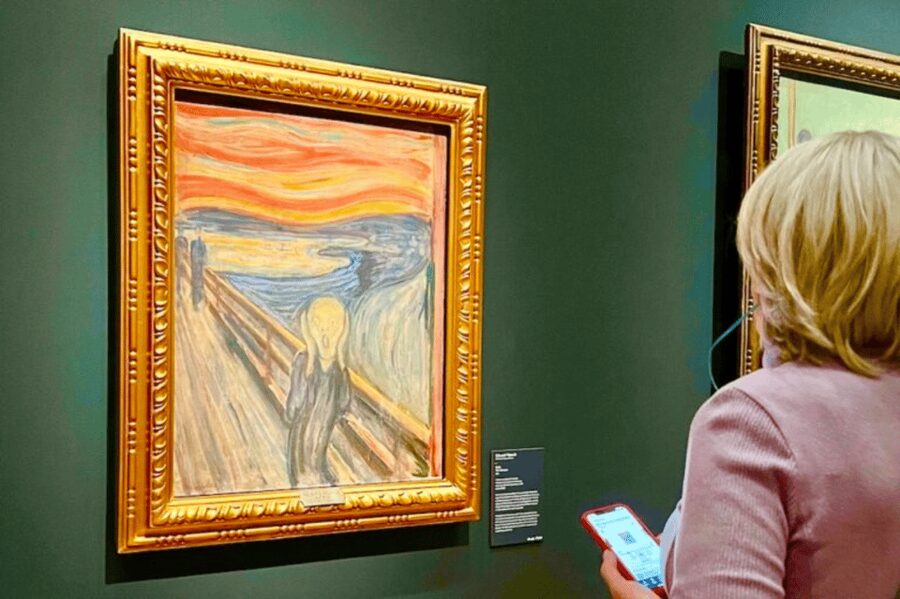
I would recommend this ticket to anyone who wants to understand why Munch matters beyond The Scream. You do not need to be an art specialist. The recurring themes are easy to recognize, and the collection gives you plenty of room to form your own response.
It is also a good fit for visitors with limited time. Two hours is long enough to see the major works and gain a sense of Munch’s development without giving up an entire day.
Families and mixed-interest groups may find the flexible pace useful. One person can spend extra time with the prints while another moves on to the better-known paintings. Since there is no stated guided itinerary, you can adjust the visit to suit your group.
I would be more cautious if you dislike emotionally intense art. Munch’s subjects include anguish, death, isolation, and difficult relationships, so this is not a light collection built around cheerful decoration.
I would also think twice if your schedule is so tight that you cannot work around the rotation for The Scream. The painting is a central reason for many people to visit, and the timing deserves attention.
Should you book the Munch Museum ticket?
Book it if you want a focused look at one of Norway’s most important artists and are willing to spend time with more than The Scream. The combination of famous works, lesser-known prints, sketches, and changing versions makes the $39 price more reasonable when you use the full two hours.
The best plan is simple: bring your valid emailed ticket, leave large bags behind, check the rotation schedule, and treat The Scream as the starting point rather than the entire visit. If you do that, the museum can give you both the famous image you came for and a much clearer sense of Munch’s life, working process, and influence.
FAQ
How long does the Munch Museum visit take?
The stated duration is two hours. You can use that time to see The Scream, Madonna, paintings, prints, and sketches.
Is The Scream always on display?
The Scream is shown according to a rotating schedule. Three versions are reported to rotate, with one change taking place every 30 minutes, so check the timing when you arrive.
Does the ticket include a guide?
No. The included item is admission to the museum. No guide is included in the activity details.
What should I bring to the museum?
Bring the valid ticket sent to you by email and a passport or ID card. The booking confirmation from GetYourGuide is not valid for entry by itself.
Can I bring luggage or a large bag?
No. Luggage and large bags are not allowed, so bring only what you need for the museum visit.
Can I cancel the ticket?
Yes. You can cancel up to 24 hours before the activity for a full refund. You can also reserve now and pay later.
Just added around Oslo
- Oslo Winter Highlights Bike Tour★ 5.0 · 36 reviews
- Unknown war. Oslo and Norway during 1940-45★ 5.0 · 74 reviews
- The Viking Planet Museum – Mini Group (4 adults)★ 4.0 · 16 reviews
- 4 hours Best View of the Oslofjord Winter Edition★ 4.0 · 15 reviews
- The Ultimate Norwegian Skiing Experience★ 5.0 · 16 reviews
- The Ultimate Study of the Human Form at Vigeland’s Sculpture Park with a Local★ 4.0 · 14 reviews
- The Viking Planet Museum Ticket★ 4.0 · 197 reviews
- The Oslo Beer Adventure★ 4.5 · 11 reviews
Museums, compared.

Stockholm Pass: Save up to 50% – Includes Vasa Museum Ticket
Read our review →

Browse the lists this tour appears in