
Reviewed · HISTORICAL TOURS
Myths and Legends: An Oslo Walking Discovery
Oslo’s past comes alive here through Viking beliefs, ghost stories, and old city secrets, not through a long string of dates. In two hours, you walk from City Hall to Oslo Cathedral, passing Christiania Torv, Akershus Fortress, and Kvadraturen along the way.
I like the compact route and the small group limit of 16 people. I also like the guides’ storytelling style, especially the warmth and humor associated with Marija and Maria. The main consideration is the tone: despite the spooky title, some stories are more curious and cultural than truly dark, and an enthusiastic guide may occasionally get ahead of the group.
Key points to know before you book
- Viking beliefs set the tone: You begin with Norse ideas about the world and how people made sense of forces around them.
- Akershus Fortress gets the most time: The 50-minute stop covers architecture, ghosts, and major Oslo atmosphere.
- The route ends near Oslo Cathedral: You finish on Karl Johans gate by Stortorvet, close to central Oslo.
- The mood is more folklore than horror: Expect entertaining legends and superstitions, not a frightening ghost walk.
- Small groups help the storytelling: The maximum group size is 16, a useful limit for a walking tour.
- The evening start works well: Meeting at 6:00 pm gives you a city walk after the main daytime rush.
Why Oslo’s myths make a good introduction

Oslo can feel easy to understand at first glance. The center is compact, public transport is close at hand, and many major sights sit within a manageable walk. Yet the city’s older stories are not always obvious from the streets.
This tour gives you a way to read those streets. You hear how the Vikings understood the world, how local people used signs and superstitions, and why certain places gathered ghost stories. That approach is more memorable than simply hearing that a building was constructed in a particular year.
I especially like tours that connect folklore to daily life. A myth is not just a strange tale from the past. It can show you what frightened people, what they respected, and how they tried to protect themselves from bad luck. This walk uses that idea well.
The experience is conducted in English and lasts about two hours. It is long enough to give you a useful introduction to central Oslo, but short enough to fit around dinner or an evening plan. The route is also practical for a first visit because it links several important central areas rather than keeping you in one small square.
The tour begins at Fridtjof Nansens plass 8 at 6:00 pm. You finish at Stortorvet, on Karl Johans gate near Oslo Cathedral. That makes the ending convenient if you want to continue exploring central Oslo on foot.
More Historical Tours in Norway
- Oslo: Historic Myths & Legends Evening Walking Tour
★ 4.8 · 408 reviews - Unknown war. Oslo and Norway during 1940-45
★ 5.0 · 74 reviews - Oslo: History, Art and Secrets Tour
★ 4.7 · 62 reviews
City Hall and the Viking view of the world
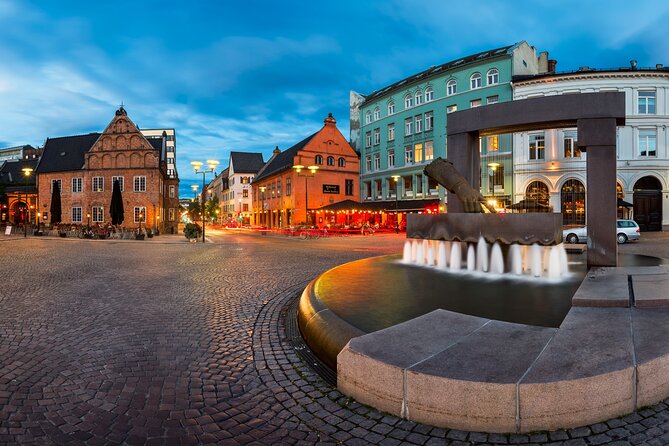
The first stop is outside Oslo City Hall, with about 15 minutes devoted to Viking beliefs and their understanding of the world around them. You do not go inside, so think of this as a short orientation stop rather than a detailed City Hall visit.
That is not a weakness. Starting outdoors lets the guide establish the ideas that shape the rest of the walk without using up time on an interior tour. You begin with the broad question of how people explained nature, fate, gods, and danger before moving into more local legends.
The setting also helps you get your bearings. If you have just arrived in Oslo, Fridtjof Nansens plass and City Hall provide a clear central starting point. You can focus on the story instead of trying to find an obscure meeting spot.
The Viking material is likely to appeal most if you want cultural context rather than a museum-style lecture. The walk is not presented as a full study of Norse mythology. Instead, it gives you a compact foundation for understanding the beliefs behind the later tales.
I would arrive a few minutes early. A mobile ticket is used, and the meeting point is in central Oslo near public transportation, but it is still wise to have the confirmation ready on your phone.
Christiania Torv and Oslo’s protective superstitions
From City Hall, the walk moves to Christiania Torv for around 20 minutes. Here the focus shifts from the Vikings to ghostly apparitions and local superstitions.
This is one of the more appealing parts of the route because the stories connect fear with ordinary choices. You hear about signs people believed could warn them of bad luck or help protect them. That gives the old neighborhood a human scale. Instead of treating the past as distant and mysterious, the guide shows how superstition could shape behavior.
Christiania Torv is also a useful place for this kind of storytelling. The square belongs to Oslo’s older urban core, so the surroundings help you imagine how much of city life once happened within a small area. The experience is not simply about spotting a famous building. You are encouraged to notice what the setting might have meant to people who lived with different ideas about illness, danger, death, and fate.
The stories are entertaining, but keep your expectations in check. If you want a full horror experience with frightening effects and a consistently sinister mood, this may feel too gentle. The material is described as fascinating and sometimes ghostly, but the overall approach is friendly, historical, and often funny.
That balance is useful for families and mixed-age groups. You can enjoy the strange stories without committing to a deliberately scary night out.
Akershus Fortress, the tour’s main event
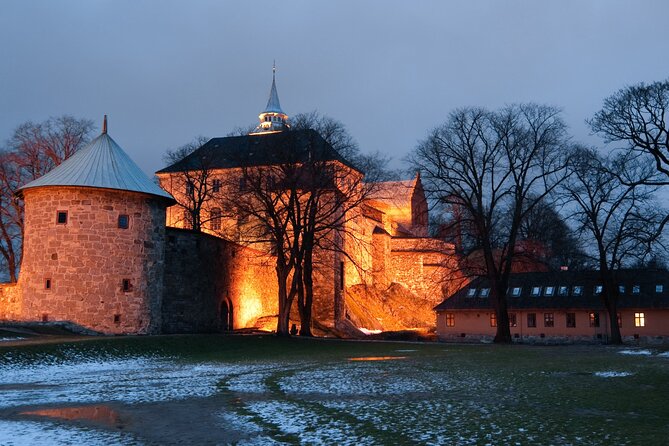
The longest stop is Akershus Castle and Fortress, with about 50 minutes set aside for the site. This is the heart of the walk, both in time and atmosphere.
The fortress dates from the late 13th century, and its imposing architecture gives the guide a strong backdrop for stories about Oslo’s past. You hear about ghosts connected with Akershus while also taking in the structure itself. The setting does much of the work: heavy walls, old defensive design, and the sense of a place that has witnessed centuries of change.
The tour information describes the fortress architecture as remaining unchanged since its construction in the late 13th century. That detail helps explain why the stop feels different from the city streets around it. You are not simply hearing about an old place. You are looking at a site whose basic form has endured across a very long span of Norwegian history.
The 50-minute timing matters. A quick pass through Akershus would leave you with a few photographs and little understanding of the site. Here, the guide has room to tell stories, point out architectural features, and let the atmosphere develop.
You should also understand what this stop does not include. The tour does not promise a separate indoor castle admission or a museum visit. The listed stops are free, and the experience is built around outdoor walking and storytelling. If you want to tour every interior room at Akershus, you will need to make another plan.
For me, this is where the price begins to make sense. You are not paying for an expensive ticketed attraction. You are paying for a guide who gives meaning to a major site while leading you through several parts of central Oslo. The fortress is the kind of place that can be easy to admire without understanding. A good storyteller closes that gap.
More Historical Tours in Oslo
- Oslo City Walks – Historic River Walk
★ 5.0 · 31 reviews - A Well Balanced History and Food Tour with Focus on the Scandinavian Kitchen
★ 4.5 · 29 reviews - Myth and Legends Oslo Walking Tour
★ 4.7 · 20 reviews - Jewish Heritage Tour in Oslo
★ 5.0 · 16 reviews
Kvadraturen and the clues in old streets
The walk continues through Kvadraturen for about 20 minutes. This is Oslo’s oldest neighborhood area, and the guide points out hidden secrets along with its mix of medieval and classic architecture.
Kvadraturen is valuable because it rewards a slower pace. You may pass through it on your way to another sight and notice only facades, corners, and street names. With a guide, those details become part of the story. The focus is not only on grand monuments. It is also on the way a city preserves traces of its past in the arrangement and character of its streets.
The blend of architectural periods gives the guide plenty to discuss. Medieval elements and later classic designs tell you that Oslo was not built in one single moment. The neighborhood reflects layers of city life, and the myths add another layer that you would not get from architecture alone.
This stop may be especially useful if you have limited time in Oslo. You get a quick introduction to one of the city’s older quarters without spending half a day on a formal architectural tour.
The phrase hidden secrets should be taken in the practical sense. Expect lesser-noticed details and stories, not a private entrance or an undiscovered attraction. The pleasure comes from seeing familiar streets with more attention.
Oslo Cathedral and a central finish
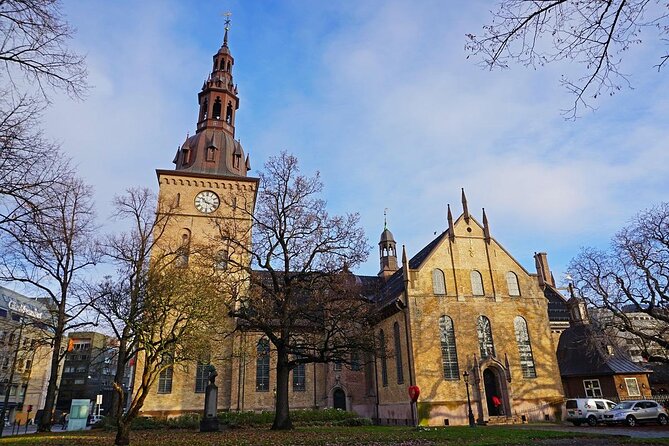
The final stop is Oslo Cathedral, dating from 1697. You view it from outside, with around 15 minutes devoted to its Baroque decoration, tall spires, and position on Stortorvet.
The cathedral provides a strong visual ending. After Viking beliefs, ghost stories, a fortress, and old streets, you finish at a prominent city landmark that is easy to recognize and easy to revisit. Its spires rise above the surrounding buildings, making the site useful for orientation as well as sightseeing.
Again, the cathedral visit is exterior only. That keeps the tour moving, but it also means you should not book this walk expecting an interior look at the building. The value is in the guide’s explanation and in seeing how the cathedral fits into the central square.
The ending is convenient. You are near Karl Johans gate and central Oslo, so you can continue walking, find food, or return to your hotel using nearby public transportation. Because the tour starts at 6:00 pm, this is a sensible way to fill an evening without giving up a full day.
How the storytelling affects the experience
The strongest feature here is the guide. The experience depends less on physical access than on how clearly and warmly the stories are told.
Marija is described as engaging, funny, approachable, and able to make historical material stick. Maria is also associated with an entertaining, well-informed presentation. Ihor is described as enthusiastic and highly interested in the subject. Those details point to a tour led by people who enjoy telling stories, not simply reciting facts.
That energy can make a big difference. The route includes several outdoor stops, and outdoor history can lose its appeal if the guide speaks in a flat voice. A warm presenter helps you stay focused, especially in the evening when you may already be tired from sightseeing.
There is one pacing issue to keep in mind. An enthusiastic guide may start a story before everyone has caught up. In a group of up to 16, that can create a small gap between the people listening and the people still walking into position. Stay close to the guide, and do not hesitate to move forward when the group changes location.
The maximum size of 16 is a real advantage. It is not a private tour, but it is small enough for a guide to address the group directly. It should also make it easier to hear stories and ask questions than on a large city walk.
Is $42.98 a fair price?
At $42.98 per person, this is not the cheapest way to walk around Oslo. You can visit the public areas of the route on your own without paying an admission fee. The price needs to be judged against the guide’s interpretation, the organized route, and the time saved planning your own history walk.
I think the value is strongest for a first-time visitor who wants an easy introduction to central Oslo. You get five connected stops, a clear two-hour structure, and a subject that adds personality to the city. The walk also takes you into parts of Oslo you might otherwise pass through without noticing.
The value is weaker if you already know the city well or prefer to read about history independently. Since the stops are viewed from outside, you are not paying for special access or included admission. You are paying for context and company.
The high rating and 95 percent recommendation suggest a strong level of satisfaction, but I would not book it based on the number alone. Match the experience to your interests. If you enjoy folklore, old buildings, and lively guides, the cost is reasonable. If you expect a genuinely dark ghost tour, you may feel the title promises more than the content delivers.
Who should book this Oslo walk?
I would choose this tour for:
- First-time visitors who want a quick orientation to central Oslo
- People who enjoy myths, superstitions, and unusual historical details
- Families with older children who can manage two hours of walking
- Couples looking for an evening activity with a little atmosphere
- History fans who prefer stories and places over a formal lecture
- Visitors who want to see Akershus Fortress with added context
I would think twice if you want a long indoor museum visit, a detailed architectural study, or a frightening ghost experience. The tour is also not ideal for anyone who finds two hours of city walking difficult. A moderate level of physical fitness is recommended.
Service animals are allowed, and the route is near public transportation. The tour is offered in English and uses a mobile ticket, so you can keep the booking on your phone.
You can cancel for a full refund up to 24 hours before the 6:00 pm start time. Changes or cancellations made less than 24 hours before the start are not accepted for a refund.
My call: book it for stories, not scares
I recommend Myths and Legends: An Oslo Walking Discovery if you want a friendly, well-paced introduction to Oslo’s older center and you enjoy folklore mixed with history. The route is sensible, the fortress stop is substantial, and the small group size supports good storytelling.
Book it with the right expectation. This is not a haunted-house experience, and not every story is especially dark. It is a guided city walk about how people understood the world, feared bad luck, remembered the past, and attached meaning to old places.
For $42.98, I would choose it early in an Oslo visit. You will leave with a better sense of the city center and several stories that can make later sightseeing more interesting. Since it is often reserved well ahead of time, booking around 38 days before your visit is a practical target if your schedule is fixed.
FAQ
Where does the tour begin?
The tour begins at Fridtjof Nansens plass 8, 0160 Oslo, Norway.
What time does the walking tour start?
The tour starts at 6:00 pm.
Where does the tour end?
It ends at Stortorvet, on Karl Johans gate near Oslo Cathedral.
How long does the experience last?
The walking tour lasts approximately two hours.
Is the tour offered in English?
Yes. The experience is offered in English and uses a mobile ticket.
What is the cancellation policy?
You can cancel at least 24 hours before the local start time for a full refund. Cancellations or changes made less than 24 hours before the start are not accepted.
More Walking Tours in Oslo
- Taste of Oslo Walking Tour
★ 4.5 · 282 reviews - Central Oslo Guided Walking Tour with Local Guide
★ 4.5 · 278 reviews - Oslo: Snowy Forest Torchlight Walk with Campfire
★ 4.6 · 254 reviews - Oslo: City Highlights Walking Tour
★ 4.8 · 197 reviews
More Walking Tours in Norway
- Oslo Nature Walks: Island Hopping Tour
★ 4.8 · 2,713 reviews - Oslo Nature Walks: Island hopping
★ 5.0 · 570 reviews - Oslo: Best of Oslo Walking Tour
★ 4.5 · 458 reviews - Oslo: Guided Walking Tour of Central Oslo
★ 4.7 · 438 reviews
Just added around Oslo
- Oslo Winter Highlights Bike Tour★ 5.0 · 36 reviews
- Unknown war. Oslo and Norway during 1940-45★ 5.0 · 74 reviews
- The Viking Planet Museum – Mini Group (4 adults)★ 4.0 · 16 reviews
- 4 hours Best View of the Oslofjord Winter Edition★ 4.0 · 15 reviews
- The Ultimate Norwegian Skiing Experience★ 5.0 · 16 reviews
- The Ultimate Study of the Human Form at Vigeland’s Sculpture Park with a Local★ 4.0 · 14 reviews
- The Viking Planet Museum Ticket★ 4.0 · 197 reviews
- The Oslo Beer Adventure★ 4.5 · 11 reviews
Historical Tours, compared.

Reindeer Camp and Sami Cultural Tour with Lunch
Read our review →
The Original Stockholm Ghost Walk and Historical Tour – Gamla Stan
Read our review →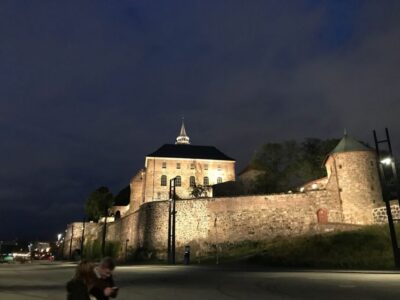


Viking History, Runes & Countryside 9h Tour to Sigtuna & Uppsala
Read our review →
Stockholm Viking History Full Day Tour to Sigtuna + Uppsala
Read our review →Browse the lists this tour appears in