
Reviewed · HISTORICAL TOURS
Myths and Legends of Oslo
Oslo’s past gets more interesting when gods, royal power, executions, church burnings, and old city streets share the same story. This private walk moves from City Hall to Akershus Fortress, using Norse myths and darker legends to explain how Oslo became the city you see today.
I like the small private format, since your guide can adjust the pace and answer questions instead of delivering a fixed speech. I also like the range, from wisdom and war in Norse mythology to the relocation of the capital and its name change to Christiania. The main drawback is time: two hours is short for a tour that tries to cover religion, politics, art, crime, and folklore.
The tour works best early in your Oslo stay. Guides including Anastasiia, Irina, and Alla have helped visitors with local suggestions as well as history, and a morning start finds central Oslo relatively quiet. Check the pickup details carefully before booking, since the information provided lists both hotel pickup as included and the official meeting point at City Hall with pickup not included.
Key points to know before booking
- A private walk from City Hall to Akershus Fortress: Your group alone takes part, with a route through central Oslo and the old Kvadraturen district.
- Norse mythology meets modern Norway: Expect stories about gods, wisdom, love, war, hate, and how old beliefs still shape Norwegian culture.
- A darker side of Oslo: The route can include an execution square, black metal church burnings, unexplained events, and tales passed down through generations.
- A useful first-day orientation: Guides can answer questions about life in Oslo and suggest activities for the rest of your stay.
- Good value for a full group: The price is $311.45 for up to eight people, which is costly for one or two people but reasonable when shared by a larger group.
- A short but thoughtful route: The listed stops total about 100 minutes, leaving some time for walking between them and discussion.
City Hall sets the mythic tone
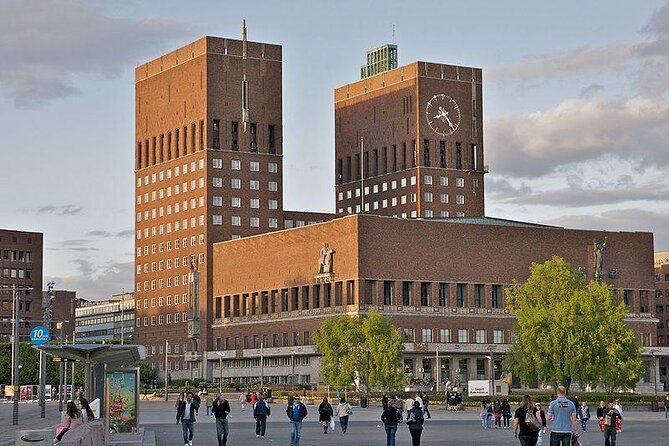
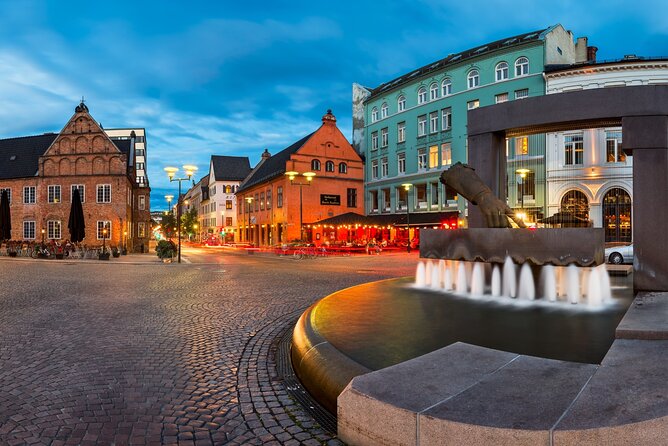
Meet at Fridtjof Nansens plass 2, beside Oslo City Hall, at 10:00 in the morning. The meeting point is easy to identify: the tour begins near the Two Swans Fountain, at the broad square in front of the city’s best-known civic building.
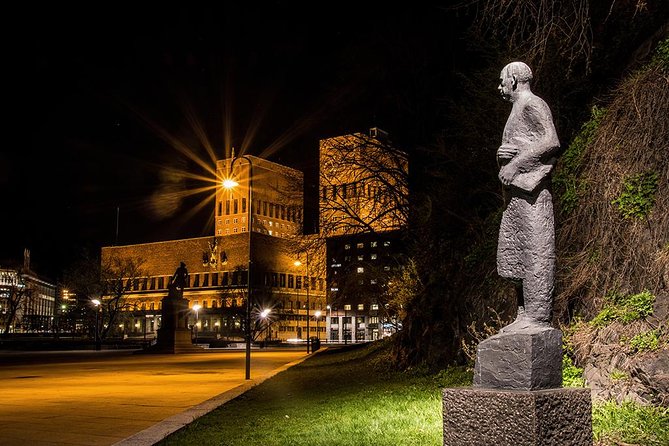
The first stop lasts about 20 minutes. Rather than treating City Hall as only a modern landmark, the guide uses it as a doorway into Norse mythology. You hear about the lives of the gods and the forces they represent, including wisdom, love, war, hate, and visions of the future.
That approach gives you more than a list of names from old Scandinavian stories. It connects the myths to ideas that still appear in Norwegian culture. If you already know the main Norse gods, you may appreciate the wider cultural angle. If the subject is new to you, the guide can provide a useful starting point without requiring previous knowledge.
I would pay close attention here, because the opening shapes the rest of the walk. This is not simply a city-center sightseeing loop. It uses legends as a way to discuss Oslo’s identity, beliefs, and changing sense of itself.
City Hall is also a practical starting point. You are in central Oslo, close to public transportation and several major sights. The square is open and exposed, so bring suitable clothing, particularly in rain or wind. The tour operates in all weather conditions.
More Historical Tours in Norway
- Oslo: Historic Myths & Legends Evening Walking Tour
★ 4.8 · 408 reviews - Unknown war. Oslo and Norway during 1940-45
★ 5.0 · 74 reviews - Oslo: History, Art and Secrets Tour
★ 4.7 · 62 reviews
Oslo symbols and stories at Radhusplassen
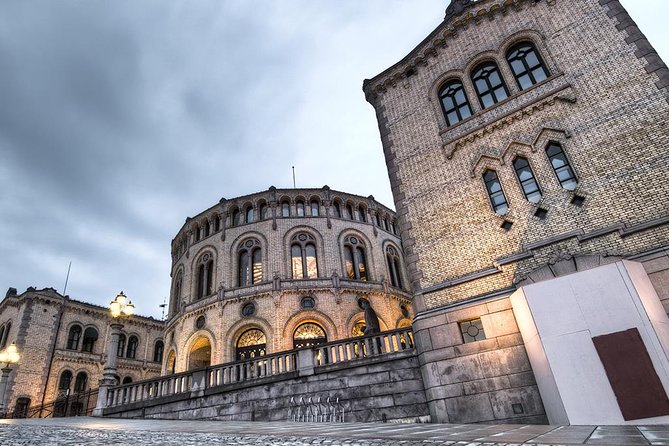
The next stop is Radhusplassen, the square around Oslo City Hall. The planned visit takes about 10 minutes, so expect a concise explanation rather than a long pause.
Here, the focus shifts from the gods to Norwegian and Oslo symbols. This is one of the tour’s useful transitions. You begin with old stories, then see how symbols help a city describe itself in the present.
The stop also keeps the tour grounded in place. Oslo is not presented as a collection of unrelated monuments. Instead, the guide explains how public spaces, symbols, and legends work together. That can help you read later parts of the city with more interest.
Because this is a walking tour, you should expect some standing while listening. There is no admission fee at the stops, but the experience is outdoors and dependent on the guide’s storytelling. If you prefer museum interiors or long visits inside historic buildings, this route may feel light on formal exhibits.
Engebret Cafe and the birth of Christiania
At Engebret Cafe, the tour spends about 15 minutes discussing the period when Norway’s capital was transferred and took the name Christiania in the 17th century. This gives the route a clear historical turn.
The name Christiania is a reminder that Oslo has not always been known by its current name or centered in precisely the same way. The story helps explain how political decisions can reshape a capital, its identity, and the way people remember it.
You are not stopping here for food or drinks as part of the tour. Food and drinks are not included, and the cafe serves as a historical reference point rather than a listed refreshment break. If you want a coffee, plan to do that before or after the walk unless your guide says otherwise.
I like this part because it moves beyond the familiar headline version of Oslo. Many city walks focus only on medieval origins or present-day design. This one makes room for the awkward and changing chapters, including the city’s relocation and renamed period.
Kvadraturen reveals Oslo’s older street plan
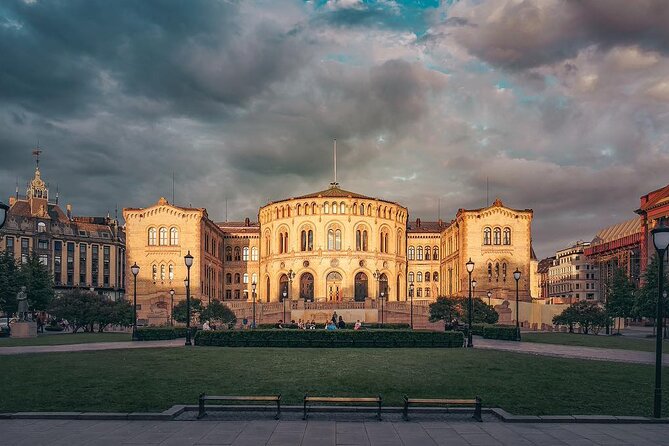
The route continues into Kvadraturen, the central district associated with Oslo’s post-fire city planning and its Christiania period. The scheduled discussion lasts around 15 minutes.
This is where the walk becomes especially useful for understanding the shape of central Oslo. The district’s streets and blocks reflect a different phase of the city’s development from the open spaces around City Hall. The guide connects the neighborhood to the stories of Christiania and explains why this part of town matters.
Do not expect a long architectural survey. The tour description gives no promise of interior visits or entry to specific buildings. Instead, you walk through the area while hearing stories tied to its past.
Kvadraturen is also a good place for questions. A private group means you can ask about what you are seeing, request more detail on a particular period, or move faster if the subject is familiar. That flexibility is one of the strongest reasons to choose this format over a larger group walk.
The drawback is that the route covers a lot in a short time. If you want a slow photo walk through every street, or time to examine buildings at length, you may find the schedule brisk.
More Historical Tours in Oslo
- Oslo City Walks – Historic River Walk
★ 5.0 · 31 reviews - A Well Balanced History and Food Tour with Focus on the Scandinavian Kitchen
★ 4.5 · 29 reviews - Myths and Legends: An Oslo Walking Discovery
★ 5.0 · 21 reviews - Myth and Legends Oslo Walking Tour
★ 4.7 · 20 reviews
Akershus Fortress supplies the dramatic finale
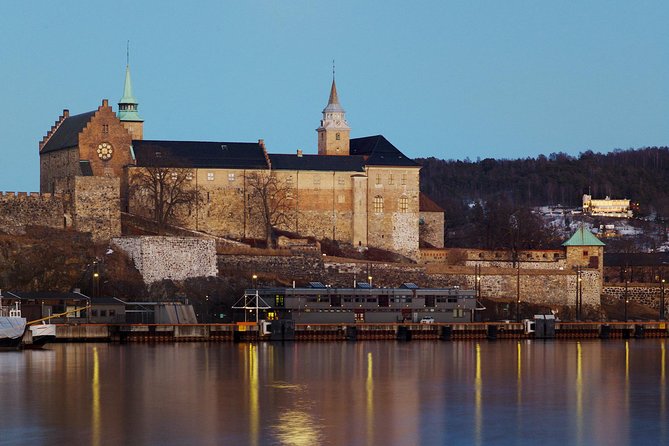
The final major stop is Akershus Castle and Fortress, where the tour spends about 40 minutes. This medieval stronghold overlooks the Oslo Fjord and was built in the late 1200s to protect the city.
Akershus has served several roles over the centuries: royal residence, military stronghold, and prison. Those changes give the guide plenty to work with. You hear about real people and events, then about myths and unexplained happenings that have passed from one generation to the next.
This is the point where the title of the experience makes the most sense. The fortress provides a real setting for stories that sit between documented history and folklore. You are not only looking at old walls. You are considering how fear, memory, rumor, and power shape the stories people tell about a place.
The fortress stop is also the longest pause on the route. Forty minutes allows more room for context and questions than the shorter city-center stops. If you enjoy military sites, royal history, old prisons, or tales with a darker edge, this will likely be the most rewarding section.
Some of the more unusual themes associated with the broader walk include Oslo’s old execution square and the church burnings connected with Norwegian black metal. Those subjects add a modern, unsettling layer to the Norse mythology and medieval history. The exact emphasis can depend on your guide and your interests, so tell the guide early if you want more mythology, political history, true crime, or local culture.
What the private format changes
This is a private activity for your group only, with a limit of eight people. That matters most because the tour asks you to listen closely and think about connections between different periods.
A private guide can spend more time on topics you care about. If you are fascinated by Norse mythology, you can ask for more stories about the gods and their influence. If Christiania and city planning interest you, you can focus on the capital’s move and the streets of Kvadraturen. If darker history catches your attention, you can ask about executions, church burnings, and unexplained tales.
The guide also becomes a useful source of local orientation. Anastasiia has been praised for answering questions about life in Oslo and suggesting activities for the rest of a stay. Irina has accommodated a requested change in start time and met a group at its hotel. Alla has been described as placing the sights in historical, political, cultural, artistic, and religious context.
Those details suggest that the guide’s role is broader than simply leading you from one stop to the next. You can use the walk to get practical advice while your questions are fresh. I recommend taking notes on places you want to return to, since the route itself does not include a separate list of recommended activities.
Is $311.45 a fair price?
The listed price is $311.45 for a group of up to eight people. For a couple, that works out to about $155.73 per person. For eight people, it drops to about $38.93 per person, before any optional food or other expenses.
That makes the group size central to the value. If you are alone or traveling as a pair, this is a premium walking tour. You are paying for a private guide, flexible conversation, and a story-led route rather than for admission tickets. The experience does not include food, drinks, or transportation to attractions.
For a family or group of friends, the calculation looks much better. You get a dedicated guide for two hours, and nobody outside your party joins. That can be worthwhile if your group enjoys asking questions or has mixed interests that would be hard to handle on a fixed public tour.
There is also value in the timing. The 10:00 start lets you use the rest of the day for museums, the waterfront, or other Oslo sights. A morning walk may be particularly pleasant because central streets can be quiet at that hour.
One point needs checking before you pay. The tour details say hotel pickup and drop-off are included in the highlights, but the included and meeting-point information says hotel pickup and drop-off are not included, with the start and end at Fridtjof Nansens plass 2. Since those statements conflict, confirm directly with Nordiva Tours AS. Do not assume a hotel transfer is part of the price.
Practical planning for the two-hour walk
Wear comfortable shoes and dress for changing weather. The tour runs in all conditions, and much of it takes place outdoors. A moderate level of physical fitness is expected, though the supplied information does not give a precise distance or describe the number of stairs.
The route starts and ends at the City Hall meeting point according to the stated meeting information. It is near public transportation, which makes arrival simple in principle, but you should allow enough time to reach the Two Swans Fountain for the 10:00 start.
The listed stop times add up to roughly 100 minutes:
- City Hall and Fridtjof Nansens Plass: 20 minutes
- Radhusplassen: 10 minutes
- Engebret Cafe: 15 minutes
- Kvadraturen: 15 minutes
- Akershus Fortress: 40 minutes
The full activity is described as about two hours, so the remaining time likely covers walking, pauses, and conversation. That is useful to know if you have a tight schedule afterward. I would avoid booking another activity immediately after the expected finish.
A mobile ticket is provided, and confirmation is sent within 48 hours of booking, subject to availability. Service animals are allowed. The cancellation policy permits a full refund if you cancel at least 24 hours before the local start time. Changes made inside that 24-hour window are not accepted, and late cancellations are not refunded.
Who will enjoy this Oslo walk?
I would recommend it to you if you enjoy history with a slightly dark edge and prefer stories over a checklist of monuments. It is especially suitable for people interested in Norse mythology, local legends, political change, military history, true crime, or the way old beliefs continue to influence culture.
It is also a good first activity in Oslo if you want a guide who can answer practical questions. The combination of central landmarks, Christiania, Kvadraturen, and Akershus gives you a useful map of the city’s past.
Families and friend groups can get good value from the private rate, especially with six to eight people. Couples should think more carefully about cost, since the per-person price is high for a two-hour walk with no entry tickets or refreshments included.
You may want a different activity if your priority is extensive time inside Akershus Fortress, detailed architectural study, a food stop, or a long route through many neighborhoods. The subject matter is broad, and the short schedule means the guide must keep moving.
Should you book Myths and Legends of Oslo?
Book it if you want Oslo explained through stories of gods, power, crime, royal history, and local folklore rather than through dates alone. The strongest features are the private format, the thoughtful guide-led discussion, and the unusual mix of Norse mythology with subjects such as Christiania, the old execution square, and black metal church burnings.
I would book early in a trip, ideally for the 10:00 morning start, so you can use the guide’s local advice afterward. For a larger group, the price is sensible. For one or two people, book only if the personal format and darker historical themes matter more to you than keeping the cost low.
Before confirming, ask Nordiva Tours AS to clarify the hotel pickup contradiction. Once that is settled, this is a compact, story-focused introduction to Oslo’s old streets and stranger legends.
FAQ
Where does the tour start?
The stated meeting point is Fridtjof Nansens plass 2, 0160 Oslo, Norway, near the Two Swans Fountain beside Oslo City Hall.
What time does the tour begin?
The scheduled start time is 10:00 am.
How long does the tour last?
The activity lasts approximately two hours.
Is the tour private?
Yes. Only your group participates, with up to eight people included in the group price.
Is hotel pickup included?
The supplied details conflict on this point. The highlights mention hotel pickup and drop-off, while the included information says they are not included and gives City Hall as the meeting point. Confirm this directly with the provider before booking.
Can I cancel for a full refund?
Yes, if you cancel at least 24 hours before the local start time. Cancellations or changes made less than 24 hours before the tour are not accepted for a refund.
Just added around Oslo
- Oslo Winter Highlights Bike Tour★ 5.0 · 36 reviews
- Unknown war. Oslo and Norway during 1940-45★ 5.0 · 74 reviews
- The Viking Planet Museum – Mini Group (4 adults)★ 4.0 · 16 reviews
- 4 hours Best View of the Oslofjord Winter Edition★ 4.0 · 15 reviews
- The Ultimate Norwegian Skiing Experience★ 5.0 · 16 reviews
- The Ultimate Study of the Human Form at Vigeland’s Sculpture Park with a Local★ 4.0 · 14 reviews
- The Viking Planet Museum Ticket★ 4.0 · 197 reviews
- The Oslo Beer Adventure★ 4.5 · 11 reviews
Historical Tours, compared.

Reindeer Camp and Sami Cultural Tour with Lunch
Read our review →
The Original Stockholm Ghost Walk and Historical Tour – Gamla Stan
Read our review →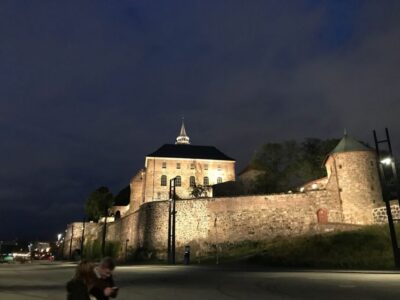

Viking History, Runes & Countryside 9h Tour to Sigtuna & Uppsala
Read our review →
Stockholm Viking History Full Day Tour to Sigtuna + Uppsala
Read our review →Browse the lists this tour appears in