
Reviewed · MUSEUMS
The Fram Museum Admission Ticket
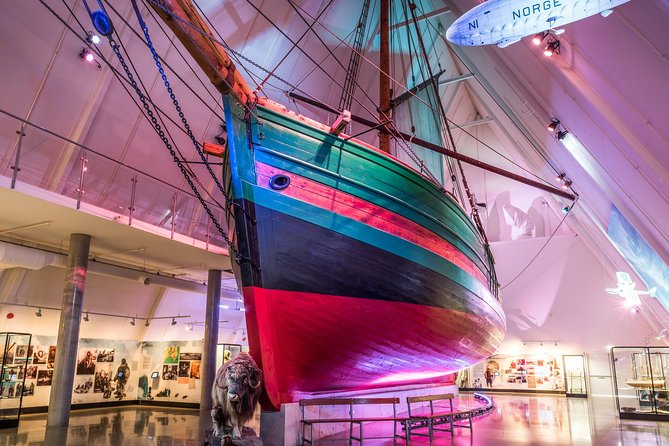
The most remarkable part of the Fram Museum is simple: you can walk aboard the original ship that carried Norwegian explorers into polar waters. You see the cabins, engine room, lower spaces, and working areas instead of viewing a ship from behind a rope. I like that physical access, and I like the way the museum pairs the vessels with maps, objects, films, and expedition stories.
The main drawback is that the museum can take more time than its modest admission price suggests. Displays are spread across several areas, some rooms can feel dark, and the museum has occasionally had a cinema or section closed. Check current conditions if your Oslo schedule is tight.
Key points about the Fram Museum
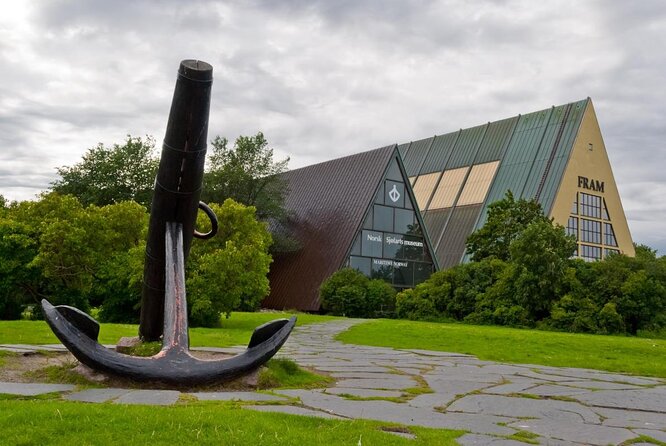
- Walk through the original Fram: Explore the ship’s decks, cabins, engine room, and lower spaces to understand daily life during polar voyages.
- See Gjøa up close: The original Gjøa is the centerpiece of a second exhibition building linked to Fram by an underground tunnel.
- Follow three Fram expeditions: Maps, artifacts, and explanatory panels show how the ship was used in major polar journeys.
- Watch the N25 Flight 4D Cinema: A short polar film adds storm, ice, and flight imagery to the museum visit.
- Plan on two hours for a proper visit: You can rush through in about an hour, but the displays and ships reward a slower pace.
- Use the prepaid mobile ticket for easy entry: The ticket costs about $19.38 per person and can be canceled free up to 24 hours before the start time.
Why walking aboard Fram changes the museum visit
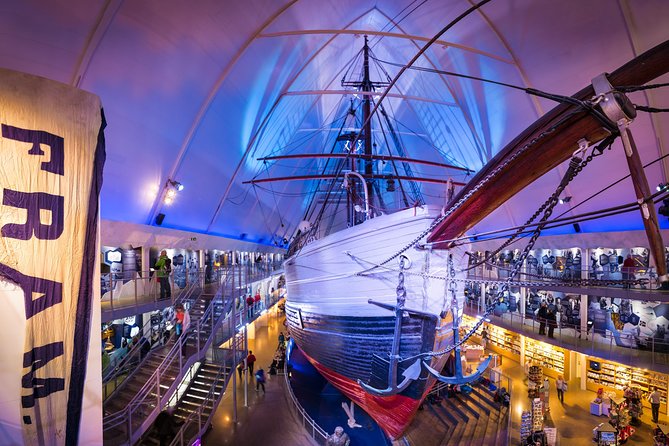
Many maritime museums let you admire a ship from the quay. Here, you go inside. That difference matters.
Fram was built for polar exploration, and its size, layout, and preserved interior make the story physical. You can see where people slept, worked, stored supplies, and spent long stretches in severe conditions. The cramped spaces help explain the strain of expeditions better than a paragraph on a wall ever could.
I especially like starting with the ship itself, then returning to the surrounding exhibits for context. Once you have seen the narrow passages and practical rooms, the maps and expedition accounts carry more weight. You are no longer reading about an abstract voyage. You are picturing people living inside that particular vessel.
The lower sections are among the most memorable parts. You can move below deck, see the engine room, and inspect working areas that show how much machinery and equipment had to fit aboard. Some displays are staged to suggest life at sea, but the actual ship gives the experience its force.
The museum also uses sound, weather effects, and visual displays. A storm simulation can make the deck feel particularly lively, while a cold-themed passage and ice bunker add a playful edge. These touches suit families, but adults interested in maritime history will find enough serious material to keep the visit worthwhile.
More Museum Visits in Norway
- Kon-Tiki Museum Entrance Ticket
★ 4.5 · 1,096 reviews - Oslo: Paradox Museum Entry Ticket
★ 4.3 · 799 reviews - Oslo: Oslo Discovery Tour with 2 Museums Included
★ 4.6 · 334 reviews
The Fram building and three major expeditions
The main Fram building centers on the ship and the three great Fram expeditions. Explanatory material is available in ten languages, so you do not need to depend on an English-speaking guide to follow the story.
Take time with the maps. They show the routes and help explain why Fram was so important to polar exploration. The displays also place the ship within the broader story of Norway’s northern and southern expeditions, rather than treating it as an isolated object.
This is where the museum is strongest as an educational stop. You can connect the vessel’s design with the demands of Arctic travel, then see how planning, endurance, and equipment shaped each mission. Original artifacts add useful detail. They show the ordinary side of exploration, including the objects and routines that supported long periods away from home.
The layout is not always a perfect straight-line story. If you want a clear introduction, begin with the polar film, then work through the exhibitions before boarding Fram. If you prefer to see the ship first, start there and use the written material to fill in the background.
Allow at least 90 minutes if you want to read the panels and explore the ship carefully. Two hours is a better target for most people. You can spend closer to three hours if you read every map and stop for each film and interactive feature.
Gjøa, Maud, and the Northwest Passage
An underground tunnel connects the Fram building with the Gjøa building. This second section broadens the story beyond Fram and presents the original Gjøa, the first ship to navigate the entire Northwest Passage.
Gjøa is a major reason to visit. You see another real expedition vessel, but the emphasis shifts to a different chapter of polar travel. The surrounding exhibition covers Gjøa and Maud, along with several other northern journeys.
The displays also cover John Franklin’s legendary expedition, as well as the work of Henry Larsen and Eivind Astrup. These names and missions help show that Arctic exploration was not one single event led by one famous figure. It was a long, difficult process involving different ships, routes, technologies, and ambitions.
The Gjøa building includes exhibitions on the N24 and N25 airplanes and the airship Norge. That makes the museum useful for anyone interested in the transition from ships to air travel in the polar regions.
I recommend moving through the tunnel rather than treating the second building as optional. The change in subject gives the visit variety, and Gjøa is not simply a smaller repeat of Fram. You get another chance to study an original vessel and consider how explorers adapted to different routes and tools.
The N25 Flight 4D Cinema and polar atmosphere
The museum includes the N25 Flight 4D Cinema, and a 116-seat cinema shows a polar introduction movie every 15 minutes. The film is a good way to begin because it gives you a quick sense of the Arctic setting before you tackle the detailed exhibits.
The cinema also helps if you arrive with children or with someone who does not want to read every display. It adds motion and atmosphere to a museum otherwise focused on objects, text, maps, and ships.
The storm and iceberg effects are another popular part of the visit. You may find the weather simulation especially effective while standing on Fram or near the deck displays. It gives a small sense of the violent conditions the crews faced, without pretending to recreate the actual danger.
Do not build your entire schedule around the cinema. It is one part of the museum, not a separate attraction that fills the day. Also, check what is open when you arrive. A cinema area has been unavailable at times, and a closed section can affect how much you see.
More Museum Visits in Oslo
- The Viking Planet Museum Ticket
★ 4.0 · 197 reviews - Oslo: Munch Museum Admission Ticket
★ 4.5 · 193 reviews - Private sightseeing in a Volvo XC 90 All inclusive museum/guiding
★ 5.0 · 35 reviews - Oslo Munch Museum Admission Ticket
★ 4.0 · 29 reviews
How long you should allow
The stated visit time is about one to three hours, and that range is sensible.
With a quick look at the ships, a few photos, and the main film, you could leave in around an hour. That approach works if you are fitting the museum between other Oslo plans, but you will miss much of the expedition material.
For a more satisfying visit, allow two hours. That gives you time to:
- Watch the introductory film
- Read the main expedition panels
- Walk through Fram
- Visit the engine room and lower spaces
- Cross to the Gjøa building
- See the Gjøa, Maud, aircraft, and airship displays
- Pause at the High North exhibits
Three hours makes sense for readers who enjoy maps, timelines, and original objects. It also gives you time to revisit the ships after learning their stories.
Arriving near the 10:00 AM opening can help if you prefer quieter galleries and better photo conditions. The museum is open daily from 10:00 AM to 5:00 PM during the stated operating period, from September 1, 2021 through April 2, 2027. Confirm the hours close to your visit, especially if your plans depend on the first or last entry.
What the visit costs and who gets good value
The admission price is about $19.38 per person. For a museum with two original exploration ships, extensive exhibits, films, and access to working areas, I consider that a fair price.
The value is strongest if you have an interest in polar exploration, ships, engineering, or Norwegian history. You are not paying for a short guided talk and a quick photo stop. You receive enough material for a substantial museum visit, and the ships give the admission a feature that a standard gallery cannot match.
Families can also get good value here. Children can move through the vessels, explore unusual spaces, and enjoy the cold-themed features and cinema. Keep in mind that the displays are not arranged as one simple story from beginning to end, so younger children may need help connecting the names, routes, and dates.
If you are only mildly interested in maritime subjects, the museum still offers a strong visual experience. The scale and preservation of Fram are impressive even before you understand every expedition. But if your Oslo itinerary is already packed with museums and historic ships, compare this admission with the time it takes to reach and explore the site.
Food and drinks are not included. Plan to eat before or after the visit rather than expecting the ticket to cover refreshments.
Getting there and practical details
The museum is near public transportation, though some visitors find the location somewhat removed from central Oslo attractions. Check transport routes and departure times before setting out, especially if you have a cruise departure, airport connection, or timed reservation afterward.
The ticket is mobile, and confirmation is provided when you book. The activity is offered in English, while the main Fram exhibition has text in ten languages. That combination makes the visit manageable for international visitors without requiring a guide.
The stated maximum is 14 participants, though this is an admission activity rather than a conventional guided group tour. You should expect to explore at your own pace instead of following a named guide from room to room.
Service animals are allowed with identification. Most people can take part, but the information provided does not promise that every ship passage, stair, or exhibition area suits every mobility need. If access is important for you, contact the provider before booking.
Free cancellation applies when you cancel at least 24 hours before the experience start time. Cancellations or changes made inside that window are not refunded. The cut-off uses local Oslo time.
A thoughtful stop for polar history
The museum is more than a collection of old boats. Its best quality is the link between the objects and the people who used them.
You can read about preparation, routes, crew life, and the risks of Arctic travel, then step into the spaces where those decisions mattered. The original ships make the past easier to picture. Even the engine room and cramped lower areas help explain what daily work required.
The High North section also brings the subject into the present. It addresses polar bears, melting ice, gas, oil, and other current issues. This gives the visit a useful modern frame instead of ending with the last historic expedition.
I would not expect every display to feel polished in the same way. Some areas can be dim, the museum may be crowded, and a closed cinema or section can disrupt your plan. Still, the combination of Fram, Gjøa, original artifacts, maps, films, and interactive effects gives the visit unusual substance.
Should you book the Fram Museum?
Book it if you want a museum where you can physically enter the central objects rather than only look at them. It is especially well suited to families, ship enthusiasts, engineering fans, and anyone curious about how polar expeditions actually worked.
I would allow two hours, arrive near opening time if you prefer a calmer visit, and begin with the film if you want the clearest introduction. The prepaid mobile ticket is convenient, but the admission itself is the main reason to go.
Skip it only if your Oslo schedule is extremely short or if you have little interest in ships, exploration, or Arctic subjects. For most visitors with room for one carefully chosen museum outside the city center, Fram offers a memorable and unusually hands-on history lesson.
FAQ
Where is the Fram Museum located?
The Fram Museum is in Oslo, Norway, and it is near public transportation.
How much does admission cost?
The listed price is about $19.38 per person.
How long does a visit take?
You should allow about one to three hours, depending on how closely you read the displays and explore the ships.
What are the museum’s opening hours?
The stated hours are Monday through Sunday, 10:00 AM to 5:00 PM, during the listed operating period from September 1, 2021 through April 2, 2027.
Can I board the original Fram ship?
Yes. Admission includes access to the original Fram, including its interior spaces and lower areas.
Can I see Gjøa?
Yes. Gjøa is displayed in a separate building connected to the Fram building by an underground tunnel.
Is the cinema included?
Yes. The included attractions list the N25 Flight 4D Cinema, and the museum shows a polar introduction film every 15 minutes in a 116-seat cinema.
Are the exhibits available in English?
The activity is offered in English, and the main Fram exhibition has explanatory text in ten languages.
Is food included?
No. Food and drinks are not included in the admission ticket.
Can I cancel for a refund?
Yes, if you cancel at least 24 hours before the experience start time. Cancellations or changes made less than 24 hours in advance are not refunded.
Just added around Oslo
- Oslo Winter Highlights Bike Tour★ 5.0 · 36 reviews
- Unknown war. Oslo and Norway during 1940-45★ 5.0 · 74 reviews
- The Viking Planet Museum – Mini Group (4 adults)★ 4.0 · 16 reviews
- 4 hours Best View of the Oslofjord Winter Edition★ 4.0 · 15 reviews
- The Ultimate Norwegian Skiing Experience★ 5.0 · 16 reviews
- The Ultimate Study of the Human Form at Vigeland’s Sculpture Park with a Local★ 4.0 · 14 reviews
- The Viking Planet Museum Ticket★ 4.0 · 197 reviews
- The Oslo Beer Adventure★ 4.5 · 11 reviews
Museums, compared.


Stockholm Pass: Save up to 50% – Includes Vasa Museum Ticket
Read our review →





Browse the lists this tour appears in