
Reviewed · HISTORICAL TOURS
Unknown war. Oslo and Norway during 1940-45
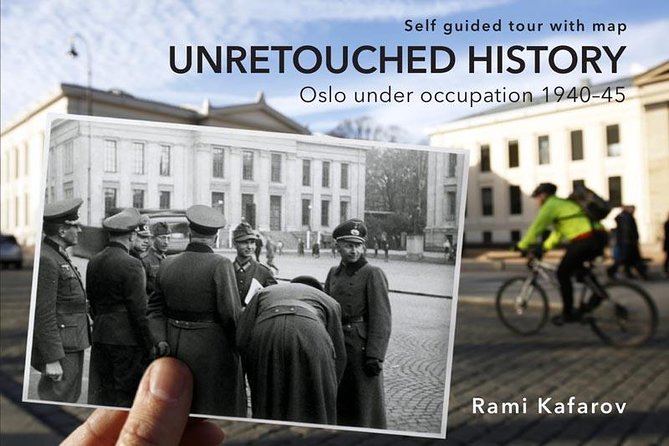
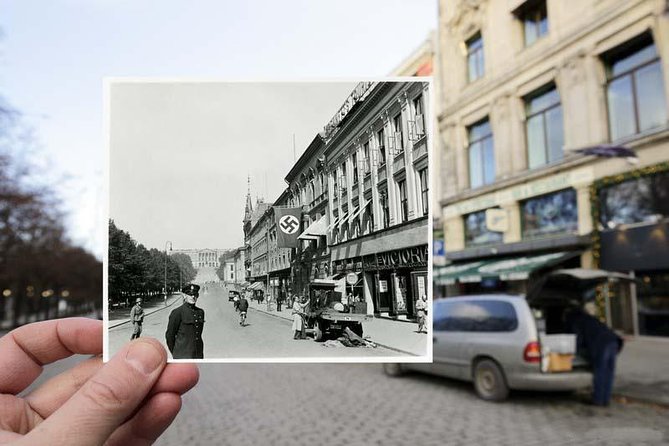
The most memorable part of this Oslo walk is the way old photographs are matched with the exact streets and buildings around you. Guide Rami uses images from the occupation to show how familiar places looked during the German takeover, then connects those scenes to daily life, resistance work, and Norway’s difficult wartime choices.
I like the private format, which lets you ask questions and shape the conversation around your interests. I also like the route’s mix of major Oslo sights and less obvious wartime landmarks, ending at Akershus Fortress near the Norway’s Resistance Museum. The main consideration is weather: this is an outdoor walking tour, and rain or cold can make the two-and-a-half-hour route less comfortable.
Key points
- Period photographs at the places where events happened: Rami’s visual material helps you compare wartime Oslo with the city you see today.
- A private group of up to five: You get a more personal pace and can focus on resistance history, civilian life, Norwegian politics, or city sights.
- A central Oslo route: The walk links the Royal Palace, Karl Johans gate, Parliament, University Square, Nationaltheatret, and Akershus Fortress.
- A useful companion to the Resistance Museum: The tour finishes close to the museum, giving you a strong historical lead-in before you visit.
- A good choice for first-time Oslo visitors with limited time: The route also works as a city orientation, not just a war history lesson.
- Plan for changing weather: Bring an umbrella or suitable outdoor clothing, especially since the experience requires good weather.
Oslo’s occupation told from the street
This is not a museum lecture delivered indoors. You walk through Oslo’s historic center while Rami explains what happened in Norway from 1940 to 1945 and shows photographs linked to the places in front of you.
That method matters. A photograph of a wartime building can feel abstract on a screen, but it has more force when you are standing in front of the same structure. You begin to notice how much of central Oslo remains part of the modern city, even as the meaning of each location changes with the story.
The focus is broader than military movements. Rami explains the German occupation, the Norwegian resistance, political events, and the effect of the war on ordinary people. This balance is one of the tour’s strengths. If you already know the major battles of World War II, you can use the walk to understand how occupation felt in a capital city far from the usual Western European tour routes.
The guide’s private collection of photographs is central to the experience. Several people who booked the tour found that the images made the narrative easier to follow and remember. The photos also help you picture events without asking you to imagine too much from a bare street corner.
More Historical Tours in Norway
- Oslo: Historic Myths & Legends Evening Walking Tour
★ 4.8 · 408 reviews - Oslo: History, Art and Secrets Tour
★ 4.7 · 62 reviews - Oslo City Walks – Historic River Walk
★ 5.0 · 31 reviews
Starting beside Karl Johan’s monument
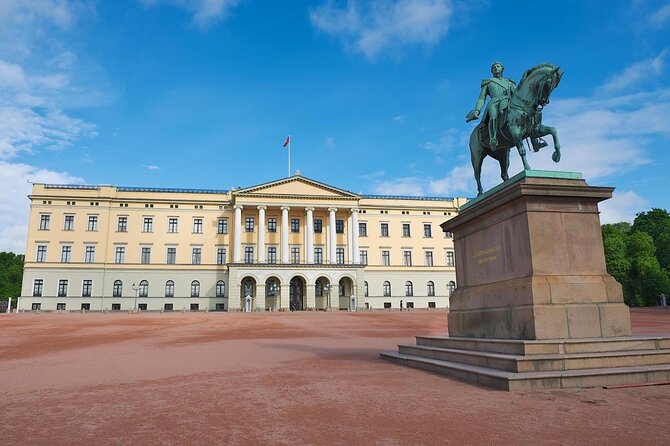
The meeting point is Karl Johan-monumentet in central Oslo, near the Royal Palace and Karl Johans gate. This is a practical start because you are already in one of the city’s main sightseeing areas.
The first stop is the Royal Palace, with about 10 minutes allocated there. The palace gives the tour an immediate connection to Norway’s monarchy and wartime government. Rami can place the German occupation within the wider political story of Norway, rather than treating the period as a string of unrelated incidents.
Admission to the palace is not included, and this tour does not turn into an interior palace visit. The value here is the setting and the explanation outside. If you want to visit the palace itself, treat that as a separate activity and allow extra time.
From there, you continue along Karl Johans gate. This main avenue is useful for orientation, but the wartime details are what make it more than a standard city stroll. The route includes several locations connected with World War II, and Rami uses photographs to show how these places looked during the occupation.
You might find this section especially helpful at the start of your Oslo stay. It gives you familiar landmarks and a historical framework at the same time. The tradeoff is that busy city streets can make it harder to hear, particularly if someone in your group has difficulty following a guide while walking. Rami has been described as willing to clarify points and answer questions, but it is still sensible to stay close.
Parliament and the choices facing Norway

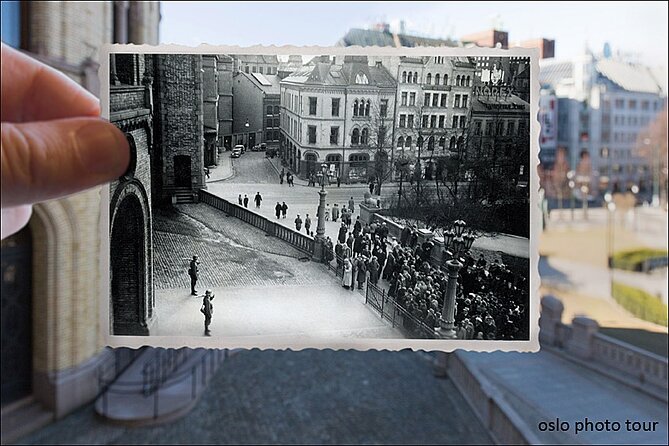
The Norwegian Parliament is the next major stop. Here, the tour can move from street-level events to the political questions surrounding Norway during the war.
The Parliament building is not simply another impressive facade on the route. It helps explain why a country’s political institutions matter during an occupation and how Norway’s national story is tied to the actions of leaders, officials, and resistance members. Rami presents the material in a neutral, fact-focused way, which suits a subject that can easily become overly dramatic.
You spend about 10 minutes here, though the private format means the precise rhythm can depend on your group. The itinerary is described as customizable, so you can ask for more detail at places that interest you and less at stops that do not.
That flexibility is especially useful for mixed groups. One person may want the political background, while another may be more interested in civilian life or the resistance. A private walk gives you more room to steer the discussion than a large group tour usually allows.
Stortorvet and the ordinary city
The route continues to Stortorvet, the market square, with a short stop of about 10 minutes. This is a useful change of scale. The palace and Parliament represent official Norway, while a public square helps you think about the people who had to live through the occupation day by day.
The tour’s value is not only in identifying famous wartime locations. It is also in asking what it meant for normal life to continue under foreign control. Rami’s explanations include the experience of everyday people as well as resistance figures, giving the story a human center.
The square is free to visit. As with much of this experience, you are outdoors and on your feet, so comfort depends on the weather and your walking pace. There is no promise of shelter during the explanations. On a rainy day, an umbrella is a simple but important piece of equipment.
More Historical Tours in Oslo
- A Well Balanced History and Food Tour with Focus on the Scandinavian Kitchen
★ 4.5 · 29 reviews - Myths and Legends: An Oslo Walking Discovery
★ 5.0 · 21 reviews - Myth and Legends Oslo Walking Tour
★ 4.7 · 20 reviews - Jewish Heritage Tour in Oslo
★ 5.0 · 16 reviews
University Square and the wider resistance story
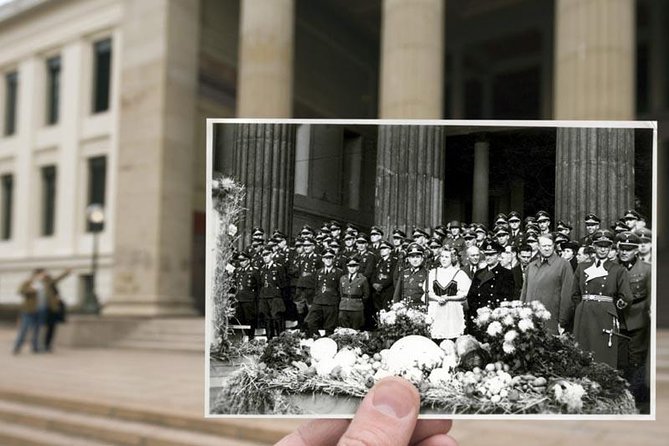
At the University of Oslo’s Faculty of Law, the stop moves the story toward the role of institutions and civil society. University Square is another place where present-day surroundings connect with the occupation period.
The route does not rely on a single memorial or one preserved room to tell the whole story. Instead, Rami links several central locations into one account. That makes the walk useful for people who want to understand how resistance and opposition fit into the daily life of Oslo.
About 10 minutes is assigned here, and admission is free. You will likely spend more time listening and comparing the present scene with the photographs than entering a building. If you are looking for a long indoor museum visit, this is not that kind of tour. If you enjoy learning through place, it is a strong part of the route.
Nationaltheatret and the Gunnar Sønsteby monument
Nationaltheatret adds another major Oslo landmark to the walk. The stop also includes the Gunnar Sønsteby monument, giving the resistance movement a clear physical marker.
Sønsteby is an important name in Norway’s wartime story, and the monument helps turn an abstract discussion of resistance into something visible. Rami’s use of images from the period is particularly useful here. You can see the difference between the wartime scene and the present-day setting, while hearing how the people connected with it fit into the larger story.
The theatre and surrounding streets also provide a natural pause in the route. You are still in the center of Oslo, surrounded by active city life, but the guide draws your attention to what happened in these same spaces during the occupation.
This is one reason I would not recommend rushing through the experience simply to check off each stop. The value comes from the connections between places. Ten minutes may be listed at a stop, but the explanation and questions are what give the location meaning.
Walking toward Akershus Fortress
The tour ends at Akershus Castle and Fortress, one of Oslo’s defining historic sites. The end point is near the Norway’s Resistance Museum, which makes the walking tour a useful introduction to a museum visit.
Akershus changes the feel of the experience. The earlier stops take place among streets, squares, government buildings, and theatres. The fortress provides a more concentrated historic setting and a natural place to continue your study of Norway during the war.
Admission to the fortress is not included. The tour itself ends near the fortress and the Resistance Museum, so you should plan separately if you want to enter either attraction. This is worth knowing before booking because the walk gives you a strong overview, but it is not a substitute for a full museum visit.
I like the pairing. The tour gives you context before you see museum displays, and the museum can then add documents, objects, and a more extended account. One person who had already planned to visit the Resistance Museum found the walk a useful companion because it placed the museum’s subject in the city itself.
What the private format is worth
The price is $307.50 per group of up to five people. That is a serious cost for a two-and-a-half-hour walk if you are traveling alone or as a couple. For five people, however, the price works out to $61.50 per person, which is more reasonable for a private specialist tour.
The group limit is important. You are not paying for a seat in a large sightseeing crowd. You get a guide focused on your party, with room to ask questions and adjust the emphasis. The itinerary can be customized around your interests and comfort, which adds value if your group has a clear focus.
I would choose this for a family, a small group of friends, or a pair of serious history enthusiasts who want direct conversation. I would think twice if your main goal is a cheap overview of Oslo. There are less expensive ways to see the city’s main landmarks, but they may not offer the same wartime focus or personal attention.
The tour is often booked well ahead, with an average booking lead time of 77 days. That suggests you should reserve early if your Oslo dates are fixed, particularly if you are visiting from a cruise schedule or have only one possible morning available.
Rami’s teaching style and the use of photographs
Rami is the named guide, and his approach is built around explanation, flexibility, and visual material. The strongest feature is not simply the amount of information. It is the way he connects facts to the buildings around you.
His photographs show many of the same structures as they appear today. That gives you a direct before-and-after comparison without needing to rely on a vivid imagination. He also brings personal passion to the subject, while keeping the presentation factual and neutral.
The amount of material can be substantial. People who enjoy World War II history are likely to want more time at each stop, while someone looking only for a quick city introduction may find the subject matter dense. If your group includes older family members or anyone who finds walking conversations difficult to hear, ask questions when needed and stay close to the guide.
You can also prepare before arriving. The films The King’s Choice and NR24 were specifically found useful as background for understanding Norway’s wartime role. They are not required, but watching them beforehand may help you recognize names, decisions, and events during the walk.
Weather, pace, and practical comfort
This is an outdoor experience that requires good weather. If poor conditions cause cancellation, you are offered another date or a full refund. You can also cancel for a full refund up to 24 hours before the start time, but cancellations or changes made less than 24 hours ahead are not accepted.
Bring an umbrella if rain is in the forecast. That advice comes directly from the practical reality of the route: you will be walking between stops and listening outdoors for much of the time.
The experience is offered in English, uses a mobile ticket, and lasts about two hours and 30 minutes. Most people can take part, and service animals are allowed. The stated operating schedule is Monday through Thursday, from 9:00 a.m. to 4:00 p.m., for the listed period through December 8, 2026.
The tour starts near Karl Johan’s monument and finishes at Akershus Fortress. That one-way route is useful because you do not need to return to the starting point. It also places you near a major historic attraction at the end, though any museum admission or further sightseeing is separate.
Who should book the Oslo WWII walk
I would book this if you want to understand Oslo through the German occupation rather than simply photograph its main sights. It is especially well suited to World War II enthusiasts, families with an older child interested in history, and visitors who prefer a private guide to a large group.
It is also a good first-day activity if you want to get your bearings while learning a serious subject. You see central Oslo’s main landmarks, but the tour gives them a specific historical lens instead of offering a general list of dates and buildings.
I would not make it my first choice if you dislike outdoor walking, want a lighthearted city tour, or have limited tolerance for detailed historical discussion. The subject is serious, the route is long enough to require suitable clothing, and some stops may feel brief if you want extended sightseeing.
Should you book it?
Book it if the German occupation of Norway, civilian life, or the resistance movement is a central reason for visiting Oslo. Rami’s period photographs, private format, and route from Karl Johan to Akershus Fortress make this more useful than a standard city walk for that purpose.
For the best value, bring three to five people, reserve well ahead, and pair the tour with the Norway’s Resistance Museum. If you are traveling alone and mainly want a broad introduction to Oslo, the price may be hard to justify. If you want a focused, personal account of wartime Oslo and have the right group size, this is a thoughtful use of two and a half hours.
FAQ
How long does the tour last?
The tour lasts approximately two hours and 30 minutes.
How much does the private tour cost?
The price is $307.50 per group, with up to five people included.
Who leads the tour?
The guide named for the experience is Rami.
What language is the tour offered in?
The tour is offered in English.
Where does the tour begin?
It begins at Karl Johan-monumentet in central Oslo, at Sentrum, 0010 Oslo, Norway.
Where does the tour end?
The walk ends at Akershus Fortress, near the Norway’s Resistance Museum.
Which places are included on the route?
The route includes the Royal Palace, Karl Johans gate, the Norwegian Parliament, Stortorvet, the University of Oslo’s Faculty of Law, Nationaltheatret and the Gunnar Sønsteby monument, and Akershus Castle and Fortress.
Are admission tickets included?
Admission is not included for the Royal Palace, Nationaltheatret, or Akershus Fortress. The stops at Stortorvet and the University of Oslo Faculty of Law are listed as free.
Can I cancel for a full refund?
You can cancel up to 24 hours before the experience starts for a full refund. If poor weather or an insufficient number of participants causes the tour to be canceled, you are offered another date or a full refund.
Just added around Oslo
- Oslo Winter Highlights Bike Tour★ 5.0 · 36 reviews
- The Viking Planet Museum – Mini Group (4 adults)★ 4.0 · 16 reviews
- 4 hours Best View of the Oslofjord Winter Edition★ 4.0 · 15 reviews
- The Viking Planet Museum Ticket★ 4.0 · 197 reviews
- The Ultimate Norwegian Skiing Experience★ 5.0 · 16 reviews
- The Ultimate Study of the Human Form at Vigeland’s Sculpture Park with a Local★ 4.0 · 14 reviews
- The Oslo Beer Adventure★ 4.5 · 11 reviews
- 3 Hours Walking Tour for Great Food in Oslo★ 5.0 · 32 reviews
Historical Tours, compared.

Reindeer Camp and Sami Cultural Tour with Lunch
Read our review →
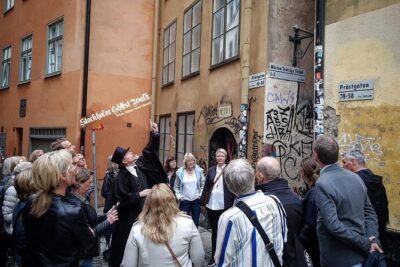
The Original Stockholm Ghost Walk and Historical Tour – Gamla Stan
Read our review →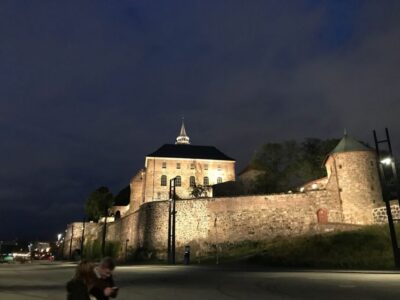

Viking History, Runes & Countryside 9h Tour to Sigtuna & Uppsala
Read our review →
Stockholm Viking History Full Day Tour to Sigtuna + Uppsala
Read our review →Browse the lists this tour appears in