
Reviewed · MUSEUMS
Stockholm: Underground Metro Art Ride with a Local
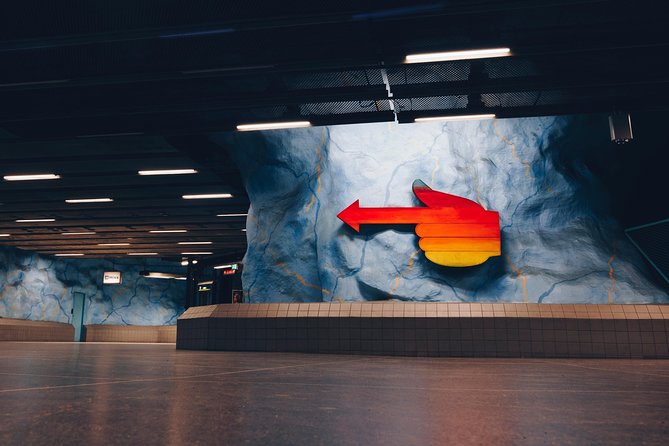
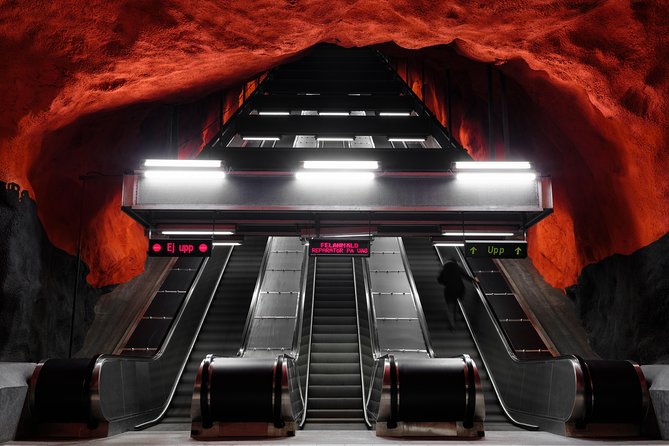
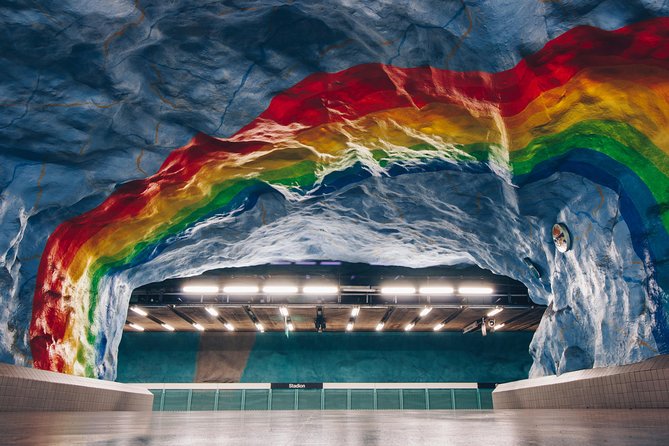
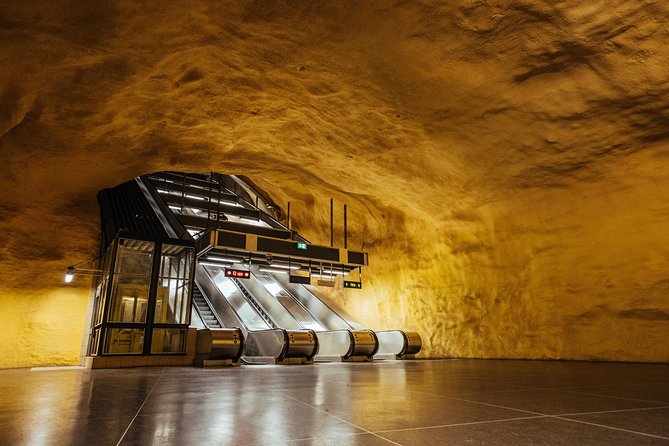
Stockholm’s metro is more than a way to get across town. It is a long, public art gallery cut into the city, with painted rock, sculpture, mosaics, and bold installations waiting below street level. This 90-minute small-group tour gives you a quick way to see several stations and understand what you are looking at.
I like two things right away: the group is limited to eight people, and the route runs through the metro itself, so you are seeing Stockholm’s art in its natural setting rather than in a museum. Guides such as Dan and Fayez have also helped visitors notice small details and feel more confident using the subway afterward.
The main catch is the price, $131.12 per person, which is high for a 90-minute outing. The tour can also involve a fair amount of walking and stairs, and the quality depends heavily on the local host assigned to your group.
Key points to know before you book
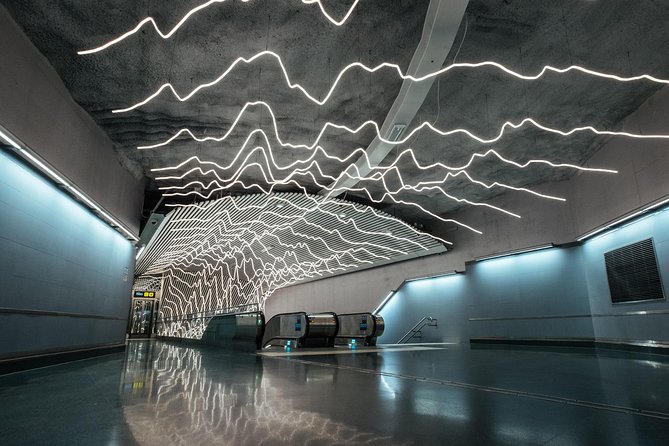
- The metro is the gallery: You visit several working subway stations, each with its own artistic idea and setting.
- Small groups help: A maximum of eight people makes it easier to ask about details and keep up with the guide.
- The route begins at T-Centralen: You meet at T-Centralen and finish at Tekniska högskolan.
- Several artists are featured: Look for work by Per Olof Ultvedt, Signe Persson-Melin, Anders Österlin, Ulrik Samuelson, and Siri Derkert.
- Plan for stairs: The walk is not recommended for people with impaired mobility, and it may be tiring if your knees give you trouble.
- It is a fast introduction: You will see a selection of stations, not every artistic stop in Stockholm’s metro system.
Why Stockholm’s subway art deserves a guided look
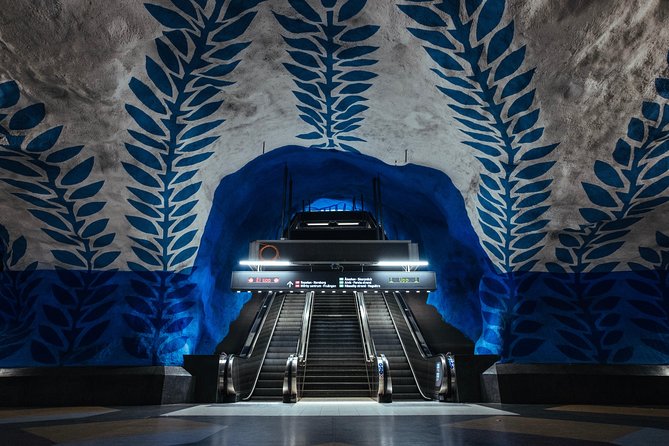
Stockholm’s underground art works because the metro is part gallery, part daily routine. You are not being led through a quiet exhibition hall. Trains arrive, commuters pass by, and the art shares the space with ordinary city life.
That setting is part of the appeal. A station can feel like a cavern, a garden, a memorial, or a burst of color, yet it still has to function as public transportation. Without a guide, you may notice that a station looks unusual but miss the reason for its design. A local can point out artistic choices, names, symbols, and details that are easy to pass without a second glance.
The small group matters here. With up to eight people, you can usually stand close enough to hear the explanation and ask a question without interrupting a large crowd. The tour also adapts to the group’s interests and walking pace, although the exact stops may change with weather conditions.
I would think of this as an introduction rather than a complete survey. The metro has many art-filled stations, and 90 minutes only allows for a selection. If you want to photograph more stations, or study each work at length, build in extra time before or after the tour.
More Museum Visits in Stockholm
- Stockholm: Skansen Open-Air Museum Admission Ticket
★ 4.5 · 3,427 reviews - Stockholm Pass: Save up to 50% – Includes Vasa Museum Ticket
★ 4.1 · 2,392 reviews - Stockholm: Nobel Prize Museum and Exhibition Entry Ticket
★ 4.3 · 994 reviews
T-Centralen is the right place to begin
The meeting point is T-Centralen, at Stockholm’s central metro station. That gives the tour a practical start, since you do not need to find a remote museum or a separate meeting venue.
From here, the guide introduces the basic idea of Stockholm’s underground art and gets the group moving through the system. The tour includes subway travel, which keeps the experience focused on the city’s actual metro network rather than a row of disconnected attractions.
The guide may also help you get comfortable with the system itself. That is useful if Stockholm is your first stop in Sweden or if you are unsure about changing lines, finding platforms, or reading the stations. Fayez, one of the hosts associated with this experience, has been especially effective at explaining how the metro works and giving people the confidence to use it for the rest of their visit.
You should arrive ready to walk, listen, and move when the group moves. This is not a tour where you linger in one room for half an hour. The art is spread across stations, so the pace is organized and fairly brisk.
Five artistic themes to watch for underground
The tour highlights work by several Swedish artists, each bringing a different feel to the metro. The route can vary, but these are the main artistic ideas you are likely to encounter.
Per Olof Ultvedt, Signe Persson-Melin, and Anders Österlin
One section of the experience focuses on the work of Per Olof Ultvedt, Signe Persson-Melin, and Anders Österlin. The value of seeing these artists together is that you can compare different approaches within the same public setting.
A guide can help you look beyond a station’s first visual impact. Pay attention to how materials, shapes, and colors interact with the rough rock and practical architecture around them. The station is not simply decorated after construction. The art is part of the way you experience the space.
This is also where a good host earns the tour fee. Dan, another host connected with the experience, has been praised for explaining what each station represents and pointing out details that are easy to miss. The quality of that explanation can make the difference between a pleasant walk and a memorable art lesson.
A different sort of day out, same corner of Stockholm:
- Stockholm: City Archipelago Sightseeing Cruise with Guide
★ 4.3 · 10,798 reviews - Stockholm: Archipelago Boat Tour
★ 4.4 · 3,110 reviews - Stockholm: Highlights Boat Tour
★ 4.3 · 2,542 reviews - Stockholm: Ghost Walk and Historical Tour
★ 4.7 · 2,206 reviews
Ulrik Samuelson’s underground garden
The underground garden by Ulrik Samuelson gives the route one of its more surprising changes in mood. The description is simple, but the idea is memorable: below street level, the station becomes a garden-like place rather than merely a transport corridor.
This is the kind of stop that benefits from being seen in person. Photographs can show colors and forms, but they do not fully convey the way the work occupies the station around you. Give yourself a moment to look up, down, and along the walls instead of only facing the guide.
The drawback is time. Since the group has other stations to visit, you may not have long to study every corner. If a particular station catches your eye, note its name and return later on your own if the route allows.
Siri Derkert’s bold work
Siri Derkert is one of Sweden’s best-known artists, and her work gives the tour a clear connection to the country’s modern art scene. This stop is a chance to see how an artist’s ideas can be translated into a public station used every day.
A guide adds useful context here by explaining what you are seeing rather than leaving you to guess. That is particularly important if you are not familiar with Swedish artists or modern public art. The tour is not only about taking pictures. It is about learning how to read the choices made in a place you might otherwise rush through.
If art is your main reason for booking, this is one of the stronger parts of the route. If you prefer architecture or railway design, you will still find the station interesting, but the guide’s interpretation will shape much of your experience.
An homage to the Olympic Games
Another stop pays tribute to the Olympic Games. This gives the tour a different subject from the artist-focused stations and shows how public art can commemorate an international event.
Look for the way the Olympic idea is expressed through the station’s design and imagery. The stop is a reminder that Stockholm’s metro art is not built around one single style. Some stations feel abstract, some symbolic, and some more directly connected to a theme or event.
Your guide may be able to explain the artistic choices in more depth, but this is one area where expectations should stay realistic. The supplied information does not promise a specialist art historian, and one low-rated experience involved a host who could not answer several questions about the works. If you want detailed academic commentary, this tour may feel light.
The four elements
The final theme mentioned is the four elements. It brings another imaginative idea into a practical underground setting and gives you a chance to look for visual references to earth, air, fire, and water.
This stop works best if you enjoy finding meaning in public art. You may see the theme immediately, or you may need the guide to point out how it is represented. That interaction is part of the fun, especially in a small group where you can ask what a particular detail means.
Taken together, these stops give you a taste of the range found in Stockholm’s metro. You get artists, symbolic themes, public memorial ideas, and unexpected changes in atmosphere, all while moving through the city.
What the guide adds to the experience
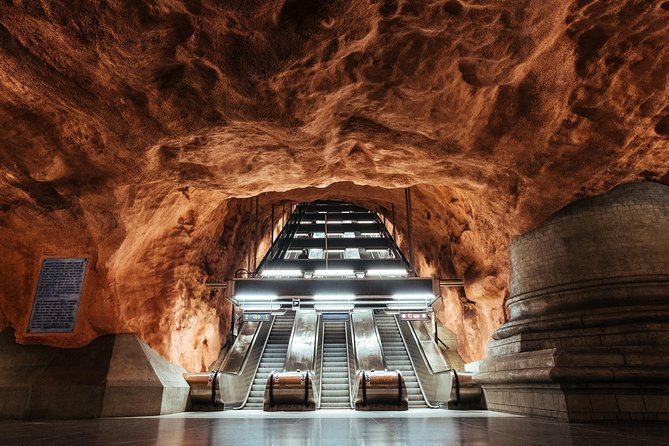
A guide is not essential for noticing that Stockholm’s metro stations are unusual. The guide is useful because the art can be hard to interpret on your own.
Dan has been singled out for his command of the stations and the meaning behind their details. Fayez has been effective at combining metro instructions with information about the art. Those examples show what the experience can be at its best: a moving art lesson that also teaches you how to use Stockholm’s subway.
But I would not book this expecting a guaranteed specialist. The hosts are independent locals, and the experience can vary. One serious problem reported was a no-show guide, while another person found the host unable to answer several questions. Those incidents appear alongside several very positive experiences, but they are still worth considering when the price is $131.12.
The best questions to ask during the tour are specific and practical. Ask what an artist was trying to express, why the work was placed in that station, or how the design connects with the surrounding rock and platforms. A strong guide should be able to make the station feel more intentional and give you a reason to return.
Is $131.12 a fair price?
The price is the biggest hurdle. You are paying for about an hour and a half, a local host, a small group, and subway travel. Since there is no museum admission or major monument entry included, the cost is not a bargain in simple time-per-dollar terms.
The value improves if you want personal attention. A private tour would normally cost more, while a large group might make it harder to hear or ask questions. With a maximum of eight people, this sits between a self-guided metro ride and a private art walk.
I would book it if you place a high value on interpretation and want a quick, organized introduction. You may not need it if you are comfortable researching the stations, using the metro independently, and spending extra time at the works that interest you.
The included subway ticket is convenient, though the additional booking information says that transportation, museum, and monument entry tickets are generally excluded. Confirm the exact ticket arrangement when booking, especially if you plan to make extra metro journeys after the tour.
Walking, stairs, and the practical side
The tour starts at T-Centralen and ends at Tekniska högskolan, at 114 28 Stockholm. That one-way route is useful because you finish in a different part of the city instead of simply returning to the starting point.
You should expect movement between stations and platforms, along with stairs. One person specifically found the number of steps difficult with knee problems and suggested bringing a walking stick. The experience is not recommended for people with impaired mobility.
Service animals are allowed, and the tour is near public transportation. Most people can participate, but you should be realistic about your walking pace. The guide can adapt the itinerary to the group’s pace and interests, yet a metro art tour still requires you to keep moving through a functioning station system.
Weather can also affect the stops. The itinerary may change according to conditions, so do not treat every named station as a guaranteed visit. The five artistic themes give you a clear idea of the tour’s focus, but the final route can vary.
Who will enjoy this metro art ride?
I would recommend it most to:
- First-time visitors who want a quick introduction to Stockholm’s subway.
- Art fans who enjoy public work outside traditional museums.
- Railway enthusiasts who like stations, transit design, and the practical side of city systems.
- Small groups who prefer asking questions instead of following a large crowd.
- People who want help using the metro for the rest of their stay.
I would hesitate if you have limited mobility, dislike stairs, or want a slow art seminar. I would also think twice if $131.12 feels steep for a short activity and you are happy to explore on your own.
The tour works particularly well near the start of a Stockholm visit. You learn the metro system, see several stations, and can return later to the ones you liked best. If you have extra time, add an independent visit to other stations rather than expecting this short tour to cover the entire network.
Should you book the Stockholm metro art tour?
Book it if you want a compact, guided introduction to Stockholm’s underground art and value a small group over the lowest possible price. The strongest version of the experience combines clear metro instruction with sharp observations about the artists and themes.
Skip it if you want a full-day art survey, need step-free access, or prefer to explore independently. The high price and uneven guide reports mean you should book with realistic expectations.
For most suitable visitors, this is a useful first look at a very unusual part of Stockholm. You will see art by important Swedish artists, learn why several stations look the way they do, and leave with a better sense of how to use the metro. Just leave room in your schedule to revisit the stations that deserve more than a quick stop.
FAQ
Where does the Stockholm underground art tour start?
The tour starts at T-Centralen, Stockholm, 111 20 Stockholm, Sweden.
Where does the tour finish?
It finishes at Tekniska högskolan, 114 28 Stockholm, Sweden.
How long does the tour last?
The tour lasts approximately 1 hour and 30 minutes.
How many people can join the group?
The group has a maximum of eight travelers.
Is the tour offered in English?
Yes. The experience is offered in English.
Is a subway ticket included?
The tour information lists a subway ticket as included. Other transportation, museum, and monument tickets are listed as excluded, so confirm the exact arrangements when booking.
Which artists are featured?
The tour includes works by Per Olof Ultvedt, Signe Persson-Melin, Anders Österlin, Ulrik Samuelson, and Siri Derkert.
Is the tour suitable for people with limited mobility?
It is not recommended for people with impaired mobility. The route includes several steps, which may be difficult if you have knee problems.
Can I cancel for a full refund?
Yes. You can cancel at least 24 hours before the local start time for a full refund. Cancellations or changes made less than 24 hours before the start are not refunded or accepted.
Just added around Stockholm
- Traditional Persian Cooking Class in Stockholm with a Local★ 5.0 · 20 reviews
- Stockholm Top attractions all-inclusive Gran Tour Winter Edition★ 5.0 · 6 reviews
- Airport Limousine Transfer: Arlanda Airport to Stockholm City 1-7 Passengers★ 4.0 · 5 reviews
- Scandinavian Art, Architecture and Design Tour in Stockholm★ 4.5 · 11 reviews
- Wolf and Wildlife Tracking in Sweden★ 5.0 · 9 reviews
- Walking Tour of Stockholm’s City Center★ 4.5 · 26 reviews
- Stockholm: Sunset Hike in Tyresta National Park with Meal★ 5.0 · 79 reviews
- Private Tour: Swedish History Day Trip to World Heritage Candidate Markim-Orkesta from Stockholm★ 5.0 · 8 reviews
Museums, compared.


Stockholm Pass: Save up to 50% – Includes Vasa Museum Ticket
Read our review →



Browse the lists this tour appears in