Reviewed · HISTORICAL TOURS
Oslo: Historic Myths & Legends Evening Walking Tour
Oslo’s old streets become much more interesting when you hear the stories behind them. This two-hour evening walk links Norse myths, trolls, and Viking beliefs with real places such as City Hall, Christiania Torv, and Akershus Fortress. Guides including Maria and Anastasia bring plenty of humor and local detail, rather than simply pointing at buildings.
I like the way the tour mixes folklore with solid city history. I also like its useful first-day format: you see central sights, learn what to look for, and pick up ideas for the rest of your stay. The main drawback is the weather. Oslo evenings can be sharply cold, windy, and dark in winter, so warm layers and good shoes matter.
Key points
- Norse folklore with a local setting: Hear about trolls, nisse, huldra, ghosts, bells, flutes, and underground kingdoms while standing in the parts of Oslo linked to these stories.
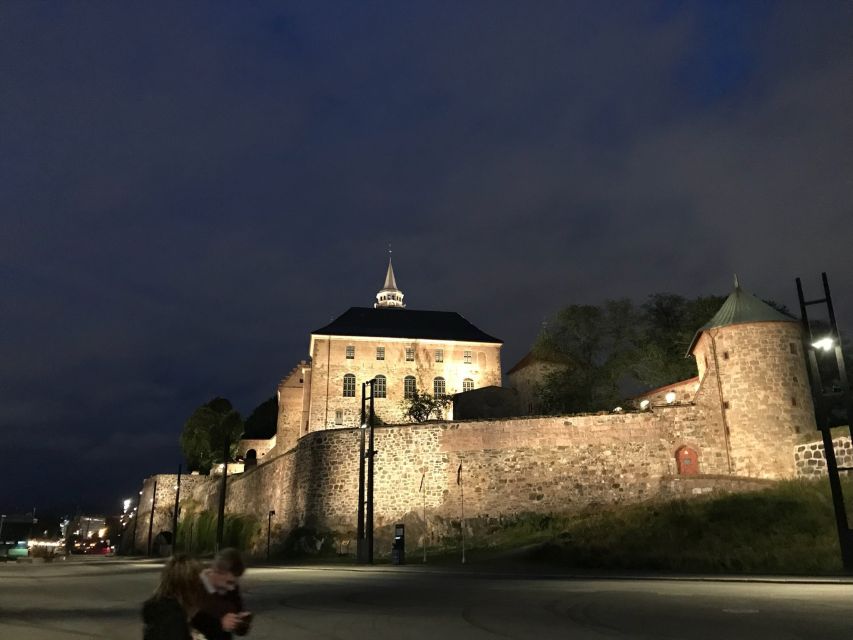
- Akershus Fortress after dark: Learn about medieval defenses, prison life, and the people who met grim fates inside the castle walls.
- City Hall’s Viking imagery: Look closely at the wooden friezes and other artwork showing old Norwegian beliefs.
- A relaxed two-hour route: The walk is generally manageable, with time for questions, pictures, and conversation.
- A strong introduction to Oslo: Guides often suggest other places to visit, making this a useful opening activity.
- Plan for real Norwegian weather: Winter tours have taken place in temperatures below freezing, with wind that can cut through ordinary clothing.
Why the myths make Oslo easier to understand
This is not a standard list of dates and monuments. The tour uses stories to explain how people once understood danger, luck, crime, death, and the natural world.
You may hear about mischievous trolls, helpful nisse, and the mysterious huldra. These figures are not treated as childish decoration. They belong to Norwegian folklore and help explain beliefs passed down through generations. Stories about protection, spirits, bells, and fear of flutes give you a glimpse of the worries and customs that shaped everyday life.
I like this approach because folklore gives otherwise quiet streets a second layer. A square becomes more than a place to cross. A fortress becomes more than stone walls. The evening setting adds to the effect, especially when Oslo’s buildings are lit and the city feels calmer than it does during the day.
The tour also keeps its feet on the ground. It is not presented as a ghost-hunting expedition, and you will not go underground. The focus is on the cultural meaning of ghost stories and underground kingdoms, plus the real places connected with them.
More Evening Tours in Norway
- Oslo: Fjord Evening Cruise with Shrimp Buffet
★ 4.5 · 1,956 reviews - Oslo Fjord Evening Cruise with Shrimp Buffet on a Sailing Ship
★ 4.0 · 170 reviews - Oslo Fjord Evening Live Rock music cruise with Shrimp buffet
★ 4.9 · 15 reviews
Starting at City Hall and Fridtjof Nansen’s Square
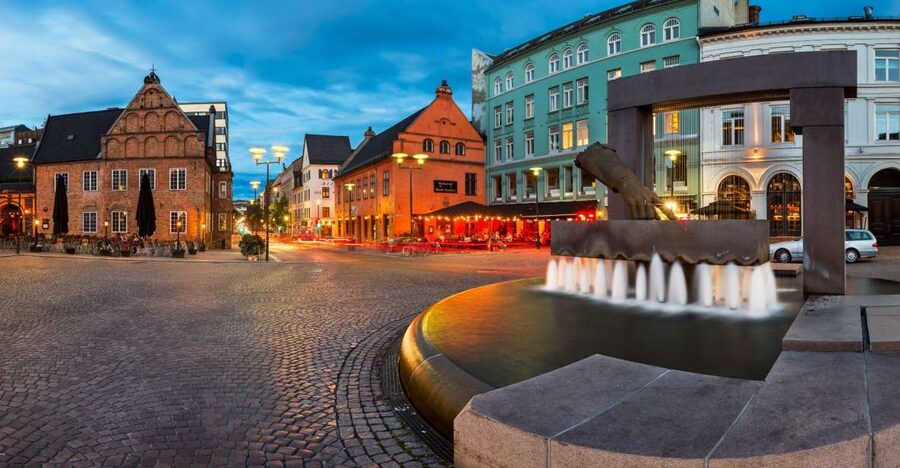
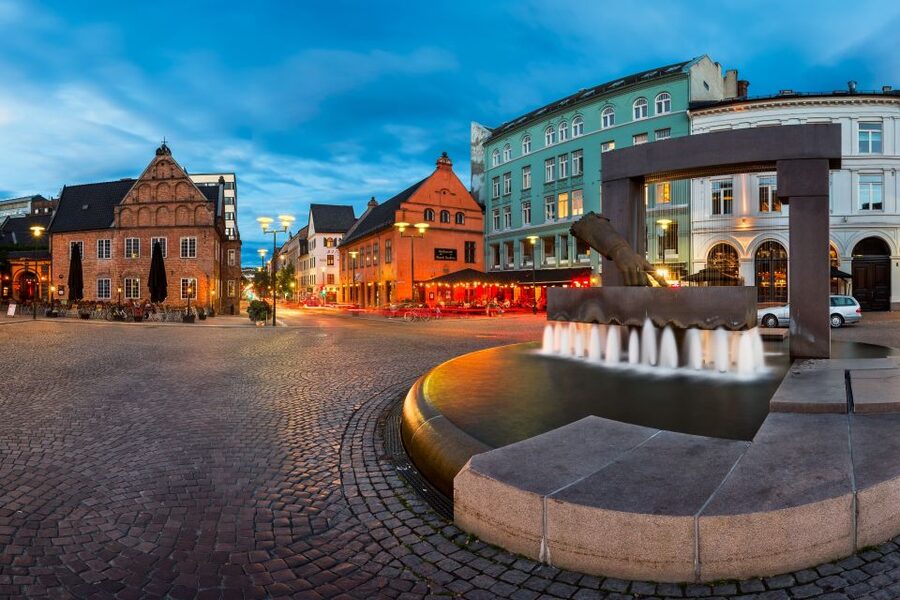
Meet the guide near the swans fountain at the entrance to Oslo City Hall on Fridtjof Nansen’s Square. Take a moment to find the exact meeting point before the start, particularly if you arrive after sunset.
City Hall provides a good opening because it connects modern Oslo with older Norwegian beliefs. The building contains artwork that reflects Viking ideas and Nordic mythology, including wooden friezes on the walls. Your guide explains what to look for, so the artwork becomes more than a quick photo stop.
The stories about the Vikings are part of the wider introduction to Norway. You can expect discussion of their voyages, beliefs, and place in the country’s past. This portion works best if you enjoy cultural context rather than a narrow military or architectural tour.
Your guide also sets the tone here. Maria is repeatedly praised for being warm, funny, and easy to listen to, while Anastasia is known for vivid storytelling and strong English. Other guides lead the walk as well, but the common thread is an interactive style with room for questions.
Christiania Torv and old Oslo stories
From City Hall, the route continues to Christiania Torv, one of the historic squares in central Oslo. Here the guide shifts from broad Norse mythology to stories tied more closely to the city and its people.
Christiania Torv has seen Oslo change over time, making it a useful place to connect old events with the modern city around you. The guide uses the square to explain episodes that shaped Oslo’s streets and public life. You will not just hear a memorized paragraph and move on. The format allows questions, short pauses, and time to take photographs.
This is also where the walk begins to feel less like a conventional sightseeing circuit. The itinerary includes familiar central landmarks, but the emphasis is on details you could easily miss alone. That might mean a story connected with a building, an old belief attached to a place, or a small clue in the city’s design.
The route is especially useful for a first visit. Several guides offer suggestions for other places to see after the walk, and you gain a basic mental map of the central area. If you already know Oslo well, the folklore and crime stories are likely to be the main reason to book.
Akershus Fortress: walls, prisoners, and medieval fear
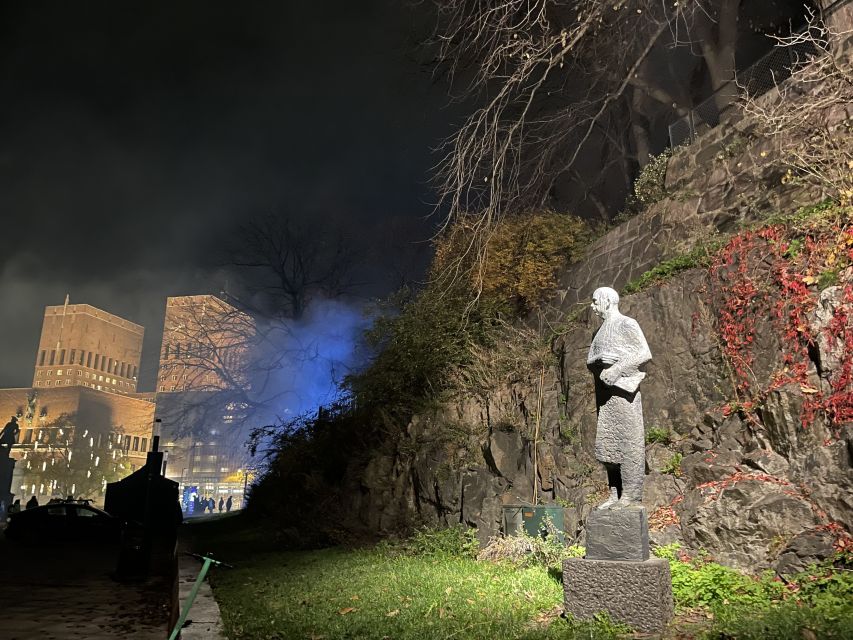
Akershus Fortress is the visual centerpiece of the walk. Its design and engineering show how Oslo needed protection through different periods, and the fortress gives the stories a powerful setting.
Your guide explains how the castle worked as a defensive structure and what happened within its walls. Prisoners and their fates form part of the story, giving the visit a darker edge without turning it into a horror attraction.
I like this section because the fortress combines physical evidence with human drama. Thick walls and defensive features make more sense once you hear why they mattered. Stories about confinement and punishment remind you that a fortress was also a place where power was enforced.
The evening timing changes the mood. In summer, the light may linger late. In winter, tours can run in darkness, and you will see the fortress in a more subdued setting. That can be atmospheric, but it also means you should pay attention to your footing and dress for the conditions.
Do not expect access to every interior room or an underground visit. The supplied details describe a walk around locations relevant to the stories, with the emphasis on explanation rather than a full fortress admission program. If exploring interiors is your main goal, check exactly what is open separately.
More Historical Tours in Norway
- Unknown war. Oslo and Norway during 1940-45
★ 5.0 · 74 reviews - Oslo: History, Art and Secrets Tour
★ 4.7 · 62 reviews - Oslo City Walks – Historic River Walk
★ 5.0 · 31 reviews - A Well Balanced History and Food Tour with Focus on the Scandinavian Kitchen
★ 4.5 · 29 reviews
Bankplassen and Oslo’s audacious thefts
At Bankplassen, the subject turns from legends to crime. The guide recounts daring thefts and complicated robberies that once shook the city, then places those events within the justice system of medieval Oslo.
This is one of the tour’s more unusual features. Many city walks stay with kings, churches, and grand buildings. Here, ordinary wrongdoing and the response to it become part of the city story. You hear how crimes were handled and how punishment worked in an earlier society.
The section gives you a useful contrast. Norse myths and supernatural beings show how people explained the unknown, while thefts and court punishments show how they dealt with very real problems. The result is a broader picture of Oslo than you get from monuments alone.
The stories can be grim, including accounts of death and punishment. That does not make the tour graphic, but the subject may not suit young children or anyone looking for a gentle folklore stroll. The formal age guidance excludes children under 13.
What the guides do well
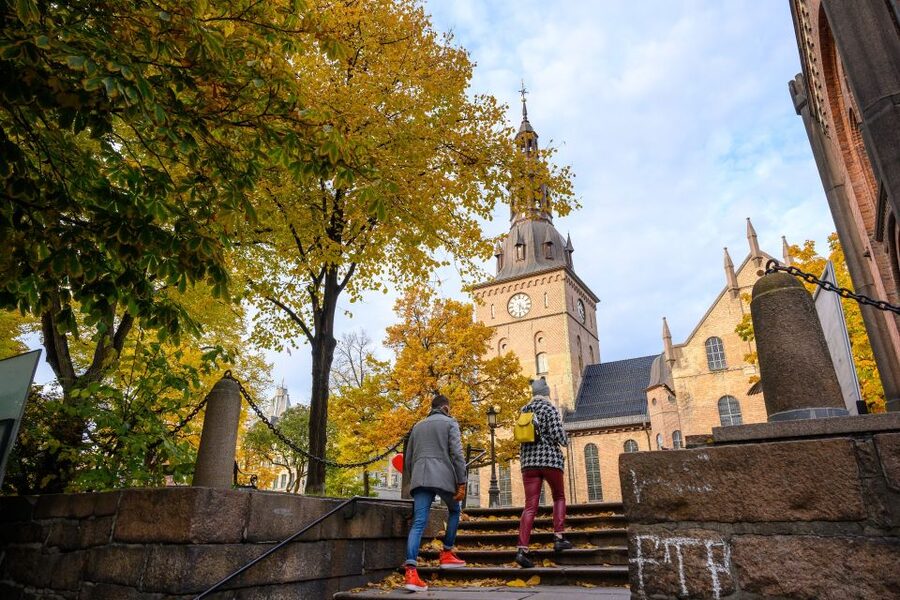
The guide makes or breaks any story-based walking tour. Here, the strongest feature is the delivery. Maria is praised for combining humor with a wide range of information, from local customs to death in Oslo. Anastasia is described as enthusiastic, clear, and skilled at telling less familiar stories.
You should expect an interactive walk rather than a lecture. Guides answer questions, respond to comments, allow time for photographs, and sometimes share suggestions for places to visit later. That flexibility matters because two hours can feel long if the guide simply recites facts.
The English-language guidance is another practical strength. The tour is conducted in English, and the available feedback repeatedly highlights clear communication. This is important when stories involve unfamiliar names, old beliefs, and details that can be easy to lose.
There is some natural variation from one guide to another. The experience depends on the person leading your departure, and a story-heavy walk will always feel different with a quiet guide than with an animated one. Still, the repeated praise for Maria, Anastasia, and other guides points to a consistent focus on personality and storytelling.
Weather, walking pace, and comfort
The route lasts two hours and is described as relaxed and manageable. You will be walking through central Oslo, stopping at several places to listen. Comfortable shoes are essential.
The biggest practical issue is the weather. Winter departures have taken place in temperatures around minus 10 degrees Celsius, with snow and piercing wind. That does not automatically ruin the tour, but ordinary city clothing may not be enough. Wear warm layers, a proper coat, gloves, and footwear with a secure grip.
Darkness also changes the practical side of the walk. A December departure from 4 to 6 p.m. can take place entirely after sunset. The atmosphere may be excellent, but you will want to stay close to the guide and watch uneven surfaces.
The walk is not suitable for people with mobility impairments or wheelchair users. The information provided does not give a detailed step count, slope description, or surface breakdown, so contact the provider if you have a specific walking concern. The age guidance says no children under 13, even though some families with older children have enjoyed the storytelling.
Is the 42 dollar price fair?
At $42 per person, this is not the cheapest way to see Oslo’s center, but it offers more than a basic orientation walk. You are paying for two hours with a live English-speaking guide, a planned route, folklore, local history, architecture, crime stories, and time for questions.
The value is strongest if you want context. You can walk past City Hall, Christiania Torv, Akershus Fortress, and Bankplassen on your own, but you will not automatically know which myths, crimes, or beliefs belong to each place. The guide turns separate sights into one connected story.
The price is less attractive if you prefer to explore quietly or want extensive access inside Akershus Fortress. Food, drinks, hotel pickup, and drop-off are not included. You meet in the city center and make your own way there.
Flexible booking helps if your schedule is uncertain. You can reserve and pay later, and cancellation is free up to 24 hours in advance for a full refund. Those terms reduce the risk of booking an evening walk when Oslo’s weather or your plans may change.
Best time to put this on your Oslo schedule
I would place this tour near the start of your visit. It gives you a working introduction to central Oslo and can point you toward places worth returning to in daylight.
An evening departure is particularly useful if you arrive during the day and want a structured way to begin exploring without committing to a long excursion. The route stays in the city, so you are not spending time on transfers.
Winter offers the strongest dark atmosphere, but it also demands the most preparation. Summer gives you more light and usually makes photographs easier, while the evening setting still adds character. Autumn and spring can offer a good middle ground, though you should still check the forecast and dress in layers.
The tour is a good match for solo visitors, couples, friends, and older families. Solo visitors can ask questions without needing to organize a private guide, and families with teenagers get stories that go beyond standard sightseeing. It is less suitable for anyone wanting a purely architectural tour, a ghost investigation, or a full museum-style treatment of Norwegian history.
What to bring and what not to expect

Bring comfortable shoes first. Add warm clothing in cold months, since the walk continues outdoors even if the weather turns rough.
You should expect:
- An English-speaking live guide
- Two hours of walking and storytelling
- Stops connected with City Hall, Christiania Torv, Akershus Fortress, and Bankplassen
- Norse mythology, Norwegian folklore, crime stories, and medieval justice
- Time for questions and photographs
- No included food, drinks, hotel pickup, or hotel drop-off
You should not expect an underground ghost tour. The stories may include spirits, haunted places, and underground kingdoms, but the purpose is to explain their historical and cultural meaning.
Should you book the Oslo myths and legends walk?
Book it if you want Oslo to feel like a lived-in city rather than a list of attractions. The tour is especially worthwhile during your first few days, when a good guide can give you bearings, explain the city’s old beliefs, and suggest what to see next.
The strongest reasons to go are the guides, the unusual mix of folklore and real crime, and the chance to see Akershus Fortress in the evening. Maria and Anastasia have both been singled out for humor, clarity, and strong storytelling, though your assigned guide may differ.
Skip it if you need step-free access, dislike outdoor walking in cold weather, or want a detailed indoor tour of the fortress. For everyone else, $42 is a reasonable price for a focused two-hour introduction to Oslo’s myths, streets, and darker chapters.
FAQ
How long is the Oslo Historic Myths and Legends Evening Walking Tour?
The tour lasts two hours.
Where does the tour meet?
Meet the guide near the swans fountain at the entrance to Oslo City Hall on Fridtjof Nansen’s Square.
What language is the tour in?
The tour is conducted in English with a live English-speaking guide.
Does the tour include a ghost hunt or underground locations?
No. The tour discusses ghost stories and underground kingdoms in their historical and cultural context, but it does not involve ghost hunting or visits underground.
Is food or hotel pickup included?
No. Food, drinks, hotel pickup, and hotel drop-off are not included.
Is the tour suitable for children or wheelchair users?
The activity is not suitable for children under 13, people with mobility impairments, or wheelchair users. Comfortable shoes are required.
More Walking Tours in Norway
- Oslo Nature Walks: Island Hopping Tour
★ 4.8 · 2,713 reviews - Oslo Nature Walks: Island hopping
★ 5.0 · 570 reviews - Oslo: Best of Oslo Walking Tour
★ 4.5 · 458 reviews - Oslo: Guided Walking Tour of Central Oslo
★ 4.7 · 438 reviews
More Historical Tours in Oslo
- Myths and Legends: An Oslo Walking Discovery
★ 5.0 · 21 reviews - Myth and Legends Oslo Walking Tour
★ 4.7 · 20 reviews - Jewish Heritage Tour in Oslo
★ 5.0 · 16 reviews - Downtown Oslo: Self-Guided Highlights and History Audio Tour
★ 4.0 · 10 reviews
Just added around Oslo
- Oslo Winter Highlights Bike Tour★ 5.0 · 36 reviews
- Unknown war. Oslo and Norway during 1940-45★ 5.0 · 74 reviews
- The Viking Planet Museum – Mini Group (4 adults)★ 4.0 · 16 reviews
- 4 hours Best View of the Oslofjord Winter Edition★ 4.0 · 15 reviews
- The Ultimate Study of the Human Form at Vigeland’s Sculpture Park with a Local★ 4.0 · 14 reviews
- The Viking Planet Museum Ticket★ 4.0 · 197 reviews
- The Ultimate Norwegian Skiing Experience★ 5.0 · 16 reviews
- The Oslo Beer Adventure★ 4.5 · 11 reviews
Historical Tours, compared.

Reindeer Camp and Sami Cultural Tour with Lunch
Read our review →
The Original Stockholm Ghost Walk and Historical Tour – Gamla Stan
Read our review →

Viking History, Runes & Countryside 9h Tour to Sigtuna & Uppsala
Read our review →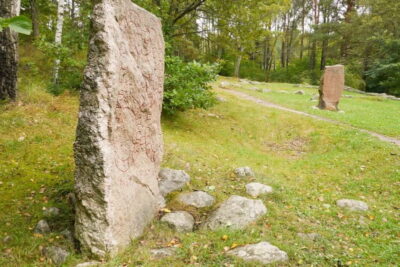
Stockholm Viking History Full Day Tour to Sigtuna + Uppsala
Read our review →