
Reviewed · MUSEUMS
Explore Copenhagen’s Art and Culture with a Local
Copenhagen’s best sights line up neatly on this 90-minute walking tour, which moves from the old town at Stork Fountain to the colorful harbor at Nyhavn. Along the way, you get street art, castles, royal squares, a star-shaped fortress, and local stories about Danish food customs and city life.
I like the small group limit of eight, which should make it easier to ask questions, and I like the route’s useful mix of famous sights and less formal city details. The main drawback is the short running time. One candid assessment found some quiet stretches and wished the route had included a closer look at the Art Museum and King’s Theatre.
Key points at a glance
- Stork Fountain to Nyhavn: The route links several major Copenhagen sights without requiring public transportation.
- Street art with local context: You see work by Stine Hvid and hear about other examples around the city.
- Royal Copenhagen in one walk: The route includes a historic castle, Amalienborg, the Royal Opera House, and a Kierkegaard statue.
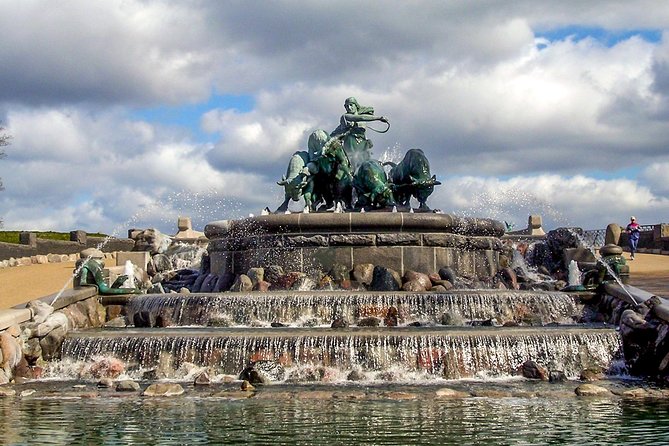
- Kastellet and the Gefion Fountain: A quick look at Copenhagen’s star-shaped fortress comes with a Norse legend.
- Small, English-speaking group: The experience is offered in English and accepts no more than eight people.
- Strongest for orientation: You get a broad first look, not long museum visits or detailed interior tours.
Starting at Stork Fountain in Copenhagen’s old town
The tour begins at Stork Fountain on Amagertorv, a central square in the old town. The fountain sits amid handsome historic buildings and a mosaic floor, so you start in a place that immediately gives you a sense of Copenhagen’s polished urban style.
This is a practical meeting point for a first day in town. You are already in the central Indre By district, near public transportation, and the tour finishes at Nyhavn. That makes it easy to continue sightseeing after the walk instead of doubling back to the starting point.
Your guide is a local who wants to show you the city, but no individual guide name is provided. The tour is conducted in English. Since the experience lasts about an hour and a half, expect commentary while walking and stopping briefly at key places, rather than a long formal talk at each site.
The opening square also sets the tone. Copenhagen is not presented only through grand palaces and famous canals. You begin with the everyday setting of a working city center, where old facades, public art, shops, and pedestrian streets all share the same space.
More Museum Visits in Copenhagen
- Copenhagen: National Museum of Denmark Entry Ticket
★ 4.5 · 960 reviews - Copenhagen: Amalienborg Palace Museum Entry Ticket
★ 4.3 · 291 reviews - Exhibition – Home of Carlsberg
★ 4.5 · 281 reviews
Street art by Stine Hvid adds a modern turn
One stop features street art by Stine Hvid. This gives the walk a welcome change of pace after the traditional architecture around the old town. You are not simply moving from one landmark to the next. You are also being shown how Copenhagen uses walls and public spaces to express newer forms of art.
The guide is meant to explain other notable street art examples in different neighborhoods. That wider context matters because you will not have time to visit those districts during this short tour. Instead, you get ideas for places to explore later if contemporary art interests you.
The limitation is worth noting. The stop is an introduction, not an art museum visit or a dedicated street-art walk. If you want artist biographies, a long discussion of technique, or several murals at close range, this route may feel brief.
Still, I like the contrast. Copenhagen’s museums and galleries can seem like the obvious cultural stops, but public art shows you a more casual side of the city. This section may also help you notice details you would otherwise pass without a second glance.
A historic castle and Hans Christian Andersen
The next part takes you to a historic castle and its gardens, with a sculpture of Hans Christian Andersen. The exact castle is not named in the tour details, so you should treat this as a scenic exterior stop rather than assume that an interior visit is included.
The gardens offer a quieter pause in the middle of the walk. After city streets and street art, the setting shifts toward formal grounds, sculpture, and Denmark’s best-known literary figure. Andersen’s connection to Copenhagen is an important part of the city’s cultural identity, and his presence gives the stop a clear local focus.
You should expect to hear stories and background from outside the buildings. The experience includes a local guide, but it does not list admission tickets or museum entry. That keeps the tour simple and affordable to operate, though it also means you will need a separate visit if you want to go inside any castle or museum.
For a first look, this is useful. You see how Copenhagen’s public spaces combine royal history, gardens, and art without spending half the afternoon indoors. Returning visitors may appreciate the setting, though newcomers who want detailed palace history could find the explanation too short.
Kastellet and the tale of the Gefion Fountain
The route then reaches Kastellet, the star-shaped fortress built in 1664. Even from a quick exterior stop, the unusual shape gives the site a strong visual identity. This is not just another old building. The fortress layout helps explain Copenhagen’s former need for defensive works and gives you a different view of the city’s past.
The guide also tells the legend connected with the Gefion Fountain, which depicts the Norse goddess Gefion. That story adds a layer of mythology to what could otherwise be a quick photo stop.
I like this combination of place and tale. A date such as 1664 can be easy to forget, but a fortress with a star-shaped plan and a goddess pulling land from the sea is easier to remember. Local legends are especially useful on a short city walk because they give you a compact way to understand how Denmark presents its own past.
The tradeoff is time. Kastellet is a site where you could spend longer walking the grounds, but this experience only gives you a glimpse. Think of the stop as an introduction and a reason to return, not a full exploration of the fortress.
A different sort of day out, same corner of Copenhagen:
- Copenhagen: Canal Cruise with Guide
★ 4.6 · 9,115 reviews - Copenhagen: Hop-On Hop-Off Bus Tour with Boat Tour Option
★ 3.9 · 4,122 reviews - Private Walking Grand Tour of Copenhagen
★ 5.0 · 3,953 reviews - From Copenhagen: Lund and Malmö 2-Country Tour
★ 4.7 · 2,772 reviews
Amalienborg, Frederiks Church, and Kierkegaard
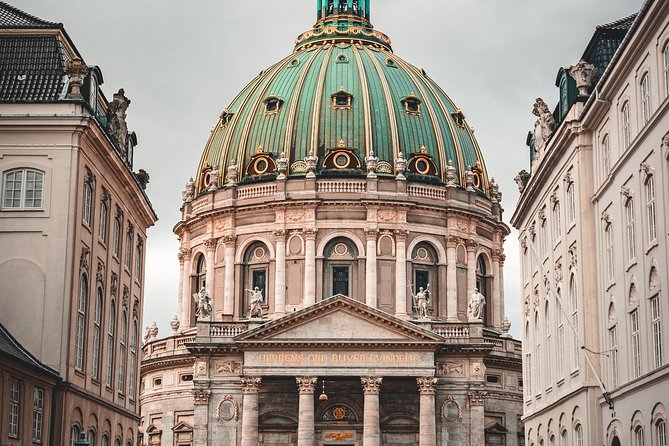
A later stop brings you to the Rococo structure with Scandinavia’s largest dome and a Kierkegaard statue in the grounds. This points to Frederiks Church, commonly known as the Marble Church, alongside the nearby Amalienborg area.
The church’s dome is the visual draw, while the statue of philosopher Søren Kierkegaard adds a distinctly Danish cultural note. This is the sort of pairing that makes a local-led walk useful. You get architecture, religion, and intellectual history in the same part of the city rather than seeing each subject as an isolated attraction.
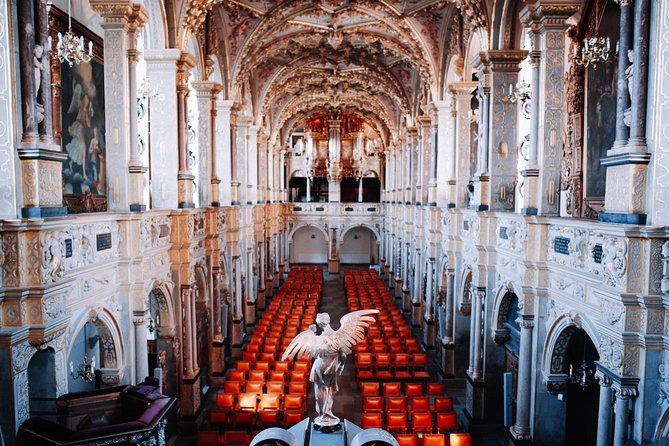
Again, the tour is focused on the outside. The supplied details do not include church entry, so do not book this expecting an indoor dome visit. If you want to see the interior, plan a separate stop and check opening arrangements on your own.
The guide’s role here is to connect the structures around you. A local explanation can help you understand why this area feels different from the commercial old town. It is grander, more formal, and tied closely to Denmark’s royal and civic identity.
Royal Square with views toward the Opera House

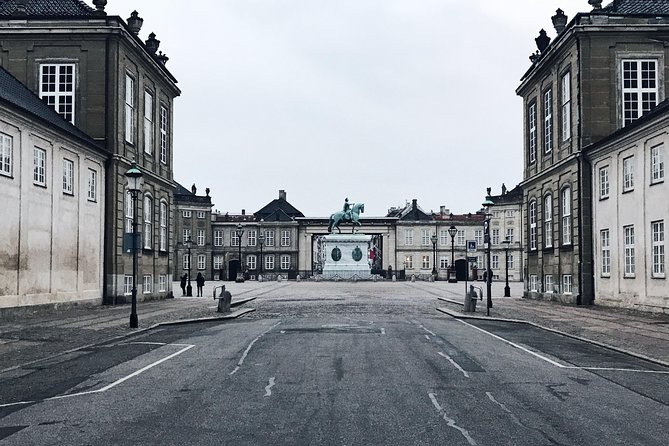
The route continues through an imposing square with a palace and garden. From across the water, you can look toward the Danish Royal Opera House. The view broadens the experience beyond the building directly in front of you and lets you see how Copenhagen’s royal center relates to the harbor.
This is a good place to keep your camera ready, but also to listen. The palace, garden, waterfront, and Opera House create a compact lesson in how old and new Copenhagen share the same cityscape. The tour does not promise an interior visit to the palace or Opera House, so you are seeing them as part of the public city rather than attending a performance or museum program.
One point deserves attention: a candid assessment of the experience wished the route had taken a less direct path to include the Art Museum and King’s Theatre. That is a fair limitation. The route covers many important sights, but a direct walk cannot show every major cultural building in central Copenhagen.
If those two places are priorities for you, make a note to visit them separately. The tour works better as a broad orientation than as a carefully focused art itinerary.
Finishing beside the colorful facades of Nyhavn
The walk ends at Nyhavn, Copenhagen’s famous 17th-century harbor. Its colorful waterfront facades make a lively finish, and the location is convenient for continuing on foot after the tour.
Ending here is one of the route’s strongest practical choices. You begin in the old town and finish beside the water, so the experience has a clear sense of movement. It also leaves you near restaurants, harbor views, and other central sights, though food and drinks are not included in the tour.
Nyhavn can be crowded and photo-heavy, but the canal remains an essential Copenhagen scene. A guide can add more value here by helping you see it as a historic harbor rather than only a row of colorful buildings. The tour details do not promise a long stop, so expect a final look and orientation rather than a full harbor history.
If you are meeting friends afterward, this is an easy place to arrange it. If you are continuing your own sightseeing, you will not need to return to Stork Fountain.
What the 90-minute length really means

Ninety minutes is enough to introduce Copenhagen’s main visual themes, but not enough for deep treatment of every stop. You will see a lot: old-town architecture, street art, gardens, a castle, Kastellet, a Norse legend, a Rococo church, royal buildings, the Opera House, and Nyhavn.
The pace is likely to feel brisk because the route covers several districts and finishes at a different location. Wear comfortable shoes and keep your schedule open enough that you do not need to rush away before the final stop.
One weakness reported in the experience was silence during parts of the walk. That matters on a short tour. Every quiet stretch takes away from time that could have been used for city stories or practical advice. You should go in expecting a friendly orientation, not constant commentary from start to finish.
The upside is that the route does not overload you with a single subject. If you have just arrived in Copenhagen, this variety can help you decide what deserves a longer visit. If you have already seen the central sights, the street art and local food customs may give the walk a fresher angle.
Local stories, including Danish food customs
The experience includes small details about Danish food customs. This was one of the more warmly received parts of the walk, and I can see why. Food habits reveal how people live in a way that palace dates often do not.
The information provided does not specify which customs are covered, so you should not expect a cooking lesson or tasting. Food, drinks, and snacks are not included. Still, a short explanation about local eating traditions can help you make better choices during the rest of your stay.
This is also where a local guide can add value beyond a map. A guide may point out how Copenhagen’s public spaces, markets, cafés, or everyday routines fit together, though the exact discussion can vary by guide. Since no guide name or fixed script is supplied, treat the storytelling as personal and flexible rather than standardized.
Is $128.94 a fair price?
At $128.94 per person, this is not a cheap way to get a basic orientation. The tour lasts about 90 minutes and does not include food, drinks, snacks, admission fees, or other personal expenses. You are paying mainly for the local guide, the route, and the convenience of seeing several central sights in a small group.
The group cap of eight improves the value. A small group usually gives you a better chance to hear the guide and ask questions than a large coach-style outing. It also keeps the walk more personal, which is important when the main product is local conversation rather than entry to a paid attraction.
The price makes the most sense if you are new to Copenhagen, have limited time, or want help getting oriented on your first day. It is less convincing if you already know the old town and harbor, or if your main goal is a detailed museum visit. In that case, you may get more from spending the same money on a focused attraction or a longer specialist tour.
Group discounts are available, though the exact discount is not stated. Check the total price for your party before booking. Since the experience is offered in English, it is best suited to you if you are comfortable following spoken commentary while walking.
Who will get the most from this walk?
I would recommend this experience to first-time visitors who want a quick introduction before exploring on their own. The route gives you a useful mental map of central Copenhagen and ends in a place where you can continue sightseeing.
It also suits returning visitors who want a local perspective on street art, food customs, and familiar landmarks. You may not discover every major attraction, but you can see well-known places in a different sequence and hear details that a guidebook may skip.
Families and mixed-interest groups may find the range appealing. One person can focus on castles, another on art, and another on city legends. Most people can participate, and service animals are allowed.
I would hesitate to recommend it to you if you want long visits inside museums, castles, or churches. I would also hesitate if you dislike brisk walking, because the route has many stops packed into a short period and includes a one-way finish at Nyhavn.
Booking is flexible in one useful way: you can cancel for a full refund up to 24 hours before the start time. Changes or cancellations made less than 24 hours ahead are not accepted for a refund, and the cutoff follows Copenhagen local time.
Should you book Explore Copenhagen’s Art and Culture with a Local?
Book it if you want a compact first look at Copenhagen, prefer a small group, and value local stories over formal museum access. The combination of Stork Fountain, street art, Kastellet, royal buildings, and Nyhavn gives you a lot of visual variety in a short time.
Skip it if you want a detailed art tour or a slow visit to the Art Museum and King’s Theatre. The route’s main strength is breadth. Its main weakness is that some stops, and possibly some stretches of commentary, may feel brief.
For many people, the best use is on the first day in town. Let the walk show you where things are, note the sights you want to revisit, and then spend the rest of your stay exploring Copenhagen at a slower pace.
FAQ
Where does the tour start?
It starts at Stork Fountain, Amagertorv 6, 1160 København, Denmark.
Where does the tour end?
The tour ends at Nyhavn in Indre By, Copenhagen.
How long does the experience last?
The walking tour lasts approximately 1 hour and 30 minutes.
What language is the tour offered in?
The experience is offered in English.
How many people can join the tour?
The maximum group size is eight people.
Are food and drinks included?
No. Food, drinks, snacks, and personal expenses are not included.
Can I cancel for a full refund?
Yes. You can cancel at least 24 hours before the experience start time for a full refund. Cancellations or changes made less than 24 hours before the start time are not accepted for a refund.
Just added around Copenhagen
- walking tour – Copenhagen and Christiansborg 3 hours★ 4.0 · 7 reviews
- The Hunt For The Six Forgotten Giants★ 5.0 · 45 reviews
- Copenhagen Walking Tour with Food Testing (smorrebrod dish & snap)★ 4.5 · 10 reviews
- The Philosopher’s Last Walk: An audio tour on the life of Søren Kierkegaard★ 4.5 · 5 reviews
- Small Group Guided Food Tour and Street Art Visit to Norrebro★ 5.0 · 9 reviews
- The Six Forgotten Giants Trolls Hunt with Minibus★ 4.5 · 27 reviews
- The Forgotten Giants Private Tour★ 5.0 · 3 reviews
- The Foodie Tour of Copenhagen★ 5.0 · 14 reviews
Museums, compared.


Stockholm Pass: Save up to 50% – Includes Vasa Museum Ticket
Read our review →



Browse the lists this tour appears in